
Science and Nature
Natural and formal sciences: physics, chemistry, biology, earth science, and mathematics.
#2044: Adversarial Thinking as a National Curriculum
Why the next generation of engineers must learn to "break" simulations and design for failure.

#1998: Why Your Brain Lies About Where the Bomb Is
Why your eyes and ears lie to you during missile strikes—and how to count seconds to find the real danger.

#1988: The Eternal Storage That Can't Escape the Lab
Quartz glass promises 10,000-year data storage, but can it scale before 180 zettabytes make it obsolete?
#1978: The Ingenious Fail-Safe Engineering of Emergency Beacons
From 98% false alarms to pinpoint rescue: how a tiny plastic device saves lives across oceans and mountains.
#1977: Why Earth Can't Hit 60°C
Death Valley hit 53.9°C, but the planet seems stuck. Here’s the physics behind Earth’s natural heat ceiling and the biological danger zone.

#1975: The Global Choreography of Weather Balloons
Why we still launch 1,000 balloons daily into the stratosphere—and why satellites can't replace them.

#1953: My Dad Wasn't Abducted, He's a Monkey Treasurer
After 30 years, a "seance" reveals dad is alive, well, and handling finances for a monkey colony.
#1910: Our Podcast Is Now a Permanent Research Artifact
Why we're uploading every episode to CERN's Zenodo archive, giving our AI experiments a permanent DOI and a life beyond streaming platforms.

#1904: The Hidden Math Behind Your Blocky Photos
Why are blocky sky artifacts still haunting your photos in 2026? We break down the math behind JPEG, WebP, AVIF, and the new JPEG XL.

#1903: The Streaming vs. Disc Quality Trade-Off
Streaming 4K movies hits 25 Mbps, while Blu-rays push 100 Mbps. Here’s why your shadows look gray and your audio lacks punch.
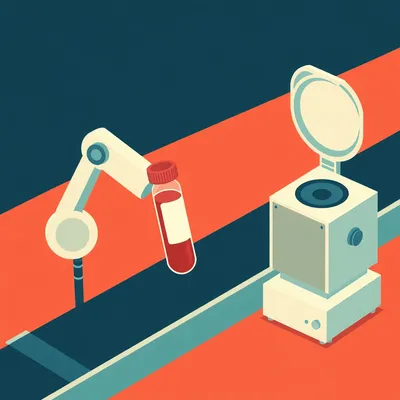
#1902: How a Single Blood Vial Becomes Hundreds of Results
A single vial of blood can yield hundreds of results. Here’s the high-tech industrial process that makes it possible.

#1896: The Unitasker Graveyard: Why We Buy Useless Gadgets
From the Juicero to the motorized ice cream cone, we explore the $300M industry of single-purpose gadgets solving problems that don't exist.
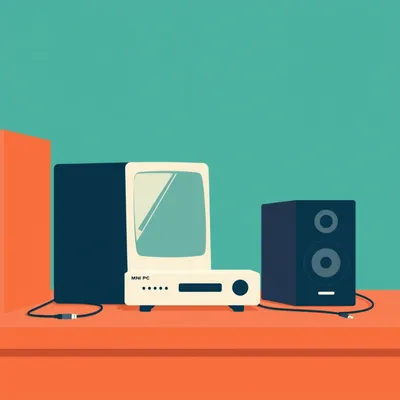
#1875: Why TOSLINK Beats USB for Noisy Mini PCs
Is optical really better than USB? We break down the noise, jitter, and bandwidth trade-offs in your home audio setup.
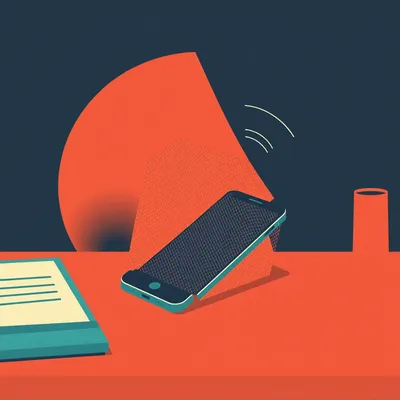
#1873: Your Gadgets Are Screaming at Each Other
Every electronic device is broadcasting invisible noise. Here’s how engineers build cages to keep the chaos from crashing your gadgets.

#1868: The $100 Pen vs. The Disposable Pen
Why a $100 pen is cheaper than a $0.50 pen. We break down the physics of pressurized ink and machined metal.

#1859: The Strange Joints of the Xenarthra
A sloth explains why his anteater cousins are actually Russian psyops agents scanning for brain waves.

#1854: The Conductor as a CPU
A conductor isn't just a timekeeper; they're a CPU for the orchestra, using high-bandwidth non-verbal signals to unify 80 musicians.

#1844: How Amateurs Track Spy Satellites with Laptops
Forget Langley—these hobbyists spot classified satellites from their backyards using math, cheap cameras, and public data.

#1821: The Quantum Computer That Doesn't Compute
Crack open a quantum computer and you won't find a CPU—just a gold-plated chandelier inside a giant white thermos.

#1813: Why Hard Tech Is Moving to Jerusalem
Jerusalem's tech sector grew 40% in 2024-25, outpacing Tel Aviv. Discover why this ancient city is now Israel's hub for AI, biotech, and cybersecur...