
History and Culture
The human past, language, religion, philosophy, arts, media, and food.
#5615: Philadelphia, Here I Come: Friel's Split Man on Stage
One actor can't hold Gar O'Donnell — so Brian Friel used two. Inside the 1964 play that split a man in half on stage.
#5614: The Master of Drinks Ran the Room
The symposiarch controlled the wine ratio, the room, and the penalties — and poetry was the skill that proved you belonged.
#5612: Who Keeps Working During Sukkot?
An ideal of universal rest meets a city that doubles in size. Who kept the lights on during the pilgrim festivals?
#5605: From Dolium to Cup: Rome's Wine Supply Chain
Rome had no wine bottles — just giant buried jars, throwaway shipping pots, and a hill of 53 million smashed amphorae.
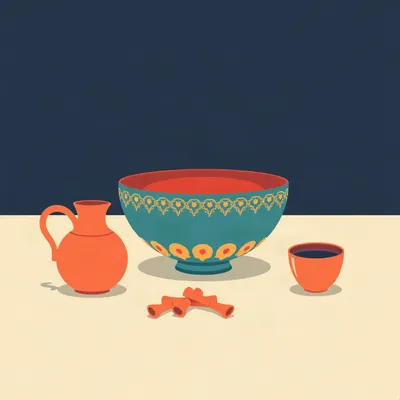
#5603: The Ancient Wine Mixer Who Ran the Party
Greeks and Romans never drank wine straight — a designated mixer decided how strong the night would get, and the whole room obeyed.
#5601: How Image Forensics Catches Fake Ghosts and Deepfakes
From darkroom magnifying glasses to AI provenance fingerprints — how we've verified photographs for a century.
#5596: What Victorian Diggers Could Teach Jerusalem's Cranes
London, Paris, and New York dug their first subways at a human cost we'd never accept today. Did we trade that chaos for something better — or just...
#5595: Roman Roads Still Running Under Modern Cities
The Aqua Virgo still pours into the Trevi Fountain. The Cloaca Maxima still drains central Rome. What keeps ancient infrastructure alive?
#5590: What Alaskan Crab Deckhands Actually Do
18-hour shifts, 800-pound steel pots, and a pay structure that's basically a lottery ticket. The real job behind the TV show.
#5588: Anchorites: Dead to the World, at the Center of It
Sealed into a church wall, declared dead to the world — and then consulted by kings. The strange, true story of the anchorite.
#5586: The Ancient World Was More Connected Than You Think
Could an ordinary person travel the Roman world? The evidence says yes — and the reasons we think otherwise are revealing.
#5585: The Lighthouse Keeper and the Serbian Cabin
A YouTube video from rural Serbia broke one listener's whole model of what a hermit is. Turns out the anchorite image is a thousand years out of date.
#5583: The Last Lighthouse Keepers: Life at the Edge of the Sea
Before automation, someone had to trim the wick, crank the clockwork, and keep the light burning through the storm. What was that job really like?
#5582: Who Invented the Internet? Actually, Seven People
The first message ever sent was "LO" — then the system crashed. The real story of the internet is a stack of seven layers, not one genius.

#5580: Before the Word Spy Existed: Venice's Intelligence Machine
Venice ran a centralised spy service with an archive, a spy network, and a counterintelligence body — in the 1400s.
#5577: When the UN Goes Viral: Pitchers, Shoes, and 6-Second Clips
A six-second clip of a man drinking from a pitcher resurfaces as if it's new — inside the long history of the UN's most meme-able moments.

#5576: Lying Flat as a Tactic: The Quiet Opt-Out
Tang ping, quiet quitting, and the N-po generation — what happens when people stop donating effort they were never paid for?
#5575: Why 1930s Riveters Carried Bigger Pouches Than You Do
A catcher's mitt made of metal, a red-hot rivet you can't look at, and the 90-year-old tool list that never changed.
#5566: Venice: The City That Was a Supply Chain
Venice wasn't romantic — it was a logistics problem with a paint job. How a lagoon empire survived 1,100 years.
#5562: What "Heavy Industry" Actually Means
It's not about weight — it's about capital intensity and cycles. Why the heavy/light split is younger than the factories it describes.