
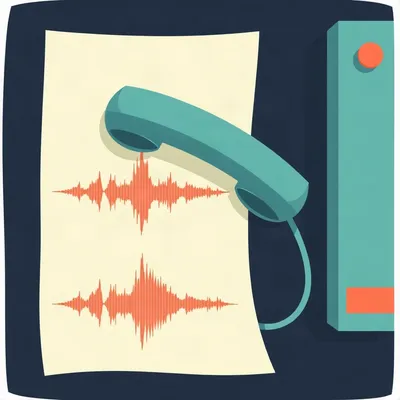
#6176: Do Audio Models Hear How You Said It?
A benchmark called LISTEN found audio models score near chance when emotion lives in the voice, not the words. What does that mean for real calls?
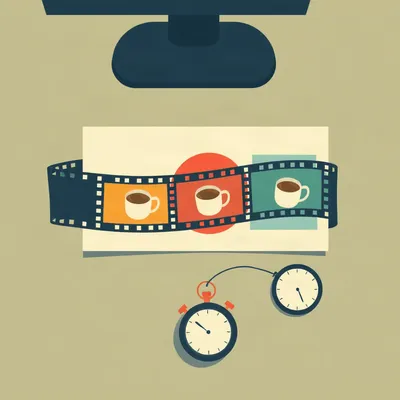
#6175: Video Models Can't Tell Time: What Motion Benchmarks Reveal
Frontier models score 48% on tasks where humans hit 98% — the gap is motion, speed, and sequence, not scene description.

#6174: What Your Voice Reveals: Accent, Distance, and Movement in Audio AI
What can AI actually hear in your voice? Accent detection, speaker distance, whale songs, and the gap between deployed audio models and chatty gene...

#6173: Auditing a Sycophantic Model From the Inside
A stumped lab, a fawning model, and the diagnostic playbook nobody has a name for — from eval slicing to persona vectors.

#6172: Recipes vs. Regeneration: AI Photo Editing in 2026
Two ways AI edits photos now: models that write a readable recipe of slider values, and models that just repaint the whole frame.

#6171: AI Audio Restoration: What Actually Ships in 2026
Noise removal and bandwidth extension are shipping products today. Matching a clip to a target EQ is still mostly a research prototype.
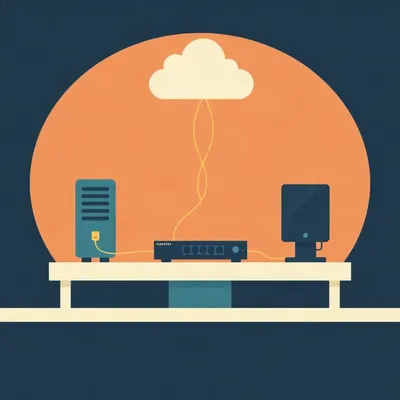
#6170: One Endpoint, Many Boxes: Local LLM Routing
A LiteLLM-style proxy can fail over between your own GPU boxes and the cloud — but it can't see your VRAM.

#6169: What It's Like to Be a Token Inside an LLM
A token's-eye view of an LLM's forward pass — no cone, no squeezing, just a hallway where every layer scribbles on you.

#6168: Hebrish: Hebrew-Aware Dictation That Actually Works
Two new speech models fix English-Hebrew code-switching dictation — and the whole training run cost about fifty cents of GPU time.
#6165: Watching 20 Batch Jobs at Once
Batch APIs give you a discount, then hand you a babysitting job. Here's what actually watches a batch run — and what doesn't.
#6164: We Gave Each Host Its Own AI Agent
We split our two hosts into separate AI agents with private context windows. The bill came to 78 cents an episode.
#6162: Why Dictated Words Rewrite Themselves
Hold-to-talk dictation shows dimmed text that silently changes when you release the key. Here's the architecture behind that rewrite.

#6161: Turning Words Into Sound: G2P, IPA, and the Hebrew Vowel Problem
Text-to-phonetics tools exist, but the neural ones guess wrong on exactly the words you care about — names, brands, and Hebrew.

#6160: Where Do Tiny Speech Rules Live? A Ladder From Regex to LoRA
A regex notebook, a WFST grammar, or a fine-tune? Where do tiny speech-rewrite rules actually belong in a 600M-parameter model?
#6159: When a Speech Model Can't Decide How to Write Dollars
One dataset says "$20," another says "twenty dollars." Fine-tuning a speech model means finding out which convention wins — and why it matters.

#6158: Naming the ASR Sub-Tasks Nobody Mapped
A 2001 linguistics paper already named Daniel's problem — but it points the other way. So what do you call a fine-tune set that expands "F Y I" to ...

#6157: Where to Sit When You're Fine-Tuning Your Own Voice
Your phone's built-in mic is the point — the setup around it is what ruins the takes. Rooms, remotes, and the app setting that deletes your data.
#6154: Who Checks the Labels? Weak vs Strong Supervision
Human labels, rule-based labels, or a teacher model writing the exam — what actually makes supervision "strong," and who verifies it?
#6153: Decision Models: Typed Answers in One Forward Pass
Clef, Jev, and OpenAI's Decisions API return typed answers with probabilities in a single forward pass — no generated text to parse.

#6149: 4 Hard Fails in 84 Answers: Testing AI Bias on Israel-Palestine
A 19-prompt, 6-model eval tested whether AI models push back evenly on false claims about Israel and Palestine. One model failed four times.