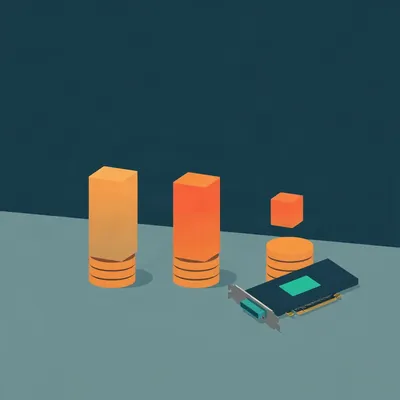
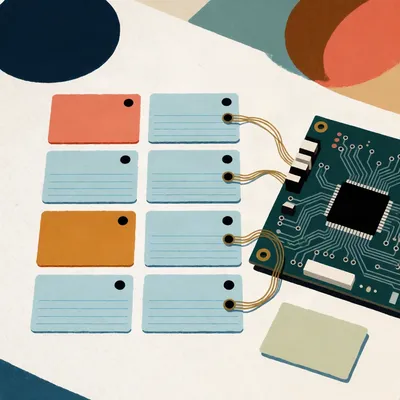
Eighty minutes without finishing a single sampling step. That's one laptop's attempt at local video generation, and it's the wall behind Daniel's prompt today. ComfyUI now lets paid cloud models sit inside the same graph as your local models. If you're paying for inference anyway, why keep the canvas?

Especially when the canvas has acquired a checkout.
Daniel's more interesting answer is a workload split across machines. An architecture practice keeps ControlNet and still generation local, where it can hold the building's geometry steady, then sends the approved image to a cloud video model because the office machine struggles with that step. ComfyUI used to be somewhere you went to avoid paying per image. Now there's a storefront between the wires.
The split can be sensible without making every workflow sensible. Cost, speed, quality and confidentiality can each point somewhere different.
Plus, are studios actually doing it? A graph that can be assembled isn't automatically a production method. Before you buy the video node, Herman, explain what crosses that wire.
A normal image goes in. A normal video output comes back. That compatibility is the important engineering decision.
Comfy calls these Partner Nodes. They connect a workflow to external API services, including closed models and third-party hosted models. The roster includes Kling, Veo, Seedance, FLUX, Wan, HeyGen and ElevenLabs. You aren't downloading those services' weights into your graphics card.
My GPU remains empty. My wallet participates.
The returned video can feed a local processing node, a preview or another compatible step. You don't have to save it from a browser, find the download, rename it and import it into a second project. That sounds small until you're doing variations and somebody imports yesterday's version.
That is a real benefit. I also want the boundary visible. An image socket shouldn't make sending a confidential design away feel identical to sending it across the desk.
Visually similar doesn't mean operationally identical. You need a Comfy account, logged in through the user settings, and a positive credit balance. The documented network requirements include HTTPS and access restricted to localhost unless you authenticate with an API key.
Localhost with international shipping.
Credits are prepaid through Stripe. Monthly credits expire with the billing period. Purchased top-ups last a year. Those are different balances with different clocks, even though the canvas presents a convenient button.
I can already predict your reaction to that button. You'll install the new node before checking what the old graph costs.
I'll check the price. Whether I check before connecting it is an implementation detail.
There it is.
Local use remains intact. There's a startup option to disable Partner Nodes, and offline mode also stops the frontend contacting the internet. Comfy explicitly says the nodes are optional and local ComfyUI remains free and open source.
Good. I don't want a depth map requiring a subscription renewal.
You can keep the whole thing local. The new question is whether this graph is a useful place to coordinate mixed execution, compared with writing scripts around separate services. Corn, would you keep ComfyUI if every inference step were hosted?
Only if the workflow itself earned its keep. A prompt box connected to an invoice doesn't need this many wires.
A production workflow can earn it through repeatability. Comfy API packages the graph with its models, custom nodes and dependencies into a hosted, autoscaling endpoint. Previously, deploying could mean rebuilding the environment elsewhere, reinstalling extensions and managing scaling yourself.
The graph remembers which particular arrangement of Python packages finally stopped screaming.
It can package that arrangement. Reproducibility still depends on what you pin and what the remote services promise. Hosting doesn't freeze a provider's model.
That's worth separating. Moving an entire workflow onto rented hardware is useful, but Daniel is asking about different stages living in different places. His local machine doesn't disappear.
Right... the stronger case is composition. A cloud-generated base image can feed a local Wan video node. That's an example in Comfy's own documentation. The direction can reverse, too. Local image, hosted video, local finishing. Each stage keeps the interface the next stage expects.
With the proviso that compatible output types don't guarantee compatible artistic intentions. A video can be perfectly valid and contain a newly invented balcony.
Architecture makes that brutally concrete. There's a published twelve-node Rhino-to-ComfyUI workflow for a fourteen-thousand-square-foot mixed-use project. Four exterior hero shots, needed for a community engagement deck within five days.
People are meant to comment on a proposed building. Giving them a more attractive, different building would rather contaminate the exercise.
The graph starts with separate exports from the actual design model. A depth pass provides spatial structure. Make2D linework carries edges. A flat-shaded view helps guide materials through IP-Adapter. Those carry different information, so they get different influence.
The depth map gets the stronger vote, presumably. Materials can change without relocating the stairwell.
In that example, depth weight is zero point eight five and lineart is zero point five five. Material guidance is gentler still. The authors also end the structural conditioning before the sampling finishes, leaving room for the image to resolve rather than remain a decorated diagram.
I like that there's an explicit point where the model is allowed to stop tracing. I dislike how tempting it must be to turn that point into a universal recipe.
It isn't one. A bad depth export faithfully conditions the wrong thing. Too much influence can flatten the visual into a reskinned diagram. Too little lets the model improvise the building. The reported result was four hero shots without misrepresented geometry, but that belongs to that workflow and its inspection.
Local ControlNet doesn't certify the result. It gives you handles you can inspect. I'd want a person checking the same roofline in the source view and the generated view before the image moves on.
Would you make that an actual stop in the graph, or just a studio procedure?
An actual stop. Otherwise the fastest part of the system becomes how quickly it propagates an unnoticed mistake. Approve a still, then spend money animating it. Don't animate everything and discover afterward that you've produced a beautifully moving planning objection.
That also changes how you count cloud demand. The endpoint receives approved candidates rather than every experiment. Local iteration can be extensive while cloud spending stays selective.
The local stage is carrying expensive correctness. It isn't merely the cheap preliminary stage before the impressive model gets involved.

Medieval Pottage Facts. Over the same period the bread given to harvest workers changed from barley and rye to wheat. The people doing the hardest work got the better loaf, and I expect they still ate it standing up.
At least the loaf respected the specification.
Video is where a modest machine can hit a very different workload. Modellix tried local Wan on a sixteen-gigabyte M4 MacBook. The official template failed to finish even one sampling step in eighty minutes.
A progress bar with tenure.
A reduced run did finish after a hundred and fifty-five minutes. Only the first frame was usable. The remaining frames broke into colour smear.
That's an exceptionally expensive still.
The same starting image went through hosted image-to-video nodes successfully. Kling produced a six-second clip for forty cents, taking eighty-nine seconds. Veo Fast took seventy-two seconds and cost fifty-four cents.
Veo also added ambient audio unasked. The building has acquired a soundtrack before it has acquired permission.
That's a reminder that the cloud step has its own creative defaults. You still inspect it. A clean clip means the generation worked, not that every detail is approved.
We're also comparing different models, not teleporting the same computation from one device to another. The cloud result may be better because the model is better, because the hardware fits, or both.
Correct. This demonstrates a useful replacement for an unsuccessful local operation. It doesn't isolate hardware performance. Nor does a laptop establish what a studio graphics card can do.
There's another distinction we need to keep intact. We have a real architectural still workflow and a real local-versus-hosted video test. Have we got the practice that actually joins them?
I don't have a documented studio running that exact sequence in production. The architectural example stops at local stills. The video comparison starts with an image but doesn't include the local ControlNet pipeline. The detailed production studio account is fully local.
Then we can build Daniel's example honestly, but we can't put a customer's name on the joined-up version.
The capability is explicit. Comfy endorses hybrid graphs, and third-party packs such as VideoRouter expose hosted models through the same general pattern. The adoption claim is narrower than the capability claim.
That leaves plenty to analyse. A practice doing occasional public marketing clips could use this split tomorrow. A practice already running a busy local farm might gain nothing except another bill.
The purchase arithmetic makes that difference substantial. At forty cents a clip, a thirty-five-hundred-dollar workstation purchase represents roughly eight thousand seven hundred hosted clips before the purchase saves anything.
That's a lot of six-second buildings.
It's deliberately crude. It excludes power, maintenance and labour. More importantly, it assumes the local output is an acceptable substitute for the hosted output. You can't recover a purchase through work the machine cannot deliver.
It also ignores that the machine may already be earning its keep on stills. Charging the whole workstation to occasional video makes local look worse than it is.
Yes. Incremental cost matters. Already owning a suitable card changes the calculation. Buying one only to avoid paying for a handful of marketing films is much harder to justify.
I'd split the practice into two situations. Public campaign, occasional video, existing local still pipeline. Hybrid looks plausible. Continuous internal design exploration, lots of rejected variations, confidential schemes. Local looks much stronger, provided the hardware can handle it.
Would you choose all-cloud for a practice starting from nothing?
Possibly. If its chosen hosted tools preserve the constraints it needs, and the client permits uploading, why build a local maintenance job? Local ControlNet is valuable because of the particular workflow control, not because electricity consumed in your office improves architecture.
Community reports put a suitable RTX forty-ninety at roughly nine minutes for a short local Wan clip. That's nowhere near the failed laptop experience. Renting a card of that class can also cost well under a dollar an hour, depending on the offering.
Then buying a workstation and paying per clip aren't the only doors. Rent compatible hardware and keep your chosen local-model workflow.
Exactly... no, more precisely, keep the workflow design. Remote execution still changes where the data goes and who operates the machine. It can solve capital expenditure without solving confidentiality.
Speed needs the same discipline. Seventy-two seconds sounds wonderful until the service queues the request, or the result needs three retries. Nine minutes sounds slow until you submit it before lunch and have no deadline.
The useful measure is time to an accepted deliverable. The laptop comparison is categorical, but only for that machine and configuration. For a working local card, quality, queueing and iteration count can outweigh the sampling time.
You were about to say throughput.
I was.
You always say throughput when I mention lunch.
Your lunch is unusually good at absorbing entire render schedules.
It has generous capacity.
Quality can justify the split in both directions. Local conditioning gives precise structural control. A hosted video model may offer a duration, motion quality or audio capability that your local setup doesn't reach. Kling's recent integration advertises clips up to thirty seconds with stereo audio in one pass.
Yet the approved still only anchors the start. Windows can wander later. A local check before uploading doesn't mean the final video respects the building throughout.
You're right. I called the still stage expensive correctness, but that correctness needs checking again after animation. A moving camera can reveal surfaces the original view never specified.
The model has to fill something in. An attractive hallucination behind the building is still a hallucination, even if the front elevation passed inspection.
Confidentiality is less forgiving still. Keeping depth generation local protects control over geometry. Once the rendered scheme goes into a cloud video node, you've disclosed that visual information outside the studio.
A correct secret is still a secret.
HTTPS protects the connection. Account authentication controls access. Neither tells you whether a provider retains the uploaded image or uses it for another purpose. Comfy's network documentation doesn't answer every provider's data-retention terms, and I haven't seen an independent audit covering those transfers.
An NDA may make the split unavailable before anybody opens a cost spreadsheet. A public development already announced is a different proposition from an unbuilt confidential competition entry.
The strongest detailed studio example takes the strict route. Vision Graphics runs a small local farm, with smaller cards handling enhancement batches and a larger card handling heavy upscales and video. A local vision model scores the images. Their stated policy is no cloud and no client data leaving.
The volume explains why. For an interior project they generated more than three hundred versions. Automated filtering reduced the human review pile to about forty.
From which the human selected the final eighteen views. That is a production account of extensive local iteration, not merely somebody proving a model starts.
It also explains why practitioners defend older cards. A machine producing useful stills every day isn't obsolete because a new video endpoint exists. I would rather own that stable pipeline.
I knew you'd defend the older card as soon as it had a dependable workload.
You installed the word dependable after I finished speaking.
Fair. Their licence handling is also unusually concrete. Models carry licence classes, and assets inherit the most restrictive class of the tools that touched them. A setting can hide non-permissive backends from the commercial pipeline.
Paying the last node doesn't cleanse the earlier ones.
Fibo's local release uses a non-commercial licence. Commercial use of those weights needs attention to those restrictions. The precise rights in outputs require reading the terms, but simply adding a paid cloud step does not grant permission for the upstream commercial use.
Another boundary the nice uniform sockets don't show. The graph needs a record of what touched an asset, not just where the pixels went.
Comfy is monetising that connected experience. Its cloud plans currently run twenty, thirty-five and a hundred dollars monthly, with different allowances and execution limits. Hosted workflows and Partner Nodes both make credits part of the interface.
The wire now has a meter.
Roughly two hundred and eleven credits to a dollar. Convenient for unified billing, less convenient for comparing a quote in seconds with another in credits per output unit.
Especially when promotional rates move. PixVerse's introductory pricing is scheduled to end November third, and the FLUX promotion November seventh. Those haven't ended yet, but they're already a reason not to treat today's calculation as permanent.
Kling's headline integration didn't have a published credit rate on the pricing page at launch. The graph can be stable while the price of executing it changes.
An overnight workflow can finish while nobody is watching, too.
Ready is a generous word, Corn. You were stricter about the still earlier. I've got a batch waiting for another run this week because the first one finished overnight with the wrong lighting. It sat behind an enormous animation job. The client spotted the afternoon shadows in what was meant to be a morning sequence. I normally look at the first frame before anything leaves the machine. I broke that rule on October twenty-sixth.
The queue delayed the discovery as well as the render. By morning, the person who submitted it wasn't necessarily the person opening it.
That's what happened. I'm rerunning it on Saturday. I've bought a plug-in bell for the completion alert because the computer is in the spare room and the phone notification was useless. My claws miss those little notification buttons. I've arranged with Yossi to bring his terrier over while he takes his daughter swimming. The dog settles under that desk, so I'll sit there with him until the first frame comes through. Yossi said no cheese. I've written that above the keyboard.
You've arranged supervision for yourself.
The dog needs company. I need to be in the room. The split you've described is fine. I sold my own render workstation this month, so the heavy job is rented now. That doesn't put anybody beside it when it finishes. I printed the bad frame and put it under the desk glass, with the wrong shadow facing me. Not as a reminder. It's the exact camera angle I need to compare. The client circled the shadow in orange.
Comparing the same view will make a lighting mismatch much easier to catch than flicking between unrelated previews.
An output arriving and an output being accepted are different events. The graph can automate the first without settling the second.
That sharpens the answer to Daniel. ComfyUI earns its place when the connections carry useful work across those boundaries, including a deliberate approval stop. Hybrid makes sense for a controlled local still pipeline with occasional hosted video, when quality, permission and spending line up. All-local has the clearest documented studio case here. All-cloud remains sensible when local execution adds no particular value.
Whether studios quietly make that split pay, including the handoff to someone who actually checks the result, is the production account I'd like to hear.
Thanks to Hilbert Flumingtop for producing the show.
If you want more of this, try episode seventeen, Cloud Render Superpowers; episode twenty, Architectural AI; and episode two, Local STT For AMD GPU Owners. This has been My Weird Prompts, the human-AI collaboration podcast.
If you enjoy following these questions all the way through, leave us a review wherever you listen.
See you tomorrow.



 chatterbox-regular