
Speech Recognition
197 episodes · Page 5 of 9

#2707: Foot Pedals vs USB Buttons: The Ergonomics of Dictation
Foot pedals, USB buttons, and under-desk macro pads for voice dictation — a deep dive into the hardware that makes AI dictation work.

#2643: How Stenographers Type 300 Words Per Minute
Court reporters don’t type letters—they chord syllables at 300 words per minute. Here’s how it works and why AI can’t replace them yet.

#2618: Text Normalization's Hidden Complexity
How to handle acronyms in text-to-speech pipelines using BERT models, lexicons, and layered preprocessing.

#2602: Letting Non-Experts Direct Audio Tools Through Conversation
How to use AI for podcast mastering — and why agentic AI works better for small tasks than big promises.

#2597: Voice Control for Renters: $25 Per Room, No Wall Damage
Distributed voice control on a budget with wake words, centralized processing, and zero wall damage — perfect for rentals.

#2591: Decoupling Script from Voice
How dynamic voice replacement could let listeners choose who narrates each host's lines.
#2590: The Uncanny Valley of Clean Speech
How transformer models distinguish "um" from meaningful speech — and why removing too much makes you sound like a robot.
#2582: What Your Browser Does to Mic Audio Before It Reaches Your Server
getUserMedia returns audio, but not raw audio. Here's what browsers actually do to your mic feed before it hits your server.

#2543: Why Base64 Adds 33% Overhead (And Why You Still Need It)
Base64 isn’t compression — it’s a safe transport encoding. Here’s how it works with audio APIs and where its limits are.
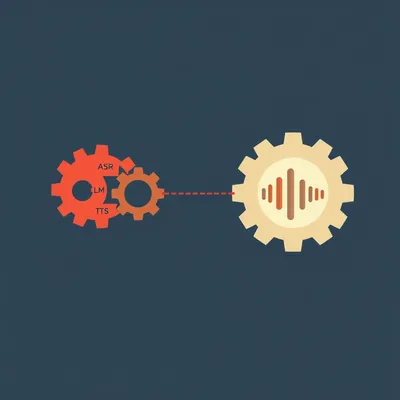
#2512: How Speech-to-Speech Models Eliminate the Robot Voice
Why AI voice agents sound robotic, and how natively integrated speech-to-speech models fix it.
#2510: The Design That Makes Voice Agents Tolerable
Drive-thru accuracy, healthcare triage, and the design secret that makes people *want* to talk to a machine.

#2487: Why AI Calls Everything a "Prediction" (Even Images)
Machine learning calls everything a "prediction" — even generated images. Here's why the terminology matters more than you think.

#2486: Why Noise Reduction Can Ruin Transcription Accuracy
Cleaning audio before transcription can increase errors by up to 46%. Here's the right approach for your voice app.

#2479: The Screaming Baby Stress Test
Choosing the right headset and control method for dictation when you're holding a baby who won't stop screaming.
#2443: How Podcast RSS Feeds Can Speak Every Language
One RSS feed, a transcript tag, and TTS voice cloning — the emerging standard for letting any podcast speak any language.
#2337: When Diarization Fails Silently
Discover how PyAnnote and other tools tackle the critical task of identifying "who spoke when" in audio—and why it’s harder than it sounds.

#2332: Voice-to-Task: Building the Claude Task Planner
How does a voice note turn into a completed task? Dive into the architecture and tradeoffs of building a Claude-powered task execution system.
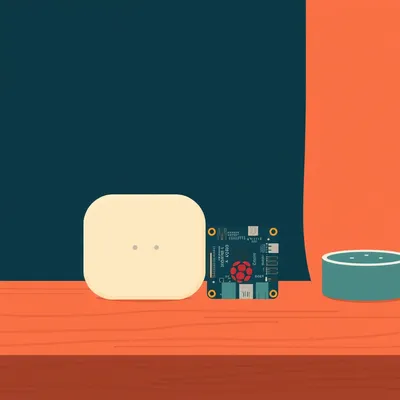
#2326: Voice Control Simplified: Home Assistant’s Local Stack
Discover how to build a reliable, vendor-agnostic voice control system for Home Assistant without relying on Amazon or Google.

#2311: Danish AI: Bridging the Localization Gap
How does AI handle Danish? Explore the challenges and progress in making AI tools work for small-language populations.

#2303: The Serverless Paradox: Why TTS Eats Your Budget
How batch processing and smart queue management can slash TTS costs for episodic podcast production.

#2288: The Invisible Gatekeeper of Voice Tech
How voice activity detection shapes every step of the voice tech pipeline, and why it’s harder than it seems.
#2272: The AI Transcription Sweet Spot
Does higher-quality audio make AI transcription worse? New research reveals a surprising "sweet spot" for bitrate, challenging a core assumption of...
#2183: Making Voice Agents Feel Natural
Turn-taking, interruptions, and latency are destroying voice AI UX—and the fixes are deeply technical. Here's what's actually happening underneath.
#2027: The Missing Photoshop for Words
Why is editing text with AI so clunky? We explore the "TITO" paradigm—using small, local models for fast, private text transformation.