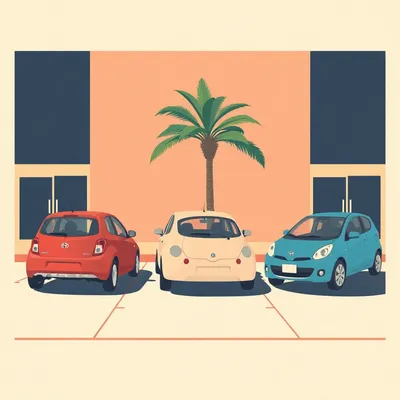
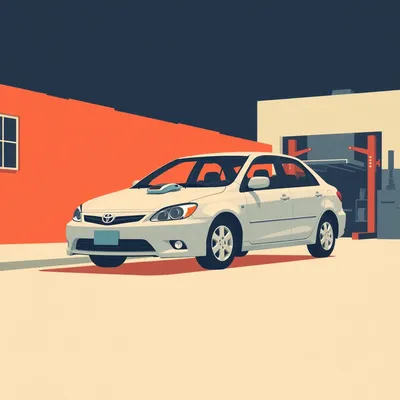
Daniel sent us this one — he's essentially asking, if he and Hannah were to buy a new car tomorrow in Israel, what manufacturers and models make sense for someone who doesn't care about status, just wants reliability, durability, good parts availability, and minimal maintenance hassle. Small hatchback, short city trips, tight parking. And he mentions they've been happy with their old Seat Ibiza, which I think says a lot about the philosophy here.

The Ibiza is a perfectly competent small car, but it's not the default choice in Israel, and the fact that they've been happy with it tells me they're not chasing badges. They're chasing something that just works.
Where do we even start? Because "reliability and durability" is one of those phrases everyone nods along to, but the car market has spent decades muddying those waters.
And Israel adds a whole extra layer. We have import taxes that can double the price of a car before it reaches the showroom. We have a market dominated by a handful of importers who essentially decide what models we get. We have parts supply chains that are, let's say, uneven. And we have parking spaces that were designed for Fiat 500s in the nineteen sixties.
The parking thing is real. I've seen spaces in Jerusalem where you basically need to disassemble the car and reassemble it inside the spot.
The prompt is asking for top three manufacturers and specific models. I want to be methodical here, because this is a question where the conventional wisdom is actually pretty solid, but the details matter enormously.
Lay it out.
Manufacturer number one, and I don't think this is controversial: Toyota. Specifically, Toyota as imported by Union Motors in Israel. They've had the market locked down for decades and there's a reason for that. Toyota's entire production philosophy, the Toyota Production System, is built around eliminating variability. Every part, every process, every supplier relationship is optimized for consistency.
The thing about Toyota is it's almost boring how consistently they show up at the top of reliability indices. Which, for someone like Daniel, is a feature, not a bug.
The Yaris is the obvious candidate here. It's a supermini hatchback, it's been in production since nineteen ninety-nine, the current generation launched in twenty twenty. In Israel, the Yaris is everywhere. That matters for parts availability — when a model is ubiquitous, every mechanic knows it, every parts supplier stocks for it, and you're never waiting three weeks for a brake caliper to arrive from Japan.
What about the hybrid versus pure petrol question?
Glad you asked. In Israel, the Yaris is primarily sold as a hybrid now. The one-point-five liter hybrid system is the same one Toyota uses across half their lineup. It's proven, it's efficient, and for short city trips it's basically ideal — the electric motor does most of the work at low speeds, the petrol engine kicks in when needed. Fuel economy in real-world Israeli driving is around twenty-two to twenty-five kilometers per liter, which is genuinely impressive.
The hybrid battery anxiety?
Toyota's hybrid batteries are warrantied for ten years or more in most markets, and the real-world failure rate is very low. I've seen data suggesting battery replacements before two hundred thousand kilometers are extremely rare. For someone doing low mileage, the battery will likely outlast their ownership period. The bigger concern is actually the twelve-volt accessory battery in hybrids, which can drain if the car sits unused for weeks — but that's a hundred-dollar fix, not a multi-thousand-dollar one.
Yaris is the frontrunner. What's the catch?
The catch is price. The Yaris Hybrid in Israel starts around one hundred thirty-five thousand shekels, and can push toward one hundred forty-five for the higher trim. That's not cheap for a supermini. The second catch is that the interior, while functional and well-built, is not exactly exciting. Hard plastics, basic infotainment. But for someone optimizing for reliability, that's almost a plus — less to go wrong.
Like adopting a feral cat. Low expectations, high reward.
I don't think that analogy works, but I appreciate the effort.
Manufacturer number two?
And this is where I get enthusiastic, because Mazda occupies this fascinating niche between mainstream and premium without charging premium prices. Their approach to engineering is almost stubborn — they refused to downsize their engines and turbocharge everything the way the Europeans did, instead developing SkyActiv technology that wrings efficiency out of naturally aspirated engines through high compression ratios.
Stubborn engineering is its own kind of reliability indicator.
When a company says "we're not following the trend, we're refining what we know works," that tends to produce durable products. In Israel, Mazda is imported by Delek Motors, and they've built a solid reputation. The Mazda2 — or in some markets it's been replaced by a rebadged Toyota Yaris, which is a whole separate conversation — the Mazda2 hatchback has been a standout in the subcompact segment.
Wait, Mazda and Toyota sharing a platform?
In some markets, yes. The current Mazda2 in Europe and Israel is actually still a Mazda-designed car, but in the US it was briefly a Toyota Yaris sedan with Mazda badging. The collaboration goes both ways. The point is, the Mazda2 you get in Israel is a genuine Mazda product, and it's excellent. The SkyActiv-G one-point-five liter engine is smooth, efficient, and has timing chains rather than belts, which eliminates a major maintenance item.
Timing chains are one of those things where most buyers don't think about it until their belt snaps and their engine eats itself.
It's a thousand-dollar repair that a chain simply eliminates. Mazda also uses conventional six-speed automatic transmissions rather than continuously variable transmissions or dual-clutch setups. CVTs have improved enormously, but a traditional torque-converter automatic is still the durability king. Fewer failure points, simpler hydraulics, well-understood maintenance.
Parts availability for Mazda in Israel?
Good, not great. Not Toyota-level ubiquitous, but Delek Motors has been the importer for decades and the supply chain is established. Independent mechanics are generally comfortable with Mazdas. The one thing to watch is that Mazda parts can be slightly more expensive than Toyota equivalents, though still far below European brands.
The Mazda2 pricing?
Similar ballpark to the Yaris. Maybe one hundred twenty-five to one hundred thirty-five thousand shekels depending on trim. The sweet spot is the mid-range trim — you get the essential safety equipment, decent infotainment, and you're not paying for cosmetic upgrades that don't affect reliability.
You mentioned safety equipment. What's the baseline in Israel for these cars?
Since around twenty eighteen, most new cars in Israel come with autonomous emergency braking, lane departure warning, and adaptive cruise control as standard or near-standard. The Mazda2 and Yaris both include these. For a car you're planning to hold onto for a decade or more, having modern safety equipment that ages well is worth factoring in.
And I suspect you're going somewhere less obvious.
Specifically, the Suzuki Swift. Delek Motors also imports Suzuki in Israel, which means the same dealer network as Mazda, which is convenient. The Swift is one of those cars that punches well above its weight class. It's lighter than almost everything in its segment — under nine hundred kilograms in some configurations — which means smaller brakes that last longer, less stress on suspension components, and fun handling despite modest power.
Light weight as a reliability feature. I like that framing.
It's not something most buyers think about, but mass is the enemy of every mechanical system. A lighter car puts less strain on tyres, bearings, bushings, dampers, everything. The Swift's one-point-two liter Dualjet engine is not exciting — ninety horsepower or so — but it's a simple four-cylinder with port injection, which means no carbon buildup on intake valves, a problem that plagues direct-injection engines.
Carbon buildup is one of those issues that doesn't show up in the first three years of ownership, so it never affects initial reviews, but by eighty thousand kilometers it can turn a smooth engine into a rough-idling mess.
The fix involves walnut blasting the intake ports, which is not cheap. Port injection avoids this entirely because fuel washes over the intake valves. The Swift's engine is old-school in the best way. It's also available with a mild hybrid system in some markets, but the base petrol is the one I'd recommend for maximum simplicity.
Parts for Suzuki in Israel?
Suzuki has a strong presence in the small car and SUV segments here, and the Swift shares a platform with several other Suzuki models. The dealer network is the same as Mazda's. Independent mechanics know these cars well. The one caveat is that Suzuki's model cycles can be longer than Toyota's or Mazda's, so you might be buying a car that's mid-cycle rather than fresh off a redesign — but again, for reliability, that's arguably better. The bugs have been worked out.
Buying the last model year before a redesign is one of the savviest things a reliability-focused buyer can do. The factory has had years to refine production, suppliers are dialed in, and any design flaws have been identified and corrected.
The Swift has been around long enough that the current generation is very mature. Pricing is also a strong point — the Swift tends to undercut the Yaris and Mazda2 by ten to fifteen thousand shekels, which is meaningful when cars are already expensive here.
We've got Toyota Yaris, Mazda2, Suzuki Swift. Three Japanese hatchbacks. I'm noticing a pattern.
The pattern is real. Japan's auto industry has structural advantages in reliability engineering. Their domestic market demands long-term durability because Japanese vehicle inspections are rigorous and expensive — owners keep cars longer and maintain them better, which feeds back into manufacturer priorities. European manufacturers optimize for the three-year lease cycle and the autobahn. American manufacturers optimize for, well, America. The Japanese optimize for a customer who might own the car for ten or fifteen years.
That's the macro explanation. What about the micro — specific model years or configurations to seek out or avoid?
For the Yaris, the current generation launched in twenty twenty and has been solid from day one. The hybrid system is the fourth generation of Toyota's hybrid synergy drive, which means it's had fifteen-plus years of iterative refinement. Avoid the earlier CVT-only petrol Yaris models from around twenty twelve to twenty fifteen — the CVT had some reliability concerns in hot climates.
Hot climates being relevant to Israel.
Our summers stress cooling systems, batteries, and rubber components in ways that Northern European testing never accounts for. For the Mazda2, the current generation has been around since twenty fourteen with a facelift in twenty nineteen. The SkyActiv engines have proven extremely durable. One thing to note: Mazda's i-Stop system, the start-stop feature, can be annoying in stop-and-go traffic and adds complexity. It can be disabled, but it defaults to on every time you start the car.
Start-stop systems are the automotive equivalent of someone who keeps interjecting to save you half a second. The aggregate fuel saving is real but the user experience is grating.
For the Suzuki Swift, the current generation launched in twenty seventeen and got a facelift in twenty twenty. The one-point-two Dualjet is the engine to get. There's also a one-liter turbocharged Boosterjet, which is more fun but adds turbocharger complexity. For maximum reliability, naturally aspirated is always the answer.
What about the elephant in the room — Hyundai and Kia? The Korean brands have been eating everyone's lunch in reliability ratings for years now.
Hyundai and Kia absolutely deserve mention. The i20 and Rio are direct competitors to the three we named. Their quality has improved dramatically since the early two thousands. The warranty in some markets is famously ten years or a hundred thousand miles.
Two things give me pause in the Israeli context. First, the local importer situation. Hyundai is imported by Colmobil, Kia by Delek Motors. The parts supply for Korean cars in Israel has improved but still lags behind the Japanese brands, particularly for models that aren't top sellers. Second, Hyundai and Kia have had some high-profile engine reliability issues in the last decade — the Theta II engine recalls affected millions of cars globally, with metal debris from manufacturing causing premature bearing failure.
That's a pretty significant ding on the reliability record.
They've addressed it, and their newer engines are much better. But when I'm recommending a car for someone whose primary value is reliability, I want a track record measured in decades, not years. Toyota, Mazda, and Suzuki have that depth of data. Hyundai and Kia are getting there, and I wouldn't talk someone out of buying one, but they wouldn't be my top three for this specific spec.
What about Honda? The Jazz seems like an obvious candidate.
The Jazz is a brilliant car. The Magic Seats alone are an engineering flex — the way the rear seats fold completely flat or flip up to create a tall cargo area is clever. The one-point-five liter i-VTEC engine is bulletproof. The problem is availability in Israel. Honda's presence here has been inconsistent. The importer has changed, model availability has been spotty, and parts supply reflects that. You might buy a Jazz today and find that in five years, getting a specific trim piece or sensor takes six weeks.
That's the kind of thing that turns a minor repair into a major headache.
It's exactly what Daniel flagged as important. Good technical documentation and parts availability. Honda's technical documentation is excellent — their service manuals are among the best in the industry — but if the parts aren't physically in the country, the documentation doesn't help you.
Let's talk about something that doesn't get enough attention: the dealer and importer relationship. You mentioned Union Motors for Toyota, Delek Motors for Mazda and Suzuki. How much does the importer matter for long-term ownership?
More than most buyers realize. The importer is essentially the gatekeeper for every part, every technical service bulletin, every warranty claim. A good importer maintains a deep parts inventory, trains their dealer network properly, and advocates for customers when there's a manufacturing defect. A bad importer can make owning an otherwise reliable car a nightmare.
In Israel, the import market is highly concentrated. A handful of companies control most brands.
Union Motors has been the Toyota importer since the nineteen eighties. They're the gold standard. Their parts warehouse is massive, their dealer network is extensive, and their relationship with Toyota Japan is strong enough that they can expedite unusual parts when needed. Delek Motors is also well-established — they import Mazda, Suzuki, and Kia, plus several others. They're solid, though their parts pricing can be higher than Union Motors.
What about the European options? Daniel mentioned being happy with a Seat, which is a Spanish brand under the Volkswagen Group umbrella.
The Volkswagen Group makes some excellent cars. The Polo is a direct competitor to the Yaris and Mazda2. The Skoda Fabia shares the same platform and often offers more space for similar money. The Seat Ibiza, which Daniel already owns, is essentially a Polo with Spanish styling.
You're not recommending them.
For someone whose stated priority is reliability and minimal maintenance hassle, I can't recommend a modern Volkswagen Group product. The TSI engines have had timing chain tensioner issues, water pump failures, and carbon buildup problems. The DSG dual-clutch transmissions, while brilliant when they work, have mechatronic unit failures that can cost more than the car is worth to repair. These are not rare edge cases — these are well-documented, widespread issues.
The counterargument I've heard is that the newer versions have fixed these problems.
Some of them, yes. The EA two-eleven engine generation improved the timing chain design. The DSG has been refined over multiple generations. But here's the thing: when I look at reliability data from organizations like Germany's TÜV, which inspects millions of cars annually, Toyota and Mazda consistently outperform Volkswagen Group products at every age bracket. At three years, at five years, at seven years, at nine years. The gap narrows but never closes. For someone optimizing for long-term durability, that data is hard to ignore.
The European options are effectively ruled out on reliability grounds. What about the budget end — something like a Dacia Sandero?
The Sandero is fascinating because it's built to a cost but uses proven Renault-Nissan mechanicals. The one-point-oh liter SCe engine is extremely simple — naturally aspirated, port injected, timing chain. It's not refined, it's not powerful, but it's unlikely to break in expensive ways. The problem is parts availability in Israel. Renault and Dacia have a smaller footprint here, and waiting for parts from Europe is common.
The Sandero's safety rating?
Euro NCAP gave it a mixed score. The current generation improved significantly, but the base versions lack some of the active safety equipment that's standard on the Japanese options. For a family car, even one doing short city trips, that matters.
Let's circle back to the specific models. If someone walked into a dealership tomorrow, what are the actual trim levels and configurations you'd point them toward?
For the Yaris, the base hybrid trim in Israel — usually called the Comfort or something similar depending on the model year — is the sweet spot. It has automatic climate control, the Toyota Safety Sense package with pre-collision braking and lane departure alert, and the essential infotainment. You don't need the higher trims with larger wheels and LED headlights. The larger wheels actually hurt ride quality and make tyres more expensive.
Smaller wheels with taller sidewalls are an underrated reliability feature. More sidewall means more protection for the rim and suspension when you hit one of Jerusalem's potholes.
Which are basically geological features at this point. For the Mazda2, I'd look at the mid-range trim — in Israel it's often called the Dynamic or Executive. You get the essential safety kit, the seven-inch infotainment screen with Apple CarPlay and Android Auto, and you avoid the larger wheels and sunroof of the top trim. Sunroofs are just future leak points.
Every sunroof eventually leaks. It's not a question of if, it's when.
When it does, the repair involves dropping the headliner and clearing drain tubes, which is hours of labor. For the Suzuki Swift, the GLX trim is the one. It includes autonomous emergency braking, adaptive cruise control, and keyless entry. The base GL trim skimps on safety equipment in a way that feels short-sighted for a long-term purchase.
Keyless entry is one of those features that sounds like a luxury until you've lived with it, and then going back to fumbling for a key feels like the dark ages.
Especially with a toddler. Daniel and Hannah have Ezra, and anything that reduces the number of hands you need to get into the car is a genuine quality-of-life improvement.
What about color choices? And I ask this not as a style question but as a practical one. In the Israeli sun, dark colors absorb more heat, which stresses the air conditioning system and interior materials.
White, silver, or light metallic colors. The interior temperature difference between a white car and a black car parked in the Israeli summer sun can be ten to fifteen degrees Celsius. That's not just comfort — it's the difference between your dashboard plastics degrading in five years versus fifteen. UV damage is relentless here.
The Middle East is basically a torture test for automotive interiors. Everything fades, cracks, or delaminates eventually.
Toyota and Mazda both do well here — their interior materials are tested in Arizona and Australia, which have similar UV exposure. Suzuki is slightly behind on interior plastics, but a light-colored Swift with a sunshade will hold up fine.
We've talked a lot about what to buy. What about when to buy? The Israeli car market has some quirks around timing.
The model year changeover in Israel typically happens around September to November. Dealers want to clear out the previous model year inventory, and you can sometimes get meaningful discounts. The other factor is the tax situation. Israel's car taxation is based on a formula that includes the vehicle's value, engine displacement, and emissions. Hybrids and electric vehicles get significant tax breaks, which is why the Yaris Hybrid is priced competitively despite being a hybrid.
The tax code as a car-buying strategy guide.
It shapes the market. The reason Toyota sells so many hybrid Yarises in Israel is partly because the tax incentive makes them cheaper than they would otherwise be relative to pure petrol competitors. It's not a free market — it's a market heavily distorted by government policy.
Buying a hybrid isn't just an environmental or fuel-economy decision, it's a tax arbitrage play.
In Israel, absolutely. And that's worth factoring in. The Yaris Hybrid might cost more upfront than a Suzuki Swift, but the combination of fuel savings and tax advantages can narrow or eliminate that gap over a five-year ownership period.
Let's address something the prompt hinted at but didn't fully articulate. Daniel said he doesn't do a lot of mileage and doesn't drive off-road. Short day-to-day trips. That usage pattern has implications for what kind of engine and maintenance schedule makes sense.
Short trips are actually harder on engines than long highway drives. The engine never fully warms up, which means moisture and fuel dilution in the oil don't get burned off. That accelerates oil degradation and can lead to sludge buildup over time. For someone doing primarily short trips, I'd recommend more frequent oil changes than the manufacturer's standard interval — every eight thousand kilometers or once a year, whichever comes first, rather than the fifteen thousand or more that some manufacturers claim.
This is the kind of thing where following the owner's manual to the letter can actually shorten engine life.
The owner's manual is written for an average driver. The average driver does a mix of short trips and longer ones. If your mix skews heavily toward sub-five-kilometer trips, you're in the severe service category whether the manual labels it that way or not. And severe service means shorter oil change intervals, period.
Does that affect which of the three cars you'd recommend?
It makes the Yaris Hybrid slightly more appealing, because the hybrid system means the petrol engine runs less often on short trips — the electric motor handles the initial pull-away and low-speed cruising. The engine only kicks in when needed. That reduces cold-start wear. But honestly, all three will handle short-trip duty fine with proper maintenance.
What about the used market? Daniel's current car is a used Seat. If someone wanted to apply this same philosophy to a used purchase, do the same manufacturers hold up?
The same three manufacturers dominate the used reliability conversation, but with an important caveat: a used Toyota or Mazda in Israel holds its value extremely well. You might find that a three-year-old Yaris costs almost as much as a new one, which makes the new purchase more justifiable. The Suzuki Swift depreciates slightly faster, which makes it a better value on the used market. A three-year-old Swift with thirty thousand kilometers can be a genuine bargain.
The Toyota tax is real. People pay a premium for the badge because they know what it represents.
In a way, that premium is self-reinforcing. High resale values mean lower total cost of ownership, which makes the higher initial price easier to justify. It's a virtuous cycle for Toyota and a frustrating one for competitors trying to break into the reliability conversation.
We should talk about one more thing that doesn't get enough attention: the owner's manual and technical documentation. Daniel specifically mentioned appreciating good technical documentation.
Toyota's documentation is excellent. Their service manuals are detailed, logically organized, and widely available. The owner's manual is clear and comprehensive. Mazda's is nearly as good. Suzuki's is slightly less polished but still solid. All three provide torque specifications, fluid capacities, and maintenance schedules in a format that a knowledgeable owner can actually use.
Contrast that with some European brands that basically say "take it to the dealer" for anything beyond checking the washer fluid.
BMW and Mercedes have moved toward sealed systems with no dipstick, electronic oil level sensors that can fail, and service intervals that require proprietary diagnostic tools to reset. That's fine for a lease customer who never opens the hood, but for someone who wants to understand and maintain their car, it's hostile design.
The sealed systems are the automotive equivalent of glued-in smartphone batteries. Planned obsolescence disguised as sophistication.
It's spreading. Even some mainstream brands are eliminating dipsticks and moving to condition-based service intervals that require dealer-level scan tools. Toyota and Mazda have resisted this more than most.
To pull this together. Top three manufacturers: Toyota, Mazda, Suzuki. Top models: Yaris Hybrid, Mazda2, Swift. Trim levels: base or mid-range, skip the cosmetic upgrades. Maintenance: more frequent oil changes for short-trip driving. Used: same brands hold up, Swift offers the best value.
If I had to pick one? For the specific use case — short city trips, tight parking, reliability above all, Israel-specific parts and dealer support — I'd put the Toyota Yaris Hybrid at the top. The combination of proven hybrid technology, ubiquitous parts availability, strong dealer support, and tax advantages makes it the safest bet. The Mazda2 is a close second and might actually be more enjoyable to drive. The Swift is the value play — less expensive upfront, simpler mechanically, and underrated in almost every way.
The Swift is the car for someone who knows exactly what they need and refuses to pay for what they don't.
That's the best summary of the Swift I've ever heard.
One thing we haven't touched on: insurance costs in Israel for these models.
They're all in the lowest insurance groups. Small engine, good safety ratings, low theft risk. The Yaris Hybrid might actually have a slight edge because hybrids are statistically involved in fewer accidents — the drivers tend to be more, let's say, measured in their approach.
That's a diplomatic way to say slow.
I was being diplomatic.
What about the electric vehicle question? Israel has been pushing EV adoption, and there are tax incentives. A small electric hatchback would seem to fit the short-trip, low-maintenance profile perfectly.
The maintenance argument for EVs is compelling — no oil changes, no spark plugs, no timing belts, no exhaust system, regenerative braking that dramatically reduces brake wear. For short city trips, a used Renault Zoe or a new MG4 or BYD Dolphin could make a lot of sense.
The Israeli EV charging infrastructure is still developing. If you live in an apartment building without dedicated parking — which describes a huge portion of the Israeli population, including many Jerusalem residents — charging becomes a logistical challenge. You're dependent on public chargers, which adds friction to daily life. And long-term battery degradation in hot climates is still an open question. We don't have twenty years of data on how EV batteries hold up in the Israeli summer.
For someone who wants a car that just works, with no new infrastructure to figure out, the hybrid or pure petrol route is still the safer bet.
In five years, the equation might look different.
That's probably the right note to end the substantive discussion on. The car market changes, but the principles — prioritize proven engineering, consider local parts availability, match the car to the actual usage pattern — those don't change.
The prompt cut off mid-sentence, by the way. I noticed we only got the first part.
Daniel was asking about manufacturers and models, and then the message just stops. I think we've covered the manufacturer question thoroughly, and if there was a second part about something like negotiation strategies or import versus dealer inventory, we can tackle that another time.
The core ask was clear.
And now: Hilbert's daily fun fact.

In the nineteen twenties, French colonial administrators in Chad discovered that local villagers had been maintaining a stretch of Roman road for over sixteen hundred years without any awareness of who built it. They simply called it "the road that was always there" and repaired it annually during the dry season as a communal obligation.
Sixteen centuries of maintenance without knowing why. That's either deeply inspiring or deeply concerning.
Somewhere, a Roman engineer is very satisfied and doesn't know why.
This has been My Weird Prompts. Thanks to our producer Hilbert Flumingtop. If you enjoyed this episode, leave us a review wherever you listen — it helps. Find us at myweirdprompts.I'm Corn.
I'm Herman Poppleberry. See you next time.