
Science and Nature
Natural and formal sciences: physics, chemistry, biology, earth science, and mathematics.
#5303: Do Airline Safety Demos Actually Save Lives?
Everyone ignores the safety demo — especially frequent flyers. But when a plane catches fire, does that ritual actually get people out alive?
#5299: Why Bright Lights Make Fog Worse
More light isn't safer light. Why fog, glare, and the moth effect turn your emergency flares against you.
#5298: The Mountain, the Message: Nuclear Tests as Diplomacy
Nine states. Two thousand detonations. Why a nuclear test is often a sentence in a conversation, not a lab result.
#5287: Does an Engraver's Practice Material Kit Exist?
Hand engravers have practice plates. Designers have plastic sample sets. Nobody's combined them — here's how to build your own reference library.
#5279: Heavy Metals: Real Syndromes vs. Online Noise
Lead, arsenic, mercury, cadmium — each metal has its own syndrome, route, and treatment. The vague online version misses all of it.
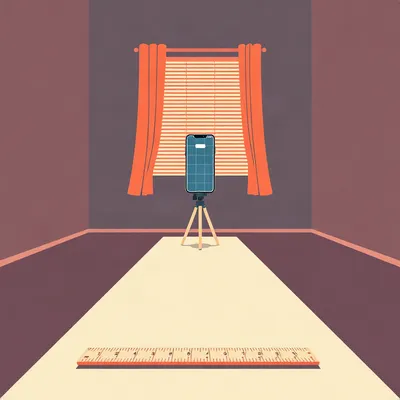
#5278: Photogrammetry vs Gaussian Splat: Scanning a Room Without LiDAR
No LiDAR? No problem. How capture modes, masking, and vertical parallax shape a phone-based room scan.
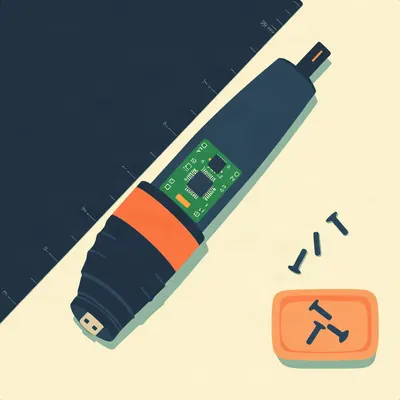
#5270: Teardowns as Documentation: Inside the Hardware Repair Playbook
A dead Dremel sparks a deep dive into teardowns as a documentation discipline — and why board-level knowledge matters more than ever.
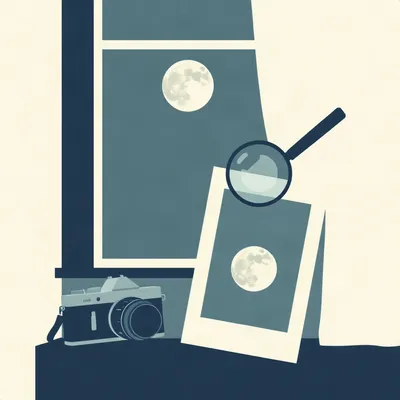
#5251: Recovering the Moon That's Already in the Pixels
Image restoration clarifies photos without inventing detail — until the fidelity dial shows up. Here's what's in the toolbox.
#5250: Building a Shortwave Monitoring Stack on Linux
What it actually takes to scan, capture, and crowdsource HF radio from a Linux box — and where automation hits a wall.
#5231: Uranium: From Yellow Glass to Little Boy
Connecticut well water, Roman glass, and the isotope that changed the world — the strange story of element 92.
#5224: When Hands Learned to Cut: Engraving and the First Metals
Half-million-year-old shell grooves, 9,000-year-old copper beads, and the feedback loop that turned cutting lines into an entire civilization.
#5219: Speechreading: What Lips Can and Can't Tell Us
Lips carry only 30–40% of speech sounds. What speechreading actually is, how the brain fuses sight and sound, and why forensic lip reading fails.
#5214: Meningitis: Why It Kills So Fast
Meningitis is an anatomical description, not a prognosis. Same word, wildly different odds — from a bad week to five days from flu symptoms to a fu...
#5212: What Happens in Your Brain During a Migraine Aura?
A shimmering wave rolls across your visual cortex at 3mm per minute—and you can watch it happen. Here's the neuroscience behind migraine aura.
#5211: Brass vs Stainless: Marking HDPE Boxes That Last
Engraving HDPE storage boxes means fighting heat, not cutting. Here's how stencil material, carbide bits, and groove depth all connect.
#5210: How the Placebo Trial Became the Gold Standard
Control groups, placebos, blinding, randomization — four inventions across 250 years, assembled into medicine's most trusted method.
#5209: Sensitivity, Specificity & the Numbers Doctors Use
A field guide to the numbers in a medical paper — what sensitivity, effect size, and risk ratio actually answer, and when they mislead.
#5205: Measuring Rooms From One Photo
One photo, one reference ruler, and a geometry trick from 1999 that measures objects without any AI at all.
#5203: Why LTO Tape Still Backs Up the Cloud
Magnetic tape isn't dead — it's holding up the cloud. How LTO-10 broke a 25-year compatibility promise, and why AI needs tape more than ever.

#5194: Designing Buildings to Age Beautifully
Copper turns green, lime plaster hardens, concrete just stains. What if architects designed for year 100 instead of day one?