
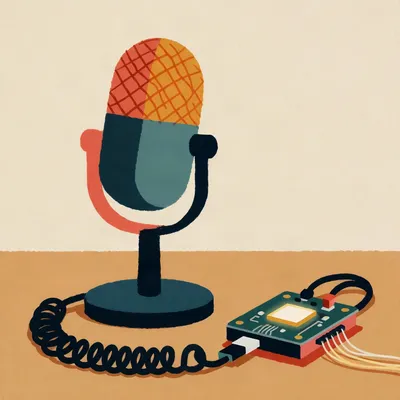
#6493: Why Speech Models Forget Other Voices When Tuned on Yours
Adapting Whisper to one person's voice can trigger catastrophic forgetting, stripping away timestamps, segmentation, and accuracy on other speakers.

#6492: What Audio Models Learn Before Fine-Tuning
With just ten minutes of labeled audio on top of unlabeled pretraining, wav2vec 2.0 achieves a 4.8 word error rate on clean speech.

#6491: Agent Skills Break When Secrets Leave Your Laptop
Cloud environments deliberately strip uncommitted dot-env files during session uploads, leaving agent skills without working credentials.

#6484: Why Narrow Speech Tasks Still Need Large Models
NVIDIA experiments show speech models trained from scratch on target domains had nearly double the error rate of fine-tuned pretrained models.

#6479: Why Research Agent Agreement Is Not Independence
When two distinct language models fail a task, they give the exact same wrong answer sixty percent of the time.
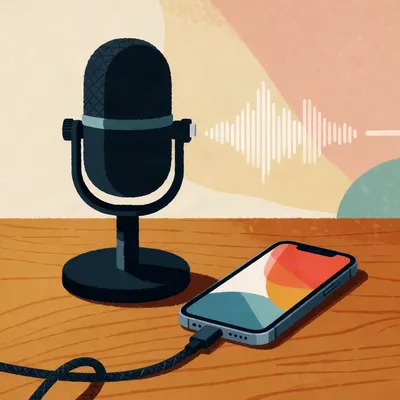
#6475: USB Audio Limits on Android for Voice Models
Android caps native USB audio capture at 48 kilohertz, leaving higher rates entirely to apps packing their own custom drivers.
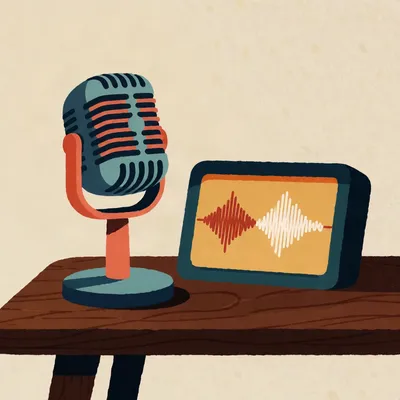
#6473: Why Whispering Breaks Speech Recognition Physics
Whispering completely removes fundamental frequency and pitch, forcing speech recognition models to rely on subtle duration cues.

#6470: Why Computer Science Publishes in Conferences
When NeurIPS tested its review process with duplicate submissions, half the papers accepted by one committee were rejected by another.
#6469: Why Switching Off One Attention Head Changes Everything
Masking just three decoder heads in Whisper drops hallucination on silent audio clips from 99.97% down to 24.1%.

#6468: Why Tiny Neural Gates Replaced Voice Activity Gates
Legacy WebRTC voice detection misses sixty-four percent of speech frames, while modern neural models compress full memory into a single megabyte.
#6467: Voice Activity Detectors Need Adaptive Thresholds
When speech recognizers receive pure noise from a loose VAD gate, they confabulate plausible sentences rather than returning silence.

#6466: Conferences Rule Machine Learning, Not Journals
At NeurIPS 2025, over 21,000 papers required nearly 22,000 reviewers, yet fewer than half a percent earned oral presentations.

#6465: Why Modern AI Models Cut Most Attention Layers
Frontier models like Kimi K3 now replace three out of four attention layers with delta-rule recurrence to curb massive KV caches.
#6464: Teaching Speech Recognizers to Stay Quiet
Masking just three self-attention heads in Whisper large-v3 cuts hallucinations on non-speech audio by over eighty percent.
#6463: Why Training Speech Recognition From Scratch Fails
Thirty-two hours of speech provides just three hundred thousand words of text, making from-scratch speech models struggle with basic spelling.

#6462: When Adding a Reranker Hurts Search
NVIDIA benchmarked a cross-encoder upgrade that scored three points below its baseline, while other models surged fifteen.

#6458: Why Synthetic Fine-Tuning Data Needs Tooling
Rewriting high-quality data synthetically gives a 3.4-point gain, but running the same process on low-quality data yields just 0.5.

#6457: Where to Learn LLM Training Without Generic Courses
A GPT-2 scale model that took OpenAI 168 hours to train in 2019 can now be replicated on a leaderboard in under two hours.

#6456: The Unsung Builders of Modern Speech AI
OpenAI's Whisper lists famous co-founders among its six authors, yet shipped with no launch event, demo day, or canonical interview.

#6455: Turning Open-Source Triage into Subscription Credit
No software vendor currently applies peer-reviewed contribution credits directly against a customer's subscription renewal invoice.