
Reliability Engineering
199 episodes · Page 4 of 9
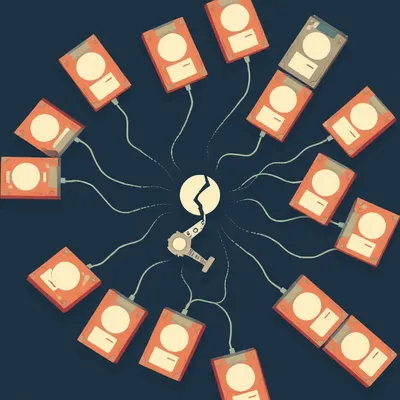
#3431: How YouTube Stores 500 Hours of Video Every Minute
YouTube's videos are shredded, replicated across global servers, and stored at a cost approaching zero. Here's how.

#3346: How $500M Trades Actually Work (Not Venmo)
No, fund managers don't have a "send $50M" button. Here's the actual plumbing behind $145 trillion in assets.

#3217: When a Truck Beats the Internet: Shipping Data at Scale
Why FedEx sometimes beats fiber for moving massive datasets across the country.

#3203: How Liquid Chrome Markers Create a Mirror Finish
The chemistry behind mirror-finish paint pens and how to use them for professional results.
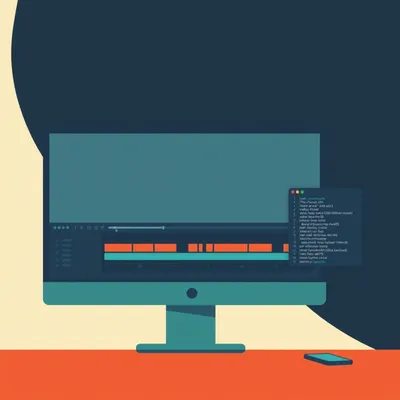
#2938: How to Prevent Linux Desktop Crashes Under Heavy Load
Stop losing work to memory exhaustion, CPU lockups, and GPU hangs on Linux workstations.

#2814: HTTP Redirects: 301, 308, and When to Use Each
301 isn't always the right choice. Learn the real differences between redirect codes and where to put them.

#2786: The Hidden Engineering of AI Data Centers
How data centers retrofit for GPUs, from liquid cooling to immersion tanks. The physics behind 100kW racks.
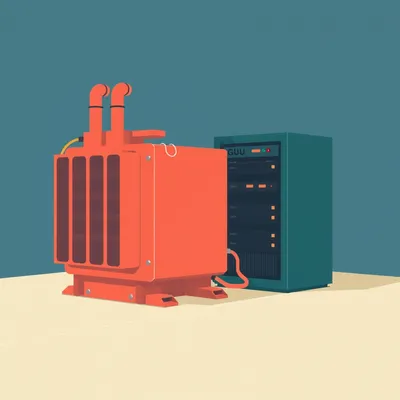
#2782: Are AI Data Centers Really New or Just Patched Together?
The real bottleneck isn't GPUs — it's power transformers. A look at the physics and economics of AI infrastructure.
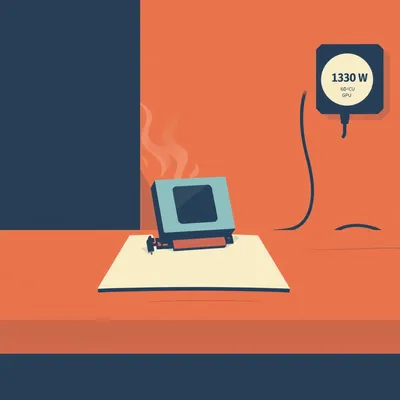
#2777: GPU Idle Waste and Serverless Green Computing
Why your dedicated GPU burns 130 watts doing nothing, and how serverless platforms cut energy waste by more than half.
#2775: How to Stop Wasting 75% of Your Build Pipeline
Stop rebuilding your entire site for every single content change. Here's how debouncing and caching save time and money.
#2773: Beyond Static Fallbacks: Agentic Error Handling in AI Pipelines
From try-except blocks to planning agents that route around failures intelligently.

#2763: Do You Really Need VLANs at Home?
Is VLAN segmentation worth it for home networks, or is it just sysadmin cosplay?

#2687: When Pre-Flight Checks Help (or Hurt) Agentic AI Plugins
How to decide when a pre-flight check is worth the latency cost — and how to write good ones.

#2646: When Your Door Won't Open: The Failure-Mode Philosophy of Smart Locks
Z-Wave vs Zigbee vs Wi-Fi for smart locks. What's reliable enough to trust with your front door?

#2620: How Atomic Clocks Actually Keep Time
Why the second is defined by a cesium atom, not the Earth's rotation — and why leap seconds are causing chaos.
#2596: The Hidden World of Industrial Computing
Two parallel tech worlds: industrial systems integrators and IT managed service providers. How they differ, and why one pays $300/hour.

#2573: What's Actually Inside a Hotel Smart Room System
Hotels don't use Alexa or smart bulbs. Here's the industrial-grade tech running behind those sleek wall panels.

#2550: Idempotent Pipelines: Checkpoints, Manifests & Safe Re-Runs
How to design scripts and pipelines so re-running them is safe, even after a crash mid-execution.

#2514: WebSockets vs SSE: Choosing the Right Real-Time Connection
WebSockets vs Server-Sent Events: when to use full-duplex vs one-way streaming, and why most developers pick wrong.

#2497: Tracing One Python Print Through 6 Abstraction Layers
What actually happens when you print "Hello" in Python? Six layers, 562 system calls, and a hardware-enforced kernel boundary.

#2448: Who Gets the Bandwidth at Sea
How packet-level bonding and QoS keep thousands of passengers streaming while navigation systems stay safe.

#2370: Morse Code and Telegrams: The Tech That Won’t Die
Morse code and telegrams, relics of the past? Think again. Discover where these technologies still thrive and why they refuse to fade away.
#2361: The Cognitive Load of Logs
How Claude Code transforms Linux system administration by automating log analysis and proactive maintenance.
#2358: ESP32 vs Raspberry Pi: The Microcontroller Mindshift
Why your smart thermostat doesn’t run Linux—and why that’s a feature. The surprising differences between microcontrollers and single-board computers.