
Linux
166 episodes · Page 4 of 7
#4147: When Your Server Won't Even Boot a Live USB
Diagnose a dead server when it won't boot anything — not even SystemRescue from USB.
#3904: Manual NAT vs Double NAT: The Measurable Reality
Tracing OPNsense packet paths and quantifying double NAT's real latency cost.
#3883: Inside OPNsense Tunables: Kernel Variables Explained
What OPNsense tunables actually do, how they work under the hood, and when to touch them.
#3817: Hide Your Desktop in a Closet: The Gear You Need
USB4, Thunderbolt 5, and active cables now let you stash your PC in another room. Here's how.
#3799: Why Printers Demand PDFs (And PNGs Fail)
PDFs are shipping containers for print. PNGs are loose cargo. Here's what actually matters for large-format output.
#3797: How Self-Reverting Watchdogs Save Broken SSH Sessions
A dead man's switch for server configs that automatically rolls back risky changes when connectivity drops.
#3790: Server Distro Showdown: BTRFS, ZFS & Pragmatic Picks
Why filesystem support often picks your distro — and what "support" actually means in practice.
#3789: What Virtualization Actually Costs on 2026 Hardware
Real benchmarks show 2-6% overhead for single-VM setups. Here's what's actually happening at the CPU level.
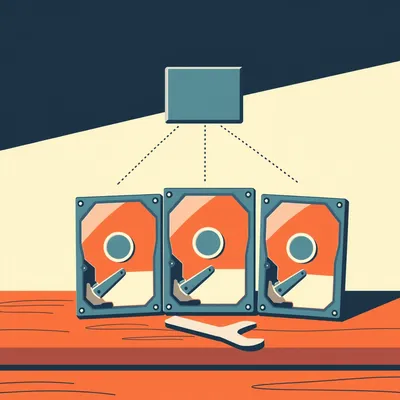
#3788: RAID Reshaping Showdown: BTRFS vs ZFS vs XFS
Can you change RAID levels without nuking your data? We compare BTRFS, ZFS, and XFS for home server upgrades.
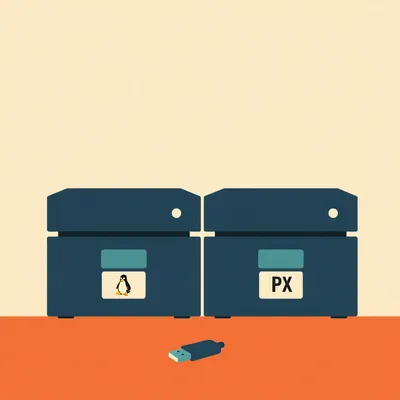
#3787: Proxmox vs Stock Linux for Home Servers
When rebuilding a home server, should you install Proxmox or just use stock Linux with KVM? We break down the tradeoffs.
#3786: When Your DNS Dies: Home Network Failure Cascade
One dead server, ZFS corruption, and a DNS collapse that takes down everything—including your ability to fix it.
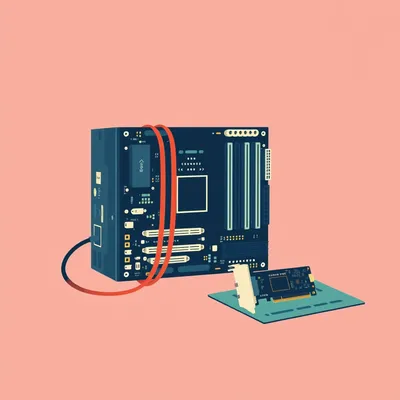
#3776: ZFS Mirroring: Why Your RAID Card Is the Weak Link
A hardware RAID card makes ZFS less safe. Here's why an HBA and a simple mirror are the real upgrade.
#3748: Your Backup Is Probably Corrupted Right Now
How to catch ZFS pool degradation before your backup faithfully preserves garbage for weeks.
#3747: How to Pick an SSD That Won't Die in Your Home Server
ZFS degradation warnings are scary. Here's what to replace that drive with — and what spec numbers actually matter.

#3564: Fixing Your Phone's Variable Frame Rate Video
Why your phone's video drifts out of sync, how to fix it, and whether RAW video is actually worth it.
#3471: What OS Actually Runs Inside a Siemens PLC?
Siemens, Rockwell, Beckhoff — the OS choices inside modern PLCs are more varied than you'd expect.
#3024: How to Incrementally Back Up Google Photos to Your NAS
Build a quarterly backup pipeline for Google Photos using the Library API, hash deduplication, and your NAS.

#2943: Mapping a Gamepad to Control Android Dictation
How to map an 8BitDo Micro gamepad to control dictation apps on Android without root access.
#2941: Distrobox: Linux Containers That Feel Like Native Apps
How Distrobox merges container isolation with native desktop integration for immutable distros, GPU work, and messy builds.
#2940: Distrobox: Linux Containers for Humans, Not Servers
Run any distro's apps on any Linux host—no VM, no dual-boot, no dependency hell.
#2938: How to Prevent Linux Desktop Crashes Under Heavy Load
Stop losing work to memory exhaustion, CPU lockups, and GPU hangs on Linux workstations.
#2892: Where Does Your Biometric Data Actually Live?
Linux, Windows, and the surprising tradeoffs of storing your face and fingerprints.
#2839: Full Disk Encryption: What It Actually Does and Why It Matters
Full disk encryption demystified — how LUKS works, performance reality, and when you actually need it.

#2821: The Trench Coat Is on Fire: Making Smart Home Parts Interrupt Each Other
Three engineering problems in a trench coat. Make Zigbee sirens, Snapcast speakers, and push-to-talk audio actually work together.