
AI Evaluation
517 episodes · Page 10 of 22

#3098: The Pilot with the Flashlight: Inside Aviation's Pre-Flight Walkaround
Why pilots still physically inspect planes before every flight — and what a 1979 crash taught us about trusting machines.

#3072: What Archival Actually Means in Your Pen
The AP seal isn't a durability guarantee. Here's what makes a marker truly archival.

#2950: Barley Beyond Soup: A Grain Guide
Pearl, pot, hulled, hulless — why barley labels matter for nutrition, cooking, and flavor.

#2936: Why AI Still Can't Really Teach You to Code
Code generators ship code. Real tutors build understanding. Why the gap is bigger than you think.

#2924: When Adding One Agent Breaks Everything
The math behind why your 100-agent pipeline fails 40% of the time — and what to do about it.
#2914: Can AI Read the Room? TTS Prosody Explained
Can TTS models truly infer emotion from text, or just mimic patterns? We break down the science of prosody.

#2909: The Reassurance Mirage: When Moderation Fails
How the EU Digital Services Act exposes a 30-to-1 gap in appeal success rates between platforms.

#2848: Can 100 Volunteers Let AI Govern Them for a Month?
An AI council of multiple models, a hundred volunteers, and a month of real municipal decisions. Here’s how you’d run the experiment.

#2847: How AI Could Transform Comparative Policy Analysis
Can AI agents do the work of a distributed think tank for cross-country policy learning?

#2800: The Two Meanings of Industrial Design
Industrial design is a profession. The "industrial look" is something else entirely. Here's where they split.
#2780: Building Self-Healing Agent Pipelines
How to build an agent that monitors and fixes other agents in production — without the hype.

#2754: Why Your Dictation Setup Might Be Wrong
Modern ASR is shockingly robust. The biggest predictor of accuracy? How well your audio matches its training data.

#2739: When Hoofbeats Are Zebras: How Doctors Learn to Think
How family doctors develop clinical judgment—pattern recognition, Bayesian reasoning, and the cognitive traps that lead to diagnostic errors.

#2736: Why AI Flagged Your Em Dash
Punctuation isn't a fixed system handed down by grammarians. It's a two-thousand-year story of contraction, invention, and now AI suspicion.

#2705: Your Brain Isn't a Hard Drive — What Actually Fits
Long-term memory isn't storage — it's a generative model. Here's where the brain/computer analogy actually holds up.

#2693: When AI Ignores Your Style Guide
Why your AI ignores formatting instructions and how to fix it with pipeline architecture, not model swaps.

#2688: Intelligent Frame Extraction for Multimodal AI
Use multimodal AI and smart frame extraction to turn a walk-through video into an actionable decluttering plan.
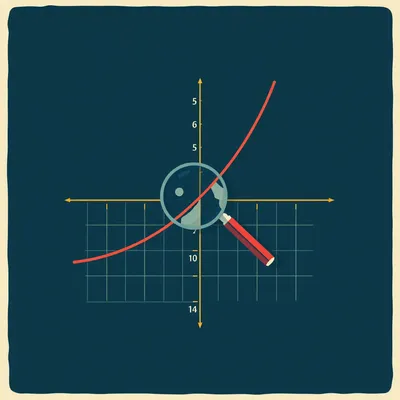
#2672: When a Startup Claims to Break the Quadratic Wall
A startup claims linear attention scaling at 12M tokens, beating GPT-5.5 on retrieval benchmarks.

#2665: Partner Certs vs Personal Certs: What Actually Matters
Solo operators face structural barriers in vendor partner programs. Here's how personal and partner certifications actually differ.

#2664: Can You Trust an LLM's Raw Knowledge?
Why pre-trained knowledge isn't reliable for facts — and what actually makes models useful.

#2651: AI Training Itself: Student, Teacher, and Grader
Can models generate their own training data and judge their own outputs? The promise and pitfalls of fully AI-led pipelines.
#2650: How to Catch an LLM's Bad Writing Habits
A practical guide to analyzing podcast transcripts for repetitive language and dialogue patterns — from Python word counts to embedding clustering.

#2648: The Art of the Brief: Writing What Busy People Actually Need
Why a crisp 600-word brief is harder than a 10-page report—and how AI changes the game.
#2643: How Stenographers Type 300 Words Per Minute
Court reporters don’t type letters—they chord syllables at 300 words per minute. Here’s how it works and why AI can’t replace them yet.