Science and Nature
Natural and formal sciences: physics, chemistry, biology, earth science, and mathematics.
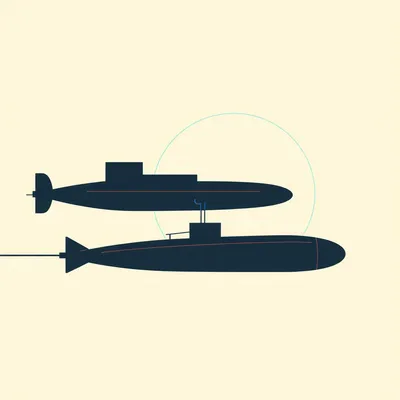
#763: The Known Unknown: Sea Denial and the Psychology of Submarine Warfare
Dive into the silent world of undersea warfare to discover how submarines navigate without GPS and stay invisible to modern tracking.

#760: How Drip Irrigation and Desalination Reshaped a Desert Nation
Discover how drip irrigation and desalination turned a desert nation into a global leader in water security and sustainable agriculture.
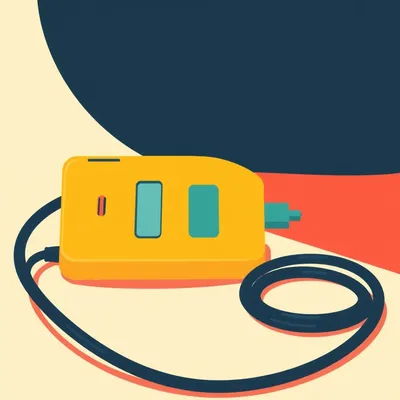
#759: Why Your Labels Fail: The Physics of Adhesion
Tired of peeling labels? Discover why consumer tapes fail and how industrial-grade solutions can bulletproof your home inventory system.
#751: The Frozen Fortress: Why the World Wants Greenland
Greenland is no longer a frozen afterthought. Discover why the Arctic is the new strategic center of global trade and resource security.

#740: The War Against Entropy at 30,000 Feet
How long can a plane truly stay airborne? Explore the mechanical, human, and logistical limits of modern aerial power projection.

#739: Worst-Case Iran: What a Nuclear Strike Actually Looks Like
What happens if the unthinkable occurs? We break down the science of a nuclear strike and the practical steps for civilian survival.
#735: When Time Stretched: The Magic of Proportional Hours
Before atomic clocks, time was a living thing. Discover how ancient civilizations used "flexible" hours to coordinate their lives.
#734: The Illusion of Now: UTC, GMT, and the Chaos of Time
Why is keeping time so hard? Explore the difference between UTC and GMT, the end of leap seconds, and the messy global politics of daylight savings.
#731: The EQ Lasagna Problem: A Signal Processing Hierarchy
Stop layering filters on top of filters. Learn the technically correct way to sync your home audio without creating a muddy "EQ lasagna."
#727: The Math of Immersion: How 360-Degree Sound Actually Works
Learn how object-based audio and clever math trick your brain into hearing 360-degree sound from even the smallest mobile devices.
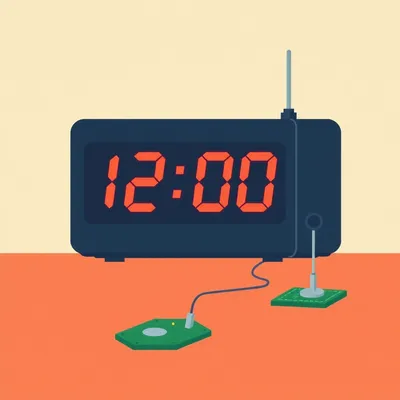
#721: The Two-Clock Obsession: Synchronizing Time at Home
Discover the hidden infrastructure of precise timekeeping, from atomic radio signals to building your own DIY Stratum 1 time server.
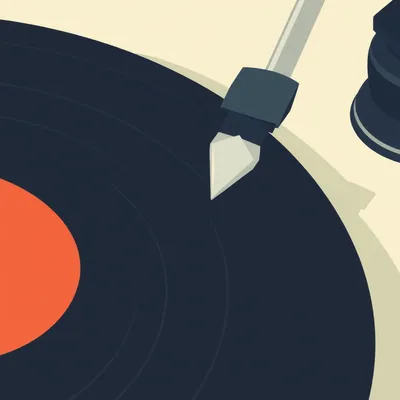
#720: Why Your Ears Prefer Imperfect Plastic to Perfect Pixels
Why do we still buy plastic discs in an age of neural-link streaming? Explore the science of analog warmth and the "ritual" of the record.

#716: Why Bombing a Nuclear Site Isn't a Second Chernobyl
Can you strike a nuclear site without a global catastrophe? Discover the science of precision strikes and the tech used to monitor "dark" sites.

#714: The Billion-Year Backup: Escaping the Digital Dark Age
Will our digital legacy survive for billions of years? Explore the tech fighting the "Digital Dark Age," from lunar libraries to quartz glass.

#705: When a Bullet Hits a Bullet at Mach 10
Explore the physics of "hit-to-kill" technology and how lasers are reshaping the future of multi-layered missile defense systems.

#685: The Pulse of the Deep: Life in the Middle of the Ocean
Is the open sea a glassy mirror or a chaotic storm? Herman and Corn dive into the science of swells, fetch, and the ocean’s constant pulse.

#676: The Slow Travel Movement Takes to the Skies
Could the future of green travel be a blast from the past? Explore why airships are trading speed for sustainability and luxury.

#674: Data Forever: From Blockchains to Lunar Vaults
Worried about the Digital Dark Age? Herman and Corn explore how to keep your data safe on the Moon, under mountains, and in the blockweave.

#653: The Chemical Cocktail: Why Desert Dust Makes Smog Deadlier
Discover the science behind the "chemical cocktail"—a toxic mix of desert dust and urban emissions turning city skies into a gritty, yellow haze.
#650: When AI Thinks Longer, Not Bigger
Explore how Gemini 3.0’s Deep Think mode shifts AI from "fast" reflexes to "deliberate" reasoning to solve complex quantum physics problems.