
Computing
Non-AI computing: networks, servers, hardware, software engineering, and digital security and privacy.

#2207: Specs First, Code Second: Inside Agentic AI's New Era
As AI coding agents evolve from autocomplete to autonomous cloud workers, the bottleneck has shifted—now it's about how clearly you specify what ne...

#2205: When AI Coding Agents Forget: Five Approaches to Context Rot
As coding agents handle longer sessions, they accumulate noise and lose crucial information. Five competing frameworks are solving this differently...

#2204: Memory Without RAG: The Real Architecture
mem0, Letta, Zep, and LangMem solve agent memory differently than RAG. Here's what's actually happening under the hood.
#2192: How We Built a Podcast Pipeline
Hilbert reveals the complete technical architecture behind 2,000+ episodes—from voice memos to GPU-powered TTS, with Claude models, LangGraph workf...
#2185: Taking AI Agents From Demo to Production
Sixty-two percent of companies are experimenting with AI agents, but only 23% are scaling them—and 40% of projects will be canceled by 2027. The ga...
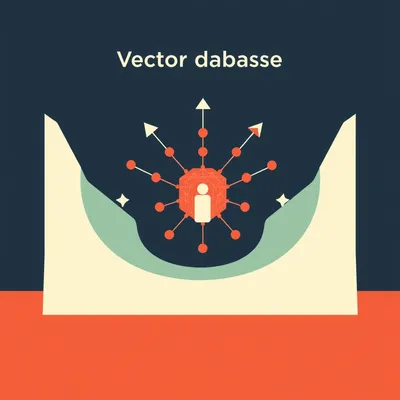
#2181: When RAG Becomes an Agent
RAG in chatbots is simple retrieval. RAG in agents is a multi-step decision loop. Here's what actually changes.

#2180: The Sandboxing Tradeoff in Agent Design
AI agents need broad permissions to be useful—but every permission expands the attack surface. We map the real threat landscape and the isolation t...
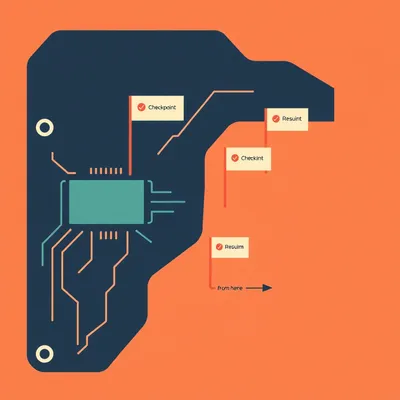
#2179: Building Cost-Resilient AI Agents
Failed API calls in agent loops aren't just technical problems—they're direct budget drains. Here's how checkpointing, retry strategies, and cachin...
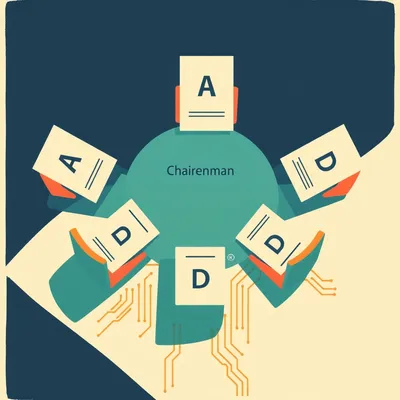
#2172: Council of Models: How Karpathy Built AI Peer Review
Andrej Karpathy's llm-council uses anonymized peer review to make language models evaluate each other fairly—but can it really suppress model bias?

#2168: What Serious Agentic AI Developers Actually Need to Know
Python, TypeScript, LangGraph, and the frameworks reshaping how agents work. A technical map of the skills and concepts that separate prototypes fr...
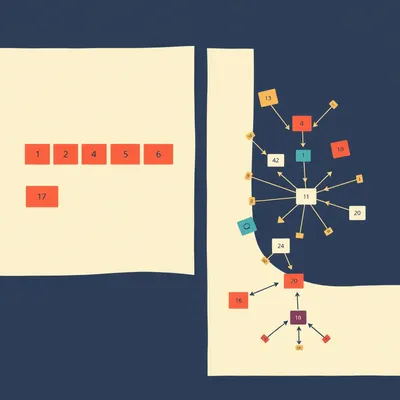
#2167: Sync vs. Async: Architecting Agents for Scale
Why most enterprise AI agents fail in production has less to do with models and more to do with whether they're built synchronously or asynchronously.
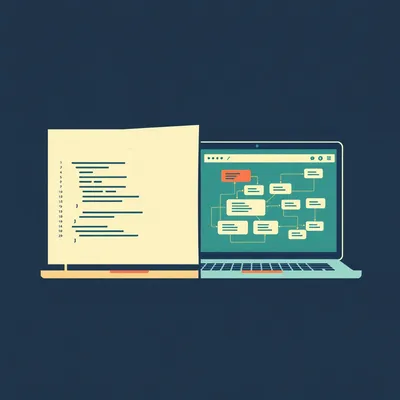
#2166: Code vs. Canvas: How Developers Pick Their Tools
LangGraph or Flowise? The honest answer isn't obvious. Developers gain speed and integrations with visual builders—but lose version control, testin...

#2163: Designing Autonomy Boundaries for AI Agents
Production data reveals a surprising truth: fully autonomous AI agents waste 98% of their context window on tool descriptions. Here's why the indus...

#2142: The Nervous System of Multi-Agent Systems
We break down the plumbing that lets a parent agent know exactly when a subagent finishes, from message passing to lifecycle events.
#2141: Choosing Your Durable Execution Platform
Why building AI agents means managing infrastructure. We explore durable execution backends like Temporal and AWS Step Functions.

#2126: Why Auto Wi-Fi Settings Fail You
Stop screaming at your phone: how UniFi transmit power settings actually cause dead zones.

#2125: Why Agentic Chunking Beats One-Shot Generation
A single prompt can't write a 30-minute script. Here’s the agentic chunking method that fixes coherence.
#2115: Why AI Answers Differ Even When You Ask Twice
You ask an AI the same question twice and get two different answers. It’s not a bug—it’s physics.
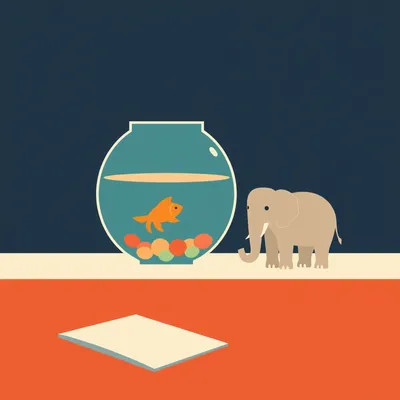
#2113: Goldfish vs Elephant: The Stateful Agent Dilemma
Stateless agents are cheap and fast, but stateful ones remember your window seat. Which architecture wins?

#2111: From Bricklayer to Foreman: AI's Dev Role Shift
AI frameworks are exploding while languages stay stable. Learn why core dev knowledge is shifting from syntax to systems thinking.