
Computing
Non-AI computing: networks, servers, hardware, software engineering, and digital security and privacy.
#5425: Preview Branches Without the Branch Dance
Daniel dreads the branch-switching dance. Turns out Vercel's promote-to-production makes most of those steps not exist.

#5424: ThinkPad E15: Swollen Battery or Bad Keyboard?
A dead arrow key and a jammed trackpad on a two-year-old ThinkPad E15 might be one problem, not three.
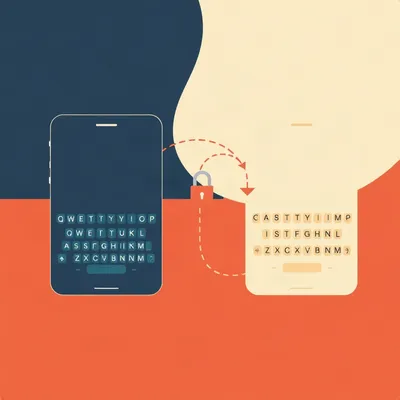
#5422: Switching Android Keyboards Without the Tap Dance
One listener wants a one-tap jump between his Parakeet voice keyboard and his typing keyboard. Android says no — unless you know the trick.
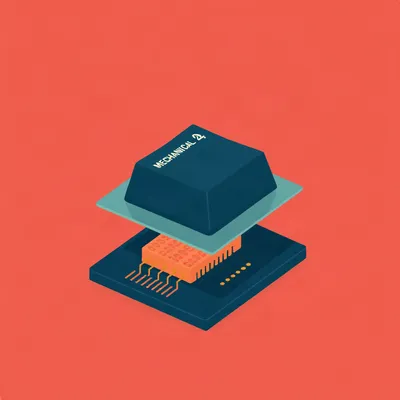
#5420: How Keyboard Middleware Actually Works
A keyboard isn't one thing — it's a stack. Here's how input methods, composition buffers, and hooks really work on Linux, Android, and Windows.

#5419: The Attention Budget in Your Pocket
Why phone dictation runs out of room, and how bounded attention windows buy you punctuation without blowing your memory budget.

#5417: Can You Version-Control Your Android Apps?
Android Developer Verification enforcement just started. Can you define your installed app list as code — and what breaks if you try?
#5416: Xet, Buckets, and Auto-Pulling Model Weights
Hugging Face swapped its storage backend to Xet with barely a ripple. So why can't a bucket auto-pull new upstream weights?

#5415: Inside F-Droid: Repos, Front Ends, and Sideloading Safely
How F-Droid's repository model works, why it has five front ends, and what actually keeps sideloaded APKs safe.

#5411: Fine-Tuning at 4-Bit vs 16-Bit: What It Really Costs
QLoRA cuts fine-tuning VRAM 15x and cost up to 85% — but you pay in training time, quality, and safety alignment.

#5408: When Small NLP Models Beat the LLM
Feature extraction, fill-mask, token classification — the classic NLP tasks still have a job. Here's when a small model beats a frontier API.
#5405: Omarchy: The Linux Distro Built for AI Agents
Omarchy treats AI agents as users of the OS itself — every setting a command, every config a text file. Here's how it works and where it breaks.

#5397: Chaining Small Models for Voice Cleanup
Six cleanup stages at 97% accuracy each compound to 83% end-to-end. So how many small models can you actually chain?

#5394: Why Waze Sends You Into a Jerusalem Alley
A listener's complaint about Waze turns into a tour of how routing apps actually work — graphs, shortcuts, and a map that's always slightly wrong.
#5390: Chaining Small Models for Dictation Cleanup
Daniel's Android dictation fork won't render "three point five" as a decimal. How many models does cleanup actually need?

#5389: Hugging Face vs Kaggle: Where Models Actually Live
Hugging Face and Kaggle aren't rivals — one is infrastructure, one is a practice field. Here's how the two platforms actually differ.

#5388: Android's Split Keyboard and Voice Input Problem
Android separates keyboards from speech engines by design. Most apps weld them back together.

#5387: Who Decides What Your Keyboard Knows?
Your keyboard's word list was probably frozen in 2014. Here's who maintains the open-source dictionaries — and why Gboard's stays fresh.

#5386: Morse Code Between Two Phones: Does It Actually Work?
Two phones, no data, one room. Morse over sound and flashlight — what the research says about echoes, timing, and whether anyone will hear you.

#5384: Android ASR Runtimes: LiteRT, ExecuTorch, and Why Your Phone Has No VRAM
Why does your phone have no VRAM number? A tour of Android's runtime layer and what it takes to run ASR locally.

#5383: Android's Open Core, Closed Governance
Android's code is open, but its roadmap isn't. What happens when Google changes the core and developers just have to cope?