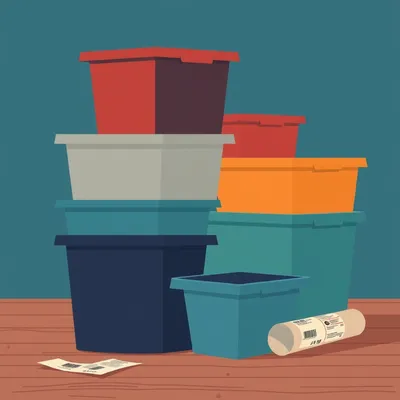
Daniel sent us this one, and it's a practical logistics question wrapped in a home renovation project. He's moving into a new rental, his IKEA storage boxes have finally given up after years of service, and he discovered the Eurobox system — those standardized 60 by 40 centimeter industrial bins that warehouses use. The genius is the interlocking footprint and the durability. The problem is they look like, well, warehouse equipment. His wife, the architect, wants to know if there's a way to make these look good in a living room. Turns out Chinese manufacturers on Alibaba will do custom colors, even transparent acrylic, for shockingly low prices. But then you hit the real question: how do you actually get a pallet or two of custom Euroboxes from Shenzhen to Tel Aviv without paying for a full shipping container?

That question is where this gets genuinely interesting, because it's not just about boxes. It's about the invisible infrastructure that makes global trade work for individual buyers. The gap between "I can buy this online" and "it arrives at my door" is this whole hidden world of consolidation warehouses, customs brokers, and INCO terms. Most people never need to know any of it. Until they do.
Let's rewind to the moment those IKEA boxes finally gave up. Daniel described his home office as having evolved into something like a home warehouse over the years — half the boxes falling apart, different generations of products that had cycled in and out of the catalog. He said the system served well but it had had its time. And that's when he asked the question most of us never think to ask: what do actual warehouses use?
Which is such a good question. We spend years buying storage solutions designed for consumers — flimsy chipboard, cardboard-backed drawers, plastic bins that crack at the corners — and the entire time there's this parallel universe of industrial storage that's stronger, cheaper per year of use, and completely standardized. The Eurobox standard, specifically the VDA 4500, is a dimensional language. The footprint is 600 by 400 millimeters. Heights come in standardized increments — 120 millimeters, 170, 320, 420. They're made of polypropylene or HDPE. They were designed for automotive supply chains, not living rooms.
That's the aesthetic tension Daniel's wife immediately spotted. She's an architect — she sees the genius of the system. Standardized modules that fit together perfectly. That's practically the definition of good design. But the colors are logistics grey and warehouse blue. They scream "forklift me.
And the solution seems obvious once you see it: go to Alibaba, find a manufacturer who does injection molding for HDPE Euroboxes, and ask for custom colors. Warm grey, matte white, whatever matches the living room. Maybe transparent acrylic for certain applications. The per-unit cost is astonishingly low — we're talking eight to twelve dollars per box delivered, compared to fifteen to twenty-five dollars locally in Israel for standard grey ones. On two hundred boxes, that's a savings of fourteen hundred to twenty-six hundred dollars.
Which more than covers the logistics hassle. Because the Alibaba platform is fundamentally designed around full container load quotes. You search for a product, you see a per-unit price, and the shipping estimate defaults to a full twenty-foot or forty-foot container. That makes almost no sense if you're shipping a pallet or two.
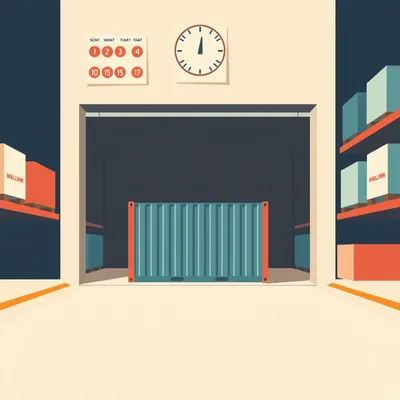
And this is the misconception that trips up most first-time importers. The platform's algorithm shows FCL quotes because that's what the suppliers default to. You have to specifically request LCL — less than container load — or ask the supplier for a consolidator recommendation. LCL consolidation is the mechanism that makes small-scale importing possible. You're essentially buying space in a shared container. Your two pallets of Euroboxes get loaded alongside someone else's shipment of ceramic tiles, someone else's bicycle parts, and a dozen other small consignments. The consolidator at the port of origin — Shenzhen, Shanghai, Ningbo — loads everything into one container, and at the destination port, a partner agent breaks it all apart again.
That's where Daniel's core question sits. When you're setting this up, do you find the consolidator on the Israeli side or the Chinese side? Two different paths, two different sets of trade-offs.
Let's map both. Path A: the Israeli-side freight forwarder. You find a forwarder in Israel who specializes in China-Israel routes. There are several — companies that have been doing this for years, with Hebrew-speaking staff who know Israeli customs inside and out. They have a partner agent in Shenzhen or Shanghai. You buy the boxes from the Alibaba factory under EXW terms — Ex Works — meaning the factory's responsibility ends at their loading dock. The factory trucks the pallets to the consolidator's warehouse in Shenzhen. From there, the consolidator loads them into a shared container. The container sails to Ashdod or Haifa. The Israeli forwarder handles customs clearance, arranges the last-mile delivery to your door. The INCO term for the ocean leg is typically FOB — Free On Board — meaning you or your forwarder arrange and pay for the shipping from the port onward.
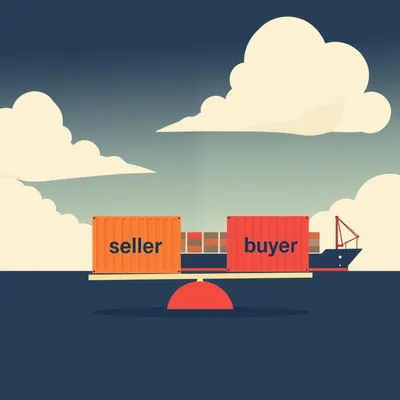
Path B is the Chinese-side consolidator. You find a company on Alibaba or through a platform like Freightos that offers DDP — Delivered Duty Paid. This is the "one price, one payment, boxes arrive at your door" model. The Chinese consolidator handles everything: pickup from the factory, consolidation in Shenzhen, ocean freight, Israeli customs clearance, VAT payment, and final delivery. You pay one number and theoretically never touch a customs form.
So walk me through where Path B breaks down.
The hidden complexity is Israeli customs. Israel has unusually strict import regulations on plastics. The Standards Institute of Israel — the SI — requires specific marking and compliance documentation for plastic products. There are standards for food contact, for durability, for material composition. If you're importing plastic storage containers, the HS code is 3923.10, and customs will want to verify that the material matches the declaration. A Chinese consolidator offering DDP might not know the nuances of Israeli SI marking requirements. An Israeli forwarder definitely does, because that's their entire business.
The DDP promise — "don't worry about customs, we handle everything" — is only as good as the consolidator's actual knowledge of Israeli regulations.
If they get it wrong, your goods get held at the port. Storage fees start accruing. You're calling a company in Shenzhen that's twelve hours ahead and may or may not have anyone who speaks Hebrew. The DDP provider might cover the storage fees eventually — good ones do — but the delay can stretch for weeks. I came across a case where a listener imported custom polypropylene bins from China for a retail store using a Chinese DDP consolidator. The boxes arrived but customs held them for three weeks because the plastic composition didn't match the declared HS code. The provider eventually covered the fees, but the delay cost the business real money.
That's the thing about DDP — the seller is legally responsible, but "responsible" and "capable" are different things. You have limited recourse with a company on the other side of the world.
That's why, for a single pallet or two of Euroboxes, my recommendation is Path A. Find an Israeli freight forwarder with a China partner. You get someone who speaks your language, knows Israeli customs, and is subject to Israeli law if something goes wrong. The cost difference is usually marginal — maybe a few hundred shekels more — and the peace of mind is worth it.
Let's put some real numbers on this. What does it actually cost to ship two pallets of Euroboxes from China to Israel right now?
A twenty-foot container from China to Israel is running about twenty-five hundred to thirty-five hundred dollars on spot rates as of mid-2026. That's for a full container — about 33 cubic meters of capacity. But two pallets of Euroboxes, say two hundred boxes at 60 by 40 by 32 centimeters each, works out to roughly 15 cubic meters. That's too big for a single pallet but way too small for a full container. You'd be paying for 18 cubic meters of empty space.
Which is just burning money.
Literally paying to ship air. LCL consolidation charges by the cubic meter — typically a hundred to two hundred dollars per CBM, plus documentation fees of fifty to a hundred dollars. For 15 CBM, you're looking at roughly two to three thousand dollars all-in: consolidation, ocean freight, customs brokerage, and last-mile delivery.
The freight cost is comparable to the product cost at that scale. Two hundred boxes at eight to twelve dollars each is, what, sixteen hundred to twenty-four hundred dollars for the product, and two to three thousand for the shipping.
Which sounds brutal until you compare it to buying locally. Two hundred Euroboxes at fifteen to twenty-five dollars each from an Israeli supplier is three to five thousand dollars. And those are standard grey or blue — no custom colors, no logo, no transparent acrylic. The total landed cost from China, even with the shipping, comes in lower than buying local. And you get exactly what you want.
Plus these things last twenty-plus years versus IKEA's five to seven. The "buy once, cry once" economics actually pencil out.
That's before we even get to the knock-on effect. Because once you decide how to ship, you hit a cascade of decisions that all connect back to each other.
The logistics are only half the story. Once you decide how to ship, you hit a cascade of second-order decisions. And the first one is the minimum order quantity trap.
This is the part nobody tells you about Alibaba. You find a factory that makes Euroboxes, you ask for a custom color — say, a warm grey to match the living room — and they say "sure, minimum order quantity five hundred units." You need two hundred. Now you're paying for five hundred boxes. The extra three hundred become inventory you need to store or sell. The per-unit price drops when you order more, but your total cash outlay goes up.
You're now in the Eurobox reselling business whether you want to be or not.
The MOQ is the real barrier, not the per-unit price. For HDPE injection molding, the color is just pigment added to the plastic pellets. The cost difference between grey and custom warm grey is negligible at scale — fractions of a cent per box. The factory's cost is in switching the production line, cleaning the molds, running a new batch. That's why they want a minimum order. Five hundred to a thousand units is typical for custom colors.
How do you solve that? Do you just eat the extra inventory?
A few approaches. One, you negotiate. Explain you're a small buyer, ask if they'll do three hundred with a small surcharge. Some factories will. Two, you find a factory that already produces in a color close to what you want and piggyback on their existing production run. Three, you split the order with someone else — find another person in Israel who wants custom Euroboxes and combine orders to hit the MOQ.
Or four, you accept the MOQ and sell the extras. There's probably a market for custom-colored Euroboxes in Israel given that the local options are all warehouse grey.
That's the entrepreneurial pivot right there. But then we hit the second knock-on effect: the transparent acrylic alternative. Daniel mentioned his wife was considering acrylic Euroboxes — they'd look sleek, you can see what's inside, they'd fit a modern living room aesthetic. And they exist. Chinese manufacturers will make Euroboxes in transparent acrylic.
What's the catch?
Acrylic is less durable than HDPE. It scratches easily. It can crack under heavy loads. For home storage — books, clothes, documents — it's probably fine. For stacking heavy items? Stick with HDPE. The industrial stuff exists for a reason.
The aesthetic choice has a durability trade-off baked in. You can have transparent and beautiful, or opaque and nearly indestructible.
That's exactly the kind of tension that makes this project interesting. It's not just a logistics problem. It's a design problem where every aesthetic decision has a material consequence. Daniel's wife is designing a built-in storage unit with 60 by 40 centimeter cubbies. The Euroboxes slide in like drawers. The interlocking grid pattern becomes visible — it's not something to hide, it's a design feature. The custom color makes it intentional rather than industrial.
That's the reframe, isn't it? You're not hiding warehouse boxes in your living room. You're using an industrial standard as a design language. The interlocking grid, the standardized proportions — those are features, not bugs, if you treat them as such.
That connects to something bigger. The line between industrial and domestic is blurring. More people work from home. More people need durable, modular storage. The IKEA model — disposable furniture designed for a five-to-seven-year lifecycle — starts to look wasteful when you're moving every few years and watching your boxes disintegrate. Custom Euroboxes might be the first wave of a broader trend toward bringing industrial-grade durability into the home.
Then we hit the third knock-on effect, and this one is sneaky: the logo customization.
Oh, this one is interesting. Adding a logo to the boxes is trivial for the factory. Pad printing or injection molding — it adds maybe a few cents per unit. Daniel mentioned you could even add your own logo. And that sounds great until you realize it changes the customs classification.
A blank plastic storage box falls under HS code 3923.10 — articles for the conveyance or packing of goods, of plastics. That's straightforward. But a box with a logo printed on it? Customs might classify it differently. It could be seen as a "promotional item" or a "branded consumer product," which might attract a different duty rate. I'm not saying it definitely will — customs classifications are famously inconsistent — but it introduces ambiguity. And ambiguity at the border is expensive.
The logo that costs a few cents to print could cost hundreds in customs headaches.
Or at least weeks of delay while someone argues about HS codes. The safe move is to order blank boxes. If you want branding, use a label or a sticker after they arrive.
Which is the kind of thing an Israeli freight forwarder would tell you upfront, and a Chinese DDP consolidator might not even think to mention.
And this is the deeper point: importing is a systems problem. Every decision — color, material, quantity, logo — has downstream effects on customs, cost, and timeline. The aesthetic choice is inseparable from the logistics choice. You can't design the perfect living room storage unit without understanding how containers get consolidated in Shenzhen.
Let's talk about the timeline. Daniel mentioned they're in the middle of setting up a new rental. If you order custom Euroboxes from Alibaba today, when do they actually show up?
Eight to twelve weeks is realistic. The factory needs time to produce — especially for custom colors, where they might batch your order with other production runs. Then there's the trucking to the consolidator, the consolidation itself, the ocean transit — about three to four weeks from China to Israel — then customs clearance, then last-mile delivery. If anything goes wrong at customs, add more weeks.
This is not an impulse purchase. You're planning months ahead.
Which is why Daniel's move strategy was smart. He used the Euroboxes for the move itself — they paid for themselves in that single use case. No destroyed boxes on the pavement. No repacking mid-move. And now they're permanent storage in the new apartment.
There's something satisfying about that. The boxes that carried your belongings across town are now part of the furniture. Not disposable packaging — infrastructure.
That's really what the Eurobox standard represents. It's infrastructure. The 600 by 400 millimeter footprint is a dimensional constant that connects your living room to global supply chains. The same boxes that move auto parts through German factories are holding your winter clothes. There's an elegance to that.
After all that, what should you actually do if you're in this position? Daniel's question was practical — Israeli-side forwarder or Chinese-side consolidator?
For a single pallet or two, my recommendation is the Israeli freight forwarder with a China partner. Here's the concrete action plan. Step one: search for "freight forwarder China Israel LCL" or ask on the Israel Importers Facebook group — there's a community there that shares recommendations. Get quotes from three forwarders. Step two: decide your INCO terms. If you're using an Israeli forwarder, you'll likely buy EXW from the Alibaba factory — the factory's price covers the goods only, loaded onto a truck at their dock. Your forwarder handles everything from there. Step three: order samples first. Alibaba factories will ship one or two sample boxes via DHL or FedEx for fifty to a hundred dollars. Test the color, the fit, the plastic quality. Then place the bulk order.
If you're determined to use a Chinese consolidator with DDP?
Then insist on a written guarantee that they handle Israeli customs clearance specifically. Ask for references from other Israeli buyers. Get the HS code they plan to use in writing. And understand that if something goes wrong, your recourse is limited. The cost savings might not be worth the risk for a few hundred boxes.
What about the cost comparison? You mentioned eight to twelve dollars per box delivered from China versus fifteen to twenty-five locally. How do you actually run those numbers?
You calculate the total landed cost. Product cost plus freight plus customs duties plus VAT plus last-mile delivery. Get quotes from three Israeli forwarders and three Chinese consolidators. Compare them side by side. The Chinese DDP quote will look simpler — one number — but ask for a breakdown. What's the declared HS code? What's the customs bond amount? Who pays storage if there's a hold? The Israeli forwarder's quote will be more detailed, and that detail is actually a feature — you can see exactly where your money is going.
In Israel, VAT is currently 17 percent on most imported goods. That's on top of the customs value — which is the product cost plus freight plus insurance. A DDP provider includes VAT in their quote. An Israeli forwarder will bill you for it separately when they clear customs. Either way, you're paying it. The difference is transparency.
The actionable takeaway: for most people in Daniel's position, use an Israeli freight forwarder. Calculate total landed cost. And if you're adding custom colors, be prepared for the MOQ negotiation.
One more thing: if you're considering transparent acrylic, really test the samples. Put weight on them. See how they scratch. The aesthetic might not be worth the durability trade-off for everything.
I keep coming back to the living room unit. Daniel's wife is designing built-in cubbies sized exactly for 60 by 40 centimeter Euroboxes. Custom color, probably a warm grey or matte white, with the interlocking grid visible. It's not trying to hide what they are — it's treating the industrial standard as a design feature.
That's where this project gets exciting. It's not just about storage. It's about rethinking what belongs in a home. Why do we accept flimsy furniture when industrial-grade alternatives exist? Why is "warehouse aesthetic" something to avoid rather than something to adapt? The Eurobox standard was designed for efficiency and durability. Those are values that translate perfectly well to a living room.
The interlocking grid pattern especially. Once you stop seeing it as "industrial" and start seeing it as "modular" and "precise," it becomes something you might actually want to look at.
The color changes everything. Warehouse grey says "this box was not meant for you." A warm grey or matte white says "this box was designed for this specific room." Same object, completely different meaning.
Which brings us back to Daniel's original question about the logistics path. The choice between Israeli-side and Chinese-side consolidation isn't just about cost or convenience. It's about who you trust to understand what you're actually trying to do. An Israeli forwarder can have a conversation about your living room project. A Chinese consolidator sees a shipment of plastic boxes.
That's the human element that gets lost in logistics discussions. Importing isn't purely transactional when it's a personal project. You want a partner who gets it.
For the concrete recommendation: Path A. Israeli freight forwarder. EXW terms from the factory. LCL consolidation through their China partner. Customs clearance handled locally. And if the MOQ forces you to order extra boxes, well, you might have just accidentally started a side business selling custom-colored Euroboxes to other Israelis who are tired of warehouse grey.
There's actually a real market there. The local suppliers — Keter, Tefen — make great products, but they're standardized. If you want a specific color or a specific height that isn't in their catalog, you're out of luck. Chinese custom manufacturing fills that gap.
As for Daniel's living room — well, that's a story still being written. The unit isn't built yet. The boxes haven't been ordered. But the framework is in place. He knows the standard, he knows the suppliers, and now he knows how to get them from Shenzhen to Tel Aviv without paying for a container of empty space.
I'm curious to see how it turns out. The idea of a living room storage unit built around industrial Euroboxes, custom-colored to match the space, with the interlocking grid as a visible design element — that's not something you see every day. It might look incredible. It might look like a warehouse that someone painted beige. We'll find out.
If it works, it opens up a much bigger question. How much of our domestic environment could be rebuilt around industrial standards that are stronger, cheaper, and more modular than consumer products? The Eurobox is just one standard. There are others. The shipping container. The server rack. We've already seen people turn shipping containers into houses. Eurobox living rooms might be next.
The modular home storage market is still mostly trapped in the IKEA paradigm — flat-pack, disposable, designed for a single configuration. The Eurobox approach is the opposite. It's durable, reconfigurable, and designed to move. In a world where people change apartments more often and work from home more, that's compelling.
If you've imported custom storage or furniture from China, email us your story. We want to hear what worked, what didn't, and what you'd do differently. We'll share the best ones in a future episode.
If you're Daniel's wife, and you're reading this — we're very curious about the color choice. The people need to know.
She's an architect. I'm sure it'll be something we haven't even considered.
That's usually how it works with architects.
Now: Hilbert's daily fun fact.

In the high medieval period, a scribe in what is now Tajikistan produced a manuscript in which he wrote the same phrase in two different scripts — one logographic, one phonetic — on alternating lines, apparently just to see if anyone would notice. Nobody did for four hundred years.
...right.
This has been My Weird Prompts. Thanks to our producer Hilbert Flumingtop. If you enjoyed this episode, email the show at show at my weird prompts dot com — we read everything. I'm Corn.
I'm Herman Poppleberry. We'll be back next week.