The average sticker fails in Jerusalem in about one summer. Daniel's inventory system — the one that survived multiple moves — kept shedding its labels like a lizard in a hurry, and the UV-resistant ones turned out to be UV-aspirational. So he picked up a Dremel and started removing material instead of adding it, which is a very different philosophy of marking. And that opened a door: hand engraving versus laser engraving, Reddit communities that barely speak to each other, specialty stores that actually know what a carbide burr is, and the question of whether the people who do this have a name at all. Plus, who outside of jewelers gets good at this? Daniel wants the full map.

The sticker failure is a materials science problem with three distinct failure modes, and Daniel hit all of them simultaneously. Adhesives delaminate when the surface energy of the substrate doesn't match the adhesive chemistry. The polymer chains in the adhesive itself break down under UV exposure. And thermal cycling — Jerusalem goes from cold desert nights to brutal daytime heat — causes the label and the object to expand and contract at different rates, which peels the edges up first. Once an edge lifts, dust gets in, and it's over.
So the sticker was never going to win. It's a temporary technology being asked to do a permanent job.
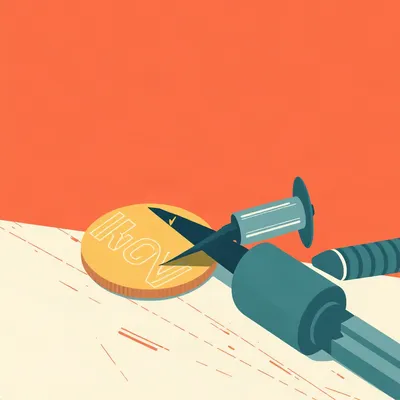
Engraving sidesteps the entire problem by not having a bond to fail. You're not applying a layer that sits on top of the object. You're removing material so the mark is physically part of the object. It's the difference between writing on a surface and writing in it. A sticker says "this belongs to Daniel" until the sticker gives up. An engraving says it forever, because the mark is the absence of material where Daniel's name used to be.
That's the conceptual shift that makes it feel decisive. Additive marking — stickers, paint, ink — always has a failure point at the interface. Subtractive marking has no interface. The mark and the object are the same thing.
And that's why it feels so satisfying the first time you do it. You watch the burr spin, the metal or plastic comes away, and you realize nothing is going to un-do that. It's permanent in a way that almost nothing else in a consumer's life is permanent.
So the episode's arc, then. We start with the personal inventory fix, move through the tool landscape — rotary versus hand versus laser — then look at the communities that have formed around each, and finally at the professions where this skill is actually a livelihood. And somewhere in there we answer Daniel's question about whether engraving enthusiasts have a name.
Spoiler: they don't. Not a unified one. But the reasons why are more interesting than the absence.
Let's start with the tools, because that's where Daniel landed first. He picked up a Dremel, which is a rotary engraver. What's actually happening when that burr spins against the surface?
A Dremel-style rotary tool spins a carbide burr at high speed — typically between five thousand and thirty-five thousand RPM depending on the model — and the burr physically abrades the material. It's grinding, not cutting in the clean sense. The burr has flutes or teeth that scrape away tiny particles of metal, wood, glass, or stone. What's left is a groove with a frosted, matte appearance, because the surface inside the cut is microscopically rough. Light hits it and scatters rather than reflecting cleanly.
And that's the characteristic look. A rotary engraving looks sandblasted, almost.
It does. And it's the cheapest entry point. A Dremel with a starter set of burrs is under a hundred dollars. It works on a huge range of materials. The trade-off is control. You're holding a spinning motor by hand, and the burr wants to wander. On metal, it can skip. On plastic, it can melt if you run too fast. The result is legible but not necessarily beautiful. It's the utility vehicle of engraving.
Which is exactly what Daniel's inventory system needs. Legible, durable, done. Not a work of art.
Right. Now contrast that with hand engraving, which is the oldest technique and mechanically almost the opposite. A hand engraver uses a graver — a sharpened blank of tool steel or carbide, shaped to a specific geometry — and either pushes it by hand or taps it with a small hammer. The graver doesn't grind material away. It displaces it. The sharp edge cuts into the metal and plows a clean furrow, pushing material to the sides.
So it's a plow, not a sander.
That's the image. And because the metal is displaced rather than abraded, the walls of the cut are smooth and bright. Light reflects off them the way it reflects off a mirror. That's why fine hand engraving has that diamond-bright appearance — the cuts literally glint. A rotary burr leaves a frosted groove. A hand graver leaves a bright line. Same brass plate, same word, completely different visual effect.
And the skill ceiling is in a different universe.
Hand engraving takes years. The graver geometry alone — face angle, heel angle, lift angle — is a whole discipline. You sharpen the graver constantly, on stones or a power hone, and the angle determines whether the tool cuts cleanly or digs in and snaps. Then there's the muscle memory of pushing the graver through metal at a consistent depth, turning curves without slipping. Master hand engravers do scrollwork that looks like it was drawn with a pen, except it's cut into hardened steel.
And then there's the newcomer. Laser engraving.
The laser is a different physical process entirely. A focused beam — either a diode laser, a CO2 laser, or a fiber laser — delivers enough energy to vaporize or ablate the surface. The material doesn't get pushed or ground. It gets turned into gas and fine particulate. On wood, the laser chars the surface, leaving a dark mark. On anodized aluminum, it removes the dye layer and exposes the bright aluminum underneath. On some plastics, it can actually change the color through a chemical reaction without removing material at all, but that's a tangent.
The point is the mark comes from heat, not from mechanical force.
And the skill set is completely different. A laser engraver is thinking about focal length, wattage, speed settings, air assist, and software. The machine does the physical work. The human's job is to dial in the parameters and design the artwork. It's more like running a printer than like cutting metal.
So we have three techniques that share a word — engraving — and almost nothing else. Different physics, different tools, different skills, different results.
And that's exactly where the community split comes from. Those three techniques have organized into three different social worlds online. The subreddit numbers tell the story. The traditional engraving subreddit has about thirteen thousand members, and it skews toward hand and rotary work. People post about graver sharpening angles, scrollwork patterns, and the occasional "is this burr any good" question. The laser engraving subreddit has about fifty-nine thousand members, and it's dominated by people with diode and CO2 machines doing tumblers, signs, anodized aluminum business cards, that kind of thing. And then there's the laser cutting subreddit, which is the biggest at around a hundred and twelve thousand, but that's more about cutting sheet material — plywood, acrylic — than marking.
So the biggest community isn't even really about engraving in the marking sense. It's about cutting parts.
And the vocabulary is completely different. Hand engravers talk about graver geometry, heel angles, sharpening stones, push versus hammer technique. Laser people talk about focal lengths, wattage, lines per inch, LightBurn software settings. They share the word "engraving" and they share Reddit, but they barely overlap.
Do they interact at all? Is there hostility, or just indifference?
Mostly indifference, from what I can tell. The traditional engraving subreddit is smaller and more craft-focused. There are regular threads critiquing line quality — someone posts a close-up of a scroll and people discuss whether the graver was sharp enough, whether the depth was consistent. The laser subreddit is bigger and more beginner-friendly. It's full of "what laser should I buy for under three hundred dollars" threads and "my first project" posts. Neither is hostile to newcomers, but the conversation is just... different. A hand engraver posting in the laser subreddit would be like a blacksmith walking into a print shop. Related crafts, different languages.
And what about the rotary people? Where do they live?
They're the interesting middle. Rotary engraving doesn't have its own big subreddit. The Dremel users tend to show up in the traditional engraving subreddit, because their concerns are closer — burr shapes, carbide grades, hand control. But they're also the most likely to be doing what Daniel's doing: practical marking, not art. Serial numbers on tools, names on equipment, inventory tags.
So Daniel's people are the rotary pragmatists, and they're sort of camping in the hand engravers' territory.
That's a fair read. The hand engravers tolerate them because the tool-adjacent questions overlap. A carbide burr and a carbide graver are both carbide, after all.
Let's talk about carbide for a second, because Daniel asked about buying from stores that actually know what they're talking about. What's the difference between a hardware store burr and a real one?
Carbide grade, burr shape, and geometry. The cheap burrs you get in a hardware store assortment pack are usually a lower grade of tungsten carbide, and the flutes are cut with less precision. They dull faster, they chatter more, and on harder materials they can chip. A good burr from a specialty supplier is made from a finer carbide grade, the flutes are sharper and more consistent, and the shank runs truer. On a rotary tool spinning at twenty thousand RPM, a tiny bit of runout — wobble — translates into a cut that's wider than it should be and harder to control.
And where do you buy the good ones?
Not at a general hardware store. The specialty suppliers are the jewelry trade suppliers. Gesswein is the big one — they've been supplying jewelers and engravers for over a century, and their staff can talk to you about carbide grades, graver geometry, burr shapes. Rio Grande is another, out of Albuquerque, huge in the jewelry supply world. Otto Frei is a third. These are companies where the person on the phone knows what a number forty flat graver is and why you'd want a ninety degree included angle instead of a hundred and twenty.
And for the laser people?
Different supply chain. The laser folks buy from the laser manufacturers' own channels, or from specialty suppliers like Cloudray, which sells lenses, mirrors, and replacement parts for CO2 lasers. The knowledge there is about optics and beam quality, not about carbide. Again, two worlds.
So the store question has a clean answer: jewelry trade suppliers for hand and rotary, laser specialty suppliers for laser. And the staff at Gesswein will not look at you blankly if you ask about a carbide burr for engraving HDPE.
They will not. They might ask you which HDPE, because the density matters for chip clearance.
Now, Daniel asked whether engraving enthusiasts have a name. You said no. Why not?
Because the community is fragmented along the exact lines we've been describing. "Engraver" is the trade title — a person who engraves for a living is an engraver. But hobbyists self-identify by their tool. Someone with a laser says "I'm a laser guy" or "I do laser engraving." Someone with a graver says "I do hand engraving." The rotary people often don't identify as engravers at all — they're just "using a Dremel to mark my tools." There's no umbrella term like "woodworker" or "potter" that covers all of them.
That's the root of it. "Woodworker" describes someone who works wood, and all woodworkers share a material and a set of fundamental techniques. "Engraver" describes someone who marks material by removing it, but the removal mechanisms are so different that a hand engraver and a laser operator have no shared skills. The term is a category, not a craft identity.
Which is interesting, because Daniel's question implies he expected there to be a name. Like he'd stumbled into a community and wanted to know what to call himself.
And the honest answer is: you call yourself whatever your tool is. Daniel is a rotary engraver, or just a guy with a Dremel who got tired of stickers. Both are true.
Let's move to the professions, because Daniel asked specifically about who outside of jewelers gets good at this. And the answer turns out to be a strange collection of very small worlds.
Firearms engravers are probably the most visible professional community. They have their own organization — the Firearms Engravers Guild of America, FEGA for short. These are the people who do scrollwork on high-end shotguns and custom pistols. The tradition is European, mostly Italian and British, and the old masters trained through multi-year apprenticeships. A master engraver can add thousands of dollars to a gun's value. A fine English double rifle with full coverage scrollwork is a six-figure object, and a chunk of that value is the engraving.
And that's hand work, presumably.
Almost entirely hand. The firearms engraving world is deeply traditional. They use push gravers and hammer-and-chisel techniques, and the apprenticeship model is still alive. FEGA runs an annual exhibition where master engravers display work that took hundreds of hours. It's a tiny profession — maybe a few hundred serious practitioners in the United States — but the skill level is extraordinary.
Knife makers too, right?
Custom knife makers engrave bolsters and blades. The knife world overlaps with the firearms world — a lot of the same engravers do both — and the aesthetic is similar: scrollwork, game scenes, floral patterns. The technical challenge is different because knife steel is often harder than gun steel, and the engraver has to work around the heat treatment.
And then there's the coin and die engraving world, which is even smaller.
Coin and die engravers cut the master dies that mints use to strike coins. It's a tiny profession — the United States Mint has a handful of them — and the work is done at a scale where the engraver's original is multiplied millions of times through striking. The engraver cuts the design in relief on a steel die, and every coin struck from that die carries the mark. It's engraving as mass production, which is a strange inversion of the usual logic.
The engraver does the work once, and the mark appears on millions of objects. That's the opposite of Daniel's inventory system, where every mark is unique.
And it's a good reminder that engraving scales in both directions. One mark, one object. Or one mark, a hundred million objects.
Trophy shops are the other obvious professional world. What's happening there?
Trophy and award shops run pantograph engraving machines. A pantograph is a mechanical tracing device — a stylus follows a brass master template with the letters or pattern, and a spinning cutter duplicates the pattern at reduced scale on the plaque. It's rotary engraving, but mechanized and repeatable. The operator isn't freehanding anything; they're tracing.
And the shops are still around, despite the laser revolution.
They are, and a lot of them run both. The pantograph for brass plaques, the laser for wood and acrylic. The pantograph actually still beats the laser for some indoor brass work, because the cut is mechanical and bright rather than dark and burned. A rotary-cut brass plaque has a crispness that a laser-marked one doesn't.
Printmakers. Daniel didn't ask about them, but they're in the same family.
Intaglio printmakers engrave plates — copper or zinc — and the engraved lines hold ink, which gets transferred to paper under pressure. It's the same physical act as hand engraving, but the goal is the print, not the plate. Rembrandt was an engraver in this sense. The plate is a tool, not the artwork.
The professional world is: jewelers, firearms engravers, knife makers, coin and die engravers, trophy shop operators, printmakers. And they all do the same fundamental thing — remove material to make a mark — but they've organized into separate guilds and trades that barely acknowledge each other.
That's the through-line to Daniel's inventory system. Every one of those professions engraves for the same reason Daniel does: because the mark has to survive conditions that defeat additive marking. A coin has to survive decades of circulation. A gun's serial number has to survive use and cleaning. A trophy plaque has to sit on a shelf for thirty years without peeling. The durability calculus is identical.
It scales up beyond the craft world. Industrial marking uses the same subtractive logic.
Pneumatic engravers mark serial numbers on firearms at the factory. Fiber lasers mark part numbers on aerospace components. The choice of method is driven by the same durability calculation that pushed Daniel away from stickers. A jet engine part has to carry its serial number through extreme temperatures, vibration, and chemical exposure. A sticker wouldn't last a single flight. An engraved mark lasts the life of the part.
Daniel's Dremel and a fiber laser on an aerospace production line are the same philosophy at different scales.
That's the thing I find moving about the whole topic. Engraving is one of the oldest human technologies — we have engraved marks from seventy-five thousand years ago, ochre blocks with crosshatch patterns. And it's still the right answer when you need a mark to outlast everything else.
The sticker is optimism. The engraving is realism.
The sticker assumes conditions will be kind. The engraving assumes they won't be.
Where does that leave Daniel? He's a guy with a Dremel, a pile of HDPE containers, and a Reddit account. He's found the rotary pragmatists camping in the hand engravers' subreddit. He's discovered that the specialty stores are jewelry suppliers. And he's learned that there's no name for what he is.
The open question is whether that fragmentation holds. Laser engravers are getting cheaper every year — sub-two-hundred-dollar diode lasers are common now — and the laser subreddit is growing faster than the traditional one. Does the craft split further, or does a unifying identity finally emerge?
My guess is it splits further. The laser people are going to keep growing, and the hand engravers are going to keep being a small, skilled, traditional community. The rotary people will keep being the practical middle.
That's probably right. The word "engraving" will keep doing its stretchy work, covering three crafts that share a verb and nothing else.
Before we go any further, Hilbert's been quiet for a while, and I have a feeling he's got something on this.

The trick with the brass plates is that you engrave them from the back.
Wait. Say that again.
The trophy shop plates. You engrave the back side, then flip them over. The front has a protective lacquer, and if you cut through it, it chips and looks terrible. So you cut the back. The engraving pushes a raised burr through to the front, and it reads as a crisp letter. Then you glue the plate to the plaque with double-sided tape.
The "engraved" brass plate on a trophy is actually a reverse engraving, with the mark showing through from behind.
That's how most of them are done. Customers never know. They think the letters are cut into the front. They're not. They're pushed up from the back.
The lacquer stays intact on the front, so it looks perfect.
That's the idea.
How do you know this?
I ran a pantograph for a summer. Trophy shop in Scranton. Place called Awards and More. The machine was a Scripta, and the cutters were single-flute carbide. The stylus traced the brass master, and the cutter duplicated it at reduced scale. You set the ratio with a knob.
You engraved the backs of the plates.
All day. The shop's own inventory system was handwritten Sharpie on masking tape. The engraved plates took too long to make for internal use, so we used the same stickers everyone else uses.
The professionals use temporary labels for their own stuff. That's beautiful.
It's the same irony as the cobbler's children having no shoes. The trophy shop could have engraved its own labels, but it didn't, because the permanent solution was too slow for the internal problem.
The permanent solution is for customers. Internal stuff gets a marker and tape.
The whole industry runs on the same split Daniel hit. Permanent marks for things that matter to other people. Temporary marks for things that matter to you.
I still have a box of those single-flute carbide cutters in the garage. If Daniel wants to try rotary engraving on brass, they're his. They're the right geometry for it.
That's a useful offer. Daniel, if you're listening, Hilbert has a box of Scripta single-flute carbide cutters from a trophy shop in Scranton.
They're in a coffee can with a piece of masking tape on it that says "Scripta bits."
The masking tape label on the box of engraving cutters. It writes itself.
The tape is probably peeling.
It's been peeling since 2004.
The lesson is that even the people who make permanent marks for a living use temporary ones for their own tools.
The lesson is that "permanent" is a customer-facing word.
That's the line of the episode, honestly. "Permanent" is a customer-facing word.
Yet the engraving is still there, decades later, while the masking tape gives up.
The engraving is there. The tape isn't. That's why it costs more.
There's a whole pricing structure built on that difference. The permanent mark costs more because it takes longer to make and it lasts longer. The temporary mark is cheap and fast and you don't care when it fails.
Which brings us back to Daniel's original insight. He was willing to pay the time cost of engraving because the sticker failure cost was higher. Every time a label peeled, he had to redo it. The engraving is slow the first time and then never needs doing again.
The amortized cost of the permanent mark beats the repeated cost of the temporary one, once the failure rate crosses a threshold. Daniel's threshold was Jerusalem.
The threshold is different for everyone. A trophy shop in Scranton uses masking tape because the internal labels don't matter enough to justify the engraving time. Daniel's inventory system matters enough, because he's already been through the cycle of re-labeling after every move.
The stuff you have to find again later is worth engraving. The stuff you'll throw away isn't.
Hilbert just summarized the entire decision framework in one sentence.
He did. And it applies to the aerospace industry too. The part number on a jet engine gets engraved because someone has to find that part again later, and the cost of not finding it is catastrophic.
The question Daniel asked — do engraving enthusiasts have a name — the answer is no, because the community is defined by the decision of what's worth marking permanently, and that decision is different for every person. The laser guy marking tumblers, the hand engraver cutting scrollwork, the trophy shop operator running a pantograph, the aerospace engineer specifying a fiber laser — they're all answering the same question, but they're answering it in different materials and at different scales.
The name, if there ever is one, will have to cover all of them. Which is why it hasn't emerged yet.
The open question for the future is whether the laser revolution creates a new name by sheer numbers. If the laser subreddit keeps growing, maybe "laser engraver" becomes the default identity, and the hand engravers become the niche within the niche.
Or maybe the hand engravers keep the word "engraver" and the laser people become "laser etchers" or something. Language follows the community that cares most about the distinction.
The hand engravers definitely care more about the distinction.
They do. The laser people are mostly just trying to make a cool tumbler. The hand engravers are defending a craft tradition that goes back centuries.
The rotary people are in the middle, just trying to mark their stuff so they can find it later.
Which is where Daniel is, and it's a perfectly honorable place to be.
To answer Daniel's questions directly, because he asked several. Online communities: yes, three main subreddits, split by technique. Stores that know what they're talking about: jewelry trade suppliers for hand and rotary, laser specialty suppliers for laser. A name for enthusiasts: no unified one, you identify by your tool. Professions beyond jewelers: firearms engravers, knife makers, coin and die engravers, trophy shops, printmakers, and the entire industrial marking sector.
The through-line for all of it: engraving is the mark that survives when everything else fails. Daniel's stickers were optimism. His Dremel is realism.
Decades from now, when the stickers are dust and the masking tape has peeled off the coffee can, the engraved inventory tag will still say what it says. That's the whole appeal.
That's worth the time it takes to cut it.
This has been My Weird Prompts, with thanks to our producer Hilbert Flumingtop for the trophy shop story and the offer of the carbide cutters.
If you enjoyed this episode, leave a review wherever you listen, or visit my weird prompts dot com for the full archive.
We'll be back soon with another one.