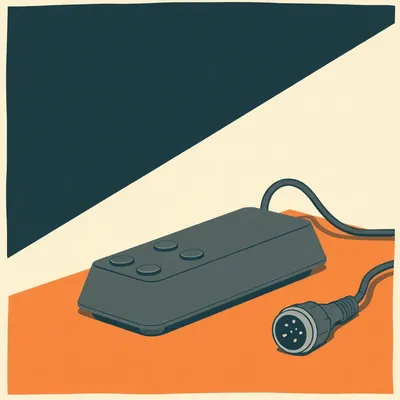
So Daniel sent us this one — and it starts with a story every Jerusalem resident knows in their bones. He and Hannah moved into a new apartment near a construction site. During the viewing, miraculously, the drilling was quiet. Now there's hammering. He jokes about the realtor scheduling around the quiet window, but the real point is deeper: noise is invisible, intermittent, and we have almost no way to prove it's happening. He's been living in Jerusalem for a decade, next to construction sites and intersections, and he's convinced noise pollution is one of the most significant and underdiscussed public health issues we face. The research is clear, he says, but there's a collective blind spot. And his actual ask is this: he wants to put a calibrated decibel monitor on his balcony, contribute the data to a global open network, and he wants to know if there are any collectives that subsidize citizen sensors or any networks that aggregate this data for researchers. He's offering to open-source everything with proper timestamps. So where do we even start with this?

The realtor scheduling during quiet hours — I've been there. When I was still practicing in Jerusalem, I had patients in Talpiot whose apartment viewings were timed like military operations. But Daniel's right that the joke reveals something structural. The World Health Organization published its Environmental Noise Guidelines for the European Region back in twenty eighteen, and the headline number is staggering: an estimated one million healthy life-years are lost annually in Western Europe alone from environmental noise. That's not annoyance. That's cardiovascular disease, cognitive impairment in children, chronic sleep disturbance, tinnitus. And the monitoring infrastructure to track any of it at the citizen level barely exists.
A million healthy life-years lost. That's one of those numbers that should reorganize how we think about urban life, and instead it just... sits there in a WHO report. Daniel's central comparison is to air quality monitoring, and I think that's the right frame. Air quality has Sensor dot Community, which started in twenty fifteen and now has something like fifteen thousand active particulate matter sensors globally. There's OpenAQ, there's PurpleAir maps. If you want to know the PM two point five on your street right now, you can probably find out. If you want to know the decibel level on your balcony over the last month, you're basically on your own.
And the asymmetry is genuinely strange when you think about it. Air quality monitoring had its citizen science moment about a decade ago. The hardware got cheap — the SDS zero one one sensor plus an ESP eight two six six microcontroller, total cost under thirty euros. Calibration for particulate matter is relatively forgiving. A ten percent error still gives you useful trend data. You can see if things are getting better or worse. Noise is fundamentally different, and that's where Daniel's calibration concern is exactly right.
What does it actually mean for a noise sensor to be calibrated, and why can't you just use a phone app?
So decibel scales are logarithmic, first of all. A three decibel increase is a doubling of sound energy. That means small measurement errors translate into large perceptual errors. And sound level meters use frequency weighting — A-weighting is the standard for environmental noise, it approximates how the human ear responds at moderate levels. C-weighting is for peak sounds. A cheap MEMS microphone without calibration can drift by three to six decibels depending on temperature, humidity, and age. That's the difference between a quiet street and a busy one. In a legal or policy context, that data is meaningless.
Three to six decibels drift. So you could have a sensor telling you your street is quiet while a construction crew is pile-driving next door, and the contractor's lawyer says "your sensor is wrong," and they'd be technically correct.
And that's Daniel's point about vested interests. Construction firms, municipal transportation departments — they have every incentive to dispute citizen-collected data. Calibration is the first line of defense against "your sensor is wrong." Without it, you've got nothing. Now, a professional Class One sound level meter — the kind you'd use for regulatory compliance — costs between a thousand and five thousand dollars. There is no open-source, sub-fifty-dollar calibrated outdoor noise sensor on the market today. It doesn't exist.
That's the gap. Air quality sensors: thirty euros, good enough for trends. Noise sensors: a thousand dollars minimum if you want legal defensibility. And the middle ground is almost empty. You mentioned the miniDSP UMIK dash one — that's a calibrated USB microphone for about seventy-five dollars, but it needs a per-unit calibration file and it's not weatherproofed for outdoor use.
Right, and the AudioMoth is the other project that comes up in these conversations. Sixty dollars, open-source, designed for wildlife bioacoustics. Ecologists use it to monitor bird populations and bat calls. But it has a sixteen-bit ADC, it lacks A-weighting, and it's not built for long-term urban deployment in rain and dust. It's the wrong tool for the job, even though it's the closest thing to a cheap open acoustic logger.
So we've got a seventy-five dollar calibrated mic that can't live outside, and a sixty dollar outdoor logger that isn't calibrated for human hearing. Neither one solves Daniel's problem. And the one citizen science platform that exists for noise — Noise dash Planet, out of France — relies on smartphone microphones.
Which drift by three to ten decibels depending on the phone model and how old it is. Noise dash Planet is doing valuable work building a citizen science community around noise, but the data quality problem is baked in at the hardware level. If you measure noise with an uncalibrated smartphone, you're measuring something, but you don't know exactly what. It's like taking someone's temperature with a thermometer that might be off by two degrees Celsius. The trend might be directionally useful, but you can't take it to city hall.
So let me summarize the hardware landscape for Daniel. He needs a calibrated, weatherproof, outdoor decibel sensor that he can network into his Home Assistant setup. The professional version costs more than a thousand dollars. The hobbyist version doesn't exist yet. And no collective is subsidizing citizen noise sensors because there's no reference design to subsidize. That's the wall.
I want to push back slightly on "doesn't exist yet," because there is a build path. It's just not off-the-shelf. Daniel could buy a miniDSP UMIK dash one for about seventy-five dollars, pair it with a Raspberry Pi Zero Two W for about fifteen dollars, build a weatherproof enclosure — there are plans online using PVC pipe and windscreens — and run OpenSoundscape, which is an open-source Python library from the Kitzes Lab, to log A-weighted Leq values every minute. Leq is the equivalent continuous sound level, the standard metric for environmental noise. Total cost around a hundred and twenty dollars. Not subsidized, but it's the cheapest calibrated path available today.
And that's a real answer to part of Daniel's question. He can build something. But a sensor without a network is just a hobby project, and that's the second half of his prompt. Where does the data actually go?
This is where the comparison to air quality gets almost embarrassing. Air quality has OpenAQ, which aggregates data from thousands of sources globally. It has the Sensor dot Community map, the PurpleAir map. If you build a particulate matter sensor, you can see your data on a public map within minutes. Noise has nothing equivalent. The European Environment Agency runs something called the NOISE database, but it's a reporting tool for member states — governments submit strategic noise maps every five years under the Environmental Noise Directive. It is not a real-time citizen science platform. It's not an API. A citizen can't contribute to it.
So the EU has a noise database that doesn't accept noise data from EU citizens. That's... very European.
It's a regulatory compliance framework, not a monitoring network. The closest thing to an open noise data platform is Noise dash Planet, which I mentioned, but again — smartphone microphones. Paris has something called Bruitparif, which is actually impressive: over a hundred and sixty fixed noise sensors across the city, real-time monitoring, public dashboards. But it's run by a government agency. It's not open to citizen contribution. You can look at their data, but you can't add yours.
So if Daniel builds his calibrated balcony sensor and starts logging data, his options for contributing it to a global network are basically: Noise dash Planet, which will accept it but was designed for smartphone data, or self-publishing on something like Hugging Face Datasets, which he mentioned. And Hugging Face is actually a smart idea — it's not a noise platform, but it's a place researchers actually look for open datasets. If he writes a clear README explaining his calibration methodology, timestamping, GPS coordinates, that dataset becomes citable.
And that's valuable. A long-term, fixed-position, calibrated outdoor sensor in a construction-adjacent Jerusalem apartment would produce a unique dataset. Most urban noise studies use mobile measurements — someone walking around with a sound level meter for a few hours — or short-duration samples. A continuous record over months, through different weather conditions and construction phases, is the kind of thing a researcher at the Barcelona Institute for Global Health or the University of Cambridge's Noise Mapping group would be interested in.
Which brings us to Daniel's question about who to contact. You mentioned ISGlobal in Barcelona and Cambridge. Who else?
The WHO European Centre for Environment and Health in Bonn has an explicit noise mandate — they're the ones who published those twenty eighteen guidelines. They're not typically in the business of receiving individual citizen data, but they do track monitoring innovations. The EU's Joint Research Centre in Ispra, Italy, also has a noise workstream. And here's the one I'd actually prioritize: the Sensor dot Community team. They've publicly discussed adding noise sensors to their platform for years. They haven't shipped a design yet, but they've done the hard work of building a global citizen science network with data ingestion, visualization, and an open API. If someone showed up with a working calibrated noise sensor design and a willingness to pilot it, they'd listen.
Sensor dot Community started in a living room in Stuttgart in twenty fifteen. Now they're cited in academic papers and their map is used by city governments. The path from "someone's living room" to "global infrastructure" is real. But it requires a reference design that costs under a hundred dollars, and as we've established, that doesn't exist for noise yet. Daniel's hundred and twenty dollar build is close, but it's not a product someone else can replicate without technical skill.
And that's the chicken and egg problem. No one subsidizes citizen noise sensors because there's no proven design. No one designs a cheap calibrated noise sensor because there's no network to plug into and no subsidy model to make it sustainable. Someone has to break the loop.
Daniel's prompt has an interesting phrase — he says it might strike as entitled to suggest that citizens contributing free data shouldn't have to bear the cost of expensive instruments. I don't think it's entitled at all. The air quality movement proved that when you lower the cost of participation, you get an explosion of data. Sensor dot Community's hardware is sold at cost by third-party distributors. That model works because the bill of materials is under thirty euros. For noise, the calibrated microphone alone is seventy-five dollars. The economics are different.
But MEMS microphone quality is improving rapidly. Five years ago, you couldn't get a calibrated USB mic for under a hundred dollars. Now the UMIK dash one is seventy-five. In another five years, we might see calibrated MEMS microphones at the twenty dollar price point, at which point the economics flip. And there's interesting work on AI-based calibration — using crowdsourced smartphone data to cross-calibrate fixed sensors. If your phone knows it's next to a calibrated reference sensor, it can adjust its own readings. That's five to ten years out, but it's the kind of thing that could create a "noise phone" moment, where every smartphone becomes a calibrated sensor.
The "noise phone" moment — like the "iPhone moment" but for decibels. I like that. But Daniel's asking what he can do now, not in five years. So let's get practical. Build the Raspberry Pi plus UMIK dash one setup. Log A-weighted Leq values every minute. Publish the raw data on Hugging Face with calibration metadata. Contribute to Noise dash Planet as a starting point even with the smartphone limitation. Contact the Sensor dot Community team and say "I've got a calibrated outdoor sensor running in Jerusalem, are you interested?" Contact the WHO Bonn office and the JRC Ispra.
And there's one more angle. Daniel mentioned he's got Home Assistant, Zigbee, and Matter networks running. The smart home community is actually a potential vector here. If someone designed a Zigbee or Matter-compatible outdoor noise sensor — even an uncalibrated one — the sheer volume of deployments would create useful aggregate data. Calibration could happen in software if you have enough sensors cross-referencing each other. Nobody's built that product yet, but the smart home market is enormous and noise is an obvious missing sensor category.
That's a product idea waiting for a Kickstarter. "The first Matter-compatible outdoor noise sensor for smart homes." I'd back it.
I'd back it and I'd put one on our balcony. But it circles back to the same problem: without calibration, the data is interesting but not actionable. And Daniel's whole point is that actionable data — data you can take to a municipality or a court — requires calibration.
Let me pull on a thread Daniel mentioned in passing. He said noise pollution is one of the most significant public health issues that goes almost entirely underdiscussed, even within environmental activism. And he's right. The WHO numbers are staggering — a million healthy life-years lost annually in Western Europe. But when was the last time you saw a climate march with "noise" on the placards? Air quality gets the attention because you can see smog. You can smell diesel. Noise is invisible and it stops the moment you focus on it, which makes it psychologically easy to dismiss.
As a pediatrician, this is the part that kept me up. The cognitive effects on children are well-documented. Chronic exposure to noise above fifty-five decibels — which is basically any apartment near a major road or construction site — is associated with reading comprehension deficits, attention problems, and reduced memory performance. These are developmental impacts that compound over years. And we just... accept it. Because the drilling eventually stops. Until the next building goes up.
Fifty-five decibels. For context, that's roughly the level of a normal conversation. It's not loud. It's not a jackhammer. And the WHO says sustained exposure at that level impairs children's cognitive development. Most people think noise pollution means "annoyingly loud." The reality is it means "the background hum of urban life is slowly damaging your health."
And the EU knows this. Their Zero Pollution Action Plan from twenty twenty-one targets a thirty percent reduction in the number of people chronically disturbed by transport noise by twenty thirty. That's an official policy goal. But the plan has no citizen monitoring component. It relies entirely on member state reporting, which happens every five years and uses modeled data, not measured data. They're making policy based on computer simulations of noise, not actual measurements from people's balconies.
Modeled data, not measured data. So the EU has a noise reduction target, but the monitoring infrastructure to know if they're hitting it doesn't exist at the street level. Daniel's balcony sensor, multiplied by a few thousand citizens across European cities, would be more granular than anything the EU currently uses for policy.
That's the vision. And it's not unprecedented. The air quality citizen science movement started exactly the same way — people in Stuttgart were frustrated that official monitoring stations weren't capturing the diesel pollution on their street. So they built sensors. Now it's a global network. Daniel's asking, essentially, "can we do for noise what Stuttgart did for air?" And the answer is yes, but the hardware is harder and the institutional support isn't there yet.
Let me ask you something. If a listener in Berlin or Barcelona or Jerusalem builds one of these calibrated sensors and starts publishing data, and a construction company disputes it, what actually happens? You mentioned legal defensibility earlier.
In most jurisdictions, nothing happens, because citizen-collected noise data has no legal standing. Environmental noise regulations are enforced through official measurements taken by accredited professionals using Class One sound level meters with valid calibration certificates. A Raspberry Pi on a balcony, no matter how carefully calibrated, doesn't meet that standard. But — and this is important — that doesn't make the data useless. It makes it useful for a different purpose: establishing patterns, identifying hotspots, supporting advocacy, and pressuring regulators to do their own measurements. Citizen data creates the political conditions for official action.
So it's not a courtroom tool. It's an organizing tool.
And that's how the air quality movement worked too. Early PurpleAir sensors weren't regulatory-grade. But when a hundred of them showed the same pollution spike that the official monitor missed, regulators had to respond. Volume and consistency create credibility even without formal certification.
Which brings us back to the network problem. A hundred calibrated sensors in a city is powerful. One sensor on one balcony is a science project. The network is what turns individual data into political force, and the network doesn't exist yet for noise.
So here's my question for Daniel and for anyone listening who's technical. What would it take to build a Sensor dot Community for noise? The requirements are: a low-cost calibrated weatherproof reference design under a hundred dollars, a data schema with timestamp, GPS, A-weighted Leq, and calibration metadata, a central aggregation API with open access for researchers, and some kind of chain of custody for data used in noise complaints. That's four hard problems, and nobody has solved all four.
The data schema part is actually the easiest. You need timestamp, GPS coordinates, A-weighted Leq, maybe peak levels, and a calibration reference. That's a JSON object. The API is harder but solvable — there are plenty of open-source IoT data platforms. The hardware is the bottleneck, and the calibration is the bottleneck within the bottleneck.
And I want to give Daniel credit here, because his offer is generous and well-structured. He's not just saying "someone should fix this." He's saying "I have a balcony, I have technical skills, I have a smart home network, I'm willing to run a sensor indefinitely, and I'll publish all the data open-source with proper timestamps." That's exactly the kind of offer that a research group or a citizen science collective should be jumping at. The problem is that the collective doesn't exist yet for noise.
Which makes Daniel an early adopter in a movement that hasn't quite started. That's a lonely position, but it's also how movements start. Someone in Stuttgart put a dust sensor on their windowsill in twenty fifteen, and now there are fifteen thousand of them worldwide.
If I were Daniel, I'd do the build, start publishing data, and then email three groups. The Sensor dot Community team — they're at sensor dot community dot org. The Noise dash Planet team in France. And the WHO European Centre for Environment and Health in Bonn. Keep the emails short: "I have a calibrated outdoor noise sensor running in Jerusalem, here's my methodology, here's my data, are you interested?" Worst case, they say no. Best case, he becomes the first node in a network.
And publish on Hugging Face. That's a smart move Daniel already identified. Researchers do trawl Hugging Face for datasets. If his README is clear about calibration and methodology, that data will get found and cited.
One more thing on the institutional side. The EU's Zero Pollution Action Plan runs through twenty thirty. There are funding calls associated with it. If a consortium of citizen science groups, universities, and cities applied for funding to pilot a citizen noise monitoring network, Daniel's Jerusalem data would be a perfect proof of concept. "Look, we already have a working sensor in a challenging urban environment in the Middle East. The approach works. Fund us to scale it."
So the path from "annoyed resident with a balcony" to "EU-funded monitoring network" is longer than it should be, but it's not imaginary. The pieces exist. They just haven't been assembled.
And that's really the thesis of this whole episode. The gap between what citizens want to measure and what the infrastructure allows them to measure is a policy failure, not a technical impossibility. The air quality movement proved that when you lower the barriers, people show up. Noise monitoring is just waiting for its Stuttgart moment.
I keep thinking about Daniel's joke about the realtor. The viewing was scheduled during a quiet window. The hammering started after they moved in. And the only reason that works as a strategy — whether it was intentional or not — is that noise is invisible and leaves no record. You can't pull up a noise history for an address the way you can pull up an air quality history. The realtor's quiet window is a microcosm of the entire problem. We accept noise because we can't prove it happened.
And a calibrated sensor on a balcony changes that. It creates a record. It makes the invisible visible. That's what Daniel is trying to do, and it's worth doing even if the network isn't ready for him yet. The network won't get ready unless people like him start building.
So to Daniel directly: build the sensor, publish the data, email the groups, and know that you're early. The infrastructure isn't there yet, but you're helping create it. And to everyone else listening: if you live in a city with a "smart city" initiative, ask them why noise isn't in the sensor suite. Ask them what their decibel map looks like. If they don't have one, ask why not.
The WHO says a million healthy life-years are lost every year to noise in Western Europe alone. That number should be as galvanizing as any air quality statistic. The fact that it isn't — that's the blind spot Daniel identified. And the first step to fixing a blind spot is measuring it.
And now: Hilbert's daily fun fact.

In the eighteen eighties, the lighthouse keepers of Cape Verde's Ponta do Sol station documented an unusual arrangement: a feral goat named Sebastião took up residence in the lighthouse and developed a habit of standing beside the keepers during foghorn tests, braying in apparent synchrony with the horn. The keepers' logs refer to him as "the assistant" and note that his participation reliably began three seconds after the horn sounded, continuing for the duration of the signal. Mariners reportedly learned to listen for the goat's distant bleat as a secondary audial landmark when approaching the island in heavy fog.
...right.
Thanks, Hilbert. A goat-assisted navigation system. That's one way to do it.
Here's what I'll leave you with. Noise is the pollution we've learned to ignore because it stops the moment we pay attention to it. But it doesn't stop affecting us. A sensor on a balcony is a small act of resistance against that invisibility. Daniel's asking the right question, and the fact that the infrastructure doesn't exist yet is not a reason to stop asking. It's a reason to start building.
This has been My Weird Prompts. Thanks to our producer Hilbert Flumingtop. If you enjoyed this episode, tell someone about it — especially someone who lives next to a construction site. We'll be back soon.