So Daniel sent us this one, and it's personal. He nearly lost five thousand episodes of this podcast last month. Not because of a hard drive crash, not because of ransomware. Because of a bank account change and a NAS still sitting in a moving box. He had what looked like a textbook backup setup, and it quietly degraded to a single copy without him noticing until the warning emails started arriving.

And what gets me about this story is that Daniel knows this stuff. He's the kind of person who thinks about redundancy, who builds systems, who reads the documentation. If it can happen to him, it can happen to anyone. I've been doing this for years and I've had the exact same near-miss. Different details, same shape. You set something up, you verify it once, and then you trust it. That trust is the vulnerability.
That's the thing. The near-miss wasn't a technical failure. It was an administrative cascade. Payment card expired during a bank switch, the cloud backup account started sending deletion warnings, and the local NAS was physically inaccessible because life happened. Three copies on paper, one copy in reality. And I want to sit with that phrase for a second — "three copies on paper." Because that's the gap between documentation and truth. You can draw the architecture diagram, you can label the boxes, you can point to each one and say "this is copy one, copy two, copy three." But if copy three is in a cardboard box under a pile of winter coats, it's not a copy. It's a memory of a copy.
So how did a setup go from feeling smug about to staring at a single point of failure? Let me walk through the cascade. Daniel's primary copy lives on a cloud GPU provider, serverless infrastructure that generates the episodes. Last month ran about two hundred dollars, which for five thousand episodes of audio generation is genuinely reasonable. That's copy one. And here's the thing about copy one — it's not just storage, it's compute. It's the engine. So losing it isn't just losing the files, it's losing the ability to make new ones. That's a double failure.
Copy two was Backblaze B2, cloud object storage, synced automatically. This is the off-site backup that the three-two-one rule demands. And it worked perfectly until the payment card expired. And I think we need to unpack why that expiration happened, because it's so mundane it's almost embarrassing. Daniel was switching banks. New account, new card. He updated the payment method on the GPU provider, the thing he interacts with daily. But Backblaze? That's set-and-forget. You configure it once, the sync runs silently, you don't think about it. So when the old card expired, Backblaze started sending emails. But here's the thing about warning emails from services you don't check daily — they compete with everything else in your inbox. They look like newsletters. They look like "your monthly statement is ready." They don't look like "we are about to delete your entire backup archive."
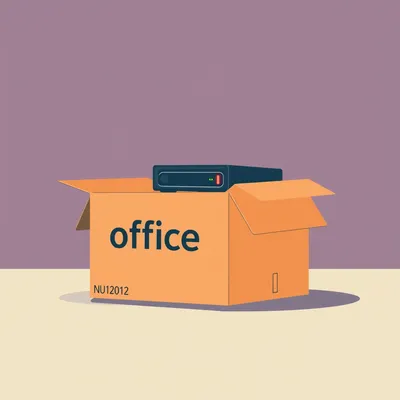
Copy three was a NAS at home, a network-attached storage device doing a daily pull of new episodes. Local, fast to restore from, exactly what you want. Except it was in a box. Several weeks behind production. That's not a backup, that's a time capsule of what the catalog looked like before the move. And let me paint the picture of how that happens, because it's not negligence, it's triage. You're moving. You have a daycare crisis. You have a hundred boxes to unpack. The NAS is in a box labeled "office" and that box is behind seven other boxes, and every day you think "I'll get to it tomorrow," and tomorrow becomes next week, and next week becomes three weeks, and the sync job that was supposed to run daily hasn't run in twenty-one days. You didn't decide to stop backing up. You just didn't decide to start again.
So for a window of time, Daniel had one copy. One. On a cloud provider that was itself sending payment warnings. The three-two-one rule didn't break because of some exotic technical edge case. It broke because of a daycare crisis and cardboard boxes. And what's terrifying about this is the simultaneity. If the NAS had been disconnected during a normal month, no problem, the cloud backup is current. If the payment card had expired during a normal month, no problem, the NAS is current. But both failed at the same time, and the reason they failed at the same time is that they shared a root cause: Daniel's attention was elsewhere. Life chaos doesn't break one thing. It breaks everything you're not actively watching.
Let's name what three-two-one actually protects against, because the rule is good. Three copies total, two different media types, one copy off-site. The classic threat model is hardware failure and local disaster. Hard drive dies, you've got another copy. House burns down, the off-site copy survives. It's a fire extinguisher for data. But it's a fire extinguisher that assumes someone checks the pressure gauge. And the pressure gauge on a backup system isn't a single thing — it's payment status, sync job health, physical connectivity, account access. Each of those is a gauge, and if any one of them drops to zero, the whole thing can fail.
That's the gap. Three-two-one is a snapshot of intent, not a guarantee of resilience over time. It says nothing about payment continuity, nothing about whether your local copy is actually plugged in, nothing about whether the sync job is still running. It's a photograph of a backup strategy on its best day. And I think the analogy that works here is a will. You can write a will, sign it, put it in a drawer, and feel responsible. But if you don't update it when you move, when you have kids, when your assets change, it becomes less useful over time. Three-two-one is the same. It's not a document you write once. It's a living arrangement that degrades the moment you stop maintaining it.
Backblaze themselves recognized this and published an evolved version, the three-two-one-one-zero rule. Same foundation, three copies, two media types, one off-site. But they added one immutable copy and zero errors, meaning verified integrity. The immutable copy is the piece that would have saved Daniel. It's a copy that cannot be altered or deleted, even by the account owner, for a set period. Backblaze B2 has a feature called Object Lock that does exactly this. You set a retention period, say thirty days, and during that window nothing can delete those objects. Not you, not a billing system, not a ransomware attacker who got your credentials. Think of it as a legal contract with your storage provider. You're saying "I don't care what happens, you are not allowed to delete this data for thirty days." And they're legally and technically bound to honor that.
So even if the payment card lapsed and the account went into some kind of frozen state, the data would still be there, locked, undeletable. That's the administrative failure mode covered. And what I love about this is that it's a feature designed for a threat model that sounds paranoid — "what if someone gets my credentials and tries to delete everything?" — but the actual use case is "what if I accidentally let my credit card expire?" The mundane failure is more common than the exotic attack.
And the zero errors piece means you're actually verifying that your backups are intact. Not just assuming the sync job ran, but periodically doing a test restore, checking checksums, confirming that the bits you think are there are actually there. Daniel's NAS was weeks behind, but if he'd had a verification step, he would have known that immediately instead of discovering it during the payment panic. And a verification step doesn't have to be elaborate. It can be a cron job that tries to restore a random episode once a week and sends an email if it fails. Five lines of bash. That's the difference between knowing and assuming.
What strikes me about Daniel's story is the line where he says any cloud dependency is not ideal, but relying upon self-hosting is not ideal either. He's caught between two failure pattern and neither one feels safe. And I think that's because we tend to evaluate safety in isolation. We look at a cloud provider and say "what could go wrong?" and we list the things. Then we look at a home NAS and say "what could go wrong?" and we list a different set of things. But we rarely ask "what could go wrong with both at the same time?" And that's the question Daniel's story forces.
Because neither one is safe on its own. The cloud dependency fails when billing breaks. The self-hosting dependency fails when you move apartments or your internet goes down or a power surge takes out the NAS. The synthesis has to be a hybrid where no single event can take out more than one copy. The goal is orthogonal failure pattern. A bank change shouldn't also kill your local backup. A move shouldn't also kill your cloud backup. The events that take out each copy should be as unrelated as possible. And here's the counterintuitive part: making them unrelated means making them different in kind, not just in location. Two cloud providers are more related than one cloud provider and one hard drive in your closet, even though the two cloud providers are in different data centers. They both depend on payment systems, on account access, on the internet being up. A hard drive in your closet depends on none of those things.
Let's talk about the NAS failure pattern specifically, because Daniel mentioned this is something people rarely think about. A home NAS is vulnerable to theft, fire, flood, power surge, and ransomware if it's always connected to the network. But it's also vulnerable to being in a box. To not being reconnected after a move. To someone tripping over the power cable and not noticing for three weeks. And I want to add one more that's even more subtle: a NAS is vulnerable to its own success. If it's been running flawlessly for two years, you stop checking on it. The uptime becomes evidence that nothing can go wrong, when really it's just evidence that nothing has gone wrong yet.
The clinical analogy here is that a NAS is like a patient on a monitor. As long as someone's watching the monitor, you catch problems early. But if the nurse steps away, you can have a silent deterioration that nobody notices until it's critical. Daniel's NAS wasn't failed, it was just disconnected, and the gap between the last sync and the current catalog was over a hundred episodes. That's a concrete recovery point objective failure. The RPO, the maximum acceptable age of your backup, was supposed to be one day. Actual RPO was several weeks. And here's the thing about RPO — it's not a target you hit or miss. It's a number that drifts. Every day the sync doesn't run, your RPO gets worse. It's a gauge, not a switch.
And recovery point objective isn't just a metric for enterprises. If your NAS burns down and the last sync was yesterday, you lost a day of work. Annoying but survivable. If the last sync was three weeks ago and you've generated a hundred episodes since then, you've lost a hundred episodes. That's not a backup, that's an archive of what the project used to be. And the emotional difference between losing a day and losing a hundred episodes is the difference between "ugh, I have to redo yesterday's work" and "I have to rebuild something that took weeks of creative effort." One is a hassle. The other is grief.
So let's get concrete. What would a truly resilient setup look like for Daniel's five thousand episodes, growing daily? I want to sketch an architecture that survives a move plus a bank change plus a daycare crisis simultaneously. And I want to stress that word "simultaneously" because that's what happened. It wasn't sequential failures where you could respond to each one. It was everything at once.
This is what I want to hear. Give me the blueprint.
Tier one, the primary copy, stays on the cloud GPU provider. That's where episodes are generated, that's the working copy. Two hundred dollars a month in heavy months, less in lighter months. Tier two, cloud backup with immutability. Backblaze B2 with Object Lock enabled, thirty day retention. This costs roughly ten dollars a month for the storage volume we're talking about. The Object Lock means that even if the payment card expires and the account gets flagged, the data cannot be deleted during the lock window. That covers the administrative failure pattern. And I want to emphasize: ten dollars a month. That's the price of a streaming subscription. That's what stands between Daniel's catalog and a billing snafu.
And tier three?
Tier three is local, but split into two pieces. First, the NAS, reconnected and doing daily syncs, ideally on a schedule that sends a notification if it fails. Not an email you might miss, but something that pushes to your phone. A notification that says "NAS sync has not completed in 48 hours" is worth more than a dashboard you never look at. Second, a cold storage drive, a simple USB hard drive that gets plugged in once a week, synced, and then physically disconnected and stored somewhere that isn't next to the NAS. A drawer in a different room, ideally. This is an air-gapped copy. Ransomware can't reach it because it's not on the network. Power surge can't take it out because it's not plugged in. Someone tripping over the NAS power cable doesn't affect it because it's in a drawer. The air gap is the cheapest insurance policy you can buy.
And the cost on that cold drive is what, a hundred and fifty dollars once?
Roughly, for a large external drive. The ongoing cost is five minutes a week to plug it in and run a sync script. That's it. And tier four, an off-site physical copy. This could be a second small NAS at a friend's house, or a rotated hard drive in a safety deposit box, or even just a drive you swap with a friend once a month. The key is that it's not in your home and it's not dependent on the same cloud accounts. If your house floods and your Google account gets hacked in the same week, this copy survives. Now, I know "swap drives with a friend" sounds like a lot to ask, but think about it — if you both have projects you care about, you're providing the same service for each other. It's mutual backup. It's the digital equivalent of "you water my plants, I'll water yours."
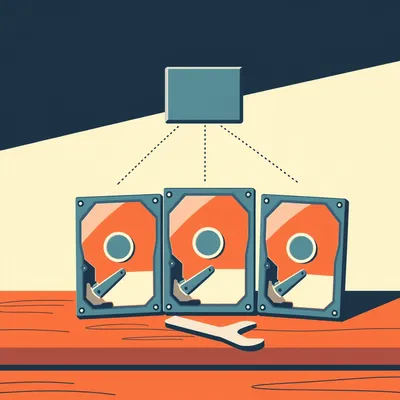
So the full architecture is primary cloud, immutable cloud backup, local NAS plus cold drive, and off-site physical. Four tiers, each with a different failure pattern. A bank change takes out the primary and the cloud backup temporarily, but the local copies are fine. A move takes out the local copies, but the cloud copies are fine. A ransomware attack takes out the NAS, but the cold drive and the off-site copy are untouched. What I like about this is that it's not elegant. It's not one system that handles everything. It's four different systems with four different maintenance rhythms, and that messiness is the point. Elegance is brittle. Messiness is resilient.
And this is where we get to the concept I think is really useful here: backup debt. It's like technical debt. Every day your NAS sits in a box, you're accruing backup debt. Every day the sync job silently fails, you're accruing backup debt. Eventually the debt comes due, and the payment is data loss. The only way to manage backup debt is to measure it. Track your actual recovery point objective. Know how far behind your oldest copy is. If it's more than your tolerance, that's not a backup strategy, that's a hope. And hope is not a strategy. Hope is what you have when you don't have metrics.
Daniel's NAS being several weeks behind is backup debt that accumulated invisibly. He didn't know it was accruing until the payment warnings forced him to audit his entire backup stack. And that audit revealed that the debt was enormous. It's like checking your credit card balance after six months of not looking. You know it's not going to be zero, but you don't know if it's going to be manageable or catastrophic until you look.
There's another layer here that Daniel's prompt hints at but doesn't fully articulate. He mentioned the My Weird Prompts FM app that randomizes episodes. That tells me the archive isn't just a backup problem, it's a living library. People are actively accessing random episodes from the back catalog. So resilience isn't just about preservation, it's about availability. If the primary goes down and you have to restore from a cold archive, how long does that take? What's the recovery time objective? If someone opens the FM app and gets a 404 because the episode isn't available, that's a user-visible failure. That's different from losing data. That's losing trust.
Right, the RTO. If your off-site copy is in AWS S3 Glacier Deep Archive, which costs about a dollar per terabyte per month, the storage is cheap but the retrieval takes hours or even days, and you pay egress fees. If you need the catalog back online fast because the FM app is serving episodes, Glacier Deep Archive is the wrong tier. You'd want something warmer. And "warmer" is a real term in storage engineering — hot, warm, cold, frozen. Each tier is a tradeoff between cost and speed. The trick is matching the tier to the actual access pattern, not the access pattern you hope for.
And that's the tradeoff Daniel's going to have to make as the catalog grows toward ten thousand episodes. At some point, the cost of warm storage for everything becomes significant. He might need to tier the archive, recent episodes in warm storage, older episodes in cold storage, with a clear understanding that restoring the full catalog from cold would take time and money. And that understanding has to be explicit. You don't want to discover during a restore that your cold storage has a 72-hour retrieval window and a four-figure egress bill. That's the kind of surprise that turns a bad day into a bad week.
There's also the self-hosting versus cloud tradeoff that Daniel explicitly named. He said any cloud dependency is not ideal, but relying upon self-hosting is not ideal either. And he's right about both. The synthesis is that you don't pick one, you pick both, arranged so that they don't share failure pattern. It's like diversifying investments. You don't put everything in stocks or everything in bonds. You put some in each because they fail under different conditions.
One thing I want to flag about cloud dependency that people don't think about enough: the payment card is a single point of failure. It's a tiny piece of plastic, or a sixteen digit number in a database, and if it expires, your entire cloud backup can evaporate. Daniel got the warning emails from Google Cloud. Those emails are terrifying because they're not saying your service will be interrupted, they're saying your account will be deleted. Data gone. Not suspended, not frozen, deleted. And the timeline on those warnings is often shorter than you'd expect. Thirty days, sometimes less. That's not a lot of time if you're in the middle of a move and a daycare crisis.
And the fix for that is surprisingly simple. Multiple payment methods on every cloud account. A backup credit card that doesn't expire in the same month as the primary. A calendar reminder set for two weeks before any card expires. A password manager that tracks expiry dates. This is not a technical problem, it's an administrative one, and the solution is administrative redundancy. And here's a fun fact: most password managers have a field for card expiry dates, and some of them will even notify you. But you have to actually enter the data. The tool can't help you if you don't feed it.
The other administrative fix is having a second authorized user on critical cloud accounts. If Daniel is incapacitated, or just overwhelmed with a move and a daycare crisis, someone else can step in and update the payment method. That someone could be Hannah, could be a trusted friend, could be anyone who knows the account exists and has the credentials. And this is uncomfortable for a lot of people because it means sharing access. But the alternative is being the only person who can prevent data loss, and that's a single point of failure too. You are a single point of failure. Your availability, your attention, your memory. Redundancy has to include people, not just machines.
That's actually a really good point. Backup strategies assume the person managing them is available and functional. Life doesn't guarantee that. And I think we underestimate how much of system administration is just "Corn is awake and has his phone." The moment Corn is asleep, or sick, or dealing with a crying toddler, the system is unmanaged. That's fine for a weekend. It's not fine for the three weeks it takes to unpack a NAS.
Let me pull on another thread from Daniel's prompt. He mentioned that he sends in voice prompts throughout the day and sometimes listens to four or five episodes at the end of the day. So he's accumulating episodes faster than he's consuming them. The catalog is growing, and the backup strategy has to grow with it. At five thousand episodes, a full restore might take a few hours. At ten thousand, it might take a day. At fifty thousand, it might take a week. The recovery time objective gets harder to meet as the catalog grows, unless you plan for it. And planning for it means testing it. Not calculating it on a spreadsheet, but actually doing a restore of a subset and measuring how long it takes, then extrapolating. Because the spreadsheet will tell you the theoretical throughput. The real world will tell you about the API rate limit you didn't know existed.
And the cost scales too. Two hundred dollars a month for GPU generation is one thing. But if the backup storage is also growing linearly with the catalog, and you're keeping multiple copies, the monthly bill starts to compound. Daniel's going to need to think about whether every episode needs to be in every tier, or whether older episodes can live in cheaper, slower storage. And this is where the FM app creates an interesting tension. If people are randomly accessing episodes from three years ago, you can't just shove those into deep archive. You need them to be retrievable in seconds, not hours. The app creates a requirement for warm access across the entire catalog, which is the most expensive kind of access.
There's a concept in backup engineering called the grandfather-father-son rotation. Daily backups, weekly backups, monthly backups, each with different retention periods. For a podcast catalog, you might do something similar. Daily sync of the last month's episodes to warm storage. Weekly sync of the last year to cool storage. Monthly archive of everything to cold storage. The cold storage is the last resort, the thing you only touch if everything else fails. And the beautiful thing about this approach is that it matches how people actually listen. Recent episodes get accessed a lot. Episodes from six months ago get accessed occasionally. Episodes from three years ago get accessed rarely. Your storage costs should reflect that curve.
Let me distill this into three things Daniel, and anyone listening, can do this week. Not next month, not after the next move, this week.
First, implement the immutable copy. If you're using Backblaze B2, enable Object Lock. It's a five minute configuration change. Set a thirty day retention window. This alone would have prevented the payment lapse vulnerability that nearly took out the catalog. It's the single highest impact change you can make. And if you're not using Backblaze, check if your provider has an equivalent. S3 has Object Lock. Azure has immutable blobs. The feature exists across providers. It's just not on by default because immutability is a commitment. You're giving up the ability to delete things quickly, and that scares some people. But that's the point. You want it to be hard to delete your backups.
Second, automate the administrative layer. Multiple payment methods on every cloud account. Calendar reminders for card expirations. A quarterly backup fire drill where you actually test restoring from each copy. Not checking that the sync job says it ran, but downloading a file and confirming it plays. The near-miss showed that payment continuity is as critical as data redundancy. And I want to add something to the fire drill idea: make it random. Don't test the same copy every quarter. Pick a random copy, pick a random episode, try to restore it. If you always test the same thing, you're only verifying that one path works. You want to verify that all paths work, and the only way to do that is to exercise them.
Third, measure your actual recovery point objective and recovery time objective. Don't assume your NAS copy is current. Check. If it's weeks behind, you don't have a backup, you have a project for next weekend. Accept that perfect resilience is impossible, but survive a move plus a bank change plus a daycare crisis is a reasonable bar. Daniel's story is proof that life chaos, not hardware failure, is the real threat. And measuring RPO and RTO doesn't require fancy tools. It requires a script that checks the timestamp of the most recent file on each backup target and compares it to now. If the gap is bigger than your threshold, it alerts you. That's it. That's the whole monitoring system.
And if you're thinking this sounds like a lot of work, compare it to the work of rebuilding five thousand episodes from nothing. The backup strategy doesn't have to be perfect. It has to be boring. The best backup is the one you don't have to think about until the day you desperately need it, and on that day, you want no drama. Just restore. I love that phrase — "no drama." Because a restore under pressure is already stressful. You're already panicking. You don't need the additional stress of discovering that your backup is corrupted, or incomplete, or three weeks stale. The backup's job is to be the calm part of the crisis.
So where does this leave us? Daniel's catalog is approaching five thousand episodes. At ten thousand, does the strategy need to evolve again? At what scale does a single NAS or even a single cloud provider become insufficient? I think the answer is that the strategy doesn't change in kind, it changes in degree. The principles stay the same. The implementation gets more formal. What was a script becomes a service. What was a reminder becomes a dashboard. What was "I'll check it when I remember" becomes "the system checks itself and tells me when something is wrong."
The FM app changes the equation. If the archive is a living library that people are actively browsing, then resilience for access becomes a different problem from resilience for preservation. CDN delivery, app availability, serving episodes while a restore is in progress. That's a whole other episode. And it's a higher bar. Preservation is "can I get my data back eventually?" Access is "can my users get my data right now?" The second question is much harder to answer yes to, and much more expensive.
It is. And I think the open question worth sitting with is this: at what point does a personal project become infrastructure? Daniel's catalog is five thousand episodes, generated at a cost of a few dollars a day, and it's become something people rely on. The backup strategy for infrastructure is different from the backup strategy for a hobby. Infrastructure needs five nines. Infrastructure needs failover. Infrastructure needs someone who isn't you to have the keys. And that transition is uncomfortable because it means admitting that your fun side project is now a responsibility. That's a psychological shift, not just a technical one.
For now, the three-two-one-one-zero rule with the architecture we sketched will carry the catalog safely through the next move, the next bank change, the next daycare crisis. It's not unbreakable. Nothing is. But it's resilient in the ways that actually matter, the ways that real life breaks things. Not the exotic attacks, not the data center fire, but the expired credit card and the unpacked box. The boring failures. The ones that don't make headlines but cause most of the data loss in the world.
And the thing I keep coming back to is that Daniel's near-miss wasn't a failure of knowledge. He knew what a good backup strategy looked like. It was a failure of maintenance, of the invisible work that keeps systems healthy. The lesson isn't that three-two-one is wrong. It's that three-two-one is a practice, not a checkbox. And a practice is something you do repeatedly, not something you did once and framed. The backup strategy that saved Daniel's catalog wasn't the one he designed two years ago. It was the one he scrambled to verify last month. The scrambling was the practice. The scrambling was the thing that caught the failure before it became a loss.
A practice that requires you to occasionally plug in the NAS and check that it's still syncing. And not just plug it in, but verify that the files are actually there. Plug it in, pick a random episode from last week, and hit play. If it plays, you have a backup. If it doesn't, you have a project.
Preferably before the payment warning emails arrive.
Preferably. Though I'll take "because of the payment warning emails" over "after the account was deleted." The warning email is a gift. It's the system telling you something is wrong while there's still time to fix it. The real nightmare is the failure that doesn't send a warning.
And now: Hilbert's daily fun fact.

During the high medieval period, the population of dyers in the Yukon region specializing in alder bark and lichen-based textile dyes numbered approximately zero, as the region's indigenous dyeing traditions relied on entirely different botanical and mineral sources, and the medieval European dyer's guild system never extended to northwestern North America.
That's a very precise zero. I appreciate that Hilbert didn't say "there were no dyers in the Yukon." He said "the population of dyers specializing in alder bark and lichen-based dyes." Which is technically true, but also completely misses the point that there were plenty of dyers using different materials. It's like saying "the number of podcasters using Pro Tools in 1200 AD was zero." True, but not because nobody was making audio content.
I have so many questions about the research methodology behind that fact. Did someone compile a global census of medieval dyers? Did they cross-reference it with botanical surveys of the Yukon? Was there a grant for this?
Thanks, Hilbert. Never change.
This has been My Weird Prompts. If you enjoyed this episode, tell someone who's still running a single copy of something they care about. You can find us at my weird prompts dot com. We'll be back soon.