
Cryptography
56 episodes
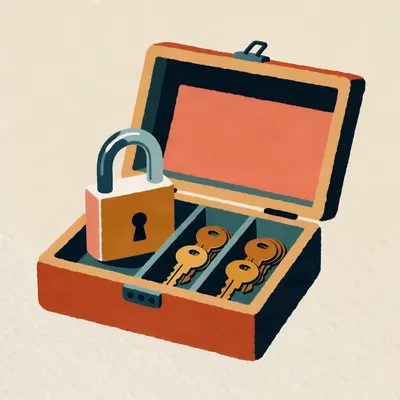
#6351: Why GPG Builds an Entire Department Instead of a Key
OpenPGP divides key management into four distinct capabilities: certify, sign, encrypt, and authenticate.
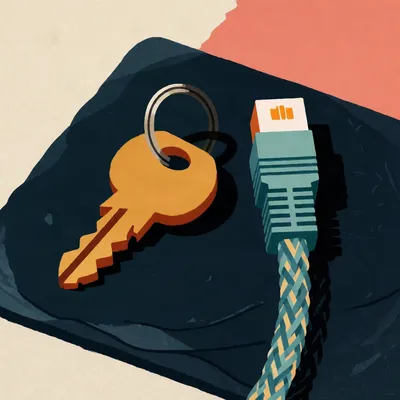
#6350: Why Modern SSH Keys Cannot Fix Harvested Traffic
Upgrading your user key to Ed25519 authenticates you cleanly, but it leaves recorded traffic vulnerable to future key-exchange attacks.

#6152: Whatever Happened to the One-Time Pad?
The math is unbreakable. The humans are the problem. Tracing the one-time pad from 1882 codebooks to quantum key distribution.

#6041: How CENO Moves a Web Page Into a Censored Country
A walk through CENO's actual plumbing: signed caches, volunteer bridges, and why the chain is deliberately short.
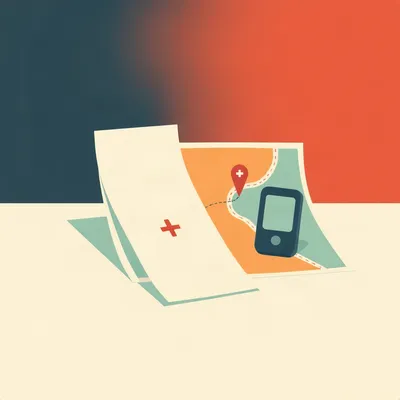
#5925: Plus Codes, Geohash, and the Open Addressing Gap
Google's Plus Codes promise offline, self-contained location — but the shortened form quietly reintroduces a dependency the standard was designed t...
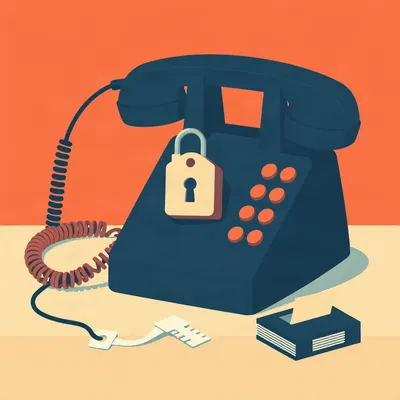
#5841: What's Actually Inside a Secure Line?
What makes a secure line secure — and why the call was never the vulnerable part.
#5748: What's Actually Inside an eSIM Adapter
An eSIM adapter isn't a converter — it's a eUICC chip in a SIM shell. Here's the silicon, the certificates, and the open source tools underneath.
#5253: Zeroization: Wiping Keys, Not Data
Destroying a 256-bit key takes milliseconds. Overwriting a terabyte takes hours. That gap is the whole story.
#5252: Paper in a Safe: The Most Rugged Key Backup
Hardware tokens protect your key from being copied. Paper in a safe protects it from being lost. You need both.

#5249: What Makes a Network Truly Sovereign?
An HF antenna on a consulate roof raises a bigger question: what makes a network sovereign — and why is everyone from cloud vendors to AI data cent...

#5202: What Happens to Breached Data After the Breach
Once a dataset leaks, it never stops moving. A look at the bots, combolists, and USB drives that make breached data impossible to recall.
#4754: Why Code Authentication Needs So Many Keys
API keys, OAuth tokens, service accounts — why can't one authenticator rule them all? The answer is trust topology.
#4740: Why FTP Still Exists and SSH Won't Die
FTP from 1985 is still not deprecated. SSH from 1995 keeps evolving. What determines which protocols survive?
#4733: Why OAuth Still Makes You Dance on Your Own Machine
Why does OAuth treat your personal computer like a public terminal? We explore token storage, PKCE, and Linux secret APIs.

#4649: Why Open Source Heroes Can't Afford Rent
The code running the internet is maintained by people earning a dollar a year. Why does the market fail to reward our digital commons?

#4541: What Would We Build If Cellular Started From Zero?
Exploring whether GSM's legacy parts—IMEI, SIM, circuit switching—are still needed in an all-IP world.
#4229: SSH Key Strategy: Compartmentalization vs. Chaos
Application-specific SSH keys vs. one key for everything — and what AI agents mean for both approaches.
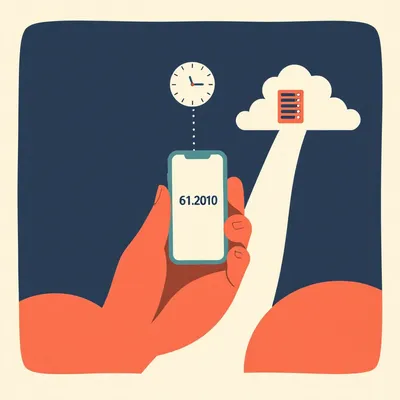
#4161: How Your Password Manager's 6-Digit Code Actually Works
Your phone and a server generate the same code without ever talking. Here's the elegant math behind it.

#3874: How to Tag 4000 Episodes Without Losing Your Mind
Why tagging breaks at scale, and how a two-stage AI pipeline fixes it for good.
#3781: Peer-to-Peer Backup: Brilliant or Overcomplicated?
Can a blockchain-inspired network replace your backup drive? We explore the promise and hidden pitfalls.
#3096: How Encrypted Plots Actually Get Busted
Encrypted phones don't stop arrests. Here's how intelligence agencies actually catch terror cells.

#2945: How a World Leader Phone Call Actually Works
A president doesn't just dial. The real process involves SCIFs, encrypted terminals, switchboard operators, and at least six listeners.
#2892: Where Does Your Biometric Data Actually Live?
Linux, Windows, and the surprising tradeoffs of storing your face and fingerprints.
#2840: How Long Must a Password Actually Be?
The surprising math behind how long your password needs to be to survive a brute-force attack.