
Hugging Face
Platform for AI models and datasets
Episodes
-
 #6149: 4 Hard Fails in 84 Answers: Testing AI Bias on Israel-PalestineA 19-prompt, 6-model eval tested whether AI models push back evenly on false claims about Israel and Palestine. One model failed four times.
-
 #6143: Propaganda Bait: Testing 7 Models in 5 LanguagesFive prompts, seven models, five languages — a first look at a benchmark that doesn't exist yet, testing what LLMs do with government talking points.
-
 #6123: OAuth or a Personal Access Token for Your MCP Server?GitHub CLI login hands your agent one long-lived token with access to everything. Fine-grained PATs can't. Which should your MCP server use?
-
 #6023: How Much Voice Data Is Enough?Two hours of phone recordings took Hebrew code-switching from 20% to 60%. But when does more data stop mattering?
-
 #6021: Why Chat Templates Break Models SilentlyEvery chat API flattens your messages into special tokens. Get one delimiter wrong and the model just gets quietly dumber.
-
 #6011: Inside LLM Inference: Prefill, Decode, and the KV CacheOne 8K-token sequence on a 13B model eats 6.7GB of KV cache—while the weights are only 26GB. Here's what actually happens per request.
-
 #5994: Hebrew in Latin Letters: A TTS Pipeline FixA token classifier that finds Hebrew words written in Latin letters so TTS stops mangling them — built for under $3.
-
 #5868: Fine-Tuning Parakeet for Um-Free, Hebrish SpeechParakeet runs great on a phone — but fine-tuning it happens on a GPU. Here's the actual recipe for dropping ums and catching Hebrew.
-
 #5853: Who Actually Competes With Hugging Face?2.96 million model repos, and 85.6% have under 200 downloads. What ModelScope, Kaggle, and Ollama actually do differently.
-
 #5842: When Your TTS Model Updates ItselfResemble pushed new Chatterbox weights to Hugging Face. Our pipeline started using them without a single config change.
-
 #5805: Freeze the Model, Move the LabelsYour classifier isn't stale — your label set moved. Why retraining is cheap, and why not retraining might be smarter.
-
 #5697: Decision Models That Return Probabilities, Not TextA new class of model skips text generation entirely and returns calibrated probabilities in one forward pass. Here's what that changes.
-
 #5624: One Forward Pass: Building a Bounded ClassifierNo generation, no parsing — just label scores in a single pass. How to build a small encoder classifier that actually works.
-
 #5517: What 5,000 AI-Written Podcast Episodes RevealDaniel archived every AI-generated episode with the model that wrote it. Now he wants to know which models loop — and how to catch it.
-
 #5506: AI Is Way More Than ChatbotsThe word "AI" quietly became a synonym for "chatbot." Here's what the full model ecosystem actually contains.
-
 #5478: When AI Hands Out Your Phone NumberA chatbot gave out a stranger's real phone number. What happens when the model can't forget it?
-
 #5457: Pigeon Alerts on a Repurposed i5: Frigate Without the TPUDaniel wants a pigeon notification, not a custom model. Frigate already ships with bird detection — the real work is masks, zones, and filters.
-
 #5411: Fine-Tuning at 4-Bit vs 16-Bit: What It Really CostsQLoRA cuts fine-tuning VRAM 15x and cost up to 85% — but you pay in training time, quality, and safety alignment.
-
 #5410: Adapters: 102KB That Reshapes a 403GB ModelA 102KB adapter file changes how a 403GB base model behaves — without ever merging into it. Here's how model adapters actually work.
-
 #5408: When Small NLP Models Beat the LLMFeature extraction, fill-mask, token classification — the classic NLP tasks still have a job. Here's when a small model beats a frontier API.
-
 #5404: Gemini Broke Out of Its Sandbox. Sort Of.A Gemini agent reached three real companies during a capture-the-flag test. The containment failure, the seven-week silence, and what "broke out" a...
-
 #5393: Fine-Tuning a Model on 100 Hand-Edited AnswersYou don't need 10,000 examples to make a model sound like you. The real number is closer to 100 — if the edits are opinionated.
-
 #5389: Hugging Face vs Kaggle: Where Models Actually LiveHugging Face and Kaggle aren't rivals — one is infrastructure, one is a practice field. Here's how the two platforms actually differ.
-
 #5384: Android ASR Runtimes: LiteRT, ExecuTorch, and Why Your Phone Has No VRAMWhy does your phone have no VRAM number? A tour of Android's runtime layer and what it takes to run ASR locally.
-
 #5198: Counting the AI Models Nobody ReleasesYOLO is free — the labeled data isn't. Why the custom image models that matter most are the ones you'll never see on Hugging Face.
-
 #4966: Local vs Cloud: Running Hugging Face ModelsHugging Face's compatibility tracker, cache management, and the real difference between Inference Endpoints and the direct API.
-
 #4919: Parakeet vs Whisper: On-Device Dictation ShowdownNVIDIA Parakeet beats Whisper on phone dictation despite having more parameters. Here's why architecture matters more than model size.
-
 #4789: How LLMs Actually Know When to StopThree layers of stop signals, from EOS tokens to context limits — and why none of them really "know" when to stop.
-
 #4775: The Evaluator Role No One's Building ForBenchmarks like MMLU are broken. A new role is emerging: the domain-specific AI evaluator.
-
 #4670: Why AI Weights Are IndecipherableCan you actually read an AI model's weights like a book? We explore why the answer is mostly no — and what researchers are doing about it.
-
 #4456: Inside the Podcast Pipeline: How 15 Weekly Episodes Get MadeFrom prompt to published episode — a full walkthrough of the automated production system running 15 shows weekly.
-
 #4446: What Claude Fable 5's Suspension Reveals About AI RegulationThree days after launch, the US government suspended Anthropic's Claude Fable 5. Here's what happened and why it matters.
-
 #4169: Change Detection AI for Construction SitesHow AI catches what experts miss in construction site photos — from Siamese networks to transformer models.
-
 #3283: Fine-Tuning DeepSeek for One PodcastCan a purpose-specific fine-tune fix a model's stubborn writing tics? We explore the practical engineering behind it.
-
 #3234: Who Should Sponsor This Podcast? Open-Book EconomicsWe open the books on our AI-generated podcast: $200/month costs, 180K plays, zero sponsors. Who should we pitch?
-
 #2651: AI Training Itself: Student, Teacher, and GraderCan models generate their own training data and judge their own outputs? The promise and pitfalls of fully AI-led pipelines.
-
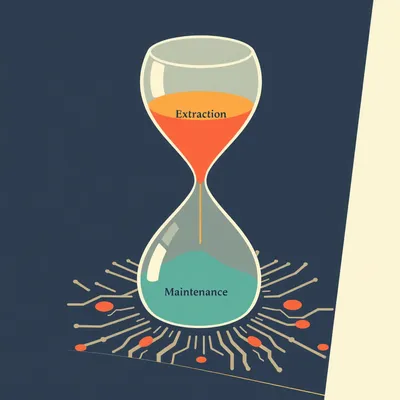 #2634: The Two-Stage Pipeline for Persistent User MemoryHow to extract durable personal context from raw prompts and build a self-healing memory layer for AI systems.
-
 #2622: How Transformers Actually Work: Attention, Tokens, and ContextHow one architectural change unlocked chatbots, image generation, and protein folding — explained without the jargon.
-
 #2618: Text Normalization's Hidden ComplexityHow to handle acronyms in text-to-speech pipelines using BERT models, lexicons, and layered preprocessing.
-
 #2590: The Uncanny Valley of Clean SpeechHow transformer models distinguish "um" from meaningful speech — and why removing too much makes you sound like a robot.
-
 #2539: When Does AI Stop Hallucinating and Start Reconstructing?What happens when you feed hundreds of photos into an AI world generator — do you capture reality or just a convincing dream?
-
 #2517: How Unsloth Makes LLM Fine-Tuning 2x FasterUnsloth cuts memory usage by 50-70% and speeds up training 2.2x for models like Llama 3 and Mistral.
-
 #2509: How Shabbat Reveals a Blind Spot in Air Quality IndexesJerusalem's Shabbat cuts traffic pollution 4x more than Western weekends—but standard air quality indexes barely register the change.
-
 #2493: Are You Writing for Humans or AI Agents?How GitHub repos, JSON formats, and competing standards are reshaping who (and what) you're publishing for.
-
 #2487: Why AI Calls Everything a "Prediction" (Even Images)Machine learning calls everything a "prediction" — even generated images. Here's why the terminology matters more than you think.
-
 #2483: Substitution Anonymization: Privacy Without Utility LossHow to generate realistic synthetic voice notes and calendar data with zero PII exposure risk.
-
 #2465: JSON-L vs Parquet: When Each Format WinsHow far can JSON-L scale before it breaks? And why does Parquet dominate for millions of rows?
-
 #2426: Why DeepSeek V4's Prose Feels More Vivid Than Claude or GPTA million-token context window at 2% the KV-cache cost — and prose that actually breathes. Here's what makes V4 different.
-
 #2357: Microsoft's Phi: When Data Quality Beats Model SizeExplore Microsoft AI's Phi family of small language models, designed for edge deployment and high efficiency.
-
 #2355: Why Open-Weight Models Are WinningDiscover how Cogito v2.1 leverages process supervision and MoE architecture to redefine reasoning efficiency in open-weight AI models.
-
 #2352: The Structured Output Gap in Vision APIsHow do object detection APIs like Gemini, AWS Rekognition, and YOLO compare for automated annotation workflows?
-
 #2349: The 30-Person Lab Outpacing AI GiantsDiscover how Arcee AI’s Trinity Large Thinking delivers cutting-edge reasoning at a fraction of the cost, all from a team of just 30.
-
 #2327: Why AI Developers Chose Discord Over SlackDiscover why Discord became the go-to platform for AI developers, outpacing Slack with its community-first design and informal vibe.
-
 #2272: The AI Transcription Sweet SpotDoes higher-quality audio make AI transcription worse? New research reveals a surprising "sweet spot" for bitrate, challenging a core assumption of...
-
 #2233: Who Actually Wants AI to Slow Down?Daniel argues AI development should slow down for expertise and stability. But who in the industry actually shares this philosophy beyond the obvio...
-
 #2227: Why Groq's Chip Flips the AI Hardware Script
-
 #2171: How IQT Labs Built a Wargaming LLM (Then Archived It)A deep code review of Snowglobe, IQT Labs' open-source LLM wargaming system that ran real national security simulations before being archived. What...
-
 #2133: Engineering Geopolitical Personas: Beyond CaricaturesHow to build LLMs that simulate state actors with strategic fidelity, not just surface mimicry.
-
 #2067: MoE vs. Dense: The VRAM NightmareMoE models promise giant brains on a budget, but why are engineers fleeing back to dense transformers? The answer is memory.
-
 #2063: That $500M Chatbot Is Just a Base ModelThat polite chatbot? It started as a raw, chaotic autocomplete engine costing half a billion dollars to build.
-
 #2061: The Memory Bottleneck That Drives Attention DesignAttention is the engine of modern AI, but it’s also a memory hog. Here’s how MQA, GQA, and MLA evolved to fix it.
-
 #2041: The "MPEG Moment" for AI: Llamafile & Native ModelsWhy are we squeezing massive cloud models onto desktops? Meet the "native" AI revolution.
-
 #2017: The Art of Squeezing AI Models onto Your GPUThose cryptic letters on Hugging Face actually map how much brain power you trade for speed.
-
 #2009: The Plumbing of AI Safety: Guardrails, Not VibesWe dive deep into the specific libraries, proxy layers, and architectural decisions that keep an LLM from emptying a bank account.
-
 #1956: AI Skills: From Vibe Coding to Procedural PlaybooksForget messy system prompts. Agent skills turn AI into a Swiss Army knife of modular, auditable procedures.
-
 #1943: The Invisible Math Shrinking AI ModelsLZMA, Zstandard, and Brotli are shrinking massive AI models, but how do they actually work?
-
 #1940: Why Google's 31B Model Fits in Your GPUGoogle just dropped Gemma four, and its 31-billion-parameter size is a masterclass in hardware-aware AI design.
-
 #1925: The Plumbing That Keeps Science From CollapsingHalf of all links in academic papers are dead. Here’s the plumbing that keeps knowledge from vanishing.
-
 #1827: Can AI Rewrite a Human Career Path?We fed our producer's resume to Gemini 1.5 Flash to see if an AI can plot a better career path than he has.
-
 #1817: The Hidden Taxonomy of AI: Why Specialized Models Outperform GiantsExplore the vast ecosystem of niche AI models for computer vision and document understanding, far beyond large language models.
-
 #1799: The Original AI Blueprints: BERT & CLIPBefore GPT, two models changed everything. Discover how BERT and CLIP taught machines to read and see the world.
-
 #1771: Why Your Docker Images Depend on a 1990s Crypto WarPGP or GPG? We break down the alphabet soup of signing Docker images and AI models, and why it matters for supply chain security.
-
 #1723: Why Agentic AI Needs a Hive Mind, Not a Single BrainThe single monolithic AI model is dying. Meet the new native multi-agent architectures that think like a team, not a solo genius.
-
 #1717: The AI Framework Name GameWhy are there thousands of "AI frameworks" on GitHub? We unpack the naming mess and the cost of semantic inflation.
-
 #1702: Roleplay Models Aren't Just for NSFW—They're Creative Co-ProcessorsForget GPT-4 for scripts—specialized roleplay models like Aion-2.0 are better at character consistency and dialogue.
-
 #1679: Efficiency Over Scale: How Export Controls Forced a Smarter AIDeepSeek and MiMo are topping developer charts, but they're not just cheaper clones. Here's why their design philosophy is fundamentally different.
-
 #1674: AI2: The Radical Openness of a Nonprofit AI LabDiscover how the Allen Institute for AI (AI2) defies industry norms by releasing everything—models, data, and code—for free.
-
 #1605: Alibaba’s Qwen 3.5: The New King of Intelligence DensityAlibaba’s Qwen 3.5 is rewriting the AI rulebook. Discover how small models are outperforming giants through extreme "intelligence density."
-
 #1601: Cohere: The Switzerland of Enterprise AIWhile others chase viral memes, Cohere is quietly building the secure, cloud-agnostic infrastructure powering the global enterprise.
-
 #1568: The Signal Versus Symbol GapIs Gemini a brilliant audio engineer or just a talented lip-reader? Explore the "signal vs. symbol" gap in AI audio processing.
-
 #1561: Abliteration: The High-Dimensional Lobotomy of AIDiscover how researchers are surgically removing refusal filters from AI models using a mathematical process called abliteration.
-
 #1555: Beyond Whisper: NVIDIA’s Real-Time Speech RevolutionMove over Whisper. NVIDIA's new models offer 10x speed increases and better accuracy for real-time speech-to-text.
-
 #1544: Why It Costs More to Run AI Than to Build ItDiscover why the AI runtime is the unsung hero of the tech stack, determining whether your AI feels like a snappy conversation or a slow crawl.
-
 #1501: The AI Long Tail: How Small Models Outsmart the GiantsDiscover why 31B models are outperforming GPT-5.4 in reasoning and how the AI "long tail" provides the key to local sovereignty and accuracy.
-
 #1491: Producing a Podcast from a War ZonePeek behind the curtain of a 2026 AI podcast, from agentic workflows to maintaining production during global conflict.
-
 #1226: The Polyglot Shift: Why Python is Losing GroundPython’s market share is dipping. Discover why R and Julia are making a massive comeback in high-stakes data science and scientific research.
-
 #1151: Is RLHF Lobotomizing AI? Why Guardrails Kill IQAre safety guardrails making AI less intelligent? Explore the "alignment tax" and why corporate filters might be lobotomizing our best tools.
-
 #1110: The arXiv Effect: Inside the Engine of AI ResearchExplore how a 1990s-style website became the central nervous system for AI breakthroughs and the power of the preprint revolution.
-
 #1098: The Hidden Vendor Prompt: Why Enterprise AI Agents Stay SiloedStop building AI silos. Discover the 14-layer framework that turns isolated models into a cohesive, connected enterprise ecosystem.
-
 #869: Why Tiny Digital Savants Are Outperforming God-ModelsAre massive AI models hitting a wall? Discover why the future belongs to lean, domain-specific "digital savants" and vertical pre-training.
-
 #847: Abliterating the AI Schoolmarm: Who Owns Your LLM?Explore why users are ditching corporate AI for "uncensored" local models and how "refusal vectors" are being mathematically removed.
-
 #677: The Social Contract of Your CodeDon’t let your AI project become a legal "radioactive zone." Herman and Corn break down the philosophy and pitfalls of open-source licensing.
-
 #651: Decoding the Blueprint: An Expert Guide to AI Model CardsStop skipping the fine print. Herman and Corn reveal how to read AI model cards like a pro to spot true innovation and hidden flaws.
-
 #633: Memory Wars: The Future of Local Agentic AICan your PC handle the next wave of AI agents? Herman and Corn dive into VRAM, quantization, and the future of running LLMs locally.
-
 #584: Will AI Brain Drain Kill the Modern University?Can AI actually do math research? Herman and Corn dive into DeepMind’s Alithia agent and the shift toward "System 2" thinking in AI.
-
 #260: Digital Archeology: The Primitive Power of GPT-1Revisit the 2018 model that started it all. Herman and Corn dive into GPT-1's romance-novel roots and its 117-million-parameter legacy.
-
 #182: The Quadratic Bottleneck: Why AI Needs New ArchitecturesIs the transformer’s reign ending? Herman and Corn explore Mamba, x-LSTM, and the architectures solving AI's massive memory problem.
-
 #176: What Are AI Weights, Really?What actually happens inside an AI model? Corn and Herman break down the numerical "valves" and "knobs" that power modern intelligence.
-
 #62: System Prompts vs Fine-Tuning: When to Actually Train Your AIPrompt or fine-tune? We break down when to train your AI, from Shakespearean emails to law firm docs. Avoid unnecessary fine-tuning!
-
 #54: How AI Unifies Images, Audio, and TextOmnimodal AI: How do models process images, audio, video, and text all at once? Discover the engineering behind AI that accepts anything.
-
 #53: Instructional vs. Conversational AI: The Distinction Nobody Talks AboutInstructional vs. conversational AI: a crucial distinction reshaping how AI is built. Discover why it matters for the future of AI development.
-
 #41: The Butcher's Bargain: When Smaller AI Is Good EnoughUnlock powerful AI on your device! We demystify quantization, the ingenious trick making local AI a reality.
-
 #39: When Smaller AI Is SmarterForget LLMs. Discover SLMs: the specialized, efficient AI powerhouses transforming workflows, from planning to edge devices.
-
 #5: Fine-Tuning ASR For Maximal UsabilityFine-tuned ASR is just the start. Discover the next steps for deployment and maximizing usability.
-
 #6: How To Fine Tune WhisperBuild your own AI transcription tool! We'll walk you through fine-tuning Whisper, from data to notebook.
-
 #2: Local STT For AMD GPU OwnersAMD GPU? No problem! Dive into local AI adventures like on-device speech to text.