Daniel sent us this one — he's asking about the whole category of gear people call moving accessories. Hand trucks, stair-climbing dollies, platform trucks — the stuff that sits between you and a herniated disc when you're relocating an apartment. He also wants to know what's useful for short urban moves, basic safety tips, and alternatives to cardboard boxes for wrapping and packing. Which, honestly, is the kind of practical question that only comes from someone who's stared at a flight of stairs with a dresser at the bottom and regret at the top.

The timing's right — moving season is basically now through August. There's a reason U-Haul's whole pricing model spikes in summer. But here's the thing most people don't realize: the difference between a miserable move and a merely annoying one is about two hundred dollars of equipment you didn't know existed. Let's start with hand trucks, because that's the entry point.
The upright two-wheeled thing with the little ledge at the bottom. I've seen people try to move entire apartments with one of those and a dream.
Right, and here's where the terminology actually matters because people use "dolly" and "hand truck" interchangeably and they're not the same thing. A hand truck is the vertical two-wheeled L-shaped device — you slide the nose plate under the load, tilt it back, and wheel it. A dolly is the flat horizontal platform with four casters that you set things on top of. They do completely different jobs.
The thing you'd use to move a vending machine is a hand truck, and the thing you'd use to slide a vending machine across a warehouse floor is a dolly.
And within hand trucks, there's a spectrum. The basic model you see at hardware stores — steel frame, solid rubber tires, maybe a hundred fifty to two hundred pound capacity — that's fine for a few boxes or a small appliance. But if you're moving an apartment, you want to look at the convertible models. These are hand trucks that fold down into a four-wheeled cart — so you get both tools in one. Milwaukee and Magliner both make good ones. The Milwaukee convertible is rated for about eight hundred pounds in the hand truck position and about five hundred as a cart.
Eight hundred pounds is a lot of regrettable life decisions.
It's a piano. It's a full-sized refrigerator. And here's the detail that matters: tire composition. Pneumatic tires — air-filled — give you shock absorption on uneven surfaces like sidewalks or cobblestones, which is most of urban moving. Solid tires never go flat but they transmit every pebble directly into your spine. For apartment moves where you're going from building to truck to building, pneumatic is worth the maintenance.
You're checking tire pressure before a move like you'd check a bike.
You should be. Underinflated tires make the hand truck unstable and increase the force you need to pull it. And hand truck geometry matters — the distance from the axle to the nose plate, the height of the handle, the angle of the frame when tilted. A well-designed hand truck puts the center of gravity directly over the axle when you tilt it back. A poorly designed one fights you the whole way.
The ergonomics of "thing on wheels." This is very on-brand for you.
I'll take that as a compliment. Now, the stair-climbing dolly — this is where the category gets genuinely interesting, because Daniel's prompt specifically called out ones that can go upstairs.
The prompt asked about moving dollies that handle stairs, yes. Which sounds like a magic trick to anyone who's ever dragged a mattress up three flights by sheer spite.
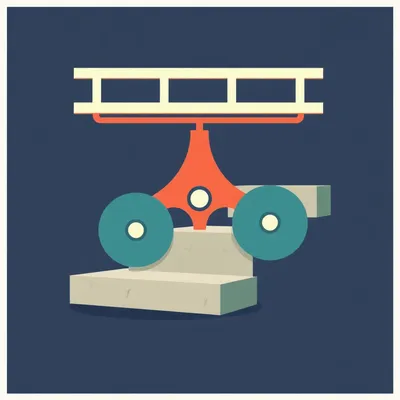
The mechanism is actually clever. A stair-climbing dolly has a rotating triangular wheel assembly — three small wheels mounted on a central hub that rotates as you pull the dolly up each step. Each triangle arm engages the next stair tread and rolls over it. It converts the vertical lift into a rolling motion. You're not dead-lifting the load up each step, you're rolling it up incrementally.
It's like giving your furniture a set of tiny tank treads that only work on stairs.
That's not a bad way to picture it. The catch is they're not effortless — you still need to pull and control the load, and the heavier the item, the more force you're applying. But the difference in peak load on your lower back is dramatic. Instead of a sudden two-hundred-pound lift, you're doing a steady forty or fifty pounds of pull.
Which is the difference between moving and "moving and then spending Tuesday at the orthopedic clinic.
I've treated enough moving-related back injuries to say that's not even hyperbole. The models to look at are things like the Wesco Stair King or the Harper stair-climbing hand truck. The Wesco has a rated capacity around seven hundred pounds and the rotating wheel assembly is steel, not plastic — that matters because plastic stair climbers can crack on the third or fourth flight when they're hot from friction. Steel holds up.
What about for someone who's not moving a piano, just the usual apartment detritus — bookshelves, boxes, a couch that's seen better decades?
For that use case, there's a lighter category — the stair-climbing trolley. These are smaller, aluminum-framed, with a capacity around two hundred to three hundred pounds. They're designed for deliveries, not whole-apartment moves. The key spec is the wheelbase — the distance between the two fixed wheels. A wider wheelbase is more stable on stairs, but harder to maneuver in tight hallways. For urban apartments, you're trading off stability for cornering.
The Miata-versus-Suburban problem, but for moving hardware.
The solution, honestly, is to rent the heavy-duty stair climber for the one or two pieces that actually need it, and use a standard hand truck for everything else. Most equipment rental places carry stair-climbing dollies now — Home Depot's rental program has them in most urban locations, typically around thirty to forty dollars a day.
That's a detail worth underlining. You don't need to buy this stuff. The stair-climbing dolly is the quintessential "rent it for the day, return it, never think about it again" item unless you're moving professionally.
Now let's talk platform trucks, because this is the third category and it gets overlooked constantly.
The flat cart with four wheels and a handle. The thing hotel bellhops use.
But for moving, the utility is in consolidating lots of small trips into one big trip. A standard platform truck is about twenty-four by forty-eight inches — that's the size of a standard pallet, by design — and can carry upwards of two thousand pounds on a steel deck. For an apartment move, you can stack ten, fifteen boxes on one, strap them down, and move them from the apartment to the truck in one go instead of eight trips.
The efficiency gain there isn't just time — it's decision fatigue. Every trip up and down stairs is another moment where you're asking yourself why you own so many books.
In urban environments, the platform truck solves a specific problem: the distance from the apartment door to the moving truck. In a city, that distance might be a hundred yards down a hallway, through a lobby, across a sidewalk, and around a corner. If you're carrying boxes two at a time, that's an hour of shuttling. A platform truck turns it into three trips.
What about the surface? Sidewalks in Jerusalem, for instance, are basically an obstacle course designed by people who hate wheels.
That's where caster selection matters. Most platform trucks come with hard rubber casters — fine for smooth warehouse floors, terrible for cracked pavement. You want polyurethane casters, which are softer and roll over debris and cracks without catching. And you want at least two of the four casters to be swivel, with the other two fixed, so you can steer. Four swivel casters sound more maneuverable but they're actually harder to control under load — the platform drifts.
The engineering of "cart goes straight" is deeper than I expected.
Everything's deep when you look at it. That's the podcast.
So we've covered hand trucks, stair-climbing dollies, and platform trucks. The prompt also asked about anything useful for short-distance urban moves specifically. What else is in that category?
Have you seen these?
I have not.
They're essentially two harnesses connected by a lifting strap. Two people wear them like backpack straps, and the strap between them supports the object you're carrying. It shifts the load from your arms and lower back to your shoulders and legs. For moving a dresser or a large piece of furniture down a narrow stairwell where a dolly won't fit, they're remarkably effective. The brand everyone references is the Forearm Forklift — despite the name, it's the same shoulder-dolly concept.
"Forearm Forklift" is a name that suggests the marketing team lost a bet and decided to own it.
They've been around for decades and they sell at basically every hardware store. The rated capacity on the standard model is about eight hundred pounds. The real advantage in an urban move is that stairwells in older apartment buildings often have tight landings where you can't pivot a hand truck. Two people with shoulder straps can walk a dresser up those stairs without ever setting it down.
The safety angle there is obvious — you're not twisting, you're not lifting with your back, the load is between two people who can communicate.
Communication is actually the hidden safety feature. When you're both wearing harnesses connected to the same load, you have to coordinate your movements. You can't just yank or shift unexpectedly. It forces a synchronized moving rhythm that prevents the sudden jerky motions that cause injuries.
Like a really boring three-legged race where the prize is not throwing your back out.
Another urban-specific item: furniture sliders. These are small plastic or felt discs that go under the feet or corners of heavy furniture. On hard floors or low-pile carpet, you can slide a fully loaded bookshelf across a room with one hand. The EZ Moves brand is the standard — they're basically Teflon-coated discs that reduce the coefficient of friction to almost nothing.
Coefficient of friction. You really are a retired pediatrician.
I contain multitudes. But seriously, these things cost about fifteen dollars for a set and they're the difference between dragging furniture and gliding it. In an urban apartment where you're rearranging rooms to stage boxes, or sliding things to the door for pickup, they save your floors and your back simultaneously.
I'm imagining someone trying to use those on Jerusalem stone tiles, where the grout lines are basically speed bumps.
That's the limitation — they work on smooth surfaces. For rough outdoor surfaces or deep carpet, you want a different tool: the furniture dolly with carpeted pads. These are small four-caster platforms you set under each corner of a piece of furniture. The carpeted top grips the furniture, and the casters roll over uneven surfaces. You can get a set of four for maybe forty dollars.
At that point you've basically given your couch a skateboard.
A very slow skateboard.
Let's move to the safety side. The prompt specifically asked for basic safe handling tips. What's the thing people get wrong most often?
The number one mistake is lifting with a rounded back. Everyone knows "lift with your legs" but almost nobody does it under time pressure. When you're on your eighth hour of moving, your form degrades, and that's when the injuries happen. When you round your lumbar spine under load, you're putting shear force on the intervertebral discs. The discs can handle compression — they're designed for that. They cannot handle shear. That's how herniations happen.
The advice is not just "lift with your legs" but "stop moving before your form collapses.
The second most common mistake is twisting while carrying — picking up a box and rotating your torso to set it down. That rotation under load is exactly the combination of compression and shear that discs can't tolerate. You want to move your feet, not your spine. Pivot your whole body.
What about hand truck technique specifically?
The big error is loading the hand truck unevenly. The heaviest items go on the bottom, against the frame. If you stack heavy on top, the center of gravity is high and the hand truck becomes tippy. The second error is tilting the hand truck too far back — you want the load balanced over the axle, not leaning back so far that you're supporting the weight with your arms instead of the wheels. The wheels should carry the load; your arms are just for steering and balance.
On stairs with a stair-climbing dolly?
Always stay uphill of the load. If you're going up stairs, you pull from above. If you're going down, you're above the load, controlling its descent. Never get below the load on stairs. If it gets away from you, you want gravity pulling it away from your body, not toward it.
That's one of those rules that sounds obvious when you say it but people violate it constantly because it's slightly more convenient to push than pull.
Convenience is the enemy of safety in moving. The third piece: strap your loads. Ratchet straps or cam-buckle straps — not bungee cords, which can snap back and hit you. A load that shifts on a hand truck going down stairs is a load that can take you with it. A fifteen-dollar set of straps prevents that.
Let's talk about wrapping and packing alternatives, because the prompt asked about "things besides boxes." I've seen people try to move with garbage bags and optimism.
Garbage bags tear and they offer zero protection. The alternative that's underrated is plastic stretch wrap — the industrial stuff, not kitchen cling film. You can buy rolls of it at any hardware store, typically five inches wide, and you use it to wrap furniture. It holds drawers closed, keeps cabinet doors from swinging open, protects upholstery from dirt and moisture, and can bundle loose items together.
You're basically mummifying your furniture.
And it's remarkably effective. A wrapped bookshelf with the books still in it — which you should never do, by the way, always empty bookshelves — but if you had to, stretch wrap would hold everything in place. For the actual use case, you wrap empty furniture to protect the finish and keep moving blankets in place.
Those are the thick quilted pads that professional movers use.
Yes, and they're available for rent or purchase. The standard size is about seventy-two by eighty inches, quilted cotton with a polyester fill. They protect furniture from scratches and dings, and they're thick enough to absorb impact. For an apartment move, six to ten blankets is usually sufficient. You wrap the furniture in moving blankets, then secure the blankets with stretch wrap or tape.
The combination of moving blanket plus stretch wrap is basically a DIY furniture condom.
I was going to say "protective cocoon" but sure, that works too. Another alternative to boxes: plastic storage bins. The black and yellow ones from hardware stores — the HDX brand at Home Depot, for instance. They're about twenty-seven gallons, they stack securely, they have attached lids, and they're far more durable than cardboard. The downside is they're more expensive — about eight to ten dollars each versus a dollar or two for a cardboard box. But they're reusable forever.
They don't collapse when someone stacks something heavy on top, which cardboard boxes absolutely do.
Cardboard boxes fail at the corners. That's where the structural integrity is. A plastic bin distributes weight through the rigid walls and the lid. For books, which are the densest thing most people own, plastic bins are vastly superior to cardboard.
Books: the reason moving companies charge by weight.
There's another packing material worth mentioning: foam pouches and foam sheets. These are thin foam wraps — like what electronics come packaged in — and they're excellent for dishes, glassware, and anything fragile. Unlike bubble wrap, they don't pop and lose their cushioning. Unlike newspaper, they don't leave ink on your dishes. A roll of foam sheeting costs about fifteen dollars and you can cut it to size.
I've also seen people use their own linens and towels as packing material, which seems efficient but also like you're just creating a different unpacking problem.
It's actually a good strategy if you're moving locally. Towels between plates, sheets around picture frames, clothing in duffel bags instead of boxes. You're moving the textiles anyway — using them as packing material just combines two tasks. The caveat is that you need to remember you did it, or you'll be opening boxes going "why is my winter coat wrapped around a blender.
The archeological dig phase of unpacking.
Which lasts approximately eighteen months in most households.
Let's circle back to something — the prompt mentioned short distances in urban environments. Are there tools that are specific to that scenario beyond what we've covered?
The utility cart — like a folding wagon — is surprisingly useful for urban moves. These are collapsible fabric carts with four wheels, originally designed for gardening or beach trips, but they handle the "move twenty small items three blocks" problem beautifully. The Mac Sports wagon is the standard — folds flat, holds about a hundred fifty pounds, and costs around a hundred dollars. For someone moving within the same neighborhood, you can shuttle an enormous amount of stuff in one of these without needing a vehicle at all.
The pedestrian move. I've actually seen people do this in Jerusalem — just walking their belongings down the street in shifts with a wagon.
In dense urban areas where parking a moving truck is impossible and the new apartment is a quarter mile away, the wagon strategy is underrated. It sounds absurd until you do the math: twenty trips with a wagon versus coordinating a truck, permits, parking, and a crew. For a studio apartment's worth of stuff, it's not crazy.
What about for getting things in and out of the truck itself? The ramp-versus-lift-gate question.
Most rental moving trucks come with a ramp, which is fine for hand trucks and dollies — you can wheel things up and down. The limitation is the incline. A fully loaded hand truck going up a steep ramp requires significant force, and going down requires controlled braking. If you're moving heavy items solo, a truck with a hydraulic lift gate is worth the extra rental cost. The lift gate raises the load to truck-bed height mechanically, so you're rolling things on and off at a level surface.
That's something you specify when you're reserving the truck — not all of them have it.
Penske and Budget tend to have lift gates available on their larger trucks; U-Haul typically doesn't. If you're moving something like a safe or a large appliance, the lift gate pays for itself in injury prevention.
Let's get into some handling specifics for the wrapping materials. You mentioned stretch wrap — how do you actually use it effectively?
The technique matters. You start at the bottom and work upward, overlapping each pass by about half the width of the wrap. You want tension but not so much that you crush what you're wrapping. For furniture with drawers, wrap across the drawer fronts to keep them closed — don't wrap around the entire piece in a way that seals the drawers shut permanently, because you'll need to open them eventually. For upholstered furniture, stretch wrap protects against dirt and snags but don't leave it on for more than a few days — the fabric needs to breathe, and trapped moisture can cause mildew.
The mummification is temporary.
The other material I want to mention is corrugated cardboard sheets — not boxes, just flat sheets. They're excellent for protecting floors during a move. You tape them down in high-traffic areas and they absorb the abuse from hand truck wheels and foot traffic. A roll of floor protection paper — basically heavy kraft paper — costs about twenty dollars and covers a couple hundred square feet.
This is the stuff that looks like a giant roll of brown wrapping paper.
And if you're moving in wet weather, floor protection is non-negotiable. Wet hand truck wheels on hardwood floors will destroy the finish in one pass.
What about mattress bags? I feel like those are the one specialty item everyone knows about but nobody buys until they're staring at a mattress in the rain.
Mattress bags are essential. They're heavy-gauge plastic bags sized for mattresses — twin, full, queen, king — and they protect against dirt, moisture, and bedbugs during transit. The bedbug angle is actually significant if you're using a shared moving truck or storage facility. A mattress bag that's sealed with tape is a barrier. They cost maybe ten to fifteen dollars each and they're worth ten times that in peace of mind.
Bedbugs: the souvenir nobody wants from their move.
They're a real risk in urban environments where multiple tenants share building infrastructure. Bedbugs travel through wall voids and electrical conduits — moving is actually one of the peak transmission events because you're carrying soft goods through shared hallways and loading areas.
That's a delightful thought to insert into anyone's moving day.
I'm a doctor. I deal in delightful thoughts.
Let's talk about some of the more niche items. The prompt asked for "anything useful." What about forearm lifting straps? You mentioned the shoulder dolly — are there simpler versions?
Yes, there are forearm straps — essentially two loops of webbing that go around your forearms, connected by a strap. You slide the strap under the object and lift with your arms straight down. They're simpler than shoulder dollies and work well for shorter carries. The limitation is that the load is still on your arms and grip strength, not transferred to your shoulders. For a dresser or a large piece, shoulder dollies are better. For moving a few heavy boxes across a room, forearm straps are fine.
What about suction cups? I've seen professional glaziers use those for moving glass and large panels.
Suction cup handles are useful for moving anything with a smooth, non-porous surface — glass tabletops, mirrors, large framed art with glass, stone countertops, even large appliances with smooth finishes. You press the cup against the surface, pump the handle to create vacuum, and you've got a secure grip point. A pair of them costs about thirty dollars and they're rated for a hundred pounds or more per cup. For a heavy mirror that's awkward to grip, they're a game-changer.
The physics of "I can't get my fingers around this" solved by atmospheric pressure.
And they're also excellent for installing or removing large items from tight spaces — you can hold a glass tabletop from above and lower it into place without needing hand clearance underneath.
Going back to the safety side for a moment — what's the guidance on team lifting versus solo lifting?
The general rule is that anything over fifty pounds should be a two-person lift, but that's conservative and depends on the shape and size. The real guideline is: if you can't hold the object close to your body, get help. The farther the load is from your center of gravity, the greater the torque on your spine. A compact fifty-pound box is easier to solo-lift than a bulky thirty-pound lamp that you have to hold at arm's length.
It's not just weight, it's geometry.
Weight, geometry, and grip. If the object doesn't have good handholds, you're going to compensate with awkward postures. That's where lifting straps or suction cups come in — they create grip points where none exist.
You mentioned earlier that the convertible hand truck is good for apartment moves. What about the lightweight aluminum hand trucks — are those worth it?
For apartment moves specifically, aluminum hand trucks are great because you're often carrying the hand truck itself up and down stairs between loads. A steel hand truck weighs forty to fifty pounds. An aluminum one weighs about twenty-five. Over the course of a move where you're lifting the hand truck into a truck or carrying it up stairs a dozen times, that weight differential adds up.
The tool becomes part of the load.
The trade-off is that aluminum hand trucks typically have lower weight capacities — around four to five hundred pounds versus eight hundred plus for steel. For most apartment moves, that's still plenty. You're not moving industrial equipment.
What about the folding hand trucks that collapse down to basically a briefcase size?
Those are travel hand trucks, designed for salespeople carrying sample cases or people moving a few boxes at a time. They're not suitable for an apartment move. The telescoping handle and small wheels can't handle the weight or the terrain. They're a different tool for a different job.
You'd classify those as "airport accessories," not "moving accessories.
That's a clean distinction. Moving accessories need to handle repeated heavy loads over varied terrain. Airport accessories need to fold into an overhead bin. Different design priorities entirely.
Let's talk about the economics of all this for a second. If someone's moving a one-bedroom apartment, what's the reasonable budget for accessories?
If you're buying nothing and renting the specialty items, you can equip yourself well for about a hundred to a hundred fifty dollars. That's a stair-climbing dolly rental for the day, a standard hand truck rental, a set of furniture sliders, a roll of stretch wrap, a few moving blankets, and some ratchet straps. If you're buying everything, it's more like three to four hundred dollars. But the purchased items last for multiple moves.
Compared to the cost of professional movers, which is what — several hundred to a couple thousand depending on distance?
In most urban markets, professional movers for a one-bedroom apartment run eight hundred to fifteen hundred dollars for a local move. The DIY approach with the right equipment is substantially cheaper, but you're trading money for time and physical labor. The equipment we're describing makes the DIY approach feasible without injury, which is the real calculus.
That's probably the core insight here. The difference between a DIY move that's miserable and dangerous and one that's just tiring but manageable is about two hundred dollars of gear and a willingness to learn how to use it.
The willingness to rent rather than buy. People have this instinct to purchase tools they'll use once, and moving equipment is the poster child for that mistake. Rent the stair climber. Rent the platform truck. Buy the consumables — the stretch wrap, the mattress bags, the furniture sliders — because those wear out and you'll use them. But the heavy hardware should be a rental unless you're moving annually.
The "moving annually" lifestyle is its own category of chaos.
It's more common than you'd think, especially in urban areas with high rental turnover. In cities like New York or San Francisco — or Jerusalem, for that matter — people move every year or two as leases change. For that person, buying a good convertible hand truck and a set of shoulder dollies makes sense. For everyone else, rent.
What's one piece of gear we haven't mentioned that you think is underrated?
The appliance dolly. This is a specialized hand truck with a curved back and a strap assembly specifically designed for moving refrigerators, washing machines, and other large appliances. The curved frame cradles the appliance, and the ratcheting strap secures it so it can't shift. Regular hand trucks can move appliances, but the load is less stable. An appliance dolly makes it almost trivial. Rental cost is about twenty dollars a day.
The use case there is someone who's taking their washer and dryer with them.
Or moving a refrigerator within the apartment to clean behind it before the move-out inspection. Appliance dollies also have stair-climbing treads on the back — these are metal skids that let you slide the dolly up and down stairs on the frame rather than the wheels. It's a different mechanism than the rotating stair climber, and it works better for very heavy, compact loads like appliances.
There are two different stair-climbing mechanisms — the rotating wheel assembly and the frame skids.
Yes, and they're optimized for different loads. Rotating wheels for boxes and furniture, skids for appliances and safes. The skid method creates more friction and requires more force, but it's more stable for very dense, heavy items.
This is the kind of granularity that makes me wonder how professional movers think about all this. They must have opinions.
Professional movers have extremely strong opinions about equipment, and they're worth listening to because they've made every mistake at least once. The consensus among pros is that the most important piece of equipment isn't the dolly or the truck — it's the moving blanket. Protect the furniture, protect the walls, protect the floors. Everything else is secondary.
The moving blanket as the unsung hero of relocation.
It's the one item that every professional crew carries in quantity and every DIY mover skimps on. Buy or rent more than you think you need. You can always return unused ones.
Alright, let's shift to some technique tips for wrapping specifically. You mentioned stretch wrap for furniture. What about for oddly-shaped items like lamps or floor plants?
Lamps should be disassembled — shade off, harp off, bulb out — and each component wrapped separately. The base gets stretch wrap or a moving blanket. The shade gets its own box or a large plastic bag with nothing else inside. Lamp shades are surprisingly fragile and surprisingly expensive to replace.
I've seen people try to move a ficus in the back seat of a Corolla.
Tall plants should be wrapped loosely in a plastic bag to contain the foliage and prevent branch breakage, then placed in a tall box if possible. The pot gets wrapped separately. For short moves, a plant can go in a sturdy box with padding around the pot to keep it upright. The key is preventing the plant from tipping over in transit — once it tips, the dirt spills, the branches snap, and you're cleaning soil out of your car upholstery for the next year.
The voice of experience.
Let's say I've seen things.
What about moving a desk or a table? Disassemble or move whole?
If it fits through the doorways assembled, move it whole — it's faster and you won't lose hardware. Remove the legs only if you have to. If you do disassemble, put all the hardware in a labeled ziplock bag and tape it to the underside of the furniture piece. Nothing worse than a desk with no screws and a bag of hardware that's in "one of these boxes, somewhere.
The archeological dig we mentioned earlier.
The universal moving experience is opening a box three months later and finding the screws you needed on day one.
Let's hit one more safety point before we move on. You mentioned straps for securing loads. What about securing things inside the moving truck?
Load bars, also called cargo bars or load locks. These are telescoping metal bars that brace between the walls of the truck to hold cargo in place. They're ratcheting, so you extend them to the width of the truck and then crank them tight. They prevent loads from shifting during transit, which is both a safety issue and a damage-prevention issue. A load that shifts can fall over when you open the door, or can shift the truck's center of gravity enough to affect handling.
These are truck-specific, or universal?
Most are adjustable from about forty inches to seventy inches, so they fit standard box trucks. Some rental trucks include them; if not, they're about thirty dollars each and you typically need two or three. They're also useful for creating a "shelf" — you can load heavy items against the back wall, install a load bar across them, and then stack lighter items on top of the bar.
You're building a mezzanine in your moving truck.
A very temporary mezzanine.
What's the most common injury you saw from moving, back when you were practicing?
Besides the back injuries we already covered, it was hand injuries. People crush fingers between furniture and doorframes, or they try to catch something that's falling and get their hand pinned. The rule is: if it's falling, let it fall. Furniture can be repaired or replaced. Hands are harder.
That's a good note to land the safety section on. Let the dresser fall.
Let the dresser fall. Your tendons will thank you.
We've covered a lot of ground. Hand trucks, stair-climbing dollies, platform trucks, urban-specific tools, safety, and wrapping alternatives. Anything we missed that the prompt was angling at?
One thing I want to mention because it's clever: wardrobe boxes. These are tall cardboard boxes with a metal bar across the top, designed for hanging clothes. You take clothes directly from your closet, hang them in the box, and they arrive at the new place unwrinkled and ready to hang. No folding, no packing, no ironing. For a move across town or across the country, they're one of those things that feels extravagant until you use one and realize it saved you three hours of laundry.
The "just move the closet" approach.
And they're reusable — you can break them down and store them flat for the next move. They cost about fifteen dollars each and each one holds about two feet of hanging clothes.
That's a useful tip to end the gear section on. Let's wrap with the forward-looking thought: as cities get denser and people move more frequently, do you think we'll see innovation in this space, or is the hand truck basically solved?
The hand truck is a mature technology — the basic design hasn't changed in a century. But what's changing is the electrification of everything. There are now powered stair-climbing dollies with electric motors that do the lifting for you. They're expensive — two to three thousand dollars — but as battery costs come down, I think we'll see those become rental staples. The idea of moving a refrigerator up three flights of stairs without breaking a sweat is compelling.
The Roomba-ification of the dolly.
Something like that. The other trend is modular moving systems — companies that rent you a complete set of stackable, wheeled containers that double as moving boxes and furniture dollies. You pack your stuff into their bins, wheel them to the truck, and return the bins after you unpack. No cardboard, no tape, no waste. It's a better model environmentally and logistically.
The future of moving might be "no boxes, just bins, and the bins have wheels.
That's where the smart money is. And it solves the biggest pain point of moving, which is the cardboard lifecycle — buying it, assembling it, taping it, breaking it down, recycling it. It's a huge time sink.
On that note of a more efficient future where we all rent wheeled bins and never tape another box, let's bring in Hilbert.
Now: Hilbert's daily fun fact.

In the early nineteen hundreds, German botanist Friedrich Welwitsch discovered a plant in the Namib Desert that survives entirely on fog moisture, lives for over a thousand years, and is considered a living fossil with no known close relatives.
A plant that drinks fog and outlives empires. That's unsettling.
The Namib Desert also has some of the oldest epiphyte communities on the planet. But yes, unsettling is the word.
Thanks to Hilbert Flumingtop for that. This has been My Weird Prompts. You can find every episode, transcripts, and more at myweirdprompts dot com. If you're moving an apartment this summer — rent the stair climber, buy the stretch wrap, and let the dresser fall.
Your tendons will thank you.


 chatterbox-regular