Daniel sent us this one — he wants to talk about car emergency kits, specifically what you should keep in the trunk for everything from routine punctures to breakdowns on dark roads. He's been carrying Roadside LED Flares for a few years, thinks they're great, and wants our take on them. Plus he's asking what other gear belongs in a vehicle kit, and what we'd put in a small trunk-specific first aid kit. This is one of those topics where everyone nods along but almost nobody actually does it properly.

The numbers back that up. AAA did a survey — nearly forty percent of drivers have no emergency supplies in their car beyond maybe whatever the manufacturer tossed under the cargo floor. A spare tire if they're lucky, and half the time that spare is underinflated.
The spare that's been quietly losing pressure since the Obama administration.
That's the one. And here's the thing about roadside emergencies — the difference between an inconvenience and a genuinely dangerous situation often comes down to whether you've got about three or four specific items within arm's reach. It's not about building a doomsday bunker in your trunk. It's about the handful of things that solve the most common failure modes.
Let's start with the LED flares, since that's what kicked this off. I've seen these — they're those hockey puck things with the blinking lights, right?
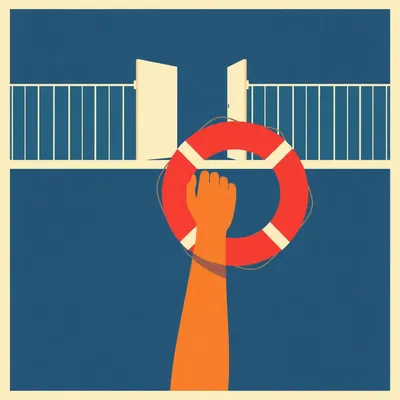
Yeah, and I want to give Daniel credit here because this is actually one of the smartest single items you can add to a car kit. Traditional road flares — the pyrotechnic kind — they burn for fifteen to twenty minutes, they're a fire hazard on dry grass or near fuel leaks, they produce toxic smoke, and once they're done they're just hot garbage on the asphalt. LED flares, by contrast, run on batteries — typically AA or AAA — they can flash or stay steady, they're visible from a mile away, they're reusable, and they don't set anything on fire.
You don't have to stand there holding a small controlled burn while hoping the semi truck sees you.
The National Highway Traffic Safety Administration has been quietly recommending electronic alternatives to combustion flares for years now, especially for non-commercial drivers. The LED versions also work in rain and snow, which traditional flares can struggle with. Some of the better models — the ones from companies like PowerFlare or Wagan — have magnetic bases so they stick to the roof or the side of the vehicle. That magnetic base is a bigger deal than it sounds.
Because a flare on the ground is a flare nobody sees until they're on top of it.
If you're broken down on a dark road, you want visibility at driver eye level, not down at pavement level. Stick a flashing LED flare on your roof and suddenly you're visible from way farther out. Some of these units also have a white light mode, so they double as work lights if you're changing a tire in the dark. And they weigh almost nothing. You can keep four or six of them in a small pouch and forget they're there until you need them.
The LED flares — strong endorsement. What's the downside?
That's the main one. If you're leaving them in a trunk that goes through summer heat and winter freeze, alkaline batteries can leak and ruin the contacts. The fix is simple — either check them when you check your tire pressure, or use lithium batteries. Lithium AAs don't leak, and they hold up better in temperature extremes. They cost more, but for something you're leaving untouched for potentially years, it's worth it. Some of the newer LED flares have built-in rechargeable lithium batteries with USB-C charging, which is nice, but then you've got to remember to top them up periodically.
The maintenance problem. Which is the theme that runs through all of this, isn't it? You can buy the perfect kit and two years later it's a bag of dead batteries and expired supplies.
That's the trap. And I think that's actually where we should start before we get into the gear list — the maintenance philosophy. Because the best car emergency kit is the one you actually remember exists.
What's your system?
Twice a year, when daylight saving time changes, I pull everything out of the trunk, check batteries, check expiration dates on medical supplies, check that the tire inflator still works, and repack it. Takes fifteen minutes. If you don't have some kind of calendar trigger, the kit will degrade. It's not a question of if, it's when.
The daylight saving trigger is good. It's the same trick people use for smoke detector batteries. So let's build the kit. Daniel asked specifically about a small trunk first aid kit — let's start there, then broaden out to the rest of the gear.
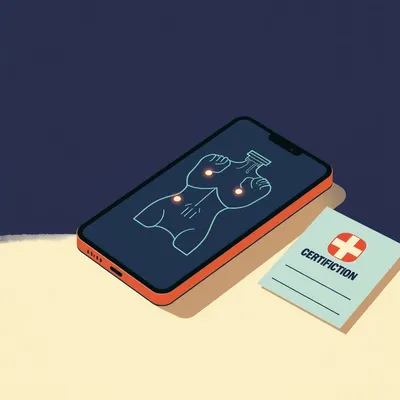
Here's my take on a vehicle first aid kit, and it's different from what you'd keep in your house. The car kit has one primary job: stabilize someone until emergency services arrive, or treat minor injuries enough that you can safely continue driving. You're not running a clinic out of your trunk.
Stabilize and continue. That's the framing.
So the core of a car first aid kit, in my view, is bleeding control. The number one preventable cause of death in road accidents is hemorrhage. If you can stop serious bleeding, you buy someone time. So the kit should have at minimum two tourniquets — and I mean real tourniquets, not improvised belts. The CAT, Combat Application Tourniquet, is the standard. They're about thirty dollars each. You want two because some injuries require more than one, and because if you're helping multiple people, you're covered.
That's already more than most people would think to include.
Most people think Band-Aids. And Band-Aids are fine — throw a few in — but they're not what saves lives. After tourniquets, you want hemostatic gauze. This is gauze impregnated with a clotting agent — QuikClot is the big brand. It's for wounds where a tourniquet isn't practical — junctional wounds, groin, armpit, neck. Pack the wound with it and apply pressure. One or two rolls. Then you want a compression bandage — the Israeli bandage is the famous one, and it's excellent. It's an elastic bandage with a pressure bar built in, so you can apply focused pressure to a wound and wrap it in one motion.
Tourniquet, hemostatic gauze, Israeli bandage. This is sounding less like a first aid kit and more like an infantry medic's pouch.
The principles are the same, and the gear has migrated into civilian use because it works. The American College of Surgeons runs the Stop the Bleed program, which trains civilians in exactly these interventions. It's become standard public health guidance — if you're in a position to help someone who's bleeding badly, these three items are the tools that make the difference. And they're compact. All of that fits in a pouch the size of a hardcover book.
That's the trauma layer. What about the more mundane stuff?
After trauma, I'd add a few things. Nitrile gloves — several pairs — because you don't know whose blood you're dealing with. A CPR face shield, the kind that folds flat. Tweezers for splinters or glass. A small roll of medical tape. A few adhesive bandages in various sizes — you don't need a hundred, just enough to cover a cut. A triangular bandage, which is basically a large cloth triangle that can be a sling, a wrap, a tourniquet in a pinch. Burn gel — the small single-use packets. And an emergency blanket, the Mylar kind, because shock makes people cold and keeping someone warm after an injury is important.
That's still a pretty compact list. You could fit all of that in a small pouch.
And I'd add one more thing that most people don't think about: a small notepad and a pen. If you're the one calling emergency services, you may need to write down instructions, or note the time you applied a tourniquet — because that matters for the hospital. A Sharpie works too — you can write directly on the tourniquet.
The time-of-application thing — that's a real detail?
If a tourniquet has been on for more than two hours, the risk of limb loss increases significantly. Emergency room teams need to know how long it's been. Writing the time on the tourniquet itself, or on the patient's forehead if you have to, is standard practice.
I'm learning that the line between "first aid kit" and "things I hope I never touch" is thinner than I thought. So that's the medical side. Let's move to the broader car kit. Daniel mentioned punctures and dark-road breakdowns. What's the full list?
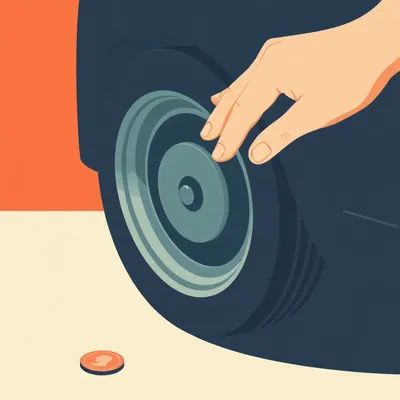
Let's start with the most common problem: a flat tire. Every car should have a spare tire, a jack, and a lug wrench. But here's the thing — many new cars don't come with a spare anymore. They come with a can of fix-a-flat and a tiny compressor, or run-flat tires. If your car has a spare, make sure it's inflated — check it when you check your other tires. If your car doesn't have a spare, you've got a decision to make.
Fix-a-flat is not a real solution.
It's a temporary patch for a small puncture. It won't help with a blowout or a sidewall tear. And tire shops hate it because it makes a mess inside the tire. A better alternative is a tire plug kit and a portable air compressor. A plug kit — the kind with the rubber strips and the insertion tool — can fix many punctures well enough to get you to a tire shop. And a compact twelve-volt air compressor lets you reinflate the tire afterward. Together they're about the size of a lunchbox.
The hierarchy is: full-size spare if you've got one, plug kit and compressor if you don't, and fix-a-flat as a distant third option.
That's fair. I'd add that even if you have a spare, a compressor is still useful — you can top off a slow leak, or help someone else. They're cheap now. A decent one is twenty-five to thirty dollars.
What about the dark road scenario?
LED flares, which we covered. But I'd also add a high-visibility vest or two. In many European countries, a reflective vest is mandatory equipment — you're required to wear one if you step out of your vehicle on a highway. It's not required in most of the US, but it should be. A vest costs five dollars and makes you dramatically more visible. If you're changing a tire on the shoulder at night, a vest plus LED flares is the difference between being seen and being a statistic.
The vest is one of those things that feels dorky until you're the one standing next to traffic. Then you want to be as dorky as possible.
Fluorescent dorkiness saves lives. I also recommend a good flashlight — not your phone. A phone flashlight drains your battery and ties up the device you might need to call for help. A small LED flashlight with fresh batteries, or a rechargeable one you check regularly. Some of them have a magnetic base so you can stick them to the car while you work.
Headlamps — I'm a headlamp evangelist. Both hands free, light always pointing where you're looking.
Headlamps are great. I keep one in my kit. They're especially useful if you're trying to read a map or sort through your trunk in the dark. Which brings us to the next category: tools.
What's the minimum viable tool kit for a trunk?
A multi-tool with pliers and a knife gets you a long way. A Leatherman or similar. Beyond that, I'd add a set of jumper cables — good ones, at least twelve feet long, with thick-gauge wire. The cheap ones with thin wire can't carry enough current to start a modern car with a dead battery. Or better yet, a lithium jump starter — these are battery packs specifically designed to jump-start a car. They're about the size of a paperback book, they hold a charge for months, and they don't require a second vehicle. You just clamp them on and start the car.
Those little jump packs actually work?
They do now. Five years ago they were hit or miss. Today, a good one — from a company like NOCO or Gooloo — can start a V8 engine multiple times on a single charge. They also double as USB power banks, which is handy. They're one of those products where the technology has matured to the point that there's almost no reason to keep traditional cables instead. The one caveat is that they need to be recharged periodically — again, the daylight saving reminder.
Jump pack over cables, but cables as a backup if you're diligent about maintaining the jump pack.
Cables don't need charging. They're a good fallback. But the jump pack solves the problem where you're stranded alone with no other car in sight. That's worth the price of admission.
What else in tools?
A small roll of it. It's the universal temporary fix — you can tape up a broken hose, secure a dangling bumper, patch a cracked window. It's not pretty but it'll get you home. Zip ties, same logic. A small fire extinguisher — rated for Class B and C fires, so it handles gasoline and electrical. These are compact, about the size of a large water bottle. And a seatbelt cutter and window breaker tool, mounted somewhere you can reach from the driver's seat — not buried in the trunk. If you end up in water or your doors are jammed, you need to be able to cut your belt and break a window immediately.
That's the one that sits in the glovebox or the door pocket, not the trunk.
It does no good if you can't reach it. Some of these tools combine the cutter and the glass breaker in one unit, and they mount to the visor or the center console. Ten to fifteen dollars.
Far we've got medical, visibility, tires, jump-starting, and tools. What about the survival side — food, water, warmth?
This is where people tend to overdo it or underdo it. The right amount depends on where you drive. If you're always in a city with services nearby, you don't need a week's worth of rations. If you drive through rural areas, mountains, or places with no cell service, you want more. But the baseline I'd recommend for anyone: a gallon of water, minimum. More if you're in a hot climate. Water is useful for drinking, for cooling an overheating engine, for washing wounds. Keep it in a sturdy container, not a thin plastic bottle that'll crack or leach in the heat.
Every six months. Use the daylight saving trigger. For food, a few high-calorie bars — the kind designed for emergency kits, not granola bars that'll crumble into dust after three months in a trunk. They're dense, they're shelf-stable for years, and they're not appealing enough that you'll snack on them impulsively.
The emergency food bar that tastes like a compressed graham cracker with the soul removed.
That's the one. But when you're stuck for hours waiting for a tow, you'll be glad you have it. I'd also add a warm blanket — not just the Mylar emergency blanket, which is good for the first aid kit, but an actual wool blanket or a compact synthetic one. Wool stays warm even when wet. And a change of clothes — at minimum, a pair of socks and a jacket. If you have to walk somewhere, or if you're stuck in a cold car for hours, dry socks and an extra layer make a big difference.
The socks thing doesn't sound like much until you've stood in the rain for forty-five minutes waiting for a tow truck. Then it's the most important item in the kit.
And while we're on the subject of waiting — a phone charger. A dedicated car charger that stays in the vehicle, with a cable. Your phone is your lifeline for calling help, checking maps, looking up tire shop hours. If it dies, you're in a much worse position. The jump pack we talked about can charge your phone, but a simple twelve-volt USB charger is cheap insurance.
What about navigation? Phones lose signal.
They sound obsolete, but a folded state map in the glovebox weighs nothing and never runs out of battery. If you're in an area without cell service, or if the network is down — which happens after natural disasters — a paper map is still the most reliable navigation tool there is. Most people under forty have never used one, but the skill of reading a map is worth refreshing.
I feel like that's a whole separate episode — the quiet death of map literacy.
It really is. But for now, I'll just say: fold one up, stick it in the door pocket, and forget about it until you need it.
Let's do a quick recap of the full list, because we've covered a lot. Medical: tourniquets, hemostatic gauze, Israeli bandage, gloves, CPR shield, tweezers, tape, antiseptic, bandages, triangular bandage, burn gel, Mylar blanket, notepad and pen. Visibility: LED flares, reflective vest, flashlight or headlamp. Tires: spare or plug kit, compressor. Power: jump pack or cables. Tools: multi-tool, duct tape, zip ties, fire extinguisher, seatbelt cutter. Survival: water, food bars, wool blanket, spare socks and jacket. And a paper map and phone charger.
That's the list. And it sounds like a lot, but almost all of it fits in a single plastic tote or duffel bag. The medical kit is the size of a book. The LED flares are the size of a few hockey pucks. The jump pack is smaller than a hardcover. The whole thing might weigh twenty-five pounds. It's not a massive commitment of space or money.
If someone's starting from zero?
I'd estimate — and these are rough numbers — maybe a hundred fifty to two hundred fifty dollars for everything, depending on quality. The tourniquets are thirty each, the jump pack is maybe eighty to a hundred, the LED flares are twenty to forty for a set, the compressor is thirty. The rest is small items, five to fifteen dollars each. Spread that over the life of the car and it's trivial. One tow truck call costs more than the whole kit.
That's the math that never gets done until it's too late. So let's talk about what most people get wrong with car kits. You mentioned the pre-packaged ones earlier — what's the problem with those?
Pre-packaged car emergency kits are the gift basket of preparedness. They look complete, they come in a nice bag, and the contents are almost universally underwhelming. The jumper cables are too thin. The first aid kit is a few Band-Aids and an alcohol wipe. The flashlight is a cheap plastic thing that'll break the first time you drop it. The tools are stamped metal that'll bend under any real force. You're paying for the illusion of preparedness.
The musical equivalent of beige wallpaper.
And the worst part is that having a bad kit can be worse than having no kit, because it gives you false confidence. You think you're covered, so you don't think about it, and then when you need it, the gear fails.
Build your own, check it twice a year, and actually know what's in it.
That's the principle. And I want to add one thing that's not a physical item but matters just as much: know how to use what you've got. A tourniquet is not intuitive. Applying one correctly takes practice — you need to tighten it until the bleeding stops, which is much tighter than most people expect. If you've never done it, you'll hesitate when it counts. The Stop the Bleed courses are free or low-cost in most areas, and they take about an hour. Same with basic car skills — do you know where your jack points are? Have you actually changed a tire on your car, or just assumed you could figure it out?
This is the part where I admit I've watched people spend twenty minutes trying to find the jack point while traffic whizzes past.
It's common. The owner's manual shows you where they are. Spend ten minutes in your driveway one Saturday and actually go through the motions. It's boring, it's a little dirty, and it means that when you're doing it in the dark in the rain, it's not the first time.
The dress rehearsal principle.
And the same goes for the medical gear. Unpack it, look at it, watch a video on how to use a tourniquet and an Israeli bandage. You don't need to become a paramedic. You just need enough familiarity that you're not reading instructions by phone light while someone is bleeding.
We've got the gear list, the maintenance schedule, the practice principle. Let's talk about one more angle — the psychology of stopping to help. Because having the kit is only useful if you're willing to use it on a stranger. And I think a lot of people hesitate.
That's a real thing. There's the bystander effect — everyone assumes someone else will stop. There's fear of liability, though Good Samaritan laws in all fifty states protect people who render reasonable emergency assistance. There's fear of making things worse. But the data on this is pretty clear: the biggest factor in whether someone survives a traumatic injury is time to bleeding control. If someone with a severe bleed waits for an ambulance, they can bleed out in three to five minutes. The average ambulance response time in the US is seven to fourteen minutes, depending on where you are. The math doesn't work in the victim's favor.
If you're the person with the tourniquet, you're the bridge between the accident and the ambulance.
You don't need to be a hero. You just need to stop the bleeding and keep them warm until the professionals arrive. That's it. The bar for making a life-saving difference is surprisingly low.
That's a good place to land, I think. The kit is not about being a prepper or living in fear of catastrophe. It's about being the person who can help when something goes wrong — whether it's your own flat tire or someone else's bad night.
It's just basic competence. Like knowing CPR or being able to swim. These are things that functional adults should be able to do, and having the right gear in your car is part of that.
To answer the prompt directly — the LED flares are a great call, keep them, check the batteries, lithium is better. Build a small trauma-focused first aid kit rather than a box of Band-Aids. Add the visibility gear, the jump pack, the basic tools, the water and warmth items. And then practice with it all once so you're not learning in the dark.
Set a calendar reminder for when the clocks change. That's the thing that keeps the whole system from falling apart.
Which means the next check is November. Plenty of time to get the kit together.
Plenty of time.
Now: Hilbert's daily fun fact.
Hilbert: In the nineteen seventies, French Guiana's territorial maps included a phantom island called Île Papillon — Butterfly Island — that appeared on nautical charts as being roughly the size of Manhattan. It was removed from official maps in nineteen seventy-nine after a survey team sailed to its coordinates and found nothing but open ocean. To put that in perspective, that's about twenty-two thousand acres of imaginary real estate, which is roughly seventeen thousand football fields of water that someone had drawn as solid ground for over two decades.
Seventeen thousand football fields of wishful thinking.
I love that they named it Butterfly Island. Very on-brand for something that turned out not to exist.
This has been My Weird Prompts. Our producer is Hilbert Flumingtop. You can find us at myweirdprompts dot com or on Spotify. If you build a car kit after this episode, send us a note — we'd love to hear what you put in it.
Check your spare tire pressure. Go do it after the episode.
We'll be back soon.