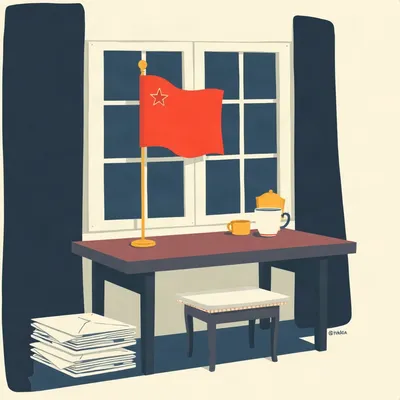
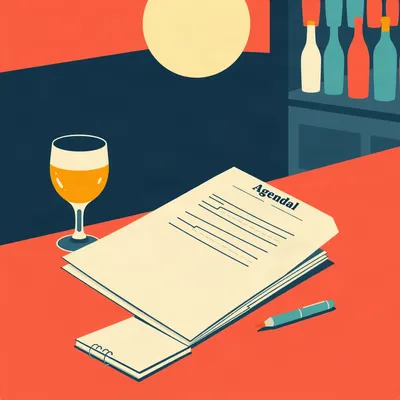
Daniel's been on a social pranking kick lately, and this one's an escalation. He wants to take the whole bilateral-meeting-as-hangout idea and scale it up — a full state dinner parody for unsuspecting friends. The brief is to walk through the entire event end-to-end: engraved invitations with rigid RSVP deadlines, a receiving line with announced titles, assigned seating by diplomatic rank, choreographed meal service with scripted toasts, and follow-up correspondence the next day. He wants it unmistakably scripted and unforgettably weird. And here's the thing — the research on actual state dinners reveals that the real protocol is so elaborate, the parody barely has to exaggerate.

The real thing is already operating at about ninety percent of the bit. I went deep on White House and Buckingham Palace procedures, and honestly, the gap between a state dinner and a prank version of one is maybe a single olive described in French. You don't need to invent absurdity — you just need to take what already exists and swap out the head of state for your friend Dave.
That's the core insight here. The prank isn't really a prank. It's a faithful reproduction that happens to feature people who have no diplomatic credentials and a main course that came out of your own oven. The form itself does all the heavy lifting.
So we're going to walk through the whole evening from the moment the invitation lands in someone's mailbox to the thank-you note they get forty-eight hours later, pulling from real protocol and seeing where the absurdity is already baked in.
And I want to flag something upfront. There's a version of this that sounds mean — like you're mocking your friends for not knowing which fork to use. That's not the bit. The bit is that the fork system itself is unhinged, and you're inviting your friends to laugh at it with you.
You're all in the joke together. The target is the protocol, not the guests. Keep that in mind as we go.
Let's start with what a state dinner actually is, because the real thing is almost as weird as anything we could invent. A state dinner is the most choreographed social event in civilian life. Every detail — the calligraphy on the invitation, the placement of the fish fork, who sits where — is dictated by centuries of accumulated protocol. At Buckingham Palace, the final seating plan is confirmed by both the King and the Foreign Office personally. The monarch reviews the flowers, the music, the menu. Nothing is left to chance.
So the person who's face is on the currency is personally approving the centerpiece. That's not a dinner party, that's a theatrical production with a head of state in the lead role.
And it's been that way for a long time. The modern state dinner traces back to the Congress of Vienna in eighteen fourteen and fifteen, where diplomacy essentially became a performance. The seating arrangements, the order of courses, who entered the room first — all of it was a coded negotiation about status and alliance. A misplaced delegate at dinner could destabilize a treaty.
Which is wild, because it means the real thing has actual stakes. If you seat the ambassador from one country below the ambassador from another, you've just made a foreign policy statement, whether you meant to or not. Our prank version has none of those stakes, but it borrows all of that gravity, and that's where the comedy lives.
Which is what makes it perfect for this. The tension that makes the prank work is the gap between absurdity and sincerity. The more seriously you commit to the bit, the funnier it gets. And the weird accidental byproduct is that protocol — real protocol — is designed to make guests feel honored. Dr. P.M. Forni, writing for the International Association of Protocol Consultants, defines it as a set of international courtesy rules based on the acknowledgment of the hierarchical standing of all present. The framework creates space where meetings can take place. You strip away uncertainty about who's who and what happens next, and people can actually relax into the event.
That's the paradox. Real protocol exists to reduce anxiety, not create it. If you know exactly where to stand, which glass to reach for, and who speaks first, you don't have to think about any of that. You can focus on the person you're talking to. The structure is a gift.
And that's the weird accidental outcome of this prank. If you execute it well, your guests don't feel pranked. They feel taken care of.
So your prank, if you commit hard enough, accidentally creates a memorable evening. The structure itself is a form of care, even when it's ridiculous. You're saying to your friends, "I care about you so much that I printed menus and assigned you a fictional diplomatic rank." That's not nothing.
And the structure we're talking about starts days before anyone shows up. The first thing your guests will see is the invitation, and this is where you set the tone. The White House Graphics and Calligraphy Office handles this for real state dinners — the Chief Calligrapher designs invitations engraved with the Seal of the President in burnished gold, using copperplate round-hand script that dates back to John Adams. The Chief Calligrapher earned a hundred and nine thousand dollars as of twenty twenty, which tells you how seriously they take this.
A hundred and nine thousand dollars to write names on cards. That's either the greatest job in Washington or proof that calligraphers have the best union. I want to know what the interview process looks like. Do you walk in with a portfolio of envelopes? Is there a practical exam where they hand you a quill and say, "Write 'The Honorable' without sweating"?
I imagine it's like a sommelier exam but for handwriting. Someone swirls an ink pot and says, "Note the viscosity."
The prank version: heavy card stock with a faux host seal. You can design something vaguely official-looking — an eagle, a shield, a particularly stern houseplant. The text should read something like, "The Host, acting in their capacity as Head of the Household, requests the pleasure of so-and-so's company at a State Dinner on Saturday, the fifteenth of October at seven o'clock." Include a separate R.S.V.P. card with a rigid deadline — "The favour of a reply is requested by the first of October" — and a space for dietary restrictions, quote, "for the consideration of the Office of the Executive Chef."
The dietary restrictions box is a nice touch. It signals that a whole bureaucratic apparatus is standing by to process their mushroom allergy. It also, by the way, is useful. You want to know if someone can't eat dairy before you serve them four courses of butter-based sauces.
Well, not exactly, but that's the signal. Add a note that formal attire is required and that the receiving line will comence promptly at seven. The formality of the invitation does two things. It tells guests this isn't a normal dinner party, and it gives them just enough warning that something is up without spoiling the reveal. They'll show up curious instead of confused.
And there's a calibration question here. How formal is too formal? If you send an invitation that looks like it came from a government office, some people might think it's a scam. You need enough official weight to be funny, but enough absurdity to tip the hand.
The first state dinner at the White House for a foreign head of state was in eighteen seventy-four — King David Kalakaua of Hawaii, hosted by Ulyses S. Grant. So the tradition of these absurdly formal invitations has been running for a hundred and fifty years. You're tapping into something deep. You're not inventing a weird bit. You're participating in a tradition that Ulyses Grant also participated in, and I guarantee his guests also thought the whole thing was a little much.
Grant probably didn't describe the amuse-bouche in French, but the spirit was there. And that's the thing — the formality has always been slightly absurd. That's not a bug. It's the feature. The absurdity signals importance. We do elaborate, unnecessary things to say, "This matters."
Now the night arives. At a real state dinner, the President and First Lady greet the visiting head of state at the North Portico entrance, followed by a photo opportunity at the top of the staircase, then a reception in the Yellow Oval Room with hors d'œuvres and champagne. The prank adaptation: station yourself at the door and announce each guest formally. "Presenting Michael, Delegate from the sovereign territory of Apartment Three-B." Have a designated protocol officer — a friend in on the joke — check names against a clipboard.
The clipboard is essential. It comunciates that admission is conditional and that someone, somewhere, might be turned away. It also gives the protocol officer something to do with their hands, which is important because standing in a doorway with nothing to do feels less like protocol and more like loitering.
The protocol officer should also have a pen. Even if they never write anything down, they should occasionally make a small mark on the paper and nod. It creates the ilusion of a system.
And if someone's name isn't on the list? That's a great moment. The protocol officer should pause, flip through several pages, then say, "Ah, here you are — you've been added in the most recent amendment." Everyone gets in. The point is the pause.
Escort guests to a reception area — your living room — serving exactly one canapé and one drink. No substitutions. If someone asks for a different drink, the protocol officer should look pained and consult the clipboard again. "I'm sorry, the beverage protocol for this evening specifies the house punch. I don't have authorization to deviate."
This is where the protocol officer role really shines. They're the straight man. They have to commit completely. If they break, the whole thing colapses. But if they maintain eye contact and say "beverage protocol" with a straight face, it's magic.
Introdce guests using exagerated titles. "May I present Sarah, our Under-Secretary for Snack Acqisition." "This is David, Ambasador Extraordinary and Plenipotentiary to the Kitchen." If you have a partner, they play the role of First Spouse and stand beside you in the receiving line, noding graciously.
The titles are where the prank signals its intentions. You want the absurdity obvious enough that guests understand they're in on the joke, not being tested on their etiqette. If someone looks confused, a title like "Consul General for Beverage Afairs" should clarify things.
And if it doesn't, you've learned something about your friends. Specifically, that they're willing to accept "Consul General for Beverage Afairs" as a real job title without question, which is either deep trust or deep confsion.
There's a sweet spot with the titles. Too mundane and it just sounds like you gave everyone a nickname. Too absurd and it feels like you're mocking them. "Ambasador to the Kitchen" works because it's clearly fake but also vaguely complimentary. You're not saying "this person is bad at cooking." You're saying "this person has diplomatic authority over the kitchen," which is a promotion in the fictional universe of the evening.
Once everyone is seated acording to their diplomatic rank, it's time for the meal itself — and this is where the choreography really kicks in. State dinners typicaly involve four or five courses. At Buckingham Palace, each place setting has six glasses — water, red wine, white wine, desert wine, champagne, and port — and up to a dozen pieces of cutlery. The George the Fourth gilt Grand Dining Service comprises four thousand pieces. The menu is chosen by the monarch from four options presented by royal chefs.
Four thousand pieces. That's not a dining set, that's a metalurgy exibition. Imagine being the person who has to inventory that. "Let's see, three thousand nine hundred ninety-seven, three thousand nine hundred ninety-eight... has anyone seen a soup spoon? It's from the George the Fourth gilt Grand Dining Service, it's worth more than my car."
And every single piece has a specific purpose. The fish fork is different from the salad fork is different from the desert fork. If you use the wrong one, the staff notices. They won't say anything, but they notice.
Which is exactly the kind of obscure anxiety that makes the prank work. Your guests will look at six glasses and think, "Which one do I use?" And the answer is: it doesn't matter. Use any of them. The point is that the glasses are there, creating the ilusion of stakes that don't exist.
The prank version: set the table with as many glasses and pieces of cutlery as you can fit. Even if you only use two glasses all night, set out six. Print menus on card stock in French or with absurdly elaborate descriptions. "Amuse-bouche: A single olive, brined for precisely seventy-two hours." "First course: A cube of chedar, aged in a refrigerator drawer since Tesday."
"The fish course: one bite of smoked salmon on a cracker, sourced from the finest supermarket within walking distance." The specificity is what sells it. "Precisely seventy-two hours" is funnier than "a few days." "Aged in a refrigerator drawer since Tesday" is funnier than "aged chedar." You're borrowing the language of fine dining and aplying it to the most mundane food you can find.
Serve the meal in multiple smal courses with a scripted anouncement before each. "The kitchen now presents the fish course." If you have a co-conspirator, have them serve as footmen who enter and exit in a choreographed maner — same path each time, same gesture when placing the plate. Play clasical music at low volume. The whole thing should feel like a balet where everyone forgot to rehearse.
The footmen are a great detail. If you can get one friend to serve as a silent, expresionless server who moves through the room like they're being graded on it, the whole thing elevates. They don't make eye contact. They don't respond to questions. They just place the plate, give a slight nod, and exit.
And if they're slightly out of sync with each other — one footman entering while the other is still clearing — that's even better. The imperfection is the joke. This is a state dinner run by people who've never done this before, and the cracks in the facade are where the comedy lives.
There's a historical inversion here that I love. In the Ancien Régime, state banquets featured a very smal number of actual diners surounded by a huge crowd of courtiers who just watched. The modern style — all guests seated and eating — was introduced by Louis Philipe the First in eighteen thirty. Your prank, with its scripted anouncements and choreographed service, is actualy a return to the older, more theatrical model. You're not being weird; you're being historicaly authentic.
You could lean into that. Have one friend whose only job is to stand against the wall and observe. They don't eat. They don't speak. They just watch. When someone asks who they are, the protocol officer says, "That's the courtier. Pay them no mind."
That's deeply unsetling. I love it. But that might be the version for close friends only. Acquaintances might just leave.
Speeches and toasts are where the host realy gets to perform. At real state dinners, the host and principal guest deliver short speches. At Buckingham Palace, all speches are checked by the Foreign Ofice. In the U.S., four rufles and flurishes folowed by Hail to the Chief play as the President enters.
So before the meal, tap a glass and deliver an overly formal spech welcoming the distinguished delegates. Thank them for undertaking the ardeous journey to your home. Propose a toast to the continued prosperity of our two great nations — your household and theirs.
Qeue up a recording of Hail to the Chief or God Save the King to play as you enter the dining room. Between courses, stand and deliver short, absurd toasts. "To the continued friendship between the soverign nation of this living room and the soverign nation of the dining room." "To the working group on optimal piza toping selection, whose deliberations continue to yield no consenss."
The toast is where parody and cringe are separated by a very thin line. The key is comiting fuly. A half-hearted toast lands as awkard. A toast delivered with absolute sincerity about the bilateral importance of your friendship, while everyone holds a glass of box wine, is comedy. You have to mean it. Not mean the absurd words — mean the act of toasting. Mean the eye contact. Mean the raised glass. Your voice can't have irony in it.
And hold the glass properly. No slouching. No casual sip before the toast is finished. You're the head of state in this room. Act like it.
I think the toast is also where you can sneak in something genuine. Between the jokes about piza topings, you can actualy say, "I'm realy glad you're all here." The structure holds it. The formality makes sincerity posible in a way that a casual dinner party sometimes doesn't.
And then the evening ends — but the prank doesn't. State dinners conclude with the departure of the guest of honor and a formal farewel. After the event, the White House sends formal thank-you notes handled by the Graphics and Caligraphy Ofice.
As guests leave, stand at the door and thank each one formaly. "The Host thanks the Delegate from the soverign territory of Dowtown for their atendance." The next day, send a folow-up email or letter on formal stationery. "The Ofice of the Host wishes to expres its profound gratitude for the Delegate's participation in the State Dinner of October fifteenth. A comuniqué sumarizing the evening's deliberations will be circulated in due course."
Include a faux joint statement sumarizing bilateral agreements reached. "Both parties reaffirmed their comitment to the continued consuption of piza and agreed to establish a working group on optimal Netfix selection." "The delegations noted with conern the declining suply of snack mix and resolved to convine an emergancy sumit."
This folow-up is the secret weapon. Most dinner party pranks end when the guests leave. The state dinner prank extends into the next day, and that's where the bit realy lands — guests share the folow-up corespondence with other friends, with partners, with anyone who'll look at their phone. The joke's lifespan extends by forty-eight hours and becomes legendary in the friend group.
And the comuniqué format is perfect for group chats. You send it to everyone who atended, and suddenly the group chat becomes a diplomatic cable channel for the rest of the week. People start refering to themselves by their titles. "The Ambasador to the Kitchen regrets to inform the working group that she cannot atend the Netfix sumit on Thursday."
That's the dream outcome. The prank doesn't end. It becomes a bit that the whole friend group can keep alive. You've created a shared language.
The risk, of course, is that the prank goes too far. Diplomatic protocol exists to prevent gafes and ofense. Your version could acidentally make guests feel uncomfrtable if they think they're being judged on their protocol performance.
Which is why the absurdity has to be obvious from the jump. The invitation's formality, the anounced titles, the menu descriptions, the unecsary formality of the whole thing — guests need to understand they're in on the joke, not being tested. The prank is on the formality itself, never on the guests.
If someone shows up and thinks you've joined a cult, you've miscalibrated.
Or you've discovered which of your friends will folow you into a cult, which is also useful information. That's valuable data. You want to know who's going to say, "This seems fine" when you're wearing robes and chanting.
I want to bring in someone who's actualy seen the real thing from the inside.

The vegetarian option was a single poached egg.
Wait.
On a bed of watercress. Served with silver tongs. The guest of honor was alergic to eggs.
Oh no.
This was nineteen ninety-four. I was a junior protocol oficer at an embasy — not saying which one — for about six months. My main job was alphabetizing seating charts and making sure the corect flag was on the corect car. I was fired for puting the amasador's wife at the wrong end of the table during a visit from a minor European trade delegation. She was suposed to be at the host's left, I put her at the far end, and aparently that was the kind of mistake you only make once.
What hapened with the egg?
The guest of honor ate it. He was a diplomat. He'd rather die than cause a scene. He didn't die, but he was uncomfrtable for the rest of the evening, and the amasador spent the next three days sending apologetic leters. The chef claimed nobody had told him about the alergy. The protocol ofice claimed they'd included it in the briefing. Somewhere in a filing cabinet in that embasy, there is still a memo about the egg.
That's the thing about real protocol — it's designed to prevent exactly that kind of disaster, and it still fails in ways that are almost too specific to believe.
The real absurdity is worse than anything you could invent for the prank. I once sat through a three-hour debate over whether a certain delegate's spouse should be adresed as Misus or Miz in the seating chart. Three hours. It ended with the amasador personaly calling the delegate's ofice to ask. The delegate's ofice didn't know either. They had to call the spouse.
Three hours.
And the spouse said, "Either is fine." Three hours for "either is fine."
That's incredible. That's the most diplomatic story I've ever heard. The entire aparatus of international protocol grinding to a halt over a title that the person in question didn't care about.
The prank version where you asign everyone an absurd diplomatic rank and move on is considerably more eficient than the real thing. The protocol oficer role — the friend with the clipboard — that's the most fun job in the room. Give it to the most chaotic person you know. Someone who will take it seriously but also start inventing new ranks on the spot when they forget someone's name.
"And this is... the Special Envoy for... Footwear. Welcome."
The best protocol oficer I ever worked with in real diplomacy had a simlar instinct. When something went wrong, he didn't panic. He just incorporated it into the flow of the evening as if it had always been the plan. That's the skill. Whatever hapens, you act like it's protocol.
The chaos agent friend is actualy the most authentic choice for the role.
Unironicaly, yes. The dietary restrictions box on the R.S.V.P. card is starting to sound less like a joke and more like genuine risk management.
It is. Always check the dietary restrictions. The egg incident could have been avoided if someone had read the card. The prank is funy, but that part is just good advice. If you're serving food to people, know what they can eat. The joke doesn't work if someone has to use an EpiPen.
The prank works, but it also raises a question about what we're actualy doing here. Does this land better with friends who know you well and will recognize the absurdity imediately, or with acqaintances who might wonder if you've joined a cult for the first twenty minutes?
I think it depends on the acqaintances. If they're the kind of people who'd play along once they figure it out, the slow reveal might be the best part. The moment someone reads "Ambasador Extraordinary and Plenipotentiary to the Kitchen" on their place card and the peny drops — that's gold. You get to watch it hapen in real time. First the furrowed brow, then the glance around the room, then the slow smile.
If they never figure it out? If they go the whole evening thinking you've lost your mind and are now runing a micro-state out of your apartment?
Then you've created a very diferent kind of memory. But honestly, I think the invitation and the titles make it clear enough. If someone sits through "Consul General for Beverage Afairs" and still thinks this is serious, they might be exactly the kind of person who'd thrive in actual diplomacy.
The state dinner prank reveals something true about human conection. Structure and ritual, even when absurd, create a shared experience that feels meaningful. The joke is on the formality, not on the guests. Protocol, in its real form, is meant to symbolize values — the democratic values of a country, the comitment of a mariage in a weding, the achievement of a graduation. Your prank dinner party, in its own weird way, symbolizes the value you place on your friends by going to this much trouble.
You spent four hours seting out six glasses per person and printing menus in French. That's not nothing. That's a signal. That's you saying, "You're worth the effort of a four-thousand-piece dining set, even if I only own twenty-four pieces and some of them are from IKEA."
The signal lands. Even if the evening is ridiculous, the takeaway isn't "my friend is weird." The takeaway is "my friend went to a lot of trouble for me." The absurdity and the care aren't in tension. They're the same thing.
Thanks to Hilert Flumingtop for prodcing, and for the egg story which I'm going to be thinking about for a while. A single poached egg. On watercress. With silver tongs.
I want to know what the silver tongs were for. Were they for serving the egg? For eating the egg? Was the guest of honor suposed to handle a poached egg with tongs?
I never got clarity on that. The memo didn't specify.
That's going to haunt me.
This has been My Weird Prompts. If you try this prank, email the show and tell us how it went — show at myweirdprompts dot com. We especialy want to hear if anyone actualy played Hail to the Chief.
Or if anyone's guest used the wrong fork and a protocol oficer noticed.
We'll be back son.