Daniel sent us this one — he's asking how many countries actually produce wine today, and points out that the whole "new terroir" label has basically expired. Countries we called "new" a few decades ago are now established. He wants to know which countries are genuinely pushing into wine production in the last few years, especially places that needed advanced agriculture and irrigation to make it work. And he visited Ramat HaNegev winery by the Egyptian border — wants to know what specific techniques they're using to pull off wine in the desert. So where do we even start?

Seventy-seven countries. That's the OIV figure from their twenty twenty-four statistical report — the International Organisation of Vine and Wine. And there have been a few additions since then, so we're probably hovering around eighty now. The trend line is unmistakable. Twenty years ago it was more like fifty-five to sixty. The map is expanding, and not just at the edges — it's jumping to places that would have been laughed out of a sommelier exam.
Eighty countries making wine. Of course there are.
Here's what makes the "new terroir" term so broken. Chile's been producing wine commercially since the eighteen-fifties. Australia, same era. South Africa's first vintage was sixteen fifty-nine — that's older than most Bordeaux classifications. Argentina's been at it since the fifteen-hundreds. These are not new wine countries. They're established wine countries that happened to be outside Europe when the French invented the classification system.
The wine equivalent of calling jazz "new music" in nineteen sixty.
The real frontier isn't geographic in the colonial sense — it's climatic. It's about places that, until very recently, could not physically ripen wine grapes. Too cold, too hot, too dry, too wet. The two axes are countries that never had a wine industry at all, and regions within existing wine countries that were written off as impossible.
Let's map this. Who's actually new?
England is the poster child. In the year two thousand, England had about a hundred vineyards. By twenty twenty-five, over eight hundred. Their twenty twenty-three vintage was twelve million bottles — the largest ever — and they're doing it almost entirely with traditional method sparkling wine, Chardonnay and Pinot Noir, on the same chalk soils that run under the Channel into Champagne. The warming has pushed the viable latitude north by about a hundred fifty kilometers in the last three decades.
Twelve million bottles from a country that used to be a punchline in wine conversations.
They're not the only ones riding that shift. China is now the second-largest vineyard area on the planet, behind only Spain. Not second-largest producer — they're still figuring out the winemaking side — but second in planted hectares. The Ningxia region alone has over forty thousand hectares under vine. That's larger than all of New Zealand's wine country. They're using a technique called winter burial — literally burying the vines under soil to survive temperatures of minus twenty-five Celsius. Then they dig them back up in spring.
Burying the vines. Like hibernating reptiles.
Combined with drip irrigation from the Yellow River. It's labor-intensive, it's expensive, and it's producing wines that are starting to win international competitions. They haven't found their identity yet — there's a lot of copycat Bordeaux blends — but the infrastructure is there.
How labor-intensive are we talking? Because burying forty thousand hectares of vines by hand sounds like a logistical nightmare.
It's enormous. We're talking about thousands of workers going row by row in late autumn, manually bending each vine down, covering it with a layer of soil — maybe thirty to forty centimeters — and then coming back in spring to uncover them. The labor cost alone makes it one of the most expensive viticultural practices on earth. But when the alternative is losing your entire vineyard to winter kill, the math changes. And China has the workforce to do it, at least for now. The question is what happens as labor costs rise.
It's a temporary solution, not a permanent one.
There's research into cold-hardy varieties that might eliminate the need for burial, but that's a decade-long breeding program. In the meantime, they bury.
What about India? I know Nashik has been making wine for a while.
Nashik Valley, northwest of Mumbai, is India's wine capital. Sula Vineyards is the big name — they started in nineteen ninety-nine and now produce over a million cases a year. But what's interesting about India is the double harvest. Because it's tropical, the vines don't go dormant in winter. They actually produce two crops a year. The winemakers have to prune strategically to get one quality crop instead of two mediocre ones. It's a completely different viticultural calendar from anywhere in the temperate zones.
That's not a bug, that's a feature you have to manage.
And managing it is trickier than it sounds. The vine wants to fruit continuously because there's no winter signal telling it to shut down. So the winemakers essentially have to force dormancy through pruning — they cut the vine back hard after the first harvest, strip the leaves, and stress the plant into a rest period. It's like convincing a plant it's winter when it's thirty-five degrees out.
You're gaslighting the vine into taking a nap.
Then you've got Thailand — monsoon climate, high humidity, fungal pressure that would destroy most vineyards. They're growing in the Khao Yai region at about three hundred fifty meters elevation, using canopy management to maximize airflow, and they're harvesting in the dry season. Brazil is doing interesting things in the Campanha region, right near the Uruguayan border, at latitudes that traditional viticulture said were impossible — below thirty degrees south. And then there's Norway.
One commercial vineyard. They're using hardy hybrids, mostly Solaris — which is a PIWI variety I'll get to in a minute — and they're producing a few thousand bottles a year at fifty-nine degrees north. That's the latitude of southern Greenland.
Wine from the latitude of Greenland. So what are PIWI varieties, and why do they sound like a startup that pivoted three times?
PIWI stands for Pilzwiderstandsfähig. It's German for "fungus-resistant." These are hybrid grapes bred specifically for disease resistance and cold tolerance. Solaris, Regent, Johanniter — these are varieties that can survive in conditions where Vitis vinifera, the classic European wine grape, would be dead within a season. They were developed mainly in Germany and Switzerland starting in the nineteen-eighties, and there are now about five thousand hectares planted globally.
Five thousand hectares is tiny in global wine terms.
It's microscopic. But the growth curve is steep, because these varieties solve a real problem. Traditional vinifera is incredibly susceptible to powdery mildew, downy mildew, botrytis — you need a spray regime of eight to twelve fungicide applications per year in humid climates. PIWI varieties need maybe two or three. They're not organic by default, but they dramatically reduce the chemical load. And they can handle winter temperatures that would kill vinifera.
What's the catch? Why isn't everyone planting these?
Two words: regulatory bottleneck. Most EU Protected Designation of Origin laws — PDO, the system that governs Champagne, Bordeaux, Barolo, all of them — explicitly prohibit hybrid varieties. You cannot put "Champagne" on a bottle made from Solaris, even if it's grown on Champagne soil and made identically. The regulations are built around specific vinifera varieties. There's a philosophical debate happening right now about whether the twenty twenty-seven Common Agricultural Policy reform will open the door.
The barrier isn't agronomic. It's paperwork.
It's always paperwork. But the flavor question is real too. PIWI varieties have different phenolic profiles. They can produce what wine people call "foxy" notes — a kind of wild, musky character that comes from the American grape species used in the original crosses. Solaris is pretty clean, actually — it makes aromatic whites that taste somewhere between Sauvignon Blanc and Riesling. Regent makes structured reds. But they're different, and "different" is a hard sell in a market built on familiarity.
Can you describe "foxy" more specifically? Because I've heard the term and I never know if it's supposed to be good or bad.
It's a very specific aromatic compound — methyl anthranilate — that occurs naturally in Vitis labrusca, the North American fox grape. It's the same compound used in grape-flavored candy and soda. So when wine people say "foxy," they're usually not being complimentary. It's that artificial grape note, almost like grape bubblegum. Concord grapes have it in spades. The better PIWI varieties have had most of it bred out, but there's sometimes a trace, and that trace is enough to make traditional wine judges recoil.
It's not that the wine is bad. It's that it reminds them of something that isn't wine.
It's a cultural association problem, not a quality problem. And that's a recurring theme in all of this — the technology works, the wine is sound, but the cultural framework hasn't caught up.
Which brings us to the bigger idea here. You mentioned "assisted terroir" earlier.
This is the concept that technology is now a deliberate component of terroir, not a corrective afterthought. Terroir traditionally means soil, climate, topography, and tradition — the idea that a wine expresses a place. But when you're using subsurface drip irrigation, reflective ground covers, precision canopy management, and climate-matching algorithms to select your site, you're not just expressing a place. You're constructing it.
Build me a place nobody notices was built.
Greg Jones at Linfield University has been doing fascinating work on climate-matching algorithms — basically, using historical climate data and predictive models to identify regions that will have Bordeaux-like climate in twenty years. Vineyards are being planted not for what the climate is now, but what it will be when the vines mature. That's a thirty-year bet. You're not farming a place. You're farming a climate model.
That's disorienting. You're planting a vineyard today for a climate that doesn't exist yet.
The model might be wrong. That's the risk. But the alternative — planting for today's climate and hoping the vines adapt over thirty years — is arguably riskier. You'd end up with a vineyard that's perfectly suited to a climate that no longer exists.
It's a hedge either way. You're just choosing which model to trust.
The model is getting better. The twenty twenty-four vintage in Bordeaux was one of the earliest harvests on record — they were picking in August, which would have been unthinkable fifty years ago. The models predicted that shift. The vineyards that are being planted now in England, in Patagonia, in Tasmania — they're bets placed on those models.
Let's go to the desert. Daniel visited, said it's right by the Egyptian border, and even by Israeli standards this is considered extreme. What are they actually doing there?
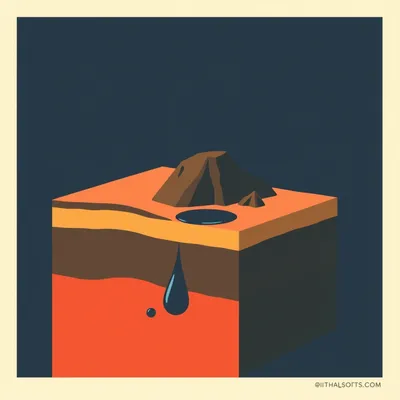
Ramat HaNegev Winery is in the Negev Highlands, near Mitzpe Ramon. They receive about a hundred millimeters of rainfall annually. For context, the threshold for "desert" is two hundred millimeters. They're at half that. The nearest town is basically a crater — the Ramon Crater, which is a geological formation, not a town. This is not a place where things grow without intervention.
A hundred millimeters. Phoenix gets about two hundred.
Phoenix is a rainforest by comparison. So how do you make wine here? Let me walk through the specific techniques. They use subsurface drip irrigation at thirty to fifty centimeters depth. The emitters are buried, not on the surface, so there's almost zero evaporation. The water comes from the Shafdan wastewater treatment plant via the National Water Carrier — it's treated, it's clean, and it's delivered directly to the root zone.
So you're not watering the desert, you're watering the roots.
And they're using about four hundred liters of water per kilogram of grapes. Compare that to Napa Valley at roughly seven hundred liters, and traditional dry-farmed European vineyards at a thousand liters or more. They're more water-efficient in a desert than most vineyards are in temperate climates.
Four hundred liters versus a thousand. That's not just adaptation, that's optimization.
Second technique: trellising. They use a goblet shape — the vine is trained into a kind of open vase, low to the ground, with the canopy creating shade for the grape clusters. In forty-degree-Celsius summer heat, sunburn on grapes is a real problem. It destroys acidity, creates bitter compounds. The goblet trellis means the leaves shade the fruit. It's the opposite of what you see in cool regions, where you're trying to maximize sun exposure.
Like wearing a hat in the desert, but the hat is the plant itself.
Third: rootstock selection. They're using Ruggeri one-forty and Richter one-ten. These are rootstocks originally developed for drought conditions — deep-rooting, highly efficient at extracting water and nutrients from poor soils. The rootstock is the interface between the plant and the ground, and choosing the right one is like choosing the right tires for a vehicle. Wrong tires, you're stuck. Right tires, you can go anywhere.
These rootstocks — they're not genetically modified, right? These are traditional breeding?
Traditional crossing and selection, going back to the late eighteen-hundreds when phylloxera devastated European vineyards. Richter one-ten is a cross of Vitis berlandieri and Vitis rupestris — both American species that evolved in dry, rocky conditions. They laugh at drought.
Phylloxera gave us desert wine. There's a sentence.
Fourth technique: night harvesting. They start at two AM. The grapes are cooler at night, which preserves acidity and prevents oxidation during transport. You're picking fruit at fourteen degrees Celsius instead of thirty-five. That matters enormously for wine quality — the difference between fresh, vibrant flavors and stewed, jammy ones.
Two AM harvests. That's a commitment. What's that like logistically? Do you have workers who specialize in night shifts?
It's a whole operation. You need lighting rigs — usually headlamps and portable LED arrays — and you're paying a premium for night labor. The pickers work in teams, and the pace is slower because you can't see as well. But the payoff is immediate. Grapes picked at fourteen degrees have intact cell walls, higher malic acid retention, and lower risk of spontaneous fermentation starting in the bins before they even reach the winery. In a desert, where daytime temperatures can hit forty by ten AM, the harvest window is maybe four hours. You start at two, you're done by six, and the grapes are in the press by seven.
It's like a military operation, but for fruit.
Fifth — and this one is particularly clever — kaolin clay spray. It's a product called Surround WP, basically a fine white clay powder mixed with water and sprayed on the leaves. It creates a reflective barrier that bounces infrared radiation off the leaf surface. The result is a leaf temperature reduction of two to four degrees Celsius. That doesn't sound like much, but for a plant operating at the edge of its thermal tolerance, two to four degrees is the difference between photosynthesis and shutdown.
Sunscreen for grapevines. White paint, basically.
And it washes off in the rain, except there's no rain, so it stays. It's been used in apple orchards for years to prevent sunburn, but applying it to wine grapes in the Negev is a direct adaptation.
You've got buried irrigation, self-shading vines, drought-evolved rootstocks, night harvesting, and sunscreen. What does the wine actually taste like?
Here's the part that should make Bordeaux nervous. Ramat HaNegev's Mitzpe Ramon Cabernet Sauvignon won a silver medal at the twenty twenty-three Terravino competition, beating wines from Bordeaux and Napa. This is a desert Cabernet that went head-to-head with some of the most famous wine regions on earth and came out ahead.
A desert Cabernet from the Negev beat Bordeaux in a blind tasting?
Not gold, but silver — meaning it scored higher than wines from regions that have been perfecting Cabernet Sauvignon for three hundred years. The judges didn't know where it was from. They just tasted the wine.
That's the kind of result that makes French winemakers wake up in a cold sweat.
It raises a uncomfortable question for the wine world. If you can make award-winning Cabernet Sauvignon in a hundred-millimeter-rainfall desert using engineered terroir, what does "typicity" even mean? What does "place" mean in a bottle?
The philosophical crisis of the wine industry, summarized in one Israeli winery.
Here's the thesis: technology is not just assisting terroir. It's replacing it. When you control water delivery to the milliliter, shade the fruit with calculated precision, cool the leaves with reflective clay, and harvest at the optimal temperature window — you're not expressing a place. You're expressing an engineering specification. The "place" is just the canvas. The painting is entirely by design.
If the painting is good — if it wins medals — does anyone actually care about the canvas?
That's the billion-euro question. Traditionalists will say yes, absolutely, the canvas is everything. That's the entire philosophy of European wine classification. The AOC system in France doesn't judge wine quality — it judges origin. You're certifying that this wine came from this specific patch of ground, using these specific grape varieties, in this specific way. Quality is assumed to follow from authenticity.
Ramat HaNegev breaks that link.
It doesn't just break it. It says the link was always optional. Quality can follow from engineering. The Negev has no wine tradition. There's no centuries-old chateau, no generational knowledge, no cultural memory of winemaking. There's just a problem — how do you grow wine grapes in a desert — and a set of solutions. And the solutions work well enough to beat the tradition.
Doesn't that create an identity problem for the wine? If there's no tradition, no story of the land, what do you put on the label?
You put the technique. You tell the engineering story. And for a certain kind of consumer — the kind who reads about vertical farming and follows SpaceX launches — that's actually more compelling than another story about limestone soils and morning fog. The Ramat HaNegev label doesn't try to pretend it's Bordeaux. It leans into the desert. The tasting room overlooks the crater. The narrative is "we made this where nothing grows." That's a powerful story. It's just a different kind of story.
The marketing adapts to the reality. Instead of "taste the soil," it's "taste the solution.
And I think that's going to become a recognizable category. We already have "natural wine" as a category defined by what it isn't — no additives, no intervention. I think we're going to see "engineered wine" emerge as a category defined by what it is — maximum intervention, maximum precision, maximum performance. And consumers will choose between them the way they choose between a handmade leather bag and a technical hiking pack. Different tools for different values.
What are the limits? Can we make wine on Mars?
The short answer is yes, probably. The longer answer is that we're already seeing the precursors. There are startups — AppHarvest and Plenty, for example — exploring controlled environment agriculture for premium crops. Vertical farming vineyards are not commercially viable yet, but the technology exists. You can control light spectrum, temperature, humidity, CO2 concentration, and water delivery with extraordinary precision. The only question is whether the economics work.
Then there's the molecular wine approach.
Endless West and Ava Winery are producing wines without vineyards at all. They analyze the chemical composition of a target wine — say, a nineteen ninety-two Screaming Eagle — and then reconstruct it from food-grade compounds. Ethanol, organic acids, tannins, aromatic compounds. No grapes, no fermentation in the traditional sense, no terroir of any kind. The result is chemically identical to the target wine.
So in a blind tasting, it's the same wine.
In practice, wine is insanely complex — we're talking about hundreds of volatile aromatic compounds, many of which we haven't even identified yet. The molecular wines are getting better, but they're not indistinguishable yet. The point is the trajectory. We're moving toward a world where "wine" might mean something fermented from grapes grown in a specific place, or something assembled in a bioreactor, and the consumer won't be able to tell the difference.
Has anyone done a proper blind tasting with molecular wine against the real thing? Like, with trained sommeliers?
There have been a few. The results are mixed, which is actually fascinating. In a twenty twenty-one tasting, a panel of sommeliers correctly identified the molecular wine about sixty percent of the time — which is better than chance, but not by much. The interesting part was what they flagged. It wasn't the flavor. It was the texture — what wine people call "mouthfeel." Molecular wines tend to have a slightly thinner body, because replicating the full suite of polysaccharides and glycerol compounds that contribute to viscosity is harder than replicating the aromatic profile. So the sommeliers were tasting the absence of something they couldn't name.
The ghost in the machine is mouthfeel.
Which is incredibly poetic and also a solvable engineering problem. Give it five years.
Which brings us back to the Negev. Ramat HaNegev is somewhere in the middle — real grapes, real soil, real sunlight, but every other variable is engineered. It's not molecular wine. But it's not natural wine either.
It's a hybrid philosophy. And I think that's actually where the whole industry is heading. The techniques used at Ramat HaNegev — subsurface drip, reflective sprays, heat-tolerant rootstocks — are directly transferable to other crops facing climate stress. Wine is the canary in the coal mine for global agriculture. Grapes are sensitive. They respond to heat, drought, and disease pressure in ways that are immediately visible in the glass. If these techniques work for wine grapes in the Negev, they'll work for almonds in California, olives in Spain, tomatoes in Italy.
Wine is the testbed for climate-adaptive agriculture.
And the stakes are enormous. The traditional wine belts are shifting. Bordeaux is planting experimental varieties to prepare for a warmer future. Champagne houses are buying land in England. The entire geography of wine is being renegotiated, and the techniques being developed in extreme environments are going to become mainstream faster than anyone expects.
Which means the wines coming out of these extreme terroirs right now are worth paying attention to. Not just as curiosities, but as previews.
And here's the actionable part for anyone listening who drinks wine. Wines from these extreme regions are often incredible value. Ramat HaNegev's bottles are priced well below comparable quality from Napa or Bordeaux, because the region has no brand recognition. Nobody's paying a premium for "Negev" on the label. The same is true for English sparkling wine — you can get world-class traditional method fizz for half the price of entry-level Champagne.
The branding gap is the opportunity.
That's the investor thesis. The bottleneck is not technology — the technology is proven. The bottleneck is regulation. PIWI varieties are restricted. Irrigation is banned in many European appellations. The rules were written for a climate that no longer exists, and the reform cycle is slow. But the twenty twenty-seven CAP discussions in the EU are going to be a flashpoint. If those regulations loosen, the floodgates open.
Watch the EU bureaucracy for your wine investment signals. That's a sentence I didn't expect to say.
Welcome to modern viticulture. It's equal parts agronomy, engineering, and regulatory arbitrage.
Let's zoom out for a second. If we can make great wine in the Negev, what other "impossible" agricultural products are a few engineering breakthroughs away?
The next ten years are going to be wild. Iceland is already experimenting with geothermal greenhouses for vines — they've got the heat, they've got the light in summer, they just need the enclosure. Mongolia has cold-hardy hybrids being tested in the Gobi. Saudi Arabia is exploring hydroponic vineyards in controlled environments. The definition of "wine country" is going to become unrecognizable. We'll have wines from places that don't even have soil in the traditional sense.
Wine from places without soil. The final decoupling.
Here's the thing — some of it will be terrible. Most new wine regions produce bad wine for the first decade or two. That's normal. But some of it will be extraordinary, because the engineering is so precise that you can dial in conditions that nature never provided. The question isn't whether we can make wine anywhere. The question is whether we'll still call it wine, and whether we'll still care where it came from.
I think we will care, but differently. Not because the place imparts some mystical quality, but because the place represents a problem that was solved. Ramat HaNegev Cabernet isn't interesting because it tastes like the Negev desert. It's interesting because it shouldn't exist at all.
The story becomes the engineering challenge, not the soil composition. And that's a fundamentally different kind of wine narrative.
For someone who wants to taste this — can they actually get these wines?
Ramat HaNegev distributes within Israel and exports in limited quantities. Their website is ramathanegev.If you're ever in Israel, you can visit the winery — it's about an hour and a half south of Tel Aviv, right near the Ramon Crater. You're standing in a desert, looking at the Egyptian border in the distance, drinking a Cabernet Sauvignon that just beat Bordeaux. It's a surreal experience.
You're drinking the future of agriculture, whether you know it or not.
Which is, I think, the deeper takeaway here. This isn't just about wine. The techniques we're talking about — subsurface drip, precision canopy management, thermal stress mitigation — are going to be deployed across global agriculture as climate stress intensifies. Wine is just the most visible and culturally loaded application. When your Cabernet depends on buried irrigation and kaolin clay sunscreen, your tomatoes aren't far behind.
The canary in the coal mine, bottled and labeled.
Available for purchase. Which is more than you can say for most canaries.
Alright, so to pull this together for anyone who's been taking notes — the number is roughly eighty countries producing wine now, up from about fifty-five two decades ago. The real frontier isn't "new world" countries, which are mostly old news, but extreme climates within both new and old regions. The techniques making this possible include PIWI hybrid varieties, subsurface drip irrigation, heat-tolerant rootstocks, reflective sprays, and precision canopy management. Ramat HaNegev is the case study in how far you can push this — a hundred millimeters of rain, forty-degree summers, and they're beating Bordeaux in blind tastings. And the implications go well beyond wine, into global food security and climate adaptation.
If I can add one more layer — the philosophical shift. We're moving from terroir as an expression of place to terroir as an engineering outcome. That's uncomfortable for the wine world, but it's also incredibly exciting. It means great wine doesn't have to come from great locations. It can come from smart people solving hard problems in impossible places.
Which is, come to think of it, a pretty good description of human agriculture in general.
Always has been. We just forgot for a while, because the places with good climates made it look easy.
And now: Hilbert's daily fun fact.

In nineteen thirty-seven, radio astronomer Grote Reber detected a persistent signal anomaly from the direction of the Caspian basin that repeated every twenty-three hours and fifty-six minutes — four minutes shorter than a solar day — leading him to initially suspect artificial origin before identifying it as the first known instance of what we now call a sidereal noise source, though the specific source in the Caspian region was never fully resolved.
A mystery signal from the Caspian that was never explained.
It was just... the rotation of the earth.
That's deeply unsettling.
This has been My Weird Prompts. Thanks to our producer Hilbert Flumingtop for the fact that will now keep me awake tonight. You can find every episode at myweirdprompts dot com, and if you want to taste what engineered terroir actually produces, visit ramathanegev dot com — tell them we sent you.
Next week, something completely different.