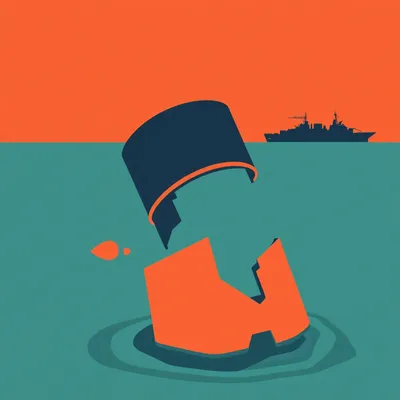
Twenty-one million barrels a day. That's what used to move through one narrow strip of water, and now that strip has a toll booth with a missile battery next to it, and nobody can agree who's allowed to collect.

And the toll booth went up in about a week. That's the part that keeps getting lost in the six-month retrospectives. This wasn't a slow squeeze. Iran claimed full control of the strait on the third of March. The war started on the twenty-eighth of February.
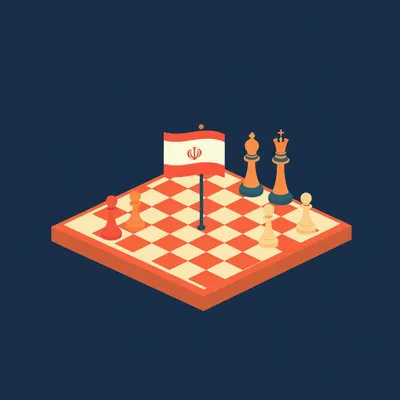
Daniel's prompt this week is the whole arc of it. He wants us to trace how this started as an explosive joint campaign with Israel in February, how it settled into the stalemate we're all watching now, and how the Strait of Hormuz became the central bargaining chip. Three questions, but they're really one question with three layers: what was the bet, why did the bet fail, and what did both sides reach for when the bet failed.
The bet was that killing the Supreme Leader would collapse the regime. That's not me editorializing, that's the stated logic of Operation Epic Fury. Decapitation strike, day one. And the regime didn't collapse. It consolidated. Eight days later, Mojtaba Khamenei was designated the new Supreme Leader, and the war regionalized within hours.
So where do we even start with this. You've got a war that was supposed to be over in a week, and instead you get a mutual blockade six months in. That's the paradox at the center of everything Daniel's asking about. Both sides are blockading each other simultaneously. Iran holds the strait largely closed, the US Navy blockades Iranian ports and strangles the economy. Each side is simultaneously the blockader and the blockaded.
James Jeffrey at Foreign Affairs called it the least bad option for both. Which is a grim way to describe a war costing a hundred thirteen billion dollars, but it tracks. The costs of accommodating the other side exceed the costs of the stalemate. So the stalemate holds.
To understand how we got here, we have to go back to a single day in late February, and a strike that killed a Supreme Leader.
February twenty-eighth. Operation Epic Fury. Trump authorized it the day before at three thirty-eight in the afternoon, Eastern time. The strikes began the next morning. Khamenei was killed on day one, along with other top officials. Israel's component was Operation Roaring Lion. The Israeli Air Force struck five hundred targets with over twelve hundred bombs in twenty-four hours. That's their largest combat sortie ever.
Twelve hundred bombs in a day. That's not a military operation, that's a statement.
It was both. And the statement was: the regime ends now. The US stated goal was regime change. Trump's February twenty-eighth statement cited Iran's support for proxies, the protest crackdowns, the hostage crisis. The logic was that decapitating the leadership would trigger collapse or at least paralysis.
And what actually happened was Operation True Promise Four. Iran's decentralized response hit US bases and Gulf states within hours. Bahrain, Kuwait, Qatar, Saudi Arabia, the UAE, Iraq. Hezbollah resumed fighting Israel, and Israel began occupying southern Lebanon in March. So the regional war the strike was supposed to prevent happened immediately.
That's the miscalculation in one sentence. The US and Israel planned for a decapitation that would prevent a regional war. Iran's command structure was decentralized enough that the response didn't need a head. The body kept fighting on its own.
And the succession question, which I think a lot of people assumed would be chaotic. It wasn't. Mojtaba Khamenei was designated Supreme Leader on March eighth. Eight days. That's faster than most corporate succession plans.
The regime didn't collapse. It consolidated. And by late March, the US had struck over eight thousand Iranian military targets, including a hundred thirty vessels. Admiral Brad Cooper gave those numbers. Air superiority was total. And it didn't produce political change.
This is the part that I think Daniel's trajectory question really turns on. The first phase was a US-Israel air campaign that dominated militarily. The US could hit anything it wanted. And hitting everything didn't achieve the goal. So then came the diplomatic arc, which was really a series of failed off-ramps.
Two-week ceasefire on April eighth. Islamabad Talks on April twelfth and thirteenth. Those collapsed, and Trump declared the naval blockade on April twelfth. Then the June memorandum of understanding, signed June eighteenth, launching a sixty-day negotiation window. That collapsed on July eighth when the US struck eighty Iranian targets and the IRGC attacked eighty-five US military sites in Bahrain and Kuwait.
Eighty targets and eighty-five sites. That's not a coincidence, that's tit-for-tat as a strategy.
The July eighth collapse is the turning point. Both sides demonstrated they could inflict pain, and neither could force the other to capitulate. Trump declared the ceasefire was over. The sixty-day window expired August seventeenth with no final deal. And then the shift happens.
The shift from military to economic. August nineteenth, Trump announced what he called the most crushing economic operation ever taken. August twenty-fourth, Treasury Secretary Bessent threatened what he called an economic D-Day. That's the admission. Military force had failed to achieve regime change, so the US pivoted to strangulation.
Aaron David Miller at Carnegie had the line that's stuck with me. He said, to me, this isn't D-Day. It's Desperation Day. I don't think the administration is any closer to finding a way out of this.
That's the six-month arc in two words. Desperation Day.
And the desperation is mutual. Iran's annual inflation hit sixty-six percent in July. Food prices up a hundred twenty-eight percent year on year. The US has drawn down strategic oil reserves to their lowest levels since nineteen eighty-four. Nobody's winning. Everybody's bleeding.
The war began with a bet that killing the leadership would collapse the regime. That bet failed. Here's how.
So the military campaign stalled, and both sides turned to the thing that could actually hurt the other. Control of the world's most important waterway.
Let's put the strait in perspective. Twenty-one million barrels per day crossed in the first half of twenty twenty-five. That's roughly one-fifth of world oil and gas supply. And after Operation Epic Fury, vessel traffic dropped seventy percent.
Rapidan Energy Group called the closure the largest global oil disruption in history. Three times larger than the nineteen seventy-three Arab oil embargo. That's not a regional problem. That's the global economy recalibrating in real time.
And Iran knew exactly what it was holding. March third, the IRGC Navy deputy commander said the strait was under Iran's full control. June eleventh, the Khatam al-Anbiya command announced full closure. And then in August, the toll threat emerged. Ban US and Israeli ships, charge everyone else.
The toll is the key innovation. A blockade is a blunt instrument. A toll is a revenue stream. Iran isn't just trying to hurt the global economy, it's trying to get paid for access.
And here's the part that I think is underappreciated. The June MoU had a clause requiring Iran to ensure safe passage with no charge for sixty days. That clause was widely read as a tacit acceptance that after sixty days, Iran could start charging. The negotiation window expired August seventeenth with no final deal. So the legal ambiguity was built into the agreement itself.
The US counter-lever was Trump's revived naval blockade and a twenty percent toll on cargo traversing the waterway. So now you've got both sides claiming the right to charge tolls on the same water. The US also created a demined southern shipping lane off Oman as an alternative route. But a demined lane doesn't solve the problem that Iran can still threaten the approaches.
This is where the toll question becomes bigger than a bilateral dispute. Foreign Affairs ran a piece by Isaac Kardon titled How America Lost Command of the Commons, and why the open seas may soon be tolled. That's the framing. This isn't just about Iran and the US. It's about whether the principle of freedom of the seas survives contact with a determined regional power sitting on a chokepoint.
And the Gulf states are caught in the middle in a way that undercuts the US position. Saudi Arabia sent a representative to the slain Supreme Leader's funeral. Qatar's defense minister floated accepting temporary fees to reopen the strait. That's a US ally suggesting, maybe we should just pay the toll.
Michael Ratney, the former US ambassador to Saudi Arabia, put it bluntly. With oil in the seventies, Gulf states need unfettered export capacity, and if the US can't solve that, they're going to have to figure out their own way to solve it.
That's the erosion of the US position in one quote. The guarantor of freedom of the seas can't guarantee anything, so the clients start making their own deals.
Meanwhile, there's an internal Iranian debate. Iran International reported a widening argument in Tehran over whether prolonged closure is exhausting Hormuz's leverage. Some factions think Iran is burning its strongest card. Others want to expand control beyond Hormuz to the Red Sea and the Gulf.
And the US-Israel dimension has decoupled. NPR reported a souring relationship between Trump and Netanyahu. The Israel front, the Hezbollah fight, the occupation of southern Lebanon, that's become its own conflict. The framing of a unified US-Israel campaign doesn't hold anymore.
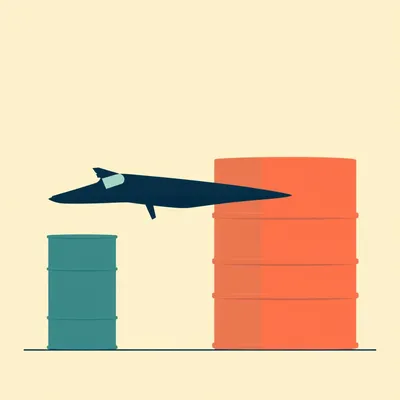
The drone seizure on September eighth is a microcosm of the whole thing. Iran's IRGC claimed it seized a US underwater drone in the strait. CENTCOM said the drone had malfunctioned and was an older model carrying no classified data. So it's either a capture or a salvage operation, and both sides get to claim a win.
And then September ninth, yesterday. US struck five Iranian oil tankers. Four IRGC-linked in the Gulf of Oman, one near Kharg Island. Iran retaliated with missiles at a US base in Jordan. Jordan says it shot down eighteen of twenty. Brent rose one and a half percent to ninety-nine forty-one a barrel.
Rubio's line yesterday was that every time Iran tries to hit US naval ships, they're going to lose tankers. That's the current logic. Tanker-for-tanker.
And Qalibaf, the Iranian parliament speaker, said strike our assets and you get struck. So both sides have settled into a rhythm. Limited exchanges, calibrated responses, no path to victory.
So the military campaign stalled, and both sides turned to the thing that could actually hurt the other. Control of the world's most important waterway.
The toll question is the analytical core here. Can Iran charge for passage through an international waterway? The US position is no. Freedom of the seas means free. One industry analyst put it that way to NPR. Iran's position is that it controls its littoral waters and can charge user fees.
And the June MoU loophole makes the US position harder to defend. If the US signed a document that said no charge for sixty days, the implication is that after sixty days, a charge is on the table. That's not a legal concession, but it's a diplomatic one.
This is a test case. If Iran successfully imposes tolls and the world adjusts, then every chokepoint becomes a potential toll booth. The Malacca Strait, the Suez Canal, the Bab el Mandeb. The principle that international waterways are free for navigation is only as strong as the power willing to enforce it.
And the US, which has been that power since nineteen forty-five, is now running a naval blockade and charging its own twenty percent toll. So the guarantor of free seas is itself charging for passage. That's a strange position.
It's a strange position because it's a desperate position. The US can't force Iran to reopen the strait without a ground invasion or a much larger air campaign, neither of which is politically viable. So instead it's trying to make Iran's position economically unsustainable.
The economic squeeze is real. Sixty-six percent inflation. Food prices up a hundred twenty-eight percent. But sanctions have rarely forced governments to abandon goals they view as existential. That's the Al-Monitor analysis. Iran believes it has time on its side.
Max Boot at CFR had the clearest version of the dilemma. Iran has seen how it could hold the entire world hostage by controlling the Strait of Hormuz, and it is in no hurry to relinquish that control. Trump is left with an unpalatable choice. Either acquiesce to Iran charging a toll, or run the significant risks of military escalation.
The stalemate isn't an accident. It's a stable equilibrium. Neither side prefers the alternatives to the status quo.
The status quo is a grinding exchange of limited strikes. The September fourth CNN analysis framed it well. The US wants to manage the stalemate in the strait. Iran wants to break it.
Which is why the toll threat keeps coming back. Iran's leverage is explicit. It's not subtle. It says, we will charge you for passage, and if you don't like it, the strait stays closed.
The Gulf states are quietly making their own arrangements. Saudi Arabia sent a representative to the funeral. Qatar's defense minister floated temporary fees. These are US allies signaling that they're willing to live with a world where Iran charges tolls, as long as the oil flows.
That's the real erosion. Not the military balance, but the diplomatic one. The US position that no tolls should be paid is only as strong as the coalition willing to refuse to pay. And the coalition is fraying.
The US-Israel divergence makes it worse. The campaign started as a joint operation. Epic Fury and Roaring Lion. Now NPR is reporting a souring relationship between Trump and Netanyahu. The Israel front has its own logic, its own escalation spiral with Hezbollah, its own occupation of southern Lebanon. And the US is focused on Hormuz.
The coalition that launched the war has split into two separate conflicts. The US-Iran maritime standoff and the Israel-Hezbollah war. That's not what the February planners intended.
The costs keep mounting. A hundred thirteen billion dollars as of June. Nineteen US soldiers and one contractor killed, seven hundred fifty-seven wounded. Forty Israeli soldiers and thirty-one civilians killed. Iranian figures say over thirty-five hundred killed, including over seventeen hundred civilians by HRANA's count.
Those numbers don't capture the oil market. Brent at ninety-nine dollars a barrel. The strategic reserve at its lowest level since nineteen eighty-four. The global economy is paying a Hormuz premium on everything.

You're missing the point.
Go on.
The toll debate. You're treating it like a legal question. It's not. Insurance underwriters already priced this in. I worked as a maritime insurance adjuster in Dubai in the early two thousands. War-risk premiums for tankers transiting the strait. That was my job. I sat in an office and calculated what it costs to get a tanker through a war zone.
The market already has a toll.
It's not a toll. It's a premium. But it functions the same way. The shipowner pays extra to transit. The underwriter collects. The question isn't whether someone charges for passage. It's who collects and who gets the receipt. Iran wants to be the one collecting. The US wants to be the one blocking collection. But the money's already moving.
That's the piece Washington keeps missing. The toll exists. It's just being collected by Lloyd's of London instead of Tehran.
In the nineteen eighties, during the tanker war, Lloyd's effectively dictated the terms of navigation through the war zone. Not by law. By pricing. If you wanted your tanker insured, you followed their routing instructions. You took their security measures. You paid their premium. That's how it worked. The law was whatever Lloyd's said it was.
The legal framework for paying Iran a toll already exists in the fine print.
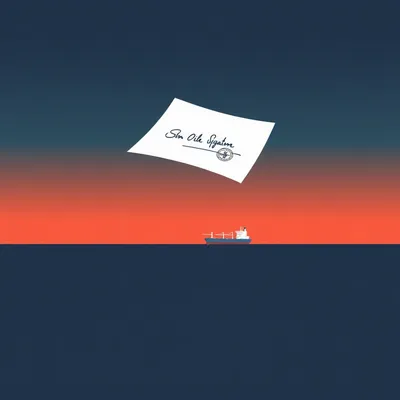
My old firm had a standing clause for transit fees paid to non-state actors. Dates back to the Somali pirate negotiations. It was boilerplate by the time I was there. The contract didn't ask whether the fee was legal. It asked whether the fee was paid and whether the cargo arrived. If Iran starts charging tolls, the underwriters will just add a line item. Transit fee, Strait of Hormuz, payable to the Islamic Republic of Iran. And the shipowner will pay it, because the alternative is no insurance.
The US position that no tolls will be paid is already moot in practice.
It's moot the moment the first tanker pays. And the first tanker will pay, because the cargo's worth more than the toll. That's the whole calculation. The toll is a rounding error compared to the value of the oil. So the shipowner pays, the underwriter documents it, and the US can stand on the deck of a carrier and say no tolls will be paid while the toll is being paid.
That reframes the entire standoff. It's not about whether there's a toll. It's about who gets to call it a toll and who gets to call it something else.
Iran wants the receipt. That's what this is about. They want a document that says the fee was paid to them. Because that document is recognition. It says, we control this waterway and the world pays us for passage. The money's secondary. The receipt is the point.
That's why the June MoU clause mattered so much. Safe passage with no charge for sixty days. That's a receipt in the making. After sixty days, the charge starts, and the receipt exists.
The US signed a document that acknowledged the possibility of a charge. That's not a legal concession. It's a diplomatic one. And it's already done. You can't unsign it.
Where does that leave us. Six months in, with no end in sight.
The open question is whether Iran actually imposes the toll, or whether the threat itself is the leverage. If the toll is imposed, the US has to decide whether to enforce its no-toll position militarily. That's the escalation risk Max Boot was talking about.
The deeper question is whether the US economic siege can force capitulation when sanctions have rarely forced governments to abandon goals they view as existential. Iran's inflation is catastrophic, but the regime is still there, still holding the strait, still threatening to expand.
The Hormuz standoff may be a preview of a world where chokepoints become toll booths. The US, the guarantor of freedom of the seas, may no longer be able to enforce it. And if the guarantor can't guarantee, the principle dies.
The misconception people have about this war is that it's a straightforward US-Iran bilateral conflict. It's not. It regionalized within hours, and the Gulf states have been making their own arrangements ever since. The toll question isn't a bilateral dispute either. It's a global test case for freedom of the seas.
The war began with a decapitation strike designed to end the Iranian regime in a day. Six months later, the regime is still there, the strait is still closed, and the world is learning to live with a new normal.
The new normal is a toll booth on the world's most important waterway, and the only question left is who gets the receipt.
Thanks to our producer, Hilbert Flumingtop, for keeping the show running.
This has been My Weird Prompts, the human-AI collaboration podcast.
If you're enjoying the show, leave us a review wherever you listen. It helps more than you'd think.
We'll be back soon.