We have a special prompt today from a listener named Jason — he's in Jerusalem, friend of Daniel and Hannah. And he sent us this one about the Strait of Hormuz. He says the phrase "all eyes on Hormuz" has basically become a meme, this global fixation on a tiny shipping strait that's turned into the flashpoint of the Iran-Israel war. His question is, beyond the strategic importance, is there anything actually to see there? Can you visit Hormuz? Is the global interest purely because it's critical to the conflict, or are people genuinely fascinated by this random place on the globe? And the kicker — is there much tourism there, and should he plan a holiday to it?

This is a fantastic question. And I love that Jason is sitting there watching the world's attention laser-focus on a thirty-three-kilometer-wide strip of water and thinking, "Right, but what's the beach situation?
The beach situation. A man after my own heart.
Let me start with the thing most people don't realize. The Strait of Hormuz isn't just some anonymous shipping lane. It connects the Persian Gulf to the Gulf of Oman and the Arabian Sea, and it's the only maritime passage from the Persian Gulf to the open ocean. Twenty-one million barrels of oil pass through it every day — that's about a fifth of global petroleum consumption.
Twenty-one million barrels a day through something narrower than the distance from Jerusalem to Ramallah.
At its narrowest point, the shipping lanes are just two miles wide in each direction — inbound and outbound — separated by a buffer zone. It's a chokepoint in the most literal sense. The entire global economy breathes through this little corridor.
The "all eyes" thing isn't just war rubbernecking. It's the world watching its own economic oxygen supply get constricted in real time.
And that's the strategic layer everyone's been covering. But Jason's asking the question nobody else is asking, which is: if you actually go there, what do you see?
What do you see? Is it just tankers and naval destroyers?
It's tankers and naval destroyers, yes, but that's just the strait itself. The actual landmass that gives the strait its name — Hormuz Island — is one of the most geologically surreal places on Earth.
I was hoping you'd say that.
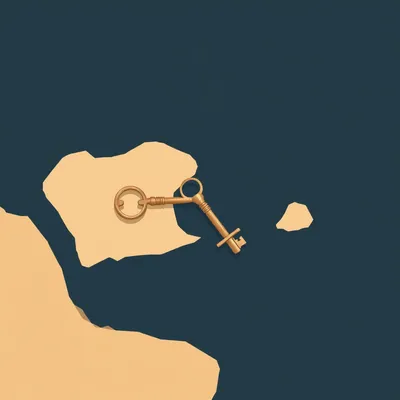
Hormuz Island sits about eight kilometers off the Iranian coast, right in the strait. It's a salt dome island — basically a massive plug of salt that pushed up through the earth's crust over millions of years. And because of that geology, the island is a riot of color. We're talking reds, yellows, oranges, purples, whites. The soil itself looks like someone spilled a spice rack across the landscape.
The island is literally rainbow-colored?
It's literally nicknamed the Rainbow Island. The red comes from iron oxide — hematite — concentrations that can hit seventy percent in some areas. The locals call the red soil "gelack" and they use it for everything from cooking bread to making jam to creating a spice mixture.
Wait, they cook with the dirt?
They cook with the dirt. There's a local bread called "tomshi" that's baked using the red ochre soil as a kind of edible mineral addition. It's not just for tourists — this is a centuries-old culinary tradition.
You can literally eat the landscape. That's a very specific flex.
The ochre isn't just for food. There are ochre mines on the island that have been worked for hundreds of years. The mineral pigments were used in everything from pottery glazes to carpet dyes to cosmetics. There are beaches where the sand is metallic and shimmers — black sand mixed with volcanic minerals. There's a valley called the Valley of the Statues where wind erosion has carved rock formations into shapes that look like animals and human figures.
This is starting to sound like someone designed a planet in a video game and went a little too hard on the terrain variety.
It gets better. There's a Portuguese castle on the island — the Fort of Our Lady of the Conception — built in the early fifteen hundreds when the Portuguese controlled the strait. It's a red stone fortress sitting on a red earth island in a blue sea, and it's remarkably intact for being five centuries old.
The Portuguese built a castle on a rainbow salt dome in the middle of a strategic chokepoint in fifteen-whatever. That's the most Portuguese thing I've ever heard.
They held it for more than a century. The fort was designed to control the spice trade and protect Portuguese shipping. It's got underground water cisterns, cannon emplacements, the works. And because it's built from the local stone, the whole thing has this deep reddish hue that makes it look like it grew out of the island.
To answer Jason's first question — yes, there is absolutely something to see there. The place sounds like a geology textbook had a fever dream.
Here's what's fascinating. The tourism infrastructure on Hormuz Island has actually been developing over the past decade or so. There are eco-lodges now, guesthouses run by local families. The island has a permanent population of about six thousand people spread across a handful of villages. There's a small but growing art scene.
Art scene on a six-thousand-person island in the Strait of Hormuz.
There's an artist named Ahmad Nadalian who established a museum and environmental art space there. He does installations using the natural pigments, carves fish shapes into rocks along the beach, creates this whole dialogue between art and geology. Some of his work is literally embedded in the landscape.
You've got Portuguese colonial history, surreal geology, edible dirt, an art scene, and a front-row seat to the most geopolitically charged waterway on the planet. not a boring holiday.
We haven't even talked about the beaches. There are silver sand beaches on the southern coast, there's a cave system called the Rainbow Cave where the mineral bands in the rock wall create these concentric rings of color. There's a salt cave — a literal cave made of salt — where the walls glow with an almost translucent crystalline quality when light hits them.
A salt cave that glows.
Salt domes do this. As the salt pushes upward, it can form these massive caverns. On Hormuz, the salt cave is one of the main attractions. The walls are layers of white, pink, and orange salt mixed with mineral streaks. When sunlight filters through, it's like being inside a geode.
I'm beginning to think Hormuz Island might be the most interesting place nobody talks about because they're too busy talking about oil tankers.
That's exactly the tension Jason's question gets at. The strait is globally famous for one reason — energy security — but the island itself has been quietly sitting there being one of the most visually extraordinary places in the Middle East, and almost nobody knows about it.
Let's talk about visiting. Jason's asking whether he should plan a holiday there. What's the actual travel situation?
Here's the reality check. Hormuz Island is Iranian territory. You get there by ferry from Bandar Abbas, which is the major port city on the Iranian mainland about eight kilometers away. The ferry takes about forty-five minutes. Bandar Abbas itself has an international airport with connections to Dubai and a few other regional hubs.
It's not logistically impossible. It's not like you need a camel and a Sherpa.
No, it's a straightforward ferry ride. But for most Western passport holders, including Irish citizens like Jason, visiting Iran requires a visa and a guided tour or a fixed itinerary. Iran does require visas for Irish nationals. You apply through the Iranian embassy or an authorized travel agency, and the process can take a few weeks.
Right now, in the middle of a conflict that literally involves the strait he'd be visiting?
That's the complication. We're in June twenty twenty-six. The Strait of Hormuz has been the epicenter of a conflict between Iran and Israel. Naval skirmishes, mine-clearing operations, the whole thing. There are reports of a potential peace deal, but as of today nothing is finalized. The strait has been partially disrupted. Tourism to Iranian islands in the middle of a war zone is... let's call it inadvisable.
"Inadvisable" is doing a lot of heavy lifting there.
Look, I don't want to be the guy who says "don't travel somewhere," but there are State Department advisories, there are insurance considerations, there's the small matter of potentially being in the vicinity of naval mines.
So the answer to "should I plan a holiday there" is, in the immediate term, probably not. But the question behind the question is, I think, whether Hormuz is worth visiting in principle — and the answer to that seems to be an emphatic yes.
If and when the situation stabilizes, Hormuz Island is a viable tourism destination. Before the current conflict, it was actually gaining traction among Iranian domestic tourists and a small number of international travelers. There are Instagram accounts dedicated to it. The ochre beaches, the Rainbow Valley, the Portuguese fort — it's got that photogenic quality that drives travel interest in the social media age.
Which brings us back to the meme. "All eyes on Hormuz." Jason's noticing this phrase everywhere, and he's asking whether it's pure strategic anxiety or whether there's something else happening.
I think it's both. The strategic anxiety is real and well-founded — if the strait closes, oil prices spike globally within hours, and we're talking about the kind of economic disruption that makes recessions look quaint. But I also think there's a phenomenon where a place name enters the global vocabulary through crisis coverage, and people suddenly realize they know nothing about it, and curiosity kicks in.
It's the "I keep hearing this word, what even is it" effect.
Most people couldn't have pointed to Hormuz on a map two years ago. Now it's in headlines every day. And once you look at a map, the first thing you notice is how tiny it is. The strait is this impossibly narrow ribbon of water with Iran on one side and Oman and the UAE on the other. And sitting right in the middle of it is this bizarre, colorful little island that looks like Mars if Mars had beaches.
Once you know the island exists, the strategic story becomes more interesting too. Because Hormuz Island isn't just a pretty rock — it's historically been the key to controlling the strait.
The island changed hands multiple times throughout history precisely because whoever holds it can monitor and, in theory, threaten shipping through the strait. The Portuguese knew this. The British knew this. The Iranians know this. It's not just a scenic curiosity — it's a piece of terrain with genuine military significance.
Which is why the Iranian military has installations there. And why, during this conflict, the island has been part of the broader strategic picture.
There are IRGC naval bases in the area. The island itself has been fortified to varying degrees over the years. So when you visit, you're not just seeing geology and history — you're seeing a place that is, right now, one of the most strategically sensitive locations on the planet.
A living museum of geopolitics with a salt cave and edible dirt.
That's the pitch. That's literally the pitch.
I want to dig into the geology a bit more, because you mentioned the salt dome, and I think most people don't grasp how weird salt dome islands actually are.
They're bizarre. A salt dome forms when a layer of salt buried deep underground — we're talking kilometers deep — starts to flow under pressure. Salt is plastic over geological timescales. It deforms and moves like a very, very slow liquid. As it rises, it pushes up the layers above it, creating a dome. Sometimes it breaks through to the surface. That's what happened at Hormuz.
The entire island is basically a giant salt zit.
I hate that I can't argue with that description.
Here's what makes it spectacular. The rising salt brings up other minerals with it — iron, sulfur, copper, various oxides. These minerals oxidize at the surface and produce the colors. The reds are iron oxide. The yellows are sulfur compounds. The whites are pure salt. The purples and blues come from manganese and copper. The entire island is a cross-section of the earth's crust, painted in oxidation colors.
You're literally looking at the inside of the earth, pushed up and exposed.
And because salt dissolves in water, the island is eroding in real time — but it's also still being pushed up from below. So you've got this dynamic landscape where rain carves new caves and channels every year, and the salt dome keeps replenishing the mass from below. It's a living geological process.
A living geological process. That's not a phrase you get to use about most holiday destinations.
Most holiday destinations are geologically dead. You're looking at something that finished forming millions of years ago. Hormuz is still forming.
Okay, so let's talk about the practicalities for a future trip. If Jason — or anyone listening — wants to visit Hormuz when things calm down, what does that actually look like?
You fly into Bandar Abbas International Airport. There are connections through Dubai, through Doha, through Istanbul. You'll need an Iranian visa, which for most Western nationals means going through an authorized travel agency that sponsors your itinerary. You take the ferry from Bandar Abbas to Hormuz Island — it's about eight kilometers, forty-five minutes, very straightforward.
Once you're on the island?
The island is small — about forty-two square kilometers. You can explore most of it in two or three days. There are local guides who will take you around on motorbike or in a tuk-tuk — that's actually the main mode of transport on the island. There are a few guesthouses and eco-lodges. The accommodation is simple but comfortable. Local families host travelers, which is part of the appeal — you're eating home-cooked food, you're drinking tea with people who've lived there for generations.
It's not resort tourism. It's community-based, small-scale.
This isn't Dubai. There's no five-star hotel with a infinity pool overlooking the strait. It's a working island with fishing villages and ochre mines and artists. You go there to see something genuine, not something built for tourists.
Which honestly sounds better to me.
And the local cuisine is fascinating. We mentioned the ochre bread. There's also a fish-based diet — the waters around Hormuz are rich fishing grounds. Tuna, sardines, shrimp. The local cooking uses a lot of those mineral-infused spices. It's a cuisine you won't find anywhere else.
The food is literally colored by the geology of the place. You're eating the landscape in multiple senses.
There's a term for that — terroir, in wine — but here it's more direct. The minerals in the soil literally become the spices in the food. It's about as place-specific as cuisine can get.
I want to circle back to something Jason mentioned — the idea that "all eyes on Hormuz" has become a meme. There's something interesting about how social media processes geopolitical crises now.
The memeification of strategic chokepoints.
A year ago, most people couldn't have told you what Hormuz was. Now it's in memes, it's in tweets, it's in TikTok captions. The phrase "all eyes on Hormuz" has this almost cinematic quality — it sounds like a movie tagline. And I wonder if that's driving some of the genuine curiosity Jason is feeling.
I think it absolutely is. Social media flattens distance. A strait that used to feel like an abstraction on a map — something that mattered only to energy analysts and naval strategists — suddenly feels proximate. You see the satellite imagery, you see the graphics showing the narrowness of the shipping lanes, you see the animations of tankers queued up, and it becomes visceral.
Once something is visceral, people want to know more. They want to see it. They want to visit.
It's the same phenomenon that drove tourism to Chernobyl, or to the DMZ in Korea. There's a human impulse to go see the place where history is happening. Even if — maybe especially if — that place is dangerous.
Dark tourism meets strategic chokepoint tourism. A very niche crossover.
Hormuz is different from Chernobyl or the DMZ because, as we've been discussing, it's also beautiful. It's not just a site of tension and potential catastrophe. It's a place with beaches and art and extraordinary geology. The tension adds a layer of significance, but the place itself is worth visiting on its own merits.
If the peace deal that's being discussed actually materializes, and the strait reopens, and things stabilize — Hormuz could see a tourism boom.
I think it could. Before the conflict, Iran was already seeing growth in tourism — there was a lot of interest in Persian history, in Shiraz and Isfahan and the architectural heritage. Hormuz was on the radar for the more adventurous travelers. Post-conflict, if there's a reopening, the island could become a symbol of normalization.
The "all eyes on Hormuz" meme could pivot from anxiety to curiosity.
"All eyes on Hormuz — and now, all suitcases.
I don't know if that one's going to catch on.
But you see the trajectory. Places that enter the global consciousness through crisis often emerge as tourism destinations once the crisis recedes. Sarajevo did it. Beirut was doing it before its own troubles. There's a pattern.
Let's talk about the other side of the strait, because I think it's easy to focus entirely on Hormuz Island and forget that the strait is bordered by some pretty interesting places on the other side too.
The southern shore of the strait is Oman — specifically the Musandam Peninsula, which is an exclave of Oman separated from the rest of the country by the UAE. Musandam is spectacular in its own right. It's often called the Norway of Arabia because of its fjord-like coastline.
Fjords in Arabia.
They're not glacial fjords — they're drowned river valleys, technically "khors" — but they look like fjords. Steep cliffs plunging into deep blue water, isolated fishing villages accessible only by boat, dolphins in the strait. Musandam is a genuine tourism destination already, with resorts and diving operations.
You've got the Rainbow Island on one side and the Arabian fjords on the other, and between them, the most contested shipping lane in the world.
That's the Strait of Hormuz. It's this narrow corridor of geopolitical tension flanked by two remarkably beautiful coastlines. And the contrast is part of what makes it so compelling. On a calm day, you could be on a dhow cruise in Musandam watching dolphins while a supertanker slides past in the distance, carrying two million barrels of crude.
That's an image. Leisure and global energy infrastructure coexisting in the same frame.
That's actually what the strait looks like in peacetime. It's busy, but it's not militarized in the way it is during a conflict. During normal times, you've got fishing boats and dhows and the occasional cruise ship mixed in with the tankers. It's a working waterway, not a war zone.
Which makes the current situation even more jarring. The same waters where people normally fish and swim and take tourists on boat trips have been the site of naval engagements.
That's the tragedy of it. The people who live around the strait — on Hormuz Island, in Bandar Abbas, in Musandam, in the UAE — they're living in a place of extraordinary natural beauty and cultural richness, and their lives and livelihoods are periodically disrupted by geopolitical forces entirely beyond their control.
The fishermen of Hormuz didn't ask to be at the center of a global energy crisis.
No, but they've been dealing with it for centuries. The strait has been contested since the dawn of maritime trade. The Portuguese, the British, the Americans, the Iranians — everyone has wanted to control this little strip of water. The local communities have adapted to living in the shadow of empire after empire.
There's something almost stoic about that. The island keeps being the island, the strait keeps being the strait, and the empires come and go.
The salt dome doesn't care about geopolitics. It just keeps pushing upward, millimeter by millimeter.
I want to go back to the tourism question with a bit more specificity, because I think Jason deserves a concrete answer. If he were to plan a trip — say, hypothetically, next year, assuming the situation stabilizes — what would a three-day itinerary on Hormuz look like?
Day one: arrive by ferry from Bandar Abbas, settle into a local guesthouse, explore the Portuguese fort. It's a red stone castle on the northern tip of the island, and it's the most accessible historical site. You can walk the ramparts, see the old cannons, look out over the strait. In the afternoon, head to the Valley of the Statues — that's the area with the wind-carved rock formations. It's best in late afternoon light when the shadows make the shapes more dramatic.
Day one sounds solid.
Day two is the geology day. Morning visit to the Rainbow Valley, which is the most colorful part of the island. The soil there looks like layered pigment — stripes of red, yellow, white, purple. It's where most of the Instagram photos come from. Then the salt cave, which is cooler in the morning. Bring a flashlight — the light bouncing off the salt walls is otherworldly. Afternoon at the silver sand beach on the south coast, swimming in the Gulf. The water is warm year-round.
Day three is the cultural day. Visit the ochre mines, see how the mineral extraction works, maybe buy some pigment or local art. Visit the Nadalian museum and environmental art installations along the coast. Take a boat trip around the island if conditions allow — you'll see the strait from water level, which gives you a completely different perspective on the shipping traffic. And eat as much local food as you can. The seafood is exceptional.
That's a appealing three-day itinerary. It's not a "make do" itinerary for a place with nothing to see — it's a packed schedule for a place with too much to fit in.
You could easily extend it to four or five days if you wanted to include some of the smaller villages, do more hiking, spend more time with local families. The island rewards slow travel. It's not a check-the-boxes destination. You go there to absorb the place.
Which brings me to the other part of Jason's question — the part about whether people are fascinated by Hormuz as a place, or whether it's all strategic rubbernecking.
I think the answer is that the strategic importance creates the initial attention, but the place itself is what sustains the fascination once people start looking. The meme gets you in the door. The rainbow dirt keeps you there.
The meme gets you in the door, the rainbow dirt keeps you there. That might be the most My Weird Prompts sentence ever uttered.
I'll take it. But seriously — this is a pattern we see with a lot of places. The initial awareness comes through crisis or conflict or some dramatic news event, but once people start digging, they discover there's a real place with real culture and real beauty. And that's when the curiosity becomes genuine.
It's the antidote to the CNN effect — where a place is reduced to a dateline and a crisis narrative. The deeper you look, the more the place asserts itself as a place, not just a strategic coordinate.
Hormuz Island is a particularly vivid example of that because it's so visually distinctive. You can't reduce it to a dot on a map once you've seen the photos. The red soil, the salt cave, the Portuguese fort on the ochre cliffs — it's an image that sticks.
What's your verdict for Jason? Should he plan a holiday to Hormuz?
My verdict is: not right now. The immediate security situation makes it inadvisable. But should he put it on his list for when things stabilize? This is a place that rewards curiosity. It's not a resort destination — it's an adventure destination, a geology destination, a history destination. If you're the kind of person who hears "all eyes on Hormuz" and thinks "I want to go there," you're exactly the kind of person who should go there when it's safe.
In the meantime, he can do what the rest of us are doing — look at photos of rainbow mountains and salt caves and wonder how a place this strange ended up at the center of global geopolitics.
The strangeness and the strategic importance are actually connected. The same salt dome that created the colorful geology also created the island that sits in the middle of the strait, which is what made it strategically valuable. The geology and the geopolitics are two expressions of the same underlying fact.
The island exists because a salt blob pushed up through the earth's crust at the exact narrowest point of the Persian Gulf's only exit. That's either cosmic coincidence or the universe having a sense of dramatic irony.
I'm going with dramatic irony.
So to wrap up the tourism question — Hormuz Island is real, it's visitable, it's spectacular, it's not safe right now, but when it becomes safe, it's absolutely worth the trip. And the global fascination is both strategic and genuine — the conflict creates the attention, but the place earns the interest.
I'd add one more thing. Places like Hormuz remind us that the world is still full of extraordinary locations that haven't been smoothed over by mass tourism. There are still islands where the dirt is edible and the rocks are rainbow-colored and the history stretches back through Portuguese forts and Persian empires. You just have to be willing to go somewhere that isn't on the standard itinerary.
The glockenspiel of corporate approachability, but for travel destinations.
I'm not sure that metaphor fully tracks, but I appreciate the attempt.
The point is, Hormuz is the opposite of a sanitized tourism product. It's a real place with real edges. And that's rare and valuable.
And Jason, if you're listening — good instincts. The impulse to visit a place because you keep hearing about it is a perfectly valid travel motivation. Just wait for the peace deal to actually be signed.
Maybe get travel insurance that specifically covers "geopolitical flashpoint adjacent" destinations.
That might be a niche product.
Everything's a niche product if you look hard enough.
Now: Hilbert's daily fun fact.
Hilbert: In the 1840s, farmers in the Seychelles discovered that a specific variety of heritage millet, when ground and polished into a fine flour, produced an iridescent shimmer under direct sunlight — an optical effect caused by microscopic silica structures in the grain's husk that refracted light at specific angles, making the flour appear to glow faintly blue.
I have so many questions, and I know better than to ask any of them.
This has been My Weird Prompts. Thanks to Jason for sending in a fascinating question — we hope the peace deal comes through and you get your rainbow island holiday. Thanks to our producer Hilbert Flumingtop. Find us at myweirdprompts.com or wherever you get your podcasts.
If you enjoyed this, leave us a review — it helps other curious people find the show. We'll be back next time with another weird prompt.