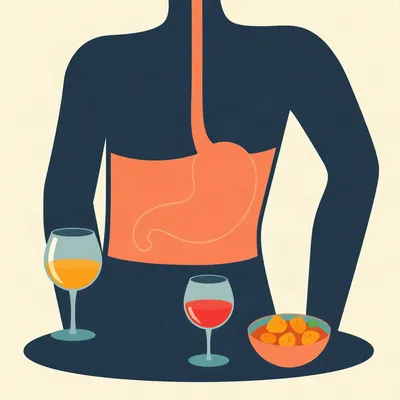
Daniel sent us this one — he's been living without a gallbladder for a decade, still dealing with the digestive fallout, and he's landed on a tension that I think a lot of people recognize but don't articulate. He needs a frozen treat that feels like indulgence, not a compromise, but has to keep fat under roughly five grams per serving or his body stages a rebellion. He's asking whether high-quality sorbet makers and low-fat ice creams can actually deliver on taste, or if they're just the frozen-dessert equivalent of beige wallpaper.

This is one of those questions where the answer branches in two completely different directions before it converges. You've got sorbet, which is fat-free by nature but often a sugar bomb, and you've got engineered low-fat ice creams that use everything from allulose to microparticulated whey protein to fake the mouthfeel of butterfat. Both paths work for different reasons, and both have hidden failure modes. So let's start with the physiology — why does a gallbladder removal from ten years ago still dictate what you can eat?
The short answer is bile. Normally, your gallbladder stores bile and releases it in a concentrated bolus when fat hits your small intestine. Think of it like a fire hose — when the alarm goes off, the whole tank empties at once. Without a gallbladder, there's no storage tank. Bile just trickles continuously from the liver into the gut. There's no surge capacity. So when a high-fat meal arrives, the trickle can't keep up, and you end up with undigested fat moving through your system — steatorrhea, bloating, the works. It's not a condition that improves over time. The bile trickle is permanent.
The body's revenge for gallbladder removal is becoming deeply weird about unavoidable things. It's like your digestive system holds a grudge. And the practical upshot here is that a single serving of premium ice cream — say, Haagen-Dazs vanilla — has about eighteen grams of fat. That's nearly four times what our listener can handle in one sitting. Even a so-called reasonable half-cup serving is nine or ten grams. The math doesn't work.
The math gets worse when you realize that the fat in ice cream isn't just any fat — it's butterfat, which is particularly good at triggering the bile response. It's highly emulsified, which means it presents a massive surface area for digestion, and it arrives cold, which slows gastric emptying and gives the bile even more time to fall behind. It's almost perfectly designed to cause problems for someone without a gallbladder.
That's a grim way to think about ice cream — as a delivery system optimized for digestive distress. But you're right. And the prompt's point about mental health is not a throwaway. There's solid neuroscience here. Anticipation of a reward triggers dopamine release in the nucleus accumbens, and that anticipation surge is often stronger than the consumption surge. If your brain categorizes the dessert as a sad compromise — watery, icy, obviously diet — the anticipation doesn't fire. You eat it and you're still craving. The indulgence gap is real.
Let me put some numbers on that, because I think it helps to understand just how powerful the anticipation piece is. Wolfram Schultz, who basically wrote the book on dopamine and reward prediction, showed that once an animal learns to associate a cue with a reward, the dopamine spike shifts from the reward itself to the cue. By the time the reward arrives, the dopamine system is already returning to baseline. The anticipation IS the reward, neurochemically speaking.
Which means if the cue — opening the freezer, seeing the pint, scooping it out — triggers a mental classification of "this is going to be disappointing," the whole neurochemical cascade fizzles before you even take a bite. You've lost before you've started. So the question becomes: can you engineer a frozen dessert that the brain reads as indulgence while the body reads as gentle? That's the brief.
With that constraint in mind, let's look at the two main paths — sorbet and low-fat ice cream. We'll start with sorbet, because it seems simpler but has hidden complexity.
Traditional sorbet is just fruit puree, sugar, and water. Elegant in principle. But commercial sorbets are rarely that simple. They add stabilizers — locust bean gum, guar gum — and often use invert sugar instead of sucrose. Invert sugar is a blend of glucose and fructose that depresses the freezing point more effectively than table sugar, which keeps the sorbet scoopable straight from the freezer instead of turning into a brick.
Here's where the sugar problem sneaks in. The tradeoff is real. A serving of Talenti Alphonso Mango Sorbetto has about twenty-eight grams of sugar. That's more than a serving of regular Haagen-Dazs vanilla, which clocks in around twenty-one grams. So you've traded fat for sugar, and for someone with blood sugar sensitivity, that's a different kind of problem. You get the spike, then the crash, and the crash triggers more cravings. It can undermine the whole treat psychology.
The crash is the thing people underestimate. You eat the sorbet, it's delicious, thirty minutes later your blood sugar plummets, and suddenly you're standing in front of the pantry looking for something else. The treat didn't close the loop — it opened a new one.
Plus, high-sugar sorbets often freeze harder than you'd expect. The sugar depresses the freezing point, sure, but water still forms ice crystals, and without fat to coat those crystals, you feel every single one. That's where the ice crystal science comes in.
This is worth spending a moment on, because ice crystals are the entire ballgame for frozen dessert texture. The perception of creaminess in frozen desserts correlates directly with ice crystal diameter. Below fifteen microns, the tongue can't distinguish individual crystals — it reads as smooth. Between fifteen and thirty microns, you start detecting a slight graininess. Above thirty microns, it's overtly icy or gritty. Premium ice cream, with its high butterfat and low overrun, keeps crystals in the ten-to-twenty-micron range. Cheap ice cream and poorly made sorbet can push past forty.
To put those numbers in perspective, a human hair is about seventy microns thick. So we're talking about crystals that are half the width of a hair versus crystals that are a quarter of that. The difference is invisible to the eye but immediately obvious to the tongue. It's like the difference between silk and burlap — same basic material, radically different sensation.
Ice crystals are like sand grains — smaller ones feel smoother. And the machine matters enormously for this.
Which brings us to the hardware question. Let's break down three machines available right now. First, the Cuisinart ICE-100 — it's a compressor model, meaning it has its own refrigeration system. You don't pre-freeze a bowl. It maintains a consistent freezing rate while a paddle churns the mixture, and that consistency produces crystals in the ten-to-twenty-micron range. It's about three hundred fifty dollars. Reliable, proven, but it's a single-purpose appliance that takes up counter space.
The pre-freeze bowl models — the ones where you stick a double-walled bowl in the freezer overnight — those are cheaper, but they're inconsistent. The freezing rate depends on how cold your freezer is, how long the bowl has been in there, whether you've opened the freezer door six times that day. You can get good results, but you can also get a batch where the bowl isn't cold enough and the whole thing freezes slowly, producing giant crystals. It's a gamble every time.
Second is the one that's been getting all the attention — the Ninja CREAMi. This thing takes a completely different approach. Instead of churning a liquid base while it freezes, you freeze the base solid in a pint container, then the machine drives a blade down through the frozen block at about two hundred RPM, shaving it into a smooth consistency. It's mechanical shearing rather than controlled crystallization during freezing. Think of it as a router for frozen desserts rather than a churn.
That's a helpful analogy. A churn is like stirring paint — you're mixing while it dries. The CREAMi is like sanding a piece of wood — you're taking a solid and mechanically reducing it. The physics are completely different.
The results are surprisingly good. America's Test Kitchen did a consumer taste test in twenty twenty-five — they found the CREAMi produced a texture rated eight-point-two out of ten for creaminess when using a low-fat base. For comparison, store-bought low-fat ice cream scored six-point-five, and premium full-fat ice cream scored nine-point-one. That's a meaningful gap closure. The CREAMi is about two hundred dollars.
You're getting within a point of premium ice cream, at a fraction of the fat content. That's the kind of engineering win that makes this whole conversation possible.
The third option is the Lello 4080 Musso Lussino — Italian, commercial-grade compressor machine, produces the smallest ice crystals of any home unit, but it's around six hundred dollars. For someone making sorbet every day, maybe worth it. For our listener, it's probably overkill.
I'd agree. The CREAMi offers the most flexibility for this specific use case, because you can control the fat content of your base with absolute precision. You're not locked into any pre-made mix. You can use almond milk, protein powder, allulose, guar gum — whatever combination works for your digestive system. And because it shears rather than churns, it's more forgiving of low-fat bases that would otherwise turn icy in a traditional machine.
The reason for that forgiveness is interesting. In a traditional churn, ice crystals form as the mixture freezes, and if there's not enough fat to coat them, they grow. The paddle can only do so much. In the CREAMi, the base freezes solid — crystals form, sure, some of them large — but then the blade physically breaks them down. It's a corrective step that the churn can't do.
The misconception I want to bust here is that you need a compressor machine to make good sorbet at home. The CREAMi's shearing approach produces comparable texture to compressor machines for low-fat bases, at roughly a third the cost of the Lello.
That's the hardware side. Let's pivot to what you actually put in the machine — the low-fat ice cream landscape, which has changed dramatically in the last few years.
The market right now splits into roughly three camps based on sweetener strategy. You've got the erythritol camp — that's Halo Top and Enlightened. You've got the allulose camp — that's Nick's, the Swedish brand. And you've got the fiber-and-stevia camp, which is more niche. Each approach has different implications for mouthfeel, for that weird cooling sensation, and for digestive tolerance.
Let's talk about the cooling sensation because it's one of those things everyone notices but few people can name. Erythritol, when it dissolves, absorbs heat from the mouth. It has a negative heat of solution. That produces a distinct cooling effect on the tongue — not like mint, more like a cold spot. For some people it's pleasant. For others, it's deeply off-putting, especially in a frozen dessert that's already cold. It creates this uncanny layering of cold-on-cold.
The cold taste problem. It's the frozen-dessert equivalent of artificial sweetener's metallic aftertaste — some people don't notice it, but for those who do, it ruins the entire experience. And here's the thing: if you're one of those people, you might not even know why you don't like Halo Top. You just know something's wrong. That's the cooling sensation, and once you learn to identify it, you can't un-notice it.
Allulose doesn't have that problem. It's a rare sugar — chemically a monosaccharide, actually — that occurs naturally in figs and raisins. It has about seventy percent of the sweetness of sucrose, with a glycemic index of roughly five, compared to sucrose at sixty-five. The FDA issued a GRAS determination for it in twenty nineteen. And critically, it doesn't produce the cooling sensation that erythritol does.
There's another dimension here, and for our listener it might be the most important one: digestive tolerance. Erythritol is absorbed in the small intestine, but it's not metabolized. It gets excreted unchanged in urine. That sounds fine, but at doses above about fifty grams per day, it can cause osmotic diarrhea — it pulls water into the intestine. The European Journal of Clinical Nutrition published a paper on this in twenty twenty-three. A pint of Halo Top has about forty-five grams of erythritol. If you eat half the pint, you're probably fine. If you eat the whole thing, you might be in trouble.
Someone who already has digestive sensitivity from post-cholecystectomy syndrome — that's a risk that's not worth taking. You're already dealing with a system that's prone to bloating and unpredictable responses. Adding a sugar alcohol that's known to cause osmotic diarrhea at high doses is like throwing gasoline on a fire you're trying to put out.
That's a vivid image, but accurate. Allulose is generally better tolerated. Most people can handle up to about forty grams per day without issues. Nick's uses allulose and monk fruit, and their pints run about three to five grams of fat total, with around three hundred fifty calories. The protein content is higher too, which improves mouthfeel. Protein and gums together create a matrix that mimics the texture of butterfat.
What's actually happening in that matrix? When ice cream has fat, the fat globules partially coalesce during freezing and create a structure that traps air bubbles and coats ice crystals. That's what gives premium ice cream its body. When you remove the fat, you need something else to do that job. Low-fat ice creams use what the industry calls fat replacers — microparticulated whey protein, like the brand Simplesse, or modified tapioca starch, or a combination of gums and fibers. These create a gel network that approximates the mouthfeel of fat.
The gel network is the key concept. Imagine a three-dimensional spider web made of protein strands and gum molecules, with water trapped in the spaces. When you shear that gel — when you bite into it — it breaks down in a way that feels similar to how butterfat breaks down on the tongue. It's not identical, but it's close enough that the brain accepts the substitution.
Then there's overrun — the amount of air whipped into the mix. Premium ice cream has low overrun, around twenty to twenty-five percent. Economy ice cream can go up to a hundred percent overrun, meaning half the volume is air. Low-fat ice creams typically target eighty to a hundred percent overrun to compensate for the lack of fat. That air provides a sense of lightness that can partially mask the absence of richness. But go too high and you get that foamy, insubstantial texture that collapses to nothing on the tongue.
The Journal of Texture Studies published a paper in twenty twenty-four that quantified this. Consumers rated low-fat ice creams as acceptable only when overrun exceeded eighty percent and stabilizer concentration was above zero-point-three percent. Below those thresholds, ratings dropped sharply. So there's a narrow window where the engineering actually works.
Let me give you a concrete comparison. Talenti Sorbetto in mango — the ingredient list is basically cane sugar, water, mango puree, citric acid. Simple, clean, but twenty-eight grams of sugar per serving. Halo Top dairy-free chocolate chip cookie dough — the ingredient list is almond milk, erythritol, tapioca fiber, pea protein, and a long tail of gums and natural flavors. Complex, engineered, lower glycemic impact, but with that erythritol cooling effect and potential digestive risk.
Neither is perfect, which is exactly the point. The listener is navigating a landscape of tradeoffs.
We've covered the mechanics of texture and sweetness. But there's another layer here — the psychology of why a treat matters, and how to hack that system.
This is where I think the prompt is most interesting. The listener didn't just ask which product to buy. They framed the treat as a mental health essential, not a luxury. And they're right. The neuroscience backs them up. The dopamine system is anticipation-driven. When you've had a hard week and you know there's something waiting in the freezer that you're genuinely looking forward to, that anticipation itself is doing work. It's a mood stabilizer that costs nothing.
The trap is that if the treat doesn't deliver — if it's watery, or icy, or leaves that weird cooling sensation, or causes bloating an hour later — the anticipation circuit weakens over time. Your brain learns that this thing isn't actually rewarding, and it stops firing dopamine in anticipation. That's the indulgence gap in neurological terms. You need the reward to be real enough to sustain the anticipation.
This is where I think a lot of diet advice goes wrong. It treats all low-calorie substitutes as equivalent, as if the brain can't tell the difference between a satisfying alternative and a sad imitation. But the brain can tell. It's exquisitely sensitive to reward prediction error — the gap between what you expected and what you got. If that gap is consistently negative, the whole system collapses.
Research from the University of Leeds in twenty twenty-three showed something that I think is counterintuitive. They had consumers rate frozen desserts on multiple dimensions — sweetness, flavor intensity, creaminess, mouth-coating. Creaminess was the strongest predictor of whether people categorized something as indulgent. Stronger than sweetness. Stronger than flavor. The mouthfeel is the thing that signals indulgence to the brain.
That's fascinating. So you could have something that's perfectly sweet, perfectly flavored, but if the texture is wrong, the brain says "this is not a treat." The mouthfeel is the gatekeeper.
Which explains why sorbet, even a really good one, can feel like it's missing something. It's refreshing, it's bright, it can be delicious — but it doesn't coat the mouth. It doesn't have that lingering richness. That's not a flaw, it's just a different category. And for someone who's craving the ice cream experience specifically, sorbet may not close the gap.
The practical question becomes: how do you add that sense of richness and mouth-coating without adding fat? And this is where the DIY approach gets really powerful.
Let me give you a specific recipe that's optimized for both the CREAMi and the listener's constraints. One cup unsweetened almond milk, one scoop vanilla whey protein isolate or a plant-based protein isolate, two tablespoons allulose, one teaspoon guar gum, half a teaspoon vanilla extract. Freeze it solid in the CREAMi pint, then run it on the lite ice cream setting. What you get is roughly three grams of fat, fifteen grams of protein, about eight grams net carbs per serving. The protein and the guar gum together create a gel matrix that gives you that mouth-coating sensation without any butterfat.
The allulose gives you sweetness without the cooling effect and without the blood sugar spike. The glycemic index of allulose is about five. For someone who's dealing with energy crashes from high-sugar sorbets, that difference is night and day.
The guar gum is doing heavy lifting here. At concentrations around zero-point-three to zero-point-five percent, it binds water and prevents it from forming large ice crystals during the initial freeze. Then when the CREAMi blade shears through, it redistributes those tiny crystals evenly. The result is a texture that's closer to soft-serve than to the icy blocks you'd get without the gum.
Here's a fun fact about guar gum that I only learned recently. It's derived from guar beans, which have been cultivated in India and Pakistan for centuries as a drought-resistant crop. The gum itself is extracted from the endosperm of the bean, and it's one of the most effective water-binding agents known. A single gram of guar gum can bind up to twenty grams of water. That's why a quarter teaspoon in a pint of ice cream base can completely transform the texture.
That's wild. So you're essentially using a legume extract to fake the mouthfeel of butterfat. The culinary world is full of these improbable substitutions.
For sorbet specifically, you can elevate it with fat-free additions that add complexity. A teaspoon of coconut extract — the flavor compound, not coconut oil — gives a richness note that tricks the brain into perceiving more body. A tablespoon of unsweetened cocoa powder adds bitterness and depth that distracts from the lack of fat. A swirl of sugar-free fruit compote made with allulose adds visual and textural contrast. The key is adding complexity that fills the gap fat would normally occupy.
The culinary term for this is layering. Fat carries flavor and provides mouthfeel, but if you can't use fat, you can use multiple flavor compounds and textural elements to create a sensation of richness that's satisfying. It's not the same, but it can be good enough to trigger the dopamine anticipation response.
The treat doesn't need to be perfect. It needs to be good enough to close the indulgence gap.
Now let's get specific about brand recommendations. For sorbet, look for brands that use invert sugar or glucose syrup instead of straight sucrose. Invert sugar has a lower freezing point, which means the sorbet stays softer and smoother straight from the freezer. Ciao Bella and Il Laboratorio del Gelato both use this approach. Their sorbets have a texture that's noticeably less icy than brands that use only sucrose.
Ciao Bella's blood orange sorbet in particular has a creaminess that doesn't make sense until you look at the ingredient list and see glucose syrup right after the fruit puree. That's the freezing point depression at work. And the blood orange itself is doing something interesting — it has a slight bitterness from the peel oils that adds complexity, which as we just discussed, helps fill the richness gap.
For low-fat ice cream, the recommendation is Nick's over Halo Top, specifically because of the erythritol issue. Nick's uses allulose and monk fruit. The digestive tolerance is better, there's no cooling sensation, and the protein content is higher — typically eight to ten grams per serving versus Halo Top's five to six. That additional protein improves the mouthfeel and also increases satiety.
Enlightened sits in a middle ground. They use tapioca fiber and glycerin along with some erythritol. The texture is good, but the glycerin can have a slightly sweet aftertaste that some people find off-putting. For the listener's specific constraints, I'd rank them Nick's first, then Enlightened, then Halo Top.
I want to address a misconception here. Frozen yogurt is often presented as a middle ground between ice cream and sorbet, but it's trickier than it looks. Frozen yogurt is made with milk solids, which contain fat — typically two to four grams per half-cup serving, but it can go higher depending on the milk base. And the live cultures that make it yogurt in the first place often don't survive freezing in meaningful numbers, so you're not getting the probiotic benefit. It's not a bad option, but it's not the automatic win people assume.
The "health halo" around frozen yogurt is a real problem. People see the word "yogurt" and assume it's significantly lighter than ice cream, but depending on the brand and the base, it can be within a few grams of fat of regular ice cream. Pinkberry's original frozen yogurt, for example, has about four grams of fat per half-cup — that's within the listener's tolerance, but just barely, and it doesn't leave much room for toppings or a slightly larger serving.
Gelato, despite its reputation as a lighter alternative, is often higher in fat than people think. Traditional gelato uses more milk than cream, sure, but it also uses egg yolks in many recipes, and the lower overrun means it's denser. A serving of gelato can easily have eight to twelve grams of fat. That's outside the listener's tolerance window.
The density is the sneaky part. Because gelato is served warmer and has less air, a half-cup of gelato weighs more than a half-cup of ice cream. So even if the fat percentage by weight is lower, the total fat in a serving can be higher simply because there's more product in the cup. It's a portion-size illusion.
Let's pull all of this together into three concrete recommendations for our listener.
First, invest in a Ninja CREAMi. It's about two hundred dollars, and it gives you total control over your base ingredients. You can dial in the exact fat content, sweetener type, and protein level that works for your digestive system. Pair it with a base recipe that uses allulose rather than erythritol, and include a protein source — whey or plant-based — for structure. The guar gum at a quarter to half teaspoon per batch is the secret weapon for texture.
Second, if you're buying pre-made, go with Nick's low-fat ice cream for the allulose-based sweetness and lower digestive impact. For sorbet, look for Ciao Bella or Il Laboratorio del Gelato — the invert sugar makes a real difference in scoopability and mouthfeel. Avoid Halo Top if erythritol causes you bloating. And avoid frozen yogurt and gelato as hidden-fat traps.
Third, for your specific situation, aim for treats that stay under five grams of fat per serving and under twenty grams of net carbs. That keeps you below the bile trickle threshold and avoids the blood sugar crash that undermines the treat psychology. The ideal dessert is one your brain categorizes as indulgent but your body processes as gentle.
There's a broader insight here that I think is worth naming. The most sustainable diet for someone with a permanent digestive constraint is not the one that eliminates treats. It's the one that ritualizes them. When you know that Friday night means a bowl of something cold and creamy that you look forward to, that ritual does more for adherence than willpower ever could. The treat is part of the compliance strategy, not a deviation from it.
The prompt's framing — that this is a mental health issue as much as a dietary one — gets at something deeper. Dietary restrictions that feel like permanent deprivation are psychologically unsustainable. The brain rebels. Finding a treat that works isn't an indulgence, it's a maintenance strategy. It keeps the whole system running.
I think that's the note we should end on. Because the listener asked a practical question — which machine, which brand, which recipe — but underneath it was a bigger question: can I still have joy in food after my body changed? And the answer, with some engineering and some thoughtfulness, is yes.
Where does this leave us? And what's coming next in the world of fat-free frozen desserts?
The current frontier is oleogels — structured oils that mimic the crystal structure of solid fat without using triglycerides. A twenty twenty-five study at MIT demonstrated that oleogels made from ethylcellulose and vegetable oil could replicate the melting profile and mouthfeel of butterfat in frozen desserts. The challenge is that the Food and Drug Administration hasn't yet approved ethylcellulose as a food additive for frozen desserts specifically. It's approved for other uses, but the frozen dessert GRAS determination is probably three to five years out.
The way oleogels work is elegant. Ethylcellulose forms a polymer network in oil that creates a semi-solid structure at room temperature, similar to how butterfat is solid when cold but melts at body temperature. The polymer strands trap the liquid oil the way a sponge traps water. When you eat it, the structure breaks down at the same rate as butterfat, giving you that same melting sensation. It's biomimicry at the molecular level.
Which means the holy grail — a zero-fat frozen dessert indistinguishable from premium full-fat ice cream — is on the horizon, but it's not here yet. In the meantime, the combination of a good machine, the right sweetener, and a thoughtful approach to texture engineering can get you remarkably close.
The gallbladder may be gone, but the ability to enjoy a treat isn't. It just takes a little more engineering than walking down the ice cream aisle.
Now: Hilbert's daily fun fact.

In the early Renaissance, European scholars believed the Inca quipu — knotted strings used for record-keeping — were a form of writing so advanced that each knot color and position encoded full sentences, not just numbers. A Spanish chronicler in Guyana in fifteen forty-two wrote that quipus could record entire legal proceedings. Modern analysis confirms they were purely numerical.
The Renaissance equivalent of thinking QR codes contained novels.
That's unsettling to imagine — entire court cases encoded in knots.
If you have a weird prompt about food science, digestion, or the intersection of health and pleasure, send it to prompts at myweirdprompts dot com. We read every one.
This has been My Weird Prompts. I'm Herman Poppleberry.
I'm Corn. Find us at myweirdprompts dot com, or wherever you get your podcasts.