The most deceptive product on Amazon isn't a gadget. It's a 72-hour emergency food kit that promises survival in a bucket but hides the real constraint from you — water weight. Nine liters per person, nine kilograms per person. The food is almost an afterthought once you've done that math.

And the bucket doesn't come with the water. You open the box and there's forty entrees and a sense of accomplishment, but the thing that actually keeps you alive is still your problem to figure out.
Which is exactly what Daniel's getting at. He was browsing Amazon on a trip to the US, saw one of those vacuum-sealed 72-hour kits, and it got him thinking about the Israeli Home Front Command's guidance. They tell you to stock three liters of water per person per day. But they don't tell you what that looks like as a shopping list, or how much food you need alongside it, or which specific items work when you can't just buy MREs off the shelf. He wants the math.
Three questions that all orbit the same number. Nine liters of water per person for 72 hours. That's the anchor.
Today we're doing the calculation the pamphlets skip. The per-person, per-day numbers that turn "have enough supplies" into a concrete, carryable load. So where do we start — with the water or with why the water is already the whole problem?
Start with the water, because the weight is the thing most people don't internalize until they've actually lifted it. The Israeli Home Front Command says three liters per person per day. That's nine liters per person for 72 hours. Nine liters weighs nine kilograms. Twenty pounds. For a family of four, you're looking at thirty-six liters — thirty-six kilograms, about seventy-nine pounds, just for the water.
That's a large suitcase full of nothing but water bottles.
And it sits in your closet. You're not carrying it anywhere — you're sheltering in place. But the weight still matters because most people in Israeli apartments are storing this on a shelf, and thirty-six kilos is a structural consideration before it's a logistical one.
Compare that to FEMA's number. FEMA says one gallon per person per day, about three point seven eight liters. For a family of four over 72 hours, that's forty-five liters, forty-five kilograms, ninety-nine pounds.
The difference is about nine liters for a family of four — roughly twenty extra pounds. They're solving for different things. FEMA's gallon includes water for basic sanitation — brushing teeth, washing hands. The Israeli guideline assumes you're using wet wipes and hand sanitizer for hygiene and reserving stored water strictly for drinking.
Which is a design choice, not an error. If you've got the space, stock the gallon. But in a small apartment where storage is already tight, the Israeli number is the more realistic one.
And it's grounded in the actual physiology. An adult at rest in a moderate climate needs about two to two and a half liters of fluid intake per day. Three liters gives you a small buffer for warmer conditions or mild exertion. You're not running a marathon in your sealed room — you're sitting, waiting, maybe stressed, maybe sweating more than usual. Three liters covers it.
So the water math is settled. Nine liters per person, nine kilograms per person. What about the food side? Daniel mentioned that dehydration is the primary threat in a 72-hour window, not calorie insufficiency. He's right, but how low can you actually go on calories before it becomes a problem?
This is where the official guidance and the survival medicine literature diverge. FEMA recommends two thousand calories per person per day — a maintenance number for an active adult. But if you're sheltering in place for 72 hours, the metabolic reality is different. Survival medicine literature puts the sufficient range at twelve hundred to fifteen hundred calories per day for a sedentary adult in a short-duration emergency.
So for 72 hours, you're looking at thirty-six hundred to forty-five hundred calories total per person, not six thousand.
You won't starve. You'll be hungry, you might feel lethargic, but you won't experience significant cognitive impairment at that intake over three days. And cognitive impairment is the real threat — you need to be able to follow instructions, monitor news, make decisions. Twelve hundred calories a day keeps the brain running.
The trade-off is that lower calories means smaller food volume and less weight, which matters enormously when water already dominates your load. For a family of four, the water alone is thirty-six kilograms. If you add two thousand calories per day of food per person, you're adding roughly one and a half to two kilograms of food per person — call it six to eight kilograms total. So the full kit is somewhere around forty-two to forty-four kilograms.
Ninety-seven pounds. That's the weight of a large checked suitcase. You are not bugging out with this. This is a shelter-in-place supply, and the Home Front Command's guidance is built around that assumption.
Let's put the water-to-food weight ratio in perspective. A typical 72-hour MRE kit for one person weighs about four to five kilograms — all food, no water. But the water for that same person is nine kilograms. So the water is roughly double the weight of the food. In a DIY kit, you can get the food weight even lower by choosing calorie-dense items.
Which brings us to the practical question Daniel's really asking. If you can't buy MREs, if you're standing in the supermarket in Jerusalem or Tel Aviv or Haifa, what do you actually put in the cart?
Let's do the grocery list. But first, let's nail down the criteria.
Four criteria. First, no cooking required — gas might be off, electricity might be out. Second, long shelf life — at least a year, preferably more, because you're going to forget about this stuff and rediscover it when the sirens go off. Third, calorie-dense — maximum calories per liter of storage space. Fourth, minimal water needed for preparation — ideally none, because your stored water is for drinking.
That rules out most of what people instinctively reach for. Pasta, rice, oatmeal — all need boiling water and a heat source. Canned soup is heavy and mostly water. Cereal needs milk. The aisle you want is the one people skip: canned proteins, nut butters, dried fruit, nuts, crackers, protein bars. Let me build the list for one person.
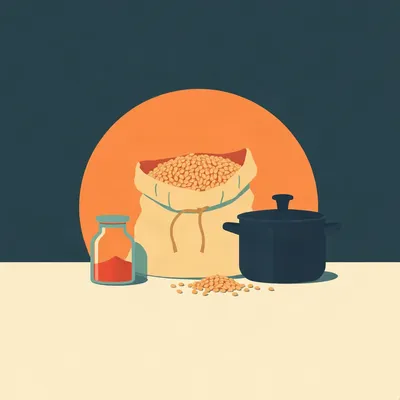
Nine liters of water — three three-liter jugs or eighteen half-liter bottles. The half-liter bottles are better because they're easier to ration and less catastrophic if one leaks. One jar of peanut butter — a standard sixteen-ounce jar is about twenty-five hundred to three thousand calories, unopened it's good for two to three years. One box of crackers or hardtack — roughly two thousand calories, dry, shelf-stable for a year or more. Four cans of tuna in oil — about two hundred calories per three-ounce can, so eight hundred calories total, and the oil adds fat calories that water-packed tuna doesn't. One bag of trail mix or dried fruit and nuts — about fifteen hundred calories, high calorie-to-weight ratio, no preparation. One box of protein bars or meal replacement bars — roughly two thousand calories, designed for exactly this use case.
That's about ninety-three hundred calories total, well above the minimum of thirty-six hundred to forty-five hundred for 72 hours. Total volume, roughly fifteen liters — nine liters of water plus about six liters of food. Total weight, about twelve kilograms, twenty-six pounds per person.
And here's the thing about that food volume. If you choose dense items — nuts, bars, peanut butter — the food for one person fits in a three to four liter container. Water occupies about seventy to seventy-five percent of your total storage volume. Optimize for density, not variety. A bag of trail mix beats a box of pasta every time, because the pasta requires water to cook and fuel to boil, and neither of those is free in an emergency.
The Israeli-specific constraint Daniel mentioned is real. No consumer MRE market here. No freeze-dried entrees at the corner store. But the grocery store has everything you need — you just have to know which aisles to raid.
Canned beans are excellent — protein and fiber, shelf-stable for years, eat them cold straight from the can. Shelf-stable milk or plant-based milk in Tetra Paks gives you calcium and additional calories. Instant coffee or tea bags weigh almost nothing and are a genuine morale boost — and morale matters when you're sitting in a sealed room waiting for the all-clear.
There's a hidden variable here that almost never appears in government guidance. Electrolytes.
This is where my old clinical instincts kick in. When you're drinking three liters of water a day and not eating much, you can flush out sodium and potassium. It's called dilutional hyponatremia if it gets bad enough — your blood sodium drops, you get headaches, confusion, fatigue. In a 72-hour window it's unlikely to become a medical emergency, but even mild electrolyte imbalance makes you feel awful, and you need to be functional.
So what's the fix?
A small container of salt and a bottle of electrolyte powder or tablets. They weigh almost nothing, cost almost nothing, and they're the difference between a good kit and a great one. You can buy oral rehydration salts at any pharmacy in Israel — they're sold for treating dehydration from stomach bugs, but they work perfectly for this. Or you can make your own — half a teaspoon of salt, six teaspoons of sugar, dissolved in a liter of water. That's the WHO oral rehydration solution formula.
That's the detail that separates someone who read a pamphlet from someone who thought it through. Salt and sugar. A few shekels at the supermarket.
And while we're on the subject of things the pamphlet doesn't tell you — the 72-hour window is the minimum. Daniel asked about 72 hours, and that's the Home Front Command's baseline. But the same cabinet scales. Double the water and food, and you've got a six-day supply. The marginal cost of extra shelf-stable food is low — another jar of peanut butter, another box of crackers. The marginal cost of extra water is high because of weight and space.
So the strategy is: stock extra food generously, and have a plan for water beyond what you can store. Fill the bathtub when things look bad. Keep a water bladder or collapsible container in the closet. Know where your nearest emergency water distribution point is. The food is cheap insurance; the water is the binding constraint.
Let's talk about the calorie floor in a bit more detail, because there's a specific number that matters. I mentioned twelve hundred to fifteen hundred calories as sufficient. FEMA says two thousand. Where does that gap come from?
Two thousand calories feels like a blanket recommendation, not something tuned to a 72-hour shelter-in-place scenario.
It is a blanket recommendation. FEMA's two thousand calories comes from standard daily nutritional guidelines for an active adult. It's not wrong — if you're doing search and rescue, clearing debris, or walking long distances, you need those calories. But the Home Front Command's scenario is different. You're in a protected space. You're sitting. Your energy expenditure is close to basal metabolic rate.
Which for most adults is somewhere between fourteen hundred and eighteen hundred calories a day, depending on age, weight, and sex.
In a shelter-in-place emergency, you're barely above that. So twelve hundred to fifteen hundred calories covers your basal needs with a small buffer. You'll lose a little weight over three days, but you won't experience the kind of hunger-induced cognitive decline that makes you unable to function.
The cognitive piece is what matters. A person who's a bit hungry but clear-headed is safer than a person who's well-fed but confused. And dehydration impairs cognition much faster than hunger does. You can go weeks without food. You can go about three days without water. The Israeli guidance prioritizes water for exactly that reason — in a generally well-nourished population, the immediate threat is dehydration, not starvation.
So the calorie baseline Daniel should target is about four thousand calories per person for 72 hours. That's roughly thirteen hundred to fourteen hundred per day. It's enough, it's achievable with grocery store items, and it keeps the food volume small enough that water can still dominate the storage space as it should.
Let me put a finer point on the peanut butter. A standard sixteen-ounce jar is about twenty-six hundred to three thousand calories. That one jar alone covers more than half of one person's calorie needs for 72 hours. It requires no refrigeration, no cooking, no water. You can eat it straight from the jar with a spoon, or spread it on crackers. It's arguably the single most efficient emergency food item in a grocery store.
I'd put canned tuna in oil right behind it. Four cans give you eight hundred calories of protein and fat, shelf-stable for three to five years. Crackers give you carbohydrates, which peanut butter and tuna don't provide in large amounts. The three together — peanut butter, tuna, crackers — form a complete macronutrient profile. Fat, protein, carbs.
And trail mix or dried fruit fills the micronutrient gaps. Dried apricots, raisins, almonds, walnuts — they give you potassium, magnesium, fiber, and some vitamins. Plus the sugar in dried fruit is a quick energy source. Your brain runs on glucose, and in a high-stress situation, having readily available glucose is not trivial.
The protein bars are the backup. A box of twelve bars at about one hundred seventy to two hundred calories each gives you another two thousand calories in a package the size of a small book.
And here's a detail most people miss. Check the expiration dates on everything when you buy it, and write the expiration date on the front of each item with a marker. When the clocks change for daylight saving time — that's the Home Front Command's recommended check interval — you pull everything out, look at the dates, and rotate anything approaching expiration into your regular pantry. Replace it with fresh stock.
Twice a year, when the clocks change. It's a simple habit to build, and it solves the single biggest failure mode in emergency preparedness.
Which is?
The kit from 2019. Everyone buys the supplies once, feels virtuous, puts them in the closet, and never thinks about them again. Six years later, the water has leached plastic taste, the crackers are stale, the peanut butter has separated into something unrecognizable, and the whole kit is worse than useless because it gives you a false sense of security.
The rotation habit is more important than the specific items. A kit that gets refreshed is worth ten times more than a perfect kit that's been sitting untouched since the last war.
Let's talk about water storage specifically. Don't store water in milk jugs or juice containers — the residual sugars and proteins can promote bacterial growth even in sealed containers. Use purpose-bought bottled water, or food-grade water storage containers. If you're filling your own containers, rotate the water every six months. Commercially bottled water in sealed bottles is good for about two years.
And store it in a cool, dark place. Not on a balcony in the Israeli summer, not next to a radiator, not in direct sunlight. Heat and light degrade the plastic and can leach chemicals into the water.
The half-liter bottle format has another advantage beyond leak resilience. If you have to share your water with a neighbor or ration it across an uncertain timeline, smaller units give you more control. You can hand someone a bottle without opening your main supply. You can track consumption more precisely. In an emergency, small things become big things.
What about the morale items? You mentioned coffee and tea. What else?
A small pack of hard candy or chocolate — pure sugar, a mood lifter, costs almost nothing in weight or volume. A deck of cards or a small book. A phone charger bank, pre-charged. These aren't survival items in the strict sense, but 72 hours in a sealed room is boring and stressful, and boredom and stress compound each other. Anything that occupies your mind is a form of preparedness.
The psychological dimension is underrated. People think of emergency supplies as purely physical — water, food, first aid. But the mental load of sitting in a sealed room, listening for sirens or booms, not knowing how long it'll last — that wears on you. A deck of cards and a charged phone with some downloaded shows are not frivolous.
And if you've got kids, this becomes even more important. A few small toys, some coloring books, a stuffed animal. For Ezra — Daniel's son — having a familiar snack and a favorite toy in the kit is not a luxury. It's part of keeping a small child calm in a situation they don't understand.
So the full list for one person, all in. Nine liters of water in half-liter bottles. One jar of peanut butter. One box of crackers. Four cans of tuna in oil. One bag of trail mix. One box of protein bars. Small container of salt. Electrolyte powder or tablets. Instant coffee or tea bags. A few morale items. Total weight, about twelve to thirteen kilograms. Total volume, about fifteen to sixteen liters. Total cost at Israeli supermarket prices, maybe a hundred fifty to two hundred shekels.
Forty to fifty-five dollars, roughly. Compared to a commercial 72-hour kit on Amazon, which runs sixty to a hundred dollars and doesn't include water. The DIY approach is cheaper, more customizable, and you know exactly what's in it.
And you can build it for your household's actual dietary needs. If someone's allergic to peanuts, swap in sunflower seed butter. If someone keeps kosher, you're buying kosher tuna and crackers anyway — no need to hunt for specialty kosher MREs at five times the price.
That's a point worth underlining. The kosher MRE market exists, but it's tiny and expensive. A kosher-certified civilian MRE pouch can run fifteen to twenty dollars each. A can of tuna from the supermarket is five shekels and has a hechsher right on the label. The grocery store is the better option by every measure.
Let's zoom out for a second. Daniel's question is about Israel, and we've anchored the numbers to the Home Front Command's guidelines. But the same math applies anywhere. If you're in an earthquake zone in the Pacific Northwest, or a hurricane corridor in the Gulf, or a dense urban apartment in a city with unreliable infrastructure — the constraints are the same. Water is heavy. Food is bulky. Storage space is limited. The numbers change slightly based on climate and local guidance, but the structure of the problem is identical.
FEMA's one gallon per day versus Israel's three liters — that's the local variation. The universal truth is that water dominates the load, and food choices should optimize for calorie density and zero preparation. Peanut butter and crackers work in Portland and Houston and Jerusalem equally well.
The other universal truth is that pre-made kits are almost never the right answer. They're expensive, they expire, they rarely match your household size, and they create the illusion that preparedness is a product you buy rather than a calculation you make. Daniel browsing Amazon and thinking "I could build this better myself" — that's the right instinct.
The calculation is the preparedness. Not the stuff. The stuff is just the output of the calculation.
Water is the constraint. Nine liters per person, nine kilograms per person. Everything else orbits that number. If you get the water right and add enough calorie-dense food to keep everyone functional, you've solved the problem. The rest is details.
Speaking of details — we haven't talked about what happens when the 72 hours are up. The water runs out. Then what?
That's the open question, and it's the logical next step. You need a plan for resupply or purification. But that's a different episode. For today, the math is: nine liters of water, about four thousand calories of shelf-stable food, a pinch of salt, and a calendar reminder to rotate it all when the clocks change.
That's the kit. That's the whole thing. And you can buy it at any supermarket in the country tomorrow morning.

Twelve hundred calories a day.
Go on.
You said twelve hundred to fifteen hundred is sufficient. I worked a year as a logistics coordinator for an NGO doing disaster relief in the Balkans in the late nineties. My job was packing 72-hour emergency kits for distribution. The constraint wasn't weight or shelf life. It was cost per kit and whether people would actually eat what we gave them.
Cultural acceptability.
We learned the hard way. First shipment, we packed American MREs. The locals wouldn't touch half the entrees. Not because they weren't hungry — they were — but the food was foreign. They didn't recognize it, didn't trust it. We switched to local equivalents. Canned fish, flatbread, olives, dried meat. Same calorie profile, completely different acceptance rate.
So the best emergency food is food people already eat.
The best emergency food is food people already eat, stored in a way that doesn't require them to learn a new behavior during a crisis. But that's not what I came in to say. You're talking about this like it's a math problem, and it is, but you're missing the single biggest failure pattern I saw in the field. People don't rotate their stock. The Home Front Command says check your supplies twice a year when the clocks change — but nobody does it.
That's the kit from 2019 problem.
I'd rather see someone with a half-empty bottle of water they refill every month than a perfect nine-liter kit from 2019. The perfect kit that's expired is worse than the imperfect kit that's fresh. At least the half-empty bottle means they're thinking about it.
How did your NGO handle the rotation problem?
We didn't. Our kits were for distribution, not storage. But the calorie floor we used was eighteen hundred per day, not two thousand. We tested it — eighteen hundred was the threshold below which people reported feeling weak and unable to follow instructions. Below sixteen hundred, we saw measurable cognitive slowdown in field assessments. Twelve hundred kept people alive, but they weren't functional. Eighteen hundred kept them functional.
That two-hundred-calorie difference between FEMA's two thousand and your eighteen hundred is a real design parameter, not a rounding error.
It's the difference between surviving and being useful. In a 72-hour window, you're probably fine at twelve hundred. But if it stretches to four days, five days — and it often does — that extra four hundred calories a day starts to matter. I'd stock for two thousand and not worry about the weight. You're not carrying it anywhere.
You're sheltering in place. The weight goes on a shelf. Stock the extra jar of peanut butter.
The eighteen-hundred threshold is interesting from a clinical perspective. That's roughly the point where the brain has enough circulating glucose to maintain executive function — decision-making, impulse control, emotional regulation. Below that, you start getting irritable, impulsive, foggy. In a crisis, that's dangerous.
We saw it in the field. People who'd been on twelve hundred calories for three days couldn't follow a simple distribution queue. They'd push, they'd grab, they'd hoard. Same people, eighteen hundred calories — fine. Cooperative. The calorie number isn't just about hunger. It's about whether you can think.
So the practical takeaway is: stock for two thousand calories per day if you can, not because you'll starve at twelve hundred, but because the margin keeps you functional if the emergency stretches past 72 hours. The extra weight is a few kilograms of food. It's negligible compared to the water.
That's what I'm saying. The water is the heavy thing. The food is light. Don't skimp on the light thing.
The other thing Hilbert's NGO experience surfaces is the cultural acceptability point. In Israel, the grocery store items we listed — peanut butter, crackers, tuna, trail mix, protein bars — those are things people already eat. They're familiar. No one's going to stare at a jar of peanut butter and wonder what to do with it.
The flatbread and olives kit we built in the Balkans cost about a third of the MRE kit and had near-universal acceptance. Same lesson. Buy what you eat, eat what you buy. Rotate it.
Rotate it. That's the line that ties the whole thing together. The math gets you to the right items. The rotation habit keeps them from becoming a museum exhibit in the back of the closet.
I had a guy in my unit who kept a case of bottled water under his bed for seven years. When he finally opened it, the water tasted like the plastic had dissolved into it. He drank it anyway. Said it was fine. It was not fine.
Phthalates and antimony leaching. Not acutely toxic at that concentration, but not something you want to consume in an already stressful situation.
He was fine. But the point is, he didn't need to drink seven-year-old plastic water. He could have just bought a new case every year for about four dollars.
Four dollars a year to not drink plastic soup during a missile attack seems like a reasonable investment.
It does. Anyway, that's what I had.
The eighteen-hundred calorie floor is going to stick with me. It reframes the whole calorie question from "what's the minimum to not starve" to "what's the minimum to stay functional." That's a better question.
And it lands on a number that's still achievable with grocery store items. Two thousand calories per day for one person for three days is six thousand calories. That's two jars of peanut butter and a box of crackers. Done. The whole food kit for one person fits in a shoebox.
The water still takes up most of the space. Nine liters is nine liters. You can't compress it. But the food is almost trivial once you choose the right items. That's the insight Daniel was looking for, I think — the water is the hard problem, and the food is easy if you know which aisle to shop.
The 72-hour window is the minimum, and the math works cleanly for it. But Hilbert's right that emergencies don't always respect the 72-hour boundary. What happens on day four is the open question. The water runs out, and you need a plan — resupply, purification, distribution point. That's a different calculation, and it's the logical next step. But for the 72-hour kit itself, the answer is surprisingly simple. Nine liters of water per person. About six thousand calories of dense, familiar, no-cook food. A pinch of salt. And a calendar reminder to rotate it all when the clocks change.
Daniel's question reveals something about preparedness that gets lost in the Amazon listings and the government pamphlets. It's not about buying the right product. It's about doing the right math. The numbers are simple. The hard part is actually buying the water and putting it in the closet.
Then remembering it's there. Twice a year, when the clocks change.
This has been My Weird Prompts. Thanks to our producer Hilbert Flumingtop. If you've got a weird prompt about a constraint you're navigating — whether it's emergency prep, urban logistics, or something stranger — email the show at show at my weird prompts dot com.
We'll be back soon.