You know, Herman, I was driving past that nondescript industrial area near the outskirts of the city the other day—you know the one, just past the old rail yards—and I saw one of those massive, windowless buildings. It is just a giant grey box with a few security cameras and some heavy-duty fencing. It really got me thinking about how invisible the physical infrastructure of our digital lives is. We talk about the cloud like it is this ethereal, floating thing, but it is actually made of concrete, steel, and a whole lot of copper. It felt less like a tech hub and more like a high-security fortress for something incredibly heavy.

Herman Poppleberry here, and you are exactly right, Corn. Those invisible cow sheds, as Daniel called them in today's prompt, are the most valuable real estate on the planet right now. Daniel's prompt today is all about how the era of artificial intelligence has fundamentally changed the requirements and the very architecture of these data centers. It is not just about having more servers anymore. It is about a complete radical redesign from the ground up. We are moving away from the general-purpose data center and into the era of the AI Factory.
It is funny because for decades, a data center was basically just a giant room with a really good air conditioner. You had rows and rows of racks filled with central processing units, or CPUs, doing standard web hosting, database management, and email. It was predictable. But now, with the shift to massive graphics processing unit clusters, or GPUs, it feels like the physics of the building itself are being pushed to the limit. I mean, we are seeing chips now that pull more power than an entire rack used to pull just a few years ago.
They absolutely are. To understand why, we have to look at the difference between the workloads. A traditional data center built ten or fifteen years ago was designed for what we call low-density compute. You might have had five to ten kilowatts of power going to a single rack of servers. That is about the same amount of power as a few high-end kitchen appliances running at once. You could cool that with fans. You just blew cold air through the front of the rack and sucked the hot air out the back. It was simple, serial processing. One task after another.
Right, the classic hot aisle and cold aisle configuration. It was simple, and it worked for a long time. But AI is different. It is parallel. It is thousands of tiny tasks happening at once. And that creates a very different kind of heat, doesn't it?
Exactly. When you are training a Large Language Model, you are performing trillions of matrix multiplications every second. That requires a level of electrical current that traditional server motherboards weren't built for. But the real kicker is the density. Now, when you look at an AI-optimized rack filled with the latest NVIDIA Blackwell B-two-hundreds or the newer Rubin chips we are seeing here in early two thousand twenty-six, how much power are we talking about per rack?
I have seen some reports saying we are hitting triple digits now.
It is staggering, Corn. We have gone from five or ten kilowatts to thirty, sixty, and in some cases, over one hundred and twenty kilowatts per single rack. To put that in perspective for our listeners, one hundred kilowatts is enough to power dozens of average homes. Now imagine putting that much heat-generating equipment into a space the size of a refrigerator. Air cooling simply cannot keep up. The laws of thermodynamics are very clear on this. Air is an insulator; it is terrible at moving heat. You could blow air at an NVIDIA GB-two-hundred NVL-seventy-two rack with a jet engine and the chips would still throttle or melt because the air just cannot carry the thermal energy away fast enough.
This is where the architecture really starts to diverge, right? If you cannot use air, you have to use liquid. I remember we touched on this briefly in an earlier episode, but the implementation seems to be the real hurdle now. It is not just putting a little radiator on a chip; it is a total plumbing overhaul.
Exactly. We are seeing a massive shift toward direct-to-chip liquid cooling or even full immersion cooling. In direct-to-chip, you have these cold plates—usually made of high-grade copper—that sit directly on top of the GPU and the HBM-three-e memory. Water or a specialized dielectric coolant is pumped through those plates to whisk the heat away. It is much more efficient than air because liquid can carry away about four times as much heat as air can for the same volume. But think about what that does to the data center design. You suddenly need a massive secondary fluid loop integrated into the server racks. You need manifolds, leak detection sensors, huge heat exchangers, and cooling towers that are vastly different from the old chillers. You are basically building a chemical processing plant that happens to calculate numbers.
And that is not even the only physical problem. I was reading a report the other day about the actual weight of these things. If you are packing a rack with GPUs, heavy copper busbars for power delivery, and all the associated liquid cooling infrastructure, those racks are becoming incredibly heavy. I think people underestimate how much a gallon of coolant and a hundred pounds of copper adds up.
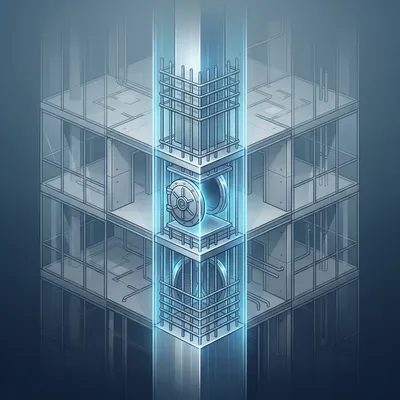
Oh, they are massive. A fully loaded AI rack can weigh three or four thousand pounds. Some of the newest integrated systems are pushing five thousand pounds per rack. Most traditional data center floors—especially those with raised floors for air circulation—were designed for a certain weight capacity, usually around two hundred and fifty pounds per square foot. These new racks simply cannot be supported by those old structures. If you try to retro-fit a traditional hyperscale facility built in two thousand fifteen with these new racks, you might literally have the floor buckle or collapse. So, you have to reinforce the concrete slabs, or better yet, build on a slab-on-grade foundation, which is a huge engineering nightmare for an existing building.
That leads perfectly into the second part of Daniel's prompt. We are seeing these newer, AI-first cloud companies—the ones often called the Neo-Cloud providers—building from scratch. Companies like CoreWeave, Lambda, or Voltage Park. What is the advantage of being a newcomer in this space compared to the traditional hyperscalers like Amazon Web Services or Google Cloud? They don't have the same bank accounts, but they seem to be moving faster.
It is the classic brownfield versus greenfield problem. If you are Amazon or Microsoft, you have hundreds of existing data centers around the world. These are multi-billion dollar assets. But they were built for the CPU era. Their power distribution is wrong—they are often set up for twelve-volt or twenty-four-volt delivery, whereas these new AI chips need forty-eight-volt or even higher to reduce energy loss. Their cooling is wrong, and their floor loading is wrong. To turn one of those into a high-end AI cluster, you have to rip out almost everything. It is like trying to turn a library into a high-performance engine factory while people are still trying to read books in the next room. You have legacy customers on those old servers that you can't just kick out.
So the AI-first companies can just say, okay, we are starting with a blank sheet of paper. We are going to put in two hundred kilowatt power feeds per rack from day one. We are going to install the plumbing for liquid cooling before we even put the walls up. And we are going to pour six-inch reinforced concrete floors that can handle the weight of ten thousand GPUs without breaking a sweat.
Precisely. They are building the car around the engine, whereas the legacy hyperscalers are trying to cram a jet engine into a minivan. The other big advantage for these newcomers is the network topology. This is something people often overlook because they focus on the chips. In a traditional data center, servers don't actually talk to each other that much. They talk to the internet. We call that North-South traffic. But in an AI cluster, the GPUs are constantly talking to each other to share the parameters of the model they are training. That is East-West traffic.
Right, because you are not just running one program on one chip. You are running one massive training job across ten thousand chips. If one chip is slightly slower because the cable is too long, the whole job slows down.
Exactly. That requires something called a non-blocking fabric. You need massive amounts of fiber optic cabling connecting every single GPU to every other GPU with almost zero latency. We are talking about InfiniBand or the newer Ultra Ethernet Consortium standards. In a legacy data center, the physical layout of the racks makes this really hard to do. You end up with these long cable runs that introduce lag and heat. The AI-first companies can design the physical layout of the building to minimize those cable lengths. They can put the compute clusters in a circular or hexagonal pattern to keep the distances as short as possible. They are optimizing for the speed of light.
It is almost like the building itself becomes a giant computer. The architecture of the walls and the pipes is just as important as the architecture of the silicon. But I have to ask, isn't it still a huge risk for these smaller companies? Building a data center costs hundreds of millions, if not billions, of dollars. How are they competing with the sheer scale and bank accounts of the big three?
That is where the gold currency of our era comes in: VRAM. Daniel mentioned this in his prompt, and he is spot on. Video Random Access Memory is the bottleneck for AI. If you have the chips—the actual physical silicon—you can get the funding. These smaller companies have been very aggressive about securing allocations of the latest chips. Because they can offer better performance for AI workloads due to their specialized architecture, they can charge a premium. They are often more agile. If a researcher wants a very specific cluster configuration with a specific type of high-speed interconnect, a specialized provider can set that up in weeks. For a giant like AWS, that kind of custom hardware request might take months to move through their bureaucracy.
That makes sense. It is the classic disruptor move. But what about the power aspect? We keep hearing about how AI is going to break the power grid. If these data centers are pulling a hundred kilowatts per rack, and you have thousands of racks, where is all that electricity coming from? Does the architecture of the data center now have to include its own power plant? Because it feels like the local utility company isn't going to be able to just flip a switch for that kind of load.
In some cases, yes! We are seeing a huge trend toward data centers being co-located with power sources. Look at the deal Microsoft made recently to restart the Three Mile Island nuclear plant—now called the Crane Clean Energy Center. They are buying one hundred percent of that power for twenty years. Some companies are looking at small modular reactors, or SMRs, which are basically mini nuclear power plants that can sit right next to the data center. Others are building massive solar farms and battery storage on-site. The physical location of the data center used to be about being near a big city for low latency to users. Now, the location is determined by where you can get a massive, stable high-voltage power line. We are seeing data centers pop up in places like Wisconsin or Indiana simply because the power grid there has more headroom.
It is a total reversal of priorities. It used to be: location, connectivity, power. Now it is: power, cooling, and then maybe we think about where it is on the map. I wonder, though, does this mean the traditional hyperscalers are doomed to be second-tier in AI? Surely they aren't just sitting around letting CoreWeave take their lunch.
Oh, far from it. They are spending hundreds of billions of dollars to catch up. They are building what they call satellite facilities—new buildings dedicated entirely to AI that sit next to their old ones. But they have a much harder job because they have to maintain their legacy business at the same time. It is a bit like a traditional airline trying to start a space program. They have the money, but the culture and the existing planes are all designed for a different purpose. Microsoft and Google are also designing their own chips—like the Maia and the TPU—to try and control the entire stack from the silicon to the cooling system.
I think one of the most interesting downstream implications of this is what it does to the secondary market for data centers. If you have a twenty-year-old data center that can only handle five kilowatts a rack, is it basically worthless now? Or is there still a world where we need those low-density cow sheds for the regular internet stuff?
That is a great question, Corn. I think we are going to see a two-tier internet. The heavy internet—the AI training, the complex simulations, the high-end rendering—will live in these new, liquid-cooled cathedrals of compute. The light internet—your emails, your static websites, your basic cloud storage—will stay in the legacy facilities. The problem is that the light internet is becoming a smaller and smaller percentage of the total traffic and compute demand. So those old buildings are definitely losing their value. We might see them being repurposed for things that don't need high density, or maybe even being torn down to make way for the new stuff. It is a real estate bubble in the making for old-school data centers.
It is amazing to think that the physical constraints of a concrete floor or a copper pipe could be the thing that determines which company wins the AI race. We always focus on the algorithms and the data, but at the end of the day, it is about how much heat you can move out of a room. It is a very grounded, physical reality for such an abstract technology.
It really is a return to the era of industrial engineering. In the nineteen nineties and two thousands, software was king and hardware was a commodity. Now, hardware is king again, and the physical environment that hardware lives in is the ultimate competitive advantage. If you can run your GPUs five percent cooler, they can run ten percent faster because they don't have to thermal throttle, and you save millions of dollars in electricity every month. That is the margin that wins. We are seeing PUE—Power Usage Effectiveness—become the most important metric in the industry. A PUE of one point zero would be perfect efficiency. Old data centers are at one point five or two point zero. The new AI-first builds are aiming for one point one or lower.
So, for someone listening who might be an investor or just a tech enthusiast, what are the red flags to look for when a company says they are AI-ready? To me, it sounds like if they aren't talking about liquid cooling and power density, they might be bluffing.
That is a very sharp observation. If a company says they are an AI cloud provider but their racks are only rated for fifteen kilowatts, they aren't really doing high-end AI training. They are just hosting some small inference models. Real AI infrastructure starts at thirty kilowatts per rack and goes up from there. You also want to look at their interconnects. If they aren't using something like InfiniBand or a very high-end custom Ethernet fabric, they can't scale. You can have the fastest chips in the world, but if they are waiting on a slow network to talk to each other, they are just expensive paperweights.
It is like having a Ferrari engine but a fuel pump that can only deliver a teaspoon of gas a minute. You are never going to hit those top speeds.
Exactly. And the fuel pump in this analogy is the networking and the cooling. You need the whole system to be balanced. This is why the AI-first companies are so interesting. They don't have the baggage of trying to support a million different legacy customers. They can build a perfectly balanced system for one specific type of workload. They are also looking at things like the supply chain for cooling. There is currently a massive shortage of things like quick-disconnect valves and coolant distribution units. The companies that secured those supply chains two years ago are the ones winning today.
I also want to touch on the human element of this architecture. These new data centers aren't just different for the machines; they are different for the people working in them. I imagine a liquid-cooled data center is a lot quieter than one filled with thousands of screaming server fans. I have been in old server rooms and the noise is deafening.
You would think so, but it is actually quite different. While you don't have as many high-pitched fans, you have the constant hum of massive pumps and the sound of water rushing through pipes. It feels more like being in a submarine or a power plant than a traditional office building. And because the power density is so high, the safety protocols are much more intense. You are dealing with massive amounts of electricity and liquid in close proximity. It requires a different kind of technician—someone who understands plumbing and thermodynamics as well as they understand Linux. We are seeing a new job title emerge: the Thermal Engineer for Data Centers.
It is funny how we keep coming back to these very old-school trades. Plumbers and electricians are the unsung heroes of the AI revolution. You can't have ChatGPT without a very talented person making sure the pipes don't leak and the busbars don't arc.
Absolutely. We are seeing a massive shortage of people who can design and maintain these high-density facilities. It is a very specialized skill set. You can't just take a regular HVAC guy and ask him to design a two hundred kilowatt immersion cooling system. The tolerances are too tight. If a pump fails in an AI cluster, you have seconds, not minutes, before those chips start to take permanent damage.
This actually brings up a point about the geographic distribution of these facilities. If you need this much power and specialized cooling, do you think we will see data centers moving to colder climates or even underwater? I remember Microsoft experimented with that underwater pod, Project Natick, a few years ago.
Colder climates are definitely a trend. If the air outside is freezing, you can use it to help cool your liquid loops through what we call free cooling. It saves a ton of energy. That is why you see so many data centers in Iceland or northern Norway. As for underwater, it is a fascinating idea because the ocean is a giant, infinite heat sink. But the maintenance is the nightmare. If a GPU dies in an underwater pod, you can't just send a tech in to swap it out. You have to haul the whole thing up. For now, I think the trend is toward land-based but extreme. We are seeing data centers built in deserts where solar is cheap, but using incredibly advanced closed-loop water systems so they don't actually consume much water. They are basically giant radiators in the sand.
It is a delicate balance. You want cheap power, but you also need to be able to get rid of the heat without destroying the local environment. I read about some towns in the Netherlands and Ireland that have actually put a moratorium on new data centers because they were sucking up too much of the local power and water. It is becoming a political issue.
That is a real risk. The cow sheds are becoming so big and so hungry that they are starting to clash with the needs of the people living around them. This is why efficiency is the biggest architectural goal right now. It is not just about speed; it is about how much intelligence you can generate per gallon of water and per kilowatt-hour of electricity. The companies that figure that out are the ones that will be allowed to keep building. We are even seeing some data centers that pipe their waste heat into local greenhouses or district heating systems for homes. It is a way to make the data center a "good neighbor."
It really feels like we are at the beginning of a new industrial revolution. Instead of steam and coal, it is liquid cooling and GPUs. But the scale of the physical transformation is just as massive. I mean, we are talking about rebuilding the entire digital foundation of our world. It is not just a software update; it is a concrete and steel update.
We really are. And I think for our listeners, the takeaway is to look past the magic of the AI on your screen. Every time you ask an AI to write a poem or analyze a data set, there is a pump somewhere in a giant grey box that is working a little harder, and a pipe that is carrying a little more heat. The physical world is still the boss, even in the era of artificial intelligence. You can't code your way out of the laws of physics.
That is a great way to put it. The physical world is still the boss. I think we have covered a lot of ground here, from the weight of the racks to the plumbing of the cooling systems. It definitely changes how I look at those windowless buildings. They aren't just sheds; they are the high-performance engines of the future. I will never look at a grey industrial park the same way again.
Exactly. And as we see more of these AI-first companies come online, the gap between the old and the new is only going to get wider. It is an exciting time to be an infrastructure nerd. We are seeing the birth of a new kind of architecture that is purely functional, yet incredibly complex.
Guilty as charged! Well, this has been a fascinating deep dive. I feel like I need to go look at some blueprints now, or at least go check my own computer's fan to make sure it is still spinning.
I have a few blueprints on my desk for a liquid-cooled home lab if you want to see them. They are surprisingly beautiful in their own way. Very symmetrical.
I might take you up on that, though my wife might have some thoughts about me installing a secondary fluid loop in the guest bedroom. But before we wrap up, I just want to say to everyone listening—if you are finding these deep dives helpful or if you just like hearing two brothers geek out about cooling systems, we would really appreciate it if you could leave us a review on your podcast app.
Yeah, whether it is Spotify or Apple Podcasts, those reviews really do help new people find the show. It makes a big difference for us, especially as we try to tackle these more technical topics.
It really does. And remember, you can find all our past episodes—all six hundred and sixty-three of them now—over at myweirdprompts dot com. We have an RSS feed there if you want to subscribe directly, and a contact form if you want to reach out with your own questions about the physical world of tech.
Or you can just email us at show at myweirdprompts dot com. We love hearing from you guys, even if it is just to tell me I am being too nerdy about power density or PUE metrics.
Never too nerdy, Herman. Never too nerdy. Thanks to Daniel for the prompt that got us into the weeds on this one. It was a good one. It really highlighted how much the physical world matters in a digital age.
Definitely. Alright, I think that is a wrap for today. I need to go check the coolant levels on my desktop.
Thanks for listening to My Weird Prompts. I am Corn.
And I am Herman Poppleberry. We will see you in the next one.
Goodbye, everyone.
Bye!