
#audio-engineering
71 episodes · Page 3 of 3
#2625: White Noise vs Pink vs Brown: What Actually Works
What makes mechanical sound machines like the Dohm different from digital ones — and which noise color actually helps you sleep?
#2603: Defining the Agentic Workspace
How composable AI agent skills turn tedious media tasks into one-instruction operations for creatives.
#2602: Letting Non-Experts Direct Audio Tools Through Conversation
How to use AI for podcast mastering — and why agentic AI works better for small tasks than big promises.

#2598: Why Israeli Walls Fail at Sound — and How to Fix Them
Why noise isolation in Israeli apartments fails, and what actually works for soundproofing walls and windows.
#2554: Bluffer's Guide to Car Talk: Sound Like You Know Engines
Stop saying "it went clunk." Learn the phrases that make mechanics think you know what you're talking about.
#2543: Why Base64 Adds 33% Overhead (And Why You Still Need It)
Base64 isn’t compression — it’s a safe transport encoding. Here’s how it works with audio APIs and where its limits are.
#2501: Describing a Neighborhood: Databases Without Screens
Can you design a relational database using only your voice? We coach a beginner through PostgreSQL from scratch.
#1952: Why We Built a 24/7 AI Radio Station
We turned our 1800-episode archive into a continuous AI-powered radio stream. Here’s the tech stack and the philosophy behind it.
#1903: The Streaming vs. Disc Quality Trade-Off
Streaming 4K movies hits 25 Mbps, while Blu-rays push 100 Mbps. Here’s why your shadows look gray and your audio lacks punch.
#1898: The Vinyl of Video: Why Laserdisc Refuses to Die
It spun at 1800 RPM, stored movies analog, and cost a fortune—yet Laserdisc’s legacy endures.
#1895: Why QVC Thrives in the Age of Amazon
Forget the death of TV shopping. QVC and catalogs are a $12B powerhouse. Discover why seniors and millennials are choosing phone calls over clicks.
#1875: Why TOSLINK Beats USB for Noisy Mini PCs
Is optical really better than USB? We break down the noise, jitter, and bandwidth trade-offs in your home audio setup.

#1545: Containers vs. Codecs: The Black Box of Export Settings
Stop guessing at export settings. Learn the difference between codecs and wrappers and why your Bluetooth audio might be losing quality.

#1372: Why 18.9 Hertz Makes You See Ghosts
Explore the eerie science of infrasound, from haunted laboratories and elephant rumbles to the legendary "brown note" urban legend.
#947: Pro Audio in Acoustic Nightmares: Mobile Recording Tips
Learn how to turn a marble-floored room into a studio using your phone, simple blankets, and the right USB-C gear.
#868: When Your Phone's Mic Beats Your Expensive Gear
Stop holding your phone like a piece of toast. Explore the best mobile microphone setups for high-quality AI voice transcription.
#732: Why Your Recorded Voice Sounds Wrong
Use AI to find your perfect EQ profile and build a pro vocal chain. Fix nasality, master de-essing, and sound your best on any device.
#731: The EQ Lasagna Problem: A Signal Processing Hierarchy
Stop layering filters on top of filters. Learn the technically correct way to sync your home audio without creating a muddy "EQ lasagna."

#725: Finding a Speaker That Loves Voices
Stop listening to podcasts through tinny speakers. Learn how to choose hardware optimized for the human voice and clear, room-filling audio.

#647: The Golden Rule of Audio Engineering
Why does digital data need to become analog? Explore the physics of sound and the critical role of the DAC in modern audio engineering.

#598: Audio Engineering as Prompt Engineering: Better Sound, Better AI
Can better audio quality actually make an AI smarter? Discover how audio post-production functions as a new form of prompt engineering.

#120: Silencing the Siren: Real-Time AI Noise Reduction
How do phones remove sirens and crying babies in real time? Explore the neural networks and hardware making crystal-clear audio possible.
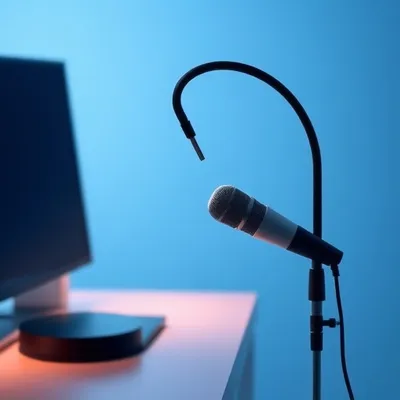
#69: Why the Gooseneck Mic Beats Studio Gear for AI
The gooseneck mic: a humble hero with surprising AI power. Discover its secret to crystal-clear speech-to-text accuracy!