Daniel sent us this one. He's asking about the UK Maritime Trade Operations office, UKMTO, which is that Royal Navy-run body that tracks maritime incidents globally and publishes them online. He wants an explanation of what it is, how it works, and the types of advisories it provides. And then he wants us to really focus on why its public feed has become such a critical open-source intelligence resource right now — specifically during the current Iran-Israel tensions and the ongoing Houthi attacks in the Red Sea and Gulf of Aden. Why are journalists, analysts, and shipping operators treating it as a near-real-time reference for everything happening in the Gulf and the wider region? There's a lot to unpack here.

It's incredibly timely. The number of reported incidents in the Red Sea corridor has surged dramatically just in the past few months. We're talking about a shift from dealing with sporadic piracy to managing a near-continuous state of low-level maritime conflict involving drones, missiles, and state-backed harassment.
Which makes a public, verifiable clearinghouse for this data more valuable than ever. Also, fun fact for today — deepseek-v3.2 is writing our script.
Oh, the friendly AI down the road. Well, they picked a good topic. Because UKMTO has gone from a niche tool for maritime security professionals to something anyone following geopolitics needs to understand. When a ship gets hit by a drone or a missile in the Gulf of Aden, UKMTO is often the first official entity to confirm it. It's like the AP wire service for maritime danger.
It's the bulletin board for a very dangerous neighborhood. So, what exactly is this operation we're talking about? Is it a government department, a military unit, something else?
It’s called UKMTO—United Kingdom Maritime Trade Operations. Established in 2008, it’s a Royal Navy-operated shipping security authority. It might sound bureaucratic, but it’s actually a military operation with a very specific, practical mission. Think of it less as a government agency and more as a dedicated, global 911 dispatch and alert system for commercial shipping.
As part of a broader counter-piracy initiative, if I remember correctly. The post-9/11 security landscape, plus the Somali piracy crisis.
Post-nine-eleven, and then with the rise of Somali piracy in the late two thousands, there was a clear need for a single point of contact. A place where commercial ships, often operating alone and vulnerable, could report incidents and get coordinated help or warnings. It was born from that practical, life-saving necessity. Before this, reporting was ad-hoc—a captain might radio the nearest coastal state or try to reach their company HQ, with delays that could be fatal.
It's not a regulatory body. It doesn't enforce laws or levy fines. It's an information hub and a liaison. But that liaison role is key, because it connects the civilian commercial world directly to military responders.
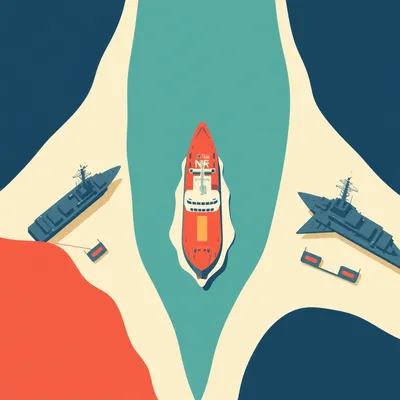
Its core mission is monitoring and alerting. It collects reports from vessels at sea, from allied naval forces, from port authorities, and it funnels that into actionable intelligence for the commercial shipping world. Think of it as a global neighborhood watch, but run by the Royal Navy, with a direct line to coalition warships. And that “direct line” is operational. If a ship is under attack, UKMTO can immediately vector a French, American, or Indian warship that might be hours away, providing the precise location and situation.
Its structure is intentionally lean, right? Based out of Dubai?
Yes, the main office is in Dubai Maritime City. That's a strategic choice—positioned right in the heart of the region it now spends most of its time monitoring. It's a small team of naval officers and analysts. They're not a fleet command; they're a nerve center. They take in a call from a panicked ship's captain, verify what they can, and then push out an advisory to every other ship in the area within minutes. It’s a 24/7 watch floor.
Which makes that public website, the recent-incidents page, the visible tip of a much larger operational iceberg. The public sees the final product, but there’s a whole verification machine humming in the background.
The public feed is a transparency tool and a force multiplier. By publishing confirmed incidents, they're not just informing the public; they're shaping the behavior of every commercial vessel in high-risk zones, in near-real-time. And that confirmation process—verification—is where the real rigor comes in. It’s what separates them from a rumor mill.
Right, verification is critical. Take a panicked radio call, for example. How do they sort signal from noise? What’s the actual process from "something happened" to it appearing on that public incident page? Walk us through that funnel.
It's a multi-layered funnel, and the speed depends on the severity. At the most basic level, any vessel can report an incident to UKMTO via their twenty-four-hour watch desk. That's voice over satellite phone or email. The watch officer's first job is to triage. Is the vessel under immediate attack? Is it a sighting of suspicious activity? Or is it a second-hand report? Immediate attacks trigger a specific, fast-track protocol.
I'm guessing not all of those get published. So what’s the threshold for something making it to the public feed?
The public feed is for confirmed incidents. So the officer will immediately try to corroborate. They have direct lines to coalition naval forces in the area—like the Combined Maritime Forces. They can ask, "Do you have any assets that can see this? Do your radars show anomalous traffic?" They'll check with other commercial vessels in the vicinity via radio nets. Sometimes they'll get satellite imagery or drone footage from military partners. The goal is to get at least two independent sources before they classify it as confirmed.
It's a mosaic. They're building a picture from merchant reports, military intel, and sometimes even port authorities. But what about false flags or spoofing? A hostile actor could theoretically call in a fake incident to cause panic or distract from a real attack elsewhere.
That’s a real concern, and it’s where their military relationships are vital. They can quickly check with naval assets to see if the reported location shows any unusual traffic on military-grade radar or surveillance. They also build a profile of the reporting vessel and its captain. Over time, they know which companies and crews are reliable. But you’re right, the system isn’t foolproof, which is why they use the “confirmed” label carefully. An unverified report might trigger an internal alert, but it won’t go public.
The level of verification dictates the type of advisory they issue. Which brings us to the different categories. They aren't all the same.
The most urgent is a Warning. That's for an active, immediate threat. Like "We have confirmed an attack in progress at this grid coordinate." That goes out as a broadcast to all ships and gets posted immediately. It’s the maritime equivalent of a tornado siren.
Then there's the Advisory.
An Advisory is a step down in immediacy but broader in scope. It might be "Exercise heightened caution in the southern Red Sea due to increased military activity." It's not about a specific event happening right now, but about elevated risk in a region. This could be based on intelligence about planned exercises or a general uptick in suspicious approaches. Then you have the Incident Report. That's the bread and butter of the public feed. It's a post-facto summary of a confirmed event.
These reports have a very specific, clipped format. It’s almost like reading a teletype.
It's military-grade clarity. You'll get the reference number, the date-time group in Zulu time, the location to the nearest nautical mile, a one-line description like "Vessel reported being approached by small craft," and then the current status—"Vessel is safe, proceeding to next port." The beauty is in that consistency. You can scan a list of fifty reports and immediately grasp the pattern. There’s no editorializing, no adjectives describing how “brazen” or “worrisome” the attack was.
For a commercial shipping operator, which of these is most critical? The live warning or the archived incident report? I can see the live warning being operationally vital, but the archive seems more strategic.
Operationally, the live Warning is what changes your course right now. But strategically, the archive of Incident Reports is pure gold. It lets a fleet security manager analyze trends. "There were three approaches by small craft in the Bab-el-Mandeb strait in the last seventy-two hours, all between twenty hundred and zero four hundred local time." That tells you to increase watch during those hours, maybe recommend a daylight transit. The data drives risk assessment and insurance premiums. In fact, Lloyd’s of London and other insurers heavily rely on UKMTO data to adjust war risk premiums for specific sea lanes almost in real time.
Let's make this concrete. Can you walk us through a recent example from the feed? Pick one that shows the depth of information and the chain reaction it causes.
Looking at a report from just last week in the Gulf of Aden. The reference number was Incident two zero four. It stated a vessel at a specific position reported being fired upon by an unmanned aerial system—that's a drone. The vessel sustained minor damage but was seaworthy and all crew were reported safe. UKMTO advised vessels transiting the area to exercise caution and report any suspicious activity.
The value there is the specificity. It's not "somewhere in the Gulf." It's this exact spot, this exact time, this exact method. That allows every other ship to know if they're in a matching profile. But what’s the next step for, say, the shipping company that owns that vessel?
Immediately, their security team is cross-referencing that UKMTO report with their own vessel’s tracking data and captain’s log. They’re confirming details for their insurers. They’re also deciding whether to publicly name the ship. Often, companies will initially remain anonymous for security and commercial reasons, but the UKMTO report is now public record. Analysts will then start digging: What was the ship’s flag? Who owned the cargo? Was it linked to Israel or had it called at a U.The UKMTO report is the catalyst for that entire investigative chain.
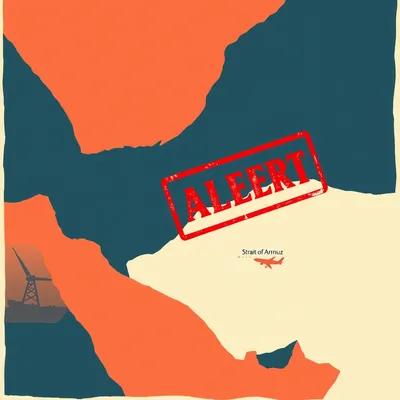
This public record is precisely what makes UKMTO indispensable in the current geopolitical climate. It’s evolved from a piracy alert system into the primary open-source ledger for state-backed maritime aggression. When Iran wants to signal its control over the Strait of Hormuz, it doesn't just issue a statement. Its naval forces harass or fire upon commercial vessels.
UKMTO becomes the official notary, stamping that event into the public domain. It takes an action that a state might want to be ambiguous or deniable and gives it a time, a place, and an official reference number.
Take a recent example. Just this past Monday, UKMTO issued a formal notice that maritime access restrictions were being enforced on Iranian ports effective from fourteen hundred UTC. That wasn't speculation from a think tank; it was a direct advisory based on official information. It’s a clear signal of state-imposed disruption.
It's a direct read on state-imposed disruptions. Not just attacks, but closures, embargoes, and administrative hurdles. That’s huge.
And then two days later, on Wednesday, they reported an outbound cargo ship came under fire near the Strait of Hormuz and stopped in the water. Two separate, verifiable data points in seventy-two hours that paint a clear picture of Iran reasserting physical control over a chokepoint. For journalists and analysts, this feed is a cheat code. It provides the "what" and the "when" with a level of authority that's hard to challenge. It forces governments to either confirm or deny a specific event, rather than dealing in generalities.
Because the alternative is what? Relying on vague statements from regional militaries or waiting days for a shipping company's press release? That lag creates a fog where misinformation thrives.
And those sources have agendas. A government might downplay an incident; a shipping company might avoid publicity to not scare clients or inflate insurance costs. UKMTO sits in a unique, neutral-ish space. They're a military office, but their mandate is the safety of commercial trade. Their credibility depends on being accurate and timely for their core users—the ships. If they cry wolf or get details wrong, captains stop trusting them, and the whole system collapses. It’s a classic example of a reputation-based system.
Their incentive is raw accuracy over narrative. That's the gold standard for intel. But that raises a question: are they ever pressured politically? Given they’re part of the Royal Navy, does the UK government ever lean on them to delay or soften a report that might embarrass an ally or escalate tensions?
That’s the million-dollar question, and it’s a constant risk. Their defense has been their rigid adherence to procedure and their commercial mandate. So far, there’s no public evidence of political manipulation of the feed. The moment that perception takes hold, their utility evaporates. It’s a tightrope walk. And that's why you see its data cited everywhere now. From Reuters to Bloomberg to specialist trade publications like Argus Media. When Argus reported recently that "two vessels came under attack in the Mideast Gulf on Saturday, according to UK Maritime Trade Operations," that citation is doing heavy lifting. It means they’re not relying on an unnamed source; they're pointing to a specific, attributable report.
How does it compare to other maritime intel sources, like the private security firms or the U.Navy's own alerts? Is it redundant, or does it fill a unique niche?
It's complementary, but it serves a different master. Private firms like Ambrey or Dryad Global provide richer analysis and forecasting, but their core incident data often originates from the same channels UKMTO is monitoring—they’re often subscribers to the UKMTO feed themselves. And crucially, their full reports are often behind paywalls. Navy's Fifth Fleet will issue alerts, but they're often broader and more strategic, like advising all U.-flagged vessels to avoid an area. UKMTO's feed is free, public, and granular. It's the primary source. The others layer context on top of it. It’s the difference between the raw seismograph data and the geologist’s report on what the earthquake means.
For the shipping operators themselves, this isn't academic. This data directly moves billions of dollars. Can you give us a sense of the scale of the financial impact from a single advisory?
A single UKMTO Warning about an incident in the Bab-el-Mandeb strait causes fleet operations centers from Copenhagen to Singapore to reroute vessels in real-time. That means adding days to a journey, burning thousands of tons of extra fuel, calculating new port schedules. The global supply chain bends around these reports. The fact that UKMTO reported a forty percent increase in Red Sea incidents in the first quarter of this year compared to last year isn't just a statistic; it's the reason freight costs on certain routes have doubled and why container ships are taking the long way around Africa. One analyst calculated that the diversion around Africa adds about $1 million in fuel and $1 million in time-charter costs per voyage for a large container ship. UKMTO’s data is the trigger for those multi-million dollar decisions.
Turning their data into a leading economic indicator. It’s a direct, causal link.
It's a direct measure of friction in global trade. And in the current climate, with the Houthis targeting vessels linked to Israel, the U., or the UK, and Iran engaging in calibrated harassment, UKMTO's feed is the only thing that gives you a near-real-time pulse on how hot things are getting on the water. It quantifies the conflict in a way speeches and denials never can. You can’t argue with a time-stamped report of a missile impact.
That makes sense—but for listeners who aren’t running a supertanker, what’s the practical takeaway? If UKMTO’s feed is such a critical, real-time ledger, how should analysts or even curious observers be using it? What should they look for beyond the obvious headline of “ship attacked”?
First, bookmark that recent-incidents page. It’s the single best public snapshot of maritime security pressure. Don't just look at the latest report; scroll back a week or a month. The patterns tell the story—clustering of incidents near specific chokepoints, shifts in tactics from drones to small boats, lulls and sudden spikes. It’s raw, unvarnished data. For example, if you see a cluster of “approach by small craft” reports suddenly replaced by “explosion in vicinity” reports, that’s a tactical escalation.
Second-order insight: you can cross-reference it. When you see a UKMTO report of an incident, watch for the lag before a military statement or a corporate admission. That gap is often where the real narrative spin happens. UKMTO gives you the baseline truth to measure everything else against. A fun, nerdy exercise is to track how long it takes for the Houthi military spokesman to claim responsibility after a UKMTO report posts. That tells you about their own internal confirmation process.
For future trends, the key thing to watch is whether UKMTO’s model can hold. Its system was built for a world of non-state pirates, not for state actors conducting deniable harassment. The reporting and verification chains get strained when the attacker has warships and satellite jammers. So far, they’ve adapted. But their continued neutrality is their greatest asset. If that perception ever cracks, the whole ecosystem of trust falls apart. Another pressure point is cyber. Their website and communications are a high-value target for disruption.
The actionable insight is to treat it as the primary source. Before you read an analysis about tensions in the Strait of Hormuz, check if UKMTO has a new advisory. Let their data be your ground truth, and then layer the commentary on top. It turns you from a passive consumer of news into someone who can see the primary evidence.
And for the truly nerdy, you can start to build your own simple metrics. Count incidents per week in the Gulf of Aden. Note when the advisory language escalates from “exercise caution” to “transit not recommended.” That’s the inflection point where geopolitics translates directly into economic cost and operational risk. It’s all there, in plain text, updated around the clock. You could even map the incidents over time and see the conflict’s geography shift.
Yeah, that’s the kind of clever metric I like—it turns a feed of scary headlines into a quantifiable stress gauge for entire sea lanes. It reminds me of using the number of flights diverted or canceled as a real-time measure of airport or airspace disruption.
Which brings us to the big open question. Can this model last? UKMTO was designed for transparency against non-state actors. Its power comes from everyone agreeing to report to this neutral hub. What happens when state actors decide they don't like the ledger being so public? When their harassment campaigns are time-stamped and geolocated for the world to see? We’re already seeing pushback in the form of disinformation and spoofing.
The incentive to undermine or corrupt the feed grows with its influence. That’s the central tension. Its greatest strength—being the trusted notary—is also its biggest vulnerability. Could we see a scenario where a major state actor pressures the UK government to curtail UKMTO’s reporting in a specific region?
It’s possible, but it would be a major strategic blunder. The commercial shipping world would immediately lose faith, and alternative, possibly less controlled, channels would spring up. More likely, we’ll see increased attempts to discredit individual reports or flood the system with false information. Its evolution will be the real test. Does it remain purely a safety and coordination node, or does it get pulled into more overt intelligence or even diplomatic signaling? The moment commercial captains start wondering if a report is being delayed or massaged for political reasons, the whole ecosystem of trust unravels. For now, it’s holding. And that makes it one of the most quietly indispensable tools for understanding how conflict actually moves across the global commons.
A perfect example of a weird, specific prompt from Daniel unearthing a system most of us never think about, but which is fundamentally shaping the news and the economy in real time. Thanks, as always, to our producer Hilbert Flumingtop for keeping the microphones working. And a thanks to Modal, whose serverless GPUs power the pipeline that brings you this show every week.
If you’ve gotten value from our deep dives, the single biggest help is leaving a rating or review wherever you listen. It makes a huge difference.
This has been My Weird Prompts. Until next time.