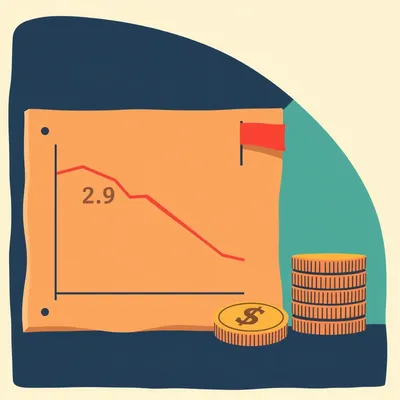
Here's a number that's been sitting in my head all week: three point zero zero. The dollar hit that against the shekel, and then kept going. We're at two point nine eight today. First time that's happened since nineteen ninety-five.

That's not a blip. That's a structural moment.
I think the reason this is worth a whole episode is that most people's instinct when they hear "the shekel is strengthening" is to feel vaguely alarmed. Like something expensive is about to happen to them. When actually, depending on who you are, this might be the best news you've heard all year.
Right, and that confusion is real. It's not a dumb mistake. The framing people hear is usually from exporters or the business press, and for them a strong shekel is genuinely painful. So that's the lens that gets baked in.
We'll untangle all of that. The drivers, the Bank of Israel's position, who's winning, who's getting squeezed. Also, by the way, today's episode is powered by Claude Sonnet four point six, which is writing our script as we speak.
The friendly AI down the road, doing its thing.
Daniel sent us this one. He's asking us to get into the shekel's recent surge against the dollar, breaching the three point zero zero line for the first time in three decades. He wants the actual numbers, the why behind it, the Bank of Israel's stance on intervention, and the full winners and losers breakdown. And there's a specific angle he flagged: the ILS/EUR comparison, which reframes part of this as a dollar story, not just an Israeli story. There's a lot here. Where do you want to start?
The number itself, because it earns the rest of the conversation. We're at two point nine eight shekels to the dollar today. A year ago we were at three point four five. That's a nineteen percent appreciation in twelve months. Against the euro, the move is there too but it's less dramatic. Twelve months ago, one euro cost about three point seven zero shekels. Now it's around three point three zero. That's roughly eleven percent.
The shekel moved about twice as far against the dollar as it did against the euro.
Which tells you something important. If this were purely a shekel story, you'd expect roughly symmetrical moves against major currencies. The fact that the dollar leg is so much bigger suggests a meaningful chunk of this is the dollar weakening globally, not just the shekel strengthening on its own merits.
That reframes the whole thing. It's not just that Israel had a great year. The dollar has been under pressure everywhere.
Fed rate expectations, dollar liquidity dynamics, the whole thing. We'll get into the mechanics. But the headline is: thirty-year high, the three shekel line is gone, and the Israeli economy is sitting in a place it hasn't occupied since the mid-nineties.
Which, for anyone who was here in the mid-nineties, is a strange sentence to say.
It really is. And the reason it matters beyond the symbolic is that it touches basically every corner of economic life here. Your grocery bill, your Amazon order, your salary if you work in tech, whether your startup can afford to hire. It's not abstract.
That's what we're getting into. Let's start with the why.
The geopolitical piece is where I'd anchor it first, because it's the most dramatic shift. A year ago the war-risk premium was baked into everything. Investors price in uncertainty, and the uncertainty in late twenty twenty-four was substantial. The Gaza ceasefire in October twenty twenty-five changed the calculus. Capital that had been sitting on the sidelines started moving.
When it moved, it moved in dollars.
Foreign investment into Israel in twenty twenty-five came in at thirty-nine billion dollars. The year before it was twenty-five billion. That's a significant jump, and most of that is denominated in USD flowing into a shekel economy.
You've got more dollars chasing the same supply of shekels.
That's the mechanism. And then layer the tech sector on top of that. Israeli tech raised three billion dollars in the first quarter of twenty twenty-six alone. March was particularly strong, one point one five billion across twenty-eight deals. That's a lot of dollar inflows hitting the currency market in a compressed window.
Which is interesting because that's not evenly distributed. That money lands in specific pockets.
And we'll get into what it does to the companies receiving it. But at the macro level, the direction is clear: more foreign capital, reduced risk premium, and a dollar that's been weakening globally anyway. Those three things stacked.
The thirty-year context matters here too. Three point four five to two point nine eight in twelve months isn't just a trend line on a chart. That's a repricing of how the world sees the Israeli economy.
The Bank of Israel has been watching all of this without stepping in, which is the part that's contested—especially when you consider the geopolitical implications.
And that geopolitical piece is where I want to spend a minute, because I think people underestimate how much of a currency move is just priced fear coming out of the market.
The war-risk premium is a real thing. It's not a metaphor. When institutional investors are modeling exposure to Israel, they're running scenarios that include conflict escalation, supply chain disruption, potential capital controls. That uncertainty gets priced into the exchange rate. And when the ceasefire held through late twenty twenty-five, those scenarios started getting discounted out.
The shekel didn't just get stronger because the economy performed better. It got stronger partly because it stopped being penalized for a risk that was receding.
The floor came up. And then on top of that, you get the actual positive flows. The thirty-nine billion in foreign investment last year, the tech funding numbers we mentioned. Those aren't small.
The tech funding is the one I keep coming back to. Three billion in one quarter, with over a billion of that landing in March alone. That's a compressed inflow. You're not spreading that over twelve months, you're hitting the currency market in a short window.
The structure of those deals matters. A foreign investor wires dollars into Israel, those dollars get converted to pay local salaries, rent, vendors. Every time that conversion happens, it's buying power flowing into the shekel. Twenty-eight deals in March means twenty-eight conversion events at meaningful scale.
Which connects to something the Calcalist reporting flagged, that this isn't uniformly distributed across the economy. It's concentrated in the tech corridor. Tel Aviv, Ra'anana, Herzliya. The rest of the country is feeling the consumer benefits but not necessarily seeing the capital.
The third leg is the dollar itself. And I think this is the one that gets least attention in the Israeli coverage, because the Israeli coverage naturally frames it as a shekel story.
Whereas if you're sitting in Frankfurt or Tokyo, you're looking at the dollar weakening against everything.
The Fed has been signaling rate cuts, and markets have been pricing that in. When US rates come down relative to other economies, dollar-denominated assets become less attractive, capital flows out, and the dollar softens broadly. Israel is catching that tailwind along with every other currency that's been under dollar pressure.
Which is why the euro comparison is the tell. Eleven percent move against the euro, nineteen percent against the dollar. If the shekel were just having a great year on its own fundamentals, you'd expect those numbers to be closer together.
The gap between them is roughly the dollar's own weakness. You can almost read it directly off the spread.
It reminds me of how people talked about the Swiss franc during the European debt crisis. Everyone kept saying the franc was surging, and technically it was, but a big part of the story was that the euro was collapsing around it. The franc looked like a rocket ship partly because the launchpad was sinking. Same logic applies here — the shekel looks extraordinary partly because the dollar is the launchpad that's moving.
The Swiss National Bank's response back then is actually instructive. They eventually capped the franc against the euro because the strength was crushing their export sector. They held that cap for three years. It cost them enormously when they finally abandoned it in twenty fifteen. The point being: central banks have real tools, but using them aggressively has its own costs. Yaron is aware of that history.
We've got three things running simultaneously. Risk premium deflating post-ceasefire, real dollar inflows from tech and foreign investment, and a globally softening dollar. Any one of those moves the needle. All three together gets you to two point nine eight.
That's before you get to the Bank of Israel sitting on its hands while exporters are losing sleep.
Those exporters haven't been shy about speaking up. They've warned that losses could hit thirty-one and a half billion shekels by twenty twenty-six. That's not a rounding error.
It's not. And the pressure on Amir Yaron has been real. The manufacturers' associations, the export lobby, they've been pushing hard for intervention. The argument is straightforward: we built our revenue models on a dollar above three point three, and now we're operating at two point nine eight. That's a margin problem that compounds every month.
What does intervention actually look like? Because I think people hear "the Bank of Israel should intervene" and picture something dramatic.
It's actually pretty mechanical. The Bank of Israel buys dollars in the open market. When it buys dollars, it's selling shekels to do so, which increases the supply of shekels in circulation and pushes the exchange rate back toward a weaker shekel. They've done it before. In twenty twenty-two they ran a twenty-five billion dollar purchase program specifically to stabilize the shekel during a period of volatility.
There's a playbook. The question is whether Yaron thinks the current situation calls for it.
His answer has been no. His framing is that the shekel's strength reflects genuine economic fundamentals. He's pointed to the inflation number, which is sitting at two point six percent, and said the stronger shekel is helping keep that in check. Cheaper imports dampen price pressure. So from his perspective, intervention would mean buying dollars to weaken the shekel, which would push import prices up, which would make his inflation job harder.
He's essentially saying the currency is doing some of the work for him.
Which is a defensible position. The problem is that it's doing the work for some parts of the economy while actively hurting others. The exporters aren't wrong that their margins are getting compressed. Yaron just doesn't think that's the central bank's problem to solve at the cost of price stability.
There's also a credibility dimension here, right? If the Bank of Israel intervenes every time a strong shekel makes exporters uncomfortable, you start to signal to markets that there's an implicit floor. And then you've got a different problem — you've essentially told currency traders where to push.
Central bank credibility is fragile in a specific way. The moment markets think they know your reaction function, they can game it. Yaron stepping in at three point zero zero would have been read as: the Bank of Israel defends three point zero zero. And then you'd have had speculators testing that line constantly. Staying out preserves ambiguity, which is itself a tool.
The tech sector squeeze is the one I find most structurally interesting. Because the funding numbers look great on paper. Three billion in a quarter. But the actual operating experience of a startup right now is complicated.
It's a mismatch problem. You raise a round in dollars. Your valuation, your runway, your investor expectations are all denominated in dollars. But you pay your engineers in shekels. You pay your office lease in shekels. Your local vendors invoice in shekels. So as the shekel strengthens, your dollar pile buys less real operating capacity than it did when the term sheet was signed.
You raised at three point four five and you're spending at two point nine eight. That's a meaningful haircut on your effective runway.
Roughly thirteen percent less runway in real terms, just from the exchange rate move. And that's before you factor in salary inflation, which has been running in the Israeli tech market anyway. So you've got two headwinds stacking: shekel appreciation and local wage pressure, both eating into dollar-denominated budgets.
Which creates a quiet pressure that doesn't show up in the funding headlines. The round looks healthy. The burn rate is silently climbing.
The companies that feel it most acutely are the ones in the growth stage, post-Series A, scaling headcount aggressively. The currency move is essentially a tax on hiring in Israel right now.
How does that actually play out at the company level? Like, does a CFO sit down and model this explicitly, or does it just show up as a surprise in the quarterly burn review?
Both, honestly, and the split is pretty revealing. The more sophisticated finance teams — companies that have been through a cycle or two, or have a CFO who came up through investment banking — they're running currency sensitivity scenarios as a standard part of their planning. They know what a ten percent shekel move does to their eighteen-month runway. The earlier-stage companies, especially first-time founders, often don't have that muscle. The exchange rate is background noise until suddenly it isn't. And by the time it shows up as a surprise in the burn review, you've already lost three months of runway you didn't know you were losing.
Yaron knows all of this. So why is he still sitting out?
I think the honest answer is that he's weighing a visible, concentrated pain against a diffuse, widespread benefit. The exporters and the scaling startups can point to specific numbers. The benefit of a stronger shekel is spread across millions of consumers in the form of slightly cheaper imports, slightly lower inflation. That's harder to lobby with.
The squeaky wheel problem, but at macroeconomic scale.
There's something almost structurally unfair about it. The person whose electricity bill is two percent lower because import costs came down doesn't know that. They don't have a number to point to. The exporter whose margin dropped thirteen points knows exactly what happened and can put it in a press release.
Let's actually make this useful. If you're a listener in Israel right now, what does this mean for you personally?
It depends enormously on which side of the exchange rate you're sitting on. Start with the obvious winners. If you buy anything priced in dollars online — Amazon, AliExpress, SaaS subscriptions, software tools — your money goes further than it did a year ago. Nineteen percent further, roughly. That's real.
Anyone carrying dollar-denominated debt is also quietly having a good year.
Significant relief there. If you took out a mortgage or loan in dollars and you're repaying it in shekels, your effective debt burden has shrunk. And the inflation angle is real too. Cheaper imports dampen the consumer price index. That two point six percent inflation number Yaron keeps citing — the strong shekel is part of why it's that low.
The losers are the ones we've been circling for the last twenty minutes.
Exporters are taking the clearest hit. Thirty-one and a half billion shekels in projected losses this year is a number that represents real businesses with real payrolls. And then the tech sector in the specific way we described — dollar revenues, shekel costs, thirteen percent less runway than the term sheet implied.
Inbound tourism is one people forget.
It's a meaningful one. If you're a tourist arriving with dollars or euros, Israel just got more expensive for you. Every hotel night, every restaurant meal, costs more in your home currency than it did eighteen months ago. That feeds through to occupancy rates, to the hospitality sector, to anyone whose livelihood depends on foreign visitors spending locally.
The olim on foreign pensions. That one is quietly painful.
You retired, you're drawing a pension in sterling or dollars or euros, you're living in Israel. Your purchasing power in shekels has dropped significantly. That's not abstract — that's groceries and rent. And the thing is, that population doesn't have a lobby. There's no Pensioners on Foreign Income Association sending letters to Yaron. They just quietly absorb the hit.
Practically, what do you do with this? If you're someone with flexibility on when you convert currency, the obvious move is to think carefully about timing. Dollar-to-shekel conversions right now are working against you if you're bringing money in. If you can hold, the question is whether this level holds or corrects.
If you're a business with dollar exposure, hedging instruments exist for a reason. The forwards market, options on currency — these aren't exotic. Israeli banks offer them. The companies that locked in rates six months ago are looking much better than the ones that didn't.
There's almost a generational divide in how Israeli businesses treat currency hedging. The older industrial exporters, the ones who lived through the shekel's wild swings in the eighties and nineties, tend to hedge almost reflexively. It's baked into their treasury culture. Some of the newer tech companies treat it as optional, or as something to think about later. This moment is probably a forcing function for a lot of CFOs who were in the "we'll deal with it eventually" camp.
The eighties hyperinflation and the subsequent stabilization left a real institutional memory in certain parts of the Israeli business community. If your company was founded in two thousand and fifteen by people who were in school during the relatively stable two-thousands, you might not have that reflex at all.
The question nobody can answer cleanly is whether two point nine eight is a floor or a ceiling.
And I think that's the most honest assessment of where we are. The three drivers that got us here — risk premium deflating, dollar inflows from tech and investment, global dollar softness — none of them have obviously reversed. The ceasefire is holding. The Fed hasn't pivoted back to hawkish. The tech funding pipeline is still open.
Which means the exporters might be living with this for a while.
The scenario where the shekel weakens back toward three point three or three point four would require something to break. Either the geopolitical situation deteriorates again, or the dollar stages a meaningful recovery globally, or the tech inflows slow. Any of those could move the rate. But you'd need a catalyst.
The structural question that keeps nagging at me is what a persistently strong shekel does to Israel's tech sector over a longer horizon. Not just the runway problem we described, but the competitiveness question. If Israeli engineers are expensive in dollar terms, does hiring start shifting?
That's the one I don't have a clean answer to. There's already been some conversation in the ecosystem about distributed hiring, teams split between Israel and lower-cost locations. A sustained strong shekel accelerates that calculus. The talent is still here. The question is whether the economics of building here stay attractive.
There's a feedback loop embedded in that question that I find almost elegantly troubling. The strong shekel is partly caused by tech investment inflows. But if the strong shekel makes it more expensive to build tech companies here, you could eventually see those inflows slow. Which would weaken the shekel. Which would make it attractive to build here again. It's self-correcting in theory, but the lag could be years, and a lot of companies get hurt in the interim.
Yaron is going to be watching that closely. If the currency strength starts visibly hollowing out the sector that generates the inflows in the first place, the intervention calculus changes.
It's a feedback loop worth tracking. Strong shekel attracts investment, investment funds companies, companies hire locally, local costs rise, strong shekel makes those costs more expensive in dollar terms, pressure builds.
At some point the pressure finds a release valve, either through market correction, policy response, or companies quietly restructuring where they put their headcount. The question is which one comes first.
We'll see where it goes. Good question to sit with.
Great stuff to chew on. Thanks to Hilbert Flumingtop for keeping the whole operation running. And Modal — the serverless GPU infrastructure that powers our pipeline — appreciate the support as always.
This has been My Weird Prompts. Find all two thousand two hundred and forty episodes at myweirdprompts.
Until next time.