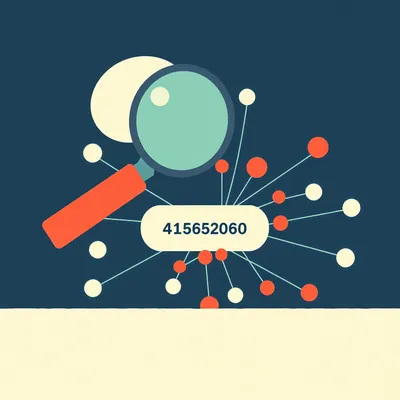
Imagine you're an investigator staring at a single, isolated phone number found at a crime scene. Ten years ago, that was a dead end unless you had a subpoena and a lot of luck. Today, you drop that number into a graph, click a button, and thirty seconds later, you’re looking at a spiderweb of two hundred connected entities. You see the suspect's secondary email, the specific DNS provider they use for a shell company, their last three physical addresses from a 2021 data breach, and the Telegram groups where they hang out.

It is a complete paradigm shift in how we perceive data. We’ve moved from searching for needles in haystacks to simply turning on a magnet that pulls the entire internal structure of the haystack into view.
Exactly the kind of high-octane digital detective work Daniel wants us to dig into today. His prompt is all about OSINT graph analysis tools like Maltego—how they’re being used by everyone from local cops to elite intelligence agencies and even civilian researchers to turn a pile of "who cares" data into a "gotcha" moment. By the way, Herman, before you go full nerd on the nodes and edges, I should mention that today’s episode is powered by Google Gemini 3 Flash.
I’m Herman Poppleberry, and I have been waiting for us to do a deep dive on link analysis for a long time. The timing is perfect because 2025 has been a massive breakout year for these commercial OSINT tools. We’re seeing a democratization of capabilities that used to be the exclusive domain of the three-letter agencies. What used to require a room full of analysts at Fort Meade is now sitting on a laptop in a corporate security office or a local precinct.
It’s the "CSI" effect, but real and actually functional. Though, I suspect it’s a bit more complicated than just clicking "enhance" on a blurry photo. Daniel mentioned this idea of "second-order" information—gathering seemingly unrelated bits like DNS profiles and phone numbers to yield actionable intel. So, Herman, for the uninitiated but technically literate, what is a graph-based tool actually doing that a regular database query isn't?
That is the fundamental question. If you use a traditional SQL database, you’re asking: "Show me all users who live in this zip code." It’s a linear, table-based search. But graph-based OSINT—the methodology used by tools like Maltego, SpiderFoot, or even the high-end Palantir Gotham—treats the relationship as the primary piece of data. In a graph database, the "edges"—the lines connecting the dots—are just as important as the "nodes" or the dots themselves.
So instead of looking at a spreadsheet, you’re looking at a map of social and technical gravity.
Precisely. In a graph, "proximity" isn't about physical distance; it’s about how many "hops" away one piece of data is from another. If I have a domain name, that’s a node. I run a "transform"—which is just a script that queries a specific data source—and it finds the IP address. That’s another node. Then I run a transform on that IP to see what other domains are hosted there. Suddenly, I’ve found five other websites owned by the same person, even if they used different names to register them.
It’s the "pivot." That’s the word Daniel used, and it’s the heart of the whole thing. You aren't just finding a name; you’re finding a bridge to the next secret. But help me understand the computational side of that. If I’m looking at a million nodes, how does the software not just choke on the sheer volume of possible connections?
That is where the graph theory magic happens. Traditional databases use "joins," which essentially means the computer has to look at two massive lists and try to find matches. If you do that four or five times in a row—a five-hop query—the math becomes exponential. It’s like trying to find a specific person in a crowd by checking every single person's ID against a master list. In a graph database, the connection is "pre-computed." The node for the IP address literally has a pointer that says "I am connected to this Domain." It doesn't search; it just follows the wire.
So it’s the difference between looking for a name in a phone book versus just following the physical telephone line from the house to the exchange.
It’s "index-free adjacency." It makes queries that would take minutes or hours in a standard database happen in milliseconds. This speed is what allows an investigator to "explore" data in real-time. You aren't writing code; you’re just clicking on a dot and saying "show me what’s next."
I want to talk about these "transforms" you mentioned. Because Maltego doesn't just "know" things, right? It’s basically a high-end interface for a thousand different API calls.
Right. Think of Maltego as the canvas. The transforms are the paintbrushes. You might have a transform that queries Shodan for IoT devices, another that hits Have I Been Pwned for breach data, and another that looks at Social Links for Telegram metadata. When you "run a transform" on a phone number, the tool is hitting a dozen different databases simultaneously. It’s looking for that number in the Facebook 533 million leak, the LinkedIn scrapings, and the WhatsApp registration logs.
Which leads us to that "second-order" intelligence. If I find a phone number, and a transform tells me it was part of a 2021 breach, I might get a full name and a birthdate. Now I have a new node: "Date of Birth." I run a transform on that, and maybe I find every corporate registration in a specific country that matches that name and birthdate. I’ve gone from a technical data point—a string of digits—to a financial profile.
And that’s where it gets wild. Let’s look at a real-world technical workflow. Say you’re investigating a phishing site. You start with the URL. Most people look at the Whois record, see it’s redacted by "Privacy Protect," and give up. But a graph analyst looks at the SSL certificate. They see the "Serial Number" of that cert. They run a transform to find every other website on the internet using that exact same SSL certificate.
Oh, that’s clever. Because people are lazy. They’ll pay for privacy on the domain registration, but they’ll reuse the same certificate across their entire infrastructure because it’s easier to manage.
Every single time. And maybe one of those other five websites isn't privacy-protected. Maybe it’s a personal blog the guy started in 2018. Boom. You have a real name, a personal email, and a physical address. You just used a technical "second-order" connection—the SSL serial number—to bypass a legal privacy shield.
It’s like finding a guy wearing a mask, but then noticing he’s wearing a very specific, limited-edition pair of sneakers. You just go look for who else bought those sneakers. It makes the "mask" irrelevant. Now, you mentioned 2024 and 2025 being big years for this. There was that Telegram breach analysis that really showcased this, right?
The 2024 Telegram analysis is a textbook case study in graph-based OSINT. Researchers took a massive leak of phone numbers and started running transforms to connect them to DNS records. They found that a huge portion of these "anonymous" accounts were tied to specific business entities because the users had used their corporate emails to set up recovery options or had linked their Telegram bots to company-owned domains. They connected 400,000 phone numbers to over 15,000 business entities.
That’s the power of scale. If you do that manually, it takes a lifetime. If you do it with a graph tool, you’re just watching the nodes populate in real time. But Herman, doesn't this create a "garbage in, garbage out" problem? If one of those transforms returns a false positive—say, a name that’s common—doesn't that false data then infect every subsequent hop in the graph?
That is the "cascade failure" of link analysis, and it’s a massive risk. If you have a node for "John Smith" and the tool incorrectly links it to a "John Smith" who is a known arms dealer, your entire graph is now hallucinating a connection to international crime. This is why the human element—the analyst—is still critical. You have to verify the "weight" of the edges. Is this connection a "hard" link, like a shared social security number, or a "soft" link, like a similar username?
I love the idea of "graph weight." It’s like measuring the tension of the spiderweb. If the line is thin, don't bet the house on it. But how do these tools actually represent that? Does the line get thicker? Does the color change?
In professional setups, yes. You use "centrality algorithms." For example, "Betweenness Centrality" measures how often a node acts as a bridge between other parts of the graph. If a node has high betweenness, the tool highlights it because if you remove that node, the network falls apart. Analysts also use "confidence scores" for transforms. If a transform matches a unique PGP key, that edge is solid. If it matches a first name and a city, it might be dotted or translucent to warn the investigator.
Let’s move into how this is actually playing out in the field. Law enforcement and intelligence are obviously the big players here. How are they using this differently than, say, a corporate security team?
Law enforcement is looking for "The Pivot to the Physical." For them, the digital graph is just a map to a front door they can kick down. They use tools like Kaseware or Sintelix to ingest legacy data—old police reports, phone tolls from seized devices, and DMV records—and merge it with live OSINT.
So they’re looking for the "Common Denominator."
Imagine a string of cold cases—unsolved robberies over five years. They ingest all the witness statements and evidence into a graph. The tool might find that in three of those cases, a specific "Burner" phone number was active near the cell tower, and that same number was once used to order a pizza to an address that appeared in a totally unrelated traffic stop. The human eye would never catch that across ten thousand pages of documents. The graph sees it instantly because "Address" is a shared node.
It’s the ultimate "small world" engine. But then you have the intelligence agencies, the three-letters. They’re operating at a strategic level. They aren't just looking for one robber; they’re looking for "Radicalization Hubs."
Right. They’re analyzing the "digital footprint" of entire movements. They’ll scrape metadata from encrypted messaging apps—not the content of the messages, but the patterns of who talks to whom and when. They look for "Bridges." A bridge is a node that connects two otherwise separate clusters. If you have two separate extremist groups that never interact, but they both have a "Bridge" node—a person or a server they both communicate with—that bridge is your high-value target.
That’s the "strategic" part. You don't take out the clusters; you take out the bridge and the whole network collapses. It’s very "The Wire," but with more Python scripts and less wiretapping. What about the civilian side? Because Daniel mentioned civilian use, and I know investigative journalists are getting really good at this.
The Panama Papers and the subsequent leaks are the gold standard for civilian link analysis. Journalists used tools like Linkurious and Neo4j—which are the underlying engines for a lot of this—to connect offshore shell companies to real-world politicians. They’d find a shared registered agent or a shared office address in the British Virgin Islands. That address becomes the "Primary Key." You run a transform on that address and suddenly you see 500 companies registered there. Then you start looking for the "Beneficial Owners" of those companies.
It’s the same "Second-Order" logic. The company name is the first order. The address is the second order. The other companies at that address are the third order. And eventually, you find the name of the Prime Minister’s cousin. It’s beautiful, really. It’s like a puzzle where the pieces reveal themselves as you solve it.
And it’s not just journalists. Corporate "Blue Teams"—the defensive security folks—are using this for "Attack Surface Management." They use tools like SpiderFoot to see their company the way a hacker does. They’ll find a "forgotten" subdomain—dev-testing dot company dot com—that was set up by an intern three years ago. That subdomain is a node. They run a transform and see it’s running an unpatched version of Log4j.
So they’re using the graph to find the "weakest link" before an adversary does.
Precisely. And they can see if any of their employees' credentials have leaked by connecting the company domain node to breach database nodes. If "bob at company dot com" appears in a leak for a gardening website, and Bob uses the same password for his work VPN... well, the graph just showed you your most likely point of entry for a ransomware attack.
It’s fascinating because it turns "security" from a checklist into a visualization. You can actually see the holes in the fence. But let's go deeper on the "Second-Order" stuff, because I think that’s what really blows people’s minds. Daniel mentioned DNS profiles. To most people, DNS is just the thing that makes the internet work. How does it become a "spy tool"?
DNS is a goldmine because it’s so noisy and so rarely cleaned up. One of my favorite techniques is looking at "Passive DNS" history. If I have a domain, I can see every IP address it has ever pointed to over the last fifteen years.
So even if you moved your "Evil-Server dot com" to a new, anonymous host yesterday, the graph remembers that three years ago, it was hosted on your home Comcast IP.
And then there’s the "Start of Authority" or SOA record. When you set up a DNS zone, there’s an email address attached to the SOA. Often, people use a generic admin email, but sometimes—especially in smaller operations or when someone is rushing—they use a personal email. That email is a "Primary Key" for a person’s entire digital life.
And once you have that email, you’re off to the races. You check LinkedIn, you check "Have I Been Pwned," you check social media handles. You’ve gone from a technical "Domain" node to a "Human" node in two hops.
And here’s a really "second-order" one: JARM fingerprints. JARM is a tool developed by Salesforce that fingerprints a server’s TLS implementation. It sends ten specifically crafted packets to a server and looks at how it responds. The response is unique based on the operating system, the library versions, and the configuration.
So it’s like a digital "signature" or voiceprint for the server itself.
Yes! If a threat actor is using a very specific, custom-configured C2 server—Command and Control—that server will have a unique JARM fingerprint. Even if they change the IP, change the domain, and change the SSL cert, if they use the same server configuration, the JARM fingerprint stays the same. You run a transform for that JARM fingerprint across the entire internet, and you find every other server they’re running.
That is terrifyingly effective. It’s like trying to hide in a crowd but forgetting that you have a very specific, recognizable cough. Every time you clear your throat, the "graph" finds you. But what about the noise? If I search for a JARM fingerprint, don't I get a thousand false hits for servers that just happen to use the same default Ubuntu setup?
You do, and that’s where the "intersection" comes in. You don't just look for the JARM fingerprint. You look for the JARM fingerprint and the specific open ports found by Shodan and the specific favicon hash. When you layer three or four "soft" technical identifiers together, you get a "hard" identifier. The graph tool visualizes this as a cluster. If you see ten servers with the same fingerprint, same ports, and they all have the same weird mispelling in their HTML headers, you’ve found the botnet.
This brings up an interesting point about the "arms race" of privacy. As these tools get better at connecting the dots, people get better at hiding the dots. We’re seeing "OSINT-resistant" infrastructure now, right?
We are. We’re seeing "Fast Flux" DNS, where the IP address changes every few seconds to prevent historical mapping. We’re seeing the use of "Domain Fronting," where traffic is hidden behind a legitimate, high-reputation domain like Google or Cloudflare. But even then, the graph finds a way. If you’re fronting through Cloudflare, the "Cloudflare" node becomes a giant hub in the graph. Analysts then look for "timing attacks" or "packet size analysis" to find the "edges" connecting that hub to your specific origin server.
It’s never a total blackout; it’s just making the "edges" harder to see. But let’s talk about the human cost of this. If I’m a regular person, and I’m caught in one of these graphs—maybe I’m three "hops" away from someone who did something wrong—how much of my life is "visible" to someone with a Maltego license and a bit of curiosity?
If they’re good? A frightening amount. And this is why we need to talk about "Data Fusion." The real power isn't just OSINT—Open Source Intelligence. It’s when OSINT is fused with "Commercial Data." There are companies that sell "Marketing Data" or "Location Data" scraped from mobile apps. If a law enforcement agency takes a Maltego graph and "fuses" it with a commercial location data set, they can see that "Email Node A" and "Phone Number Node B" were physically in the same Starbucks at 2:00 PM last Tuesday.
That’s the "Pivot to the Physical" on steroids. You’re not just connecting digital accounts; you’re connecting physical bodies in real-time. And that’s where the "Second-Order" implications get really heavy. What happens when these graphs start making decisions?
We’re already seeing "Predictive Policing" and "Risk Scoring" based on graph analysis. If your "Node" is too close to "High-Risk Nodes," your "Risk Score" goes up. This is the "Guilt by Association" problem, but automated and backed by a professional-looking graph. It’s very hard to argue with a visualization that shows you in the middle of a web of "bad actors," even if those connections are purely coincidental or three hops deep.
It’s the "Digital Scarlet Letter." You might not even know you’re wearing it, but every time you apply for a job or travel across a border, some analyst is looking at a graph where your node is colored red because of who you follow on Twitter or where you bought your coffee.
And let’s not forget the "False Positive Cascade" I mentioned earlier. If the tool incorrectly identifies a connection, and that connection is used to justify a search warrant, the "evidence" found in that search is now "clean," but the reason for the search was a hallucination of the graph. We’re moving into a world where the "Probable Cause" is an algorithm’s interpretation of a spiderweb.
It’s a bit like "Minority Report," but instead of psychics in a pool, it’s just a very stressed-out analyst in a cubicle running "transforms" on a Wednesday afternoon. So, Herman, what’s the takeaway for the "average" tech-literate listener who wants to protect their own "graph"?
The first takeaway is: Understand your "Primary Keys." Your phone number and your primary email address are the "Master Nodes" of your life. If you use those to register for everything—from your bank to a random forum for "Donkey Enthusiasts"—you are creating a "Star Schema" where everything leads back to you.
So, "segmentation" is the name of the game. Use different "Master Nodes" for different parts of your life. But how do you actually do that in a world where every app demands a phone number for "security"?
You have to get clever. Use services like MySudo or masked emails from Fastmail or DuckDuckGo. If you’re really serious, you use a "burner" identity for your technical life and a "clean" identity for your financial life. The goal is to break the "edges." If there is no line connecting your "Donkey Enthusiast" forum account to your "Bank of America" account, the graph can’t bridge the gap.
It’s about "Graph Hygiene." You have to look at your own footprint and ask, "If I were a Maltego transform, what would I find?" And there are tools for this, right? You mentioned SpiderFoot.
Yes! SpiderFoot is fantastic because it has a free, open-source version. You can point it at your own domain or your own email and just watch it work. It’s a sobering experience. You’ll see it pull up old passwords from 2014, your home address from a forgotten domain registration, and a list of every social media account you’ve ever touched.
It’s like looking in a mirror and realizing you have a giant "Kick Me" sign on your back that’s been there for a decade. But on the flip side, there’s a "Defensive Value" here. For a company, running these tools on yourself is the only way to know what an attacker sees.
It’s essential. You can’t defend an "attack surface" you haven't mapped. If you don't know that your "Node" is connected to an unpatched server or a leaked credential, you’re just waiting for the "Pivot" to happen to you. I’ve seen companies discover entire "shadow IT" departments—servers set up by marketing teams without telling IT—just by running a simple graph analysis on their own brand name.
This brings me to the future of this stuff. We’re in 2026. AI is everywhere. How is the "Large Language Model" revolution changing graph analysis? Because I imagine an LLM is really good at spotting patterns in a graph.
It’s a force multiplier. Right now, an analyst has to manually decide which "transforms" to run. "Okay, I have an IP, now I’ll run a DNS transform. Now I’ll run a Geo-IP transform." An AI-integrated graph tool—like what we’re starting to see with "AI Agents" in OSINT—can do the "pivoting" automatically. It can say, "I see a phone number. I’ve automatically run 50 transforms, found the owner, mapped their social network, and identified the three most likely physical locations. Here’s a summary of why this person is a threat."
So we’re moving from "Human-Led, Tool-Assisted" to "AI-Led, Human-Supervised." But doesn't that make the "hallucination" problem worse? If an AI is drawing the lines, how do we know they’re real?
That is the trillion-dollar question. We’re entering the era of "Explainable Graph AI." The tool has to be able to show its work. It can’t just say "This guy is a terrorist." it has to say "I have connected this node to that node because of a shared SSH key found in this specific 2023 breach." If the AI can’t provide the "pedigree" of the edge, the analyst has to discard it. But the speed... Corn, the speed is the real story. An investigation that used to take three weeks of "connecting the dots" now takes three minutes. The "OODA Loop"—Observe, Orient, Decide, Act—is being compressed to near-zero.
Which means the "advantage" in this world shifts from whoever has the most data to whoever has the best "correlation engine." If everyone has access to the same "Open Source" data, the winner is the one who can turn that data into a "Graph" the fastest.
And that’s a geopolitical issue, too. We’re seeing a "Graph Gap" between nations. The US and its allies have access to the best commercial tools and the most comprehensive "fused" data sets. But adversaries are building their own "Graphs" using scraped data from Western social media and breach databases. It’s a "Cold War of Connectivity."
I love that. The "Cold War of Connectivity." It’s not about who has the most nukes; it’s about who knows that the guy who services the nukes uses the same password for his "World of Warcraft" account.
That is literally how modern espionage works. It’s the "Second-Order" vulnerability. You don't attack the "Hardened Target"; you attack the "Soft Node" that is three hops away from the hardened target. Think about a high-ranking official. You don't hack their phone. You hack the smart-fridge of their daughter’s roommate. Because that roommate’s phone is on the same Wi-Fi as the daughter’s phone, which is connected to the official’s home network. The graph shows you the path of least resistance.
It’s a wild world. Daniel really hit on something big here. It’s not just "nerdy tools for spies"; it’s the underlying architecture of how power is exercised in the 21st century. If you can see the graph, you can control the outcome.
And as the world becomes more "instrumented"—with IoT, more social platforms, more digital payments—the graph just gets denser. Every new "Smart Device" you buy is just another node in the graph of "You." Every time you tap your credit card, you’re creating an "edge." Even your fitness tracker is a node that can be pivoted to find your physical location patterns.
So, what’s the final word, Herman? Are we doomed to live in a transparent spiderweb, or is there a way to "live off the graph"?
You can’t live "off the graph" anymore. Even if you don't have a phone, the "absence" of your data in a world of data is itself a pattern. The goal isn't to be "invisible"; it’s to be "noisy" and "decentralized." Make your graph so complex, so full of "dead ends" and "false pivots," that it’s not worth the analyst’s time to follow the trail.
"Strategic Inefficiency." I like it. Be the "John Smith" of the digital world—so common and so poorly connected that the "magnet" just slides right past you.
Or, just be aware. Knowledge is the first step. If you understand how the pivot works, you can start to see the "bridges" you’re building in your own life. And maybe, just maybe, don't use your work email to sign up for that "Which 90s Sitcom Character Are You?" quiz.
Spoken like a true nerd. But a nerd who knows where the "bridges" are. I think we’ve covered a lot of ground here—from the technical "first-class citizens" of graph databases to the "JARM fingerprints" and the geopolitical "Graph Gap." It's clear that the "dots" are always there; it's just a matter of who has the best lines to connect them.
It’s a massive topic, and honestly, we could spend another three hours just on "Palantir" and the ethics of data fusion. But I think we’ve given people a good "map" of the terrain.
Pun intended?
Always.
Alright, let's wrap this up. This has been a deep dive into the "Digital Spiderweb." As always, a huge thanks to our producer Hilbert Flumingtop for keeping the nodes from collapsing. And a big thanks to Modal for providing the GPU credits that power this show—they’re the literal infrastructure under our feet.
This has been "My Weird Prompts." If you found this useful—or terrifying—leave us a review on your favorite podcast app. It genuinely helps us reach more people who might need to hear about "Graph Hygiene."
And if you want to see the "Graph" of this show, find us at myweirdprompts dot com. We’ve got the RSS feed, all the past episodes, and a way for you to send in your own weird prompts.
Maybe next time we’ll talk about something less "surveillance-y." Like... I don't know, the chemistry of artisanal cheese?
Only if the cheese has a "JARM fingerprint," Herman. Only then.
Fair enough.
Catch you all in the next one. Stay off the "bridges."
And watch your "edges." Goodbye!