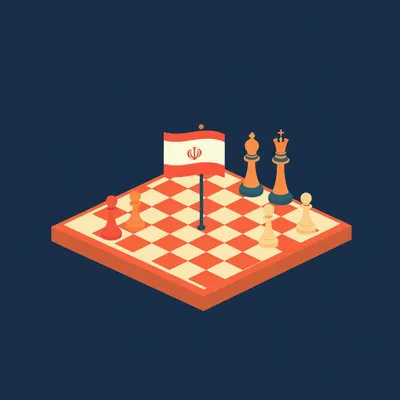
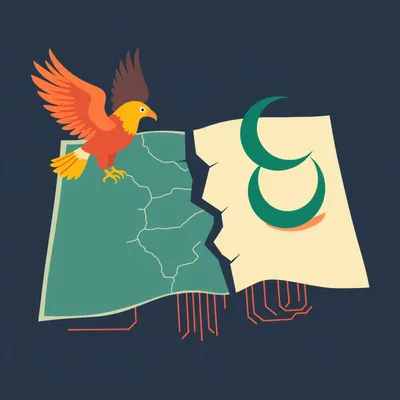
It is March sixteenth, twenty twenty-six, and the dust is finally starting to settle after what everyone is calling the Twelve-Day War. But as we look around, the map of the Middle East and the very structure of the global order look completely different than they did just three weeks ago. It is one of those rare, jarring moments in history where the physical reality on the ground—the missiles, the radars, the troop movements—is moving in the exact opposite direction of the diplomatic reality in the courtrooms and the hallowed halls of the United Nations.

It is a total inversion of traditional statecraft, Corn. We have seen Israel achieve what many military analysts thought was functionally impossible, which is the literal decapitation of the Iranian leadership and the neutralization of their nuclear infrastructure in a single, massive blow. And yet, at the same time, the legal and diplomatic walls are closing in faster than ever before. Herman Poppleberry here, and I have been staring at the data coming out of the Gulf and the Hague all morning. We are living through a paradox of power. Israel is arguably more militarily secure than it has been since nineteen sixty-seven, but it is also more diplomatically radioactive than at any point in its seventy-eight-year history.
Today's prompt from Daniel is about this very tension. He is asking us to look at how the Gaza war and this recent escalation with Iran have shifted Israel's global standing, specifically looking at which bilateral ties are sinking and which are actually showing promise. He wants us to dig into how this has shifted the entire world order, not just the local neighborhood. We are talking about a fundamental realignment of how states interact when the old rules of international law seem to be fraying at the seams.
Daniel is hitting on the most critical question of twenty twenty-six. To understand where we are today, on March sixteenth, we have to go back to the morning of February twenty-eighth. That was the day the world changed. The joint United States and Israeli strikes that hit those Iranian nuclear and military sites were not just another round of "mowing the grass." It was the ultimate expression of hard power. Killing Ali Khamenei and the top tier of the Islamic Revolutionary Guard Corps was a move that basically said the era of managing the threat is over. We have moved into a post-negotiation world.
And that is where the Oman situation becomes so fascinating and, frankly, a bit tragic for the diplomats involved. Just moments before those strikes happened on the twenty-eighth, Oman’s Foreign Minister, Badr Al-Busaidi, was on the verge of announcing what he called a massive diplomatic breakthrough. Iran had supposedly agreed to never stockpile enriched uranium and was going to allow full International Atomic Energy Agency verification. It was the Omani-brokered deal everyone had been waiting for—the "off-ramp" that was supposed to prevent a regional conflagration. And then, boom. The strikes happen, the deal is vaporized, and Oman is left standing there looking dismayed and, let’s be honest, betrayed.
The Oman betrayal is the pivot point for the entire region, Corn. If you go back to episode twelve zero two, where we talked about the Decapitation Doctrine, we speculated that the window for diplomacy was closing. This was that doctrine in full effect. From the perspective of the Gulf states, it signaled that the United States and Israel are no longer interested in the "off-ramp" strategy. They are interested in an end-state. But here is the unexpected part Daniel was asking about. While the public rhetoric from places like Muscat or Amman is one of absolute condemnation, the underlying military reality is the complete opposite.
That is the dual-track strategy we are seeing, right? You have Jordan, Saudi Arabia, and the United Arab Emirates publicly slamming the strikes, calling them a violation of sovereignty and a threat to global peace. But when the Iranian retaliation came during those twelve days of conflict—when missiles were flying toward infrastructure in nine different countries, including Bahrain, Kuwait, and Qatar—those same countries were quietly sharing tactical intelligence and providing air corridors for Israeli and American interceptors. It is like they are living in two different dimensions at once.
The technical integration is actually what is driving the promise in those relationships, even if it is a promise that no one can talk about at a press conference. Israel’s formal move into Central Command, or CENTCOM, was not just a bureaucratic shift. It was a structural revolution. It means that right now, as we speak, Israeli radar systems are talking directly to Saudi and Emirati systems in real-time through a unified architecture. During the Twelve-Day War, when Iran launched its massive drone and missile swarms, the only way those Gulf countries could defend their own desalination plants and oil terminals was through this shared umbrella.
It is the ultimate "enemy of my enemy" scenario, but on steroids. If you are a leader in Riyadh and you see Iranian missiles hitting your soil—which they did, let's not forget that Iran hit targets in all the Gulf states during their retaliation—the fact that Israel just took out the guy who ordered the strike becomes a very practical benefit. It doesn't matter what your street is saying about Gaza in that moment; it matters that your air defense worked because of a data link with Tel Aviv. But Herman, how long can that last? You cannot keep the military integration a secret forever when the International Criminal Court is breathing down your neck.
That is the breaking point. While the regional security ties are hardening into a real alliance, the global diplomatic ties are fracturing. Look at the Global South. We have seen a massive shift led by South Africa, Brazil, and Ireland. Brazil joining the genocide case at the International Court of Justice back in July of twenty twenty-five was the first domino. Now, we have over a dozen countries intervening. The legal pressure isn't just a side show anymore; it is a coordinated effort to use the institutions of the old world order to restrain the new military reality.
And the International Criminal Court situation is even more dire for the Israeli leadership. The appeals chamber rejected the bid to block the investigation back in December, and that arrest warrant for Netanyahu is active. It is not just a piece of paper anymore. It has real-world consequences for where he can travel and who can be seen with him. We are seeing a world where the Prime Minister of Israel is technically a fugitive in over one hundred and twenty countries, even as his generals are being welcomed into secret command centers across the Middle East.
The Netanyahu Paradox is that he has arguably made Israel more militarily secure than it has been in decades by neutralizing the Iranian nuclear threat and the leadership, but he has become a diplomatic pariah in the process. Israel has basically abandoned its legal defense at the International Criminal Court. They are not even trying to play the game of international law anymore because they view the system as fundamentally rigged. They are betting that the physical security of having the Iranian nuclear program in ruins is worth being a pariah in the halls of the United Nations.
Is the system rigged, or is it just that the old world order is finally collapsing under the weight of these conflicts? When you have a United Nations Commission of Inquiry concluding back in September of twenty twenty-five that a state is committing genocide, and that state responds by launching a pre-emptive strike to kill a sovereign head of state, you are not in the world of nineteen forty-five anymore. We are in a world where the rules are being rewritten by whoever has the most effective sensors and the fastest missiles.
We are back to raw, multipolar power politics. The United Nations-led order is under a level of strain that I don’t think it survives in its current form. When the United States and Israel nullified that Omani deal, they essentially told the international diplomatic community that their "breakthroughs" are irrelevant compared to tactical necessity. That sets a precedent that other powers are watching. If you can take out a head of state because you deem them an existential threat, what stops other regional powers from doing the same? The concept of Westphalian sovereignty is essentially on life support.
It is a high-risk, high-reward environment. But let’s look at the bilateral ties that are actually on the downward trend. Obviously, Ireland is at the top of that list in the West. Their leadership has been incredibly vocal, and they have moved beyond just rhetoric into formal legal action at the International Court of Justice. Then you have the entire BRICS bloc, which is increasingly using the Gaza and Iran conflicts as a wedge to pull the Global South away from the Western orbit. They are framing this as a struggle against the last vestiges of Western colonialism, and that narrative is sticking.
The Ireland-South Africa-Brazil axis is the new moral center for the Global South. They are positioning themselves as the defenders of the "rules-based order" at the exact moment the creators of that order—the United States and its allies—are bypassing it. But then you look at the unexpected ties. Morocco, for instance. Despite all the pressure, they are still slated to participate in the International Stabilization Force for Gaza. They are leaning into the Abraham Accords because they see the long-term benefit of that security and cyber cooperation. They are choosing the "Deep State" of regional security over the public theater of the United Nations.
The cyber side is actually a huge part of this that people miss. The Israel-United Arab Emirates cyber initiative has expanded from thirteen countries to thirty-three active participants since the war began. Even as the bombs were falling, the digital defense cooperation was growing. It is like there is a secondary layer of international relations that is completely insulated from the political firestorm. You have forty to seventy passive participants in these cyber-sharing agreements who are probably voting against Israel at the General Assembly while simultaneously using Israeli code to protect their power grids.
It is a bizarre, bifurcated reality. But we have to talk about the economic side of this, because that is where the rest of the world is feeling the heat. Brent crude oil is sitting above one hundred dollars a barrel right now. That is the leverage Iran still has, even with their leadership in chaos. Their remaining forces have made traffic through the Strait of Hormuz a nightmare. If you are an average person in Europe or Asia, your relationship with this war isn't about the International Criminal Court; it is about the fact that it costs twice as much to heat your home or fill your car.
That economic pressure is what is cracking the Western alliance. The European Union is deeply divided. You have countries like Germany trying to maintain a pro-Israel line because of their historical context, but they are being pushed by their own populations and by the economic reality of one hundred dollar oil. The United States is becoming increasingly isolated as the primary enabler of the Israeli strategy. It feels like the "Walking Between Raindrops" era we discussed in episode five fifty-five is officially over. Israel is no longer trying to balance these interests. They have chosen a side, which is total military dominance, and they are willing to accept the diplomatic isolation that comes with it.
But Herman, what does "stronger than ever" actually mean if you can’t fly to London or Paris without the risk of being detained? If the "Decapitation Doctrine" becomes the new standard, we are looking at a much more violent and unpredictable world. It is not just about Israel and Iran; it is about what this tells every other country with a grievance. If the international legal system is seen as an existential threat to a state's ability to defend itself, then legitimacy becomes a luxury that no one can afford.
It means that the definition of strength has shifted from "legitimacy" to "survivability." If you believe the system is rigged against you, you stop trying to win the argument and you start trying to win the fight. The second-order effects are what really keep me up at night. We are moving into a world of "spheres of influence" where the strongest actor in the room sets the rules, and the international courts are just there to provide a soundtrack of protest that everyone ignores. It is a return to the nineteenth century, but with twenty-first-century weapons and total digital transparency.
Let’s talk about the Saudi angle for a second, because that is the big prize Daniel mentioned. Normalization was supposed to be the goal before all of this. After the Iran war, you would think it would be dead, but the fact that Iran struck Saudi soil during their retaliation has actually created a weird new opening. The Saudis are furious with Tehran. They feel like they were caught in the crossfire of a war they didn’t start, and it has made them realize that their own security is inextricably linked to the United States-Israeli defense umbrella.
So, the Saudi-Israel tie might actually be on an upward trend, but it will be the most covert, unacknowledged relationship in history. They will never have a public signing ceremony on the White House lawn as long as the Gaza situation is what it is, but they will have a joint command center in a bunker somewhere. That is the "Dual Track" taken to its logical extreme. A world of secret alliances and public condemnations. And for the global world order, it means the death of the "Grand Bargain" where everyone pretends to follow the same rules.
We are seeing the emergence of a new axis. You have the Western-led security bloc, which is increasingly focused on raw military and cyber integration, and then you have this new Global South-led legal and moral bloc that is trying to use the old institutions of the United Nations and the International Criminal Court to restrain that power. It is a fracture that maps almost perfectly onto the BRICS versus G-seven tensions. Brazil and South Africa aren’t just acting on principle; they are positioning themselves as the leaders of a world that is tired of Western exceptionalism.
When they see the United States and Israel ignore an International Court of Justice order to halt an offensive, they see the ultimate proof that the current system only works for the people who built it. Which brings us back to the question of what replaces it. If the United Nations is effectively dead as a peacekeeping body, do we go back to a series of regional "Security Architectures"? That seems to be what is happening with CENTCOM. Israel is now an internal node in a regional military system. That is a permanent structural shift. It doesn’t matter who the Prime Minister is or who is in the White House; the radars are already linked. The interceptors are already positioned.
It is a hardening of the world into these technological and military camps. And the "unexpectedly promising" ties Daniel asked about are likely to be with countries that value that technological edge over diplomatic niceties. Look at the expansion of the cyber cooperation to thirty-three countries. These are nations that realize that in the twenty twenty-six version of warfare, having access to Israeli and American cyber defense is more important than voting a certain way in a General Assembly resolution. It is a cold, hard calculation. If you are a mid-sized power and you are worried about your power grid being taken out by a state-sponsored hack, you are going to go with the people who have the best shields.
The "moral authority" of Ireland or South Africa doesn’t keep your lights on. That is a cynical way to look at it, Herman, but it is probably the most accurate one. The world Daniel is describing is one where "values-based" foreign policy is being crushed by the reality of "threat-based" foreign policy. The Twelve-Day War was the final nail in the coffin for the idea that we could just talk our way out of these regional rivalries. The Oman betrayal really is the perfect metaphor for that. Badr Al-Busaidi thought he was playing the old game of diplomatic breakthroughs and verification. He thought he had a deal.
But the United States and Israel were playing a different game entirely. They weren't looking for a deal; they were looking for an end-state. And they achieved it, technically speaking. The Iranian nuclear program is in ruins, and the leadership is gone. But the cost was the trust of every mediator in the region. Which means the next time there is a crisis, there won’t be an Oman to call. There won’t be a diplomatic off-ramp. It will just be a straight line to escalation. That is the world order we have inherited in March of twenty twenty-six. It is a world where security is bought at the price of legitimacy, and where the only ties that matter are the ones that happen in the shadows.
It is a permanent state of siege-diplomacy. Israel is stronger than ever on the battlefield, but it is standing on a very lonely hilltop. The question for the next year is whether that military strength can be converted into some kind of sustainable regional order, or if it just leads to the next twelve-day war. And that leads us to the practical takeaways for anyone trying to navigate this mess. First, if you are tracking geopolitical risk, you have to look past the headlines of condemnation. The real story is in the military and cyber integration. If the radars are still talking, the alliance is still alive, no matter what the diplomats say at the United Nations.
Second, watch the price of oil. One hundred dollars a barrel is the baseline now. As long as the Strait of Hormuz is a contested zone, the global economy is going to be under immense pressure, which will continue to fray the Western alliance. European leaders are going to be forced to choose between their security commitments to Israel and the economic survival of their own middle classes. That is a choice that could lead to the collapse of governments in places like Italy or Greece.
And third, the legal front is no longer symbolic. The International Criminal Court arrest warrants and the International Court of Justice cases are creating a new reality for international travel and trade. We are seeing the emergence of "legal safe zones" and "legal danger zones" for world leaders. That is going to change how diplomacy is conducted—less face-to-face, more digital, more covert. We are moving from a world of global summits to a world of encrypted calls and secret meetings in non-signatory states.
It is a return to a much more fragmented world. We moved from "Walking Between Raindrops" to standing in the middle of a hurricane, and the only way to survive is to be the one holding the biggest umbrella. Or the one who built the umbrella in the first place. This has been a heavy one, but that is the reality of March twenty twenty-six. The old rules are gone, and we are all just trying to figure out what the new ones are.
It is a fascinating, if terrifying, time to be watching this stuff. I keep going back to those one hundred and thirty foreign military officials who visited Israel in November of twenty twenty-five. They weren't there for a photo op; they were there to learn how to fight the kind of war we just saw. That tells you everything you need to know about where the world is heading. Knowledge is the only currency that still has value in a world like this.
Thanks for diving deep with me on this, Corn. You really have to look at the mechanics of why these things happen. When you see a diplomatic deal get vaporized in real-time like that Omani deal, it tells you that the strategic calculus has shifted permanently. It is the most significant shift in regional policy since the nineteen seventies, and we are only in the first month of the aftermath.
Well, we will be here to track whatever comes next. Thanks as always to our producer, Hilbert Flumingtop, for keeping the gears turning behind the scenes. And a big thanks to Modal for providing the GPU credits that power the research and generation of this show. We couldn't do these deep dives into the technical side of the CENTCOM integration without that kind of computational muscle.
This has been My Weird Prompts. If you are finding these episodes helpful for making sense of the chaos, a quick review on your podcast app really helps us reach more people who are looking for this kind of depth. You can also find us on Telegram if you want to get notified the second a new episode drops. Just search for My Weird Prompts.
We will be back soon with more. Until then, stay curious and keep asking the weird questions.
Goodbye, everyone.
See ya.