Daniel sent us this one, and I have to say, it's a chapter of Israeli history that most people, including a lot of Israelis, don't know much about. He's asking about the Lebanese-born citizens who sought asylum in Israel and now live here, primarily former South Lebanon Army soldiers and their families who fled across the border in May two thousand when Israel withdrew from southern Lebanon. He wants the full historical narrative, the Good Fence, the alliance with Saad Haddad, the security zone era, the chaotic withdrawal, and what life has been like for these people since. And underneath all of that, he's asking what this story says about loyalty, exile, and the strange intimacies that come out of long border conflicts.

Before we dive in, quick note — DeepSeek V four Pro is writing our script today, so if this episode sounds unusually coherent, now you know why.
I was going to say, this feels suspiciously well-organized for us.
Let me start by anchoring the timeline. The key starting point is nineteen seventy-six. That's when Israel opened what became known as the Good Fence at Metula, Israel's northernmost town, right up against the Lebanese border. The Lebanese Civil War had kicked off the year before, and southern Lebanese villagers, mostly Christians from Marjayoun and the surrounding areas, started coming to the border fence asking for help — medical care, food, work. And Israel made a decision: they opened the gate.
That's the detail that surprises people. The name wasn't ironic or propaganda. It was literally called the Good Fence, Hagader Hatova in Hebrew. For a lot of Lebanese civilians in the south, it genuinely was a lifeline. Israel set up a field hospital right at the border. By the mid-eighties, something like two hundred thousand Lebanese had passed through for medical treatment. Farmers from southern Lebanon would cross into Israel to sell tobacco and produce. Israeli merchants would go north to buy goods. There were even Lebanese kids who went to school in Metula.
This is where I want to be precise about names. In nineteen seventy-six, Israel started working with a Lebanese army major named Saad Haddad. Haddad was a Greek Catholic, born in Marjayoun, and he commanded a breakaway Lebanese army unit that became the Free Lebanon Army. His force controlled a strip of southern Lebanon along the border. Israel provided weapons, funding, training. Haddad set up his headquarters in Marjayoun, and from Israel's perspective, this was the buffer — a friendly militia keeping the Palestinian factions and later Hezbollah away from the border fence.
Saad Haddad is one of those figures who's almost been forgotten outside Lebanon and Israel, but he was central to this whole arrangement. He died of cancer in nineteen eighty-four, and after that, command passed to a retired Lebanese army general named Antoine Lahad. Lahad was also from a prominent family, also Greek Catholic, and under him the militia was reorganized and renamed the South Lebanon Army, the SLA. This is the force that most people remember when they talk about this period.
The SLA was an unusual army by any measure. About two thousand five hundred to three thousand soldiers at its peak, overwhelmingly Lebanese Christians, but with significant Shia Muslim and Druze contingents as well. These were local men fighting in their own territory. They knew every wadi, every ridge. And they were deeply tied to Israel — salaries, hospital access for their families, officer training in Israel. Antoine Lahad himself would come to Israel regularly for meetings with defense officials.
Now, the formal security zone gets established in nineteen eighty-five. After Israel's broader invasion of Lebanon in eighty-two, the war that went all the way to Beirut, Israel pulled back from most of Lebanon but kept a strip along the border, roughly fifteen to twenty kilometers deep. The SLA was the primary force on the ground, with Israeli troops in support positions. And this arrangement held, more or less, for fifteen years.
Here's what most people miss about the security zone. It wasn't just a military occupation in the conventional sense. The SLA soldiers and their families lived in those villages. They were the security zone. Their kids went to school there, they farmed there, they buried their dead there. When an SLA soldier was killed fighting Hezbollah, his funeral was a local event in a Lebanese village. His widow and children still lived down the road from people who might be sympathetic to the other side. The social complexity was staggering.
That's the strange intimacy angle Daniel mentioned, and it really is the heart of this. You had Lebanese villagers who for decades had relatives in Israel, who worked in Israel, who sent their kids to Israeli hospitals, who spoke Hebrew. And on the other side, Israeli soldiers spent months deployed in Lebanese villages, learned some Arabic, knew the local shopkeepers by name. There was more daily contact between northern Israel and the security zone than between the security zone and Beirut.
By the late nineties, roughly fifteen hundred Israeli soldiers were stationed in the security zone at any given time, alongside the SLA's roughly two thousand five hundred active fighters. Hezbollah was running an increasingly sophisticated guerrilla campaign — roadside bombs, ambushes, mortar attacks. Israeli casualties were mounting, and domestically, the pressure to withdraw was building. The Four Mothers movement, founded by mothers of soldiers serving in Lebanon, became a major political force pushing for unilateral withdrawal.
On the SLA side, there was growing unease. They could read Israeli newspapers. They could see the television debates. They knew a withdrawal was becoming a real possibility, and they knew what that would mean for them. Antoine Lahad was publicly saying that a unilateral withdrawal without security arrangements for the SLA would be a betrayal. These people had fought alongside Israel for two decades. Hezbollah had made it very clear what would happen to anyone associated with the SLA if they ever got the chance.
The timeline here is important. In March of two thousand, the Israeli cabinet voted to withdraw from Lebanon by July. The vote was public, the date was set, and the SLA had about four months to figure out what to do. Some SLA officers tried to negotiate with the Lebanese government and even with Hezbollah through intermediaries, looking for guarantees. They got nothing. The message was clear — if you stay, you face trial, prison, or worse.
Then came May twenty-second to twenty-fourth, two thousand. The withdrawal was supposed to be orderly, but it collapsed into chaos. Israeli forces pulled out faster than planned. SLA positions were overrun or abandoned. Hezbollah fighters swept south, and in some villages, there were reprisals within hours. The SLA command structure disintegrated. Antoine Lahad himself crossed into Israel. And behind him came the flood — roughly six thousand to seven thousand SLA fighters and family members.
I want to be precise about those numbers. The Israeli Interior Ministry recorded about six thousand five hundred Lebanese who crossed the border in those days — SLA soldiers, their wives, their children, some elderly parents. They came through the Fatima Gate at Metula, which had been the main crossing point for years. Some came in SLA vehicles with their weapons still in the trucks. Some came on foot carrying whatever they could grab. Israeli border police were initially overwhelmed. They weren't prepared for the scale.
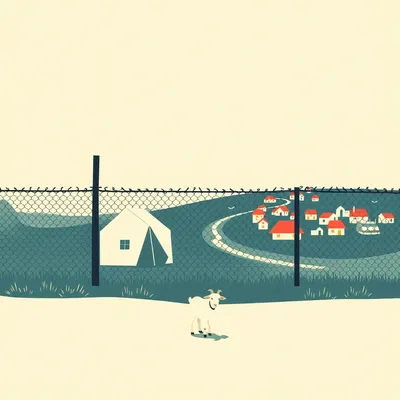
There's a detail that sticks with me. Some of the SLA families brought their livestock — goats and chickens and whatever they could manage — because they didn't know if they'd ever go back, and they figured at least they'd have something to eat. That's not a military withdrawal. That's a refugee flight. These people were not just soldiers relocating. They were families uprooting their entire existence.
Israel's response was complicated. On one hand, there was a clear moral obligation — these people had been allies for twenty years, their lives were in danger because they had sided with Israel. On the other hand, Israel had never planned for absorbing thousands of Lebanese refugees. There was no framework, no policy, no budget. The initial response was ad hoc. Families were put up in hotels and guesthouses in the north, mostly around Tiberias and Nahariya. The army provided basic supplies. Social workers were brought in.
This is where the human-interest side gets really textured. You had Lebanese Christian families who suddenly found themselves living in Tiberias, a largely Jewish city on the Sea of Galilee. They spoke Arabic, they were culturally Lebanese, they had grown up in villages only twenty or thirty kilometers away but might as well have been on another planet. And now they were shopping at Israeli supermarkets, enrolling their kids in Israeli schools, navigating a society that didn't quite know what to make of them.
The legal pathway was a mess. Israel didn't grant them automatic citizenship. Initially, they were given temporary residency permits under a special humanitarian provision. Over time, many applied for and received permanent residency, and eventually citizenship, but it was a slow process. Some families waited years. There were issues with documentation — a lot of them had fled without passports or birth certificates. They were stateless in practical terms, Lebanese citizens who couldn't return to Lebanon, living in Israel but not yet Israeli.
Yet, if you go to Nahariya today, or Maalot, or parts of Tiberias, you'll hear Arabic spoken with a Lebanese accent. There are Lebanese restaurants, Lebanese bakeries. There's a small but real Lebanese-Israeli community, maybe a few thousand people now, including the second generation. These kids grew up speaking Hebrew, served in the Israeli army, went to Israeli universities. They're Israeli in every sense, but they also know their family history. They know their parents fled. They know there are relatives still in Lebanon they've never met.
The Times of Israel ran a piece recently about the second generation, and one thing that jumped out was the reaction to Nasrallah's death. For these families, it wasn't an abstract geopolitical event. Nasrallah was the man who had driven their parents from their homes, who had hunted their fathers and uncles. One person quoted in the piece said it felt like justice finally arriving after twenty-four years. That's not the perspective you get from most coverage of the conflict. It's a very specific, very personal lens.
There's a darker side to this story too. Some SLA members did return to Lebanon. After the Israeli withdrawal, the Lebanese government set up military courts to try SLA personnel on charges ranging from collaboration with Israel to treason. Several hundred who stayed behind or returned were tried and sentenced. Some got prison terms, some got lighter sentences. A handful of senior figures got death sentences, though those were generally not carried out. The Lebanese government was under pressure from Hezbollah to prosecute, but also under international pressure to show restraint.
There's one figure I want to mention because his story captures the tragedy of this whole chapter. A man named Aql Hashem, a senior SLA commander, a Maronite from the south. He stayed in Lebanon after the withdrawal, was arrested, tried, and sentenced to prison. He served several years, was released, and then in twenty twelve, he was assassinated. His killers were never identified, but the assumption was Hezbollah. Even after serving his time, even after going through the official reconciliation process, he wasn't safe.
Then there were the ones who went back voluntarily, or tried to. There's a Jerusalem Post profile of a former SLA soldier who crossed back into Lebanon years later, hoping to see his mother. He was arrested at a checkpoint, spent time in prison, and eventually made his way back to Israel. He said the Lebanon he returned to wasn't the one he remembered. His village had changed, the people had changed, and he realized that for him, home was no longer there. Home was now Israel, for better or worse.
This is the psychological dimension. Exile isn't just a physical state. These people spent twenty years in the security zone, living a kind of liminal existence between two countries. Then they spent another two decades plus in Israel, building new lives, but always with this awareness that they couldn't go back. Their children speak Hebrew as a first language, eat hummus and falafel and argue about Israeli politics, but they also make Lebanese tabbouleh and listen to Fairuz and maintain these cultural touchstones that are distinctly Lebanese.
The Israeli relationship with this community has been complicated too. There's genuine warmth in a lot of cases — Israeli soldiers who served in the security zone remember specific SLA comrades by name, friendships going back thirty, forty years. But there's also an awkwardness, because the Israeli withdrawal was, from the SLA perspective, an abandonment. Israel made a strategic decision to leave, and these people paid the price. That's not something you can just paper over with nice words.
I think it's worth being specific about what the security zone actually accomplished from an Israeli perspective. Between nineteen eighty-five and two thousand, the security zone reduced cross-border attacks into northern Israel significantly — not eliminated, there were still Katyusha rocket attacks and infiltrations, but the buffer worked in military terms. The cost was roughly two hundred fifty Israeli soldiers killed over those fifteen years, and somewhere between six hundred and a thousand SLA fighters killed.
The Four Mothers movement is an interesting piece of this. Started in nineteen ninety-seven by four women from kibbutzim in the north whose sons were serving in Lebanon, they organized, protested, built a coalition, and within three years shifted Israeli public opinion decisively toward withdrawal. Ehud Barak campaigned on it in ninety-nine and delivered in two thousand. From their perspective, it was a success — their sons came home. But the SLA families, the ones who had no home to go to, they were the collateral consequence.
Something I want to clarify, because it often gets muddled. The SLA wasn't a monolithic Christian militia. It included Shia Muslims, particularly from villages in the central sector of the security zone, and Druze as well. The internal dynamics were complex — tensions between different religious communities, between officers from different towns, between the old Haddad loyalists and the Lahad faction. And there were also SLA soldiers who had personal grievances with Hezbollah that predated the militia's formation — family feuds, land disputes, local rivalries that got folded into the larger conflict.
That's such an important point. Western coverage tends to flatten these conflicts into neat sectarian narratives — Christians versus Muslims, Shia versus Sunni. But on the ground, it was always messier. You had Shia SLA soldiers fighting Shia Hezbollah fighters. You had Christian villagers who had good relations with their Shia neighbors but were targeted because of their association with the SLA. The lines were personal and local as much as they were sectarian.
The Good Fence itself — I want to circle back to that because it's the foundation of the whole relationship. By the time it closed in two thousand, it had been operating for twenty-four years. Tens of thousands of Lebanese had received medical treatment in Israel. Israeli hospitals in Nahariya and Safed had entire wards that regularly treated Lebanese patients. Israeli doctors and nurses learned Lebanese Arabic dialects. There were Lebanese children born in Israeli hospitals because their mothers crossed the border for delivery. That's a depth of human contact that's hard to overstate.
There's a particular story that's stayed with me. During the nineteen eighties, an Israeli nurse at the Nahariya hospital learned that one of her regular Lebanese patients, a woman from a village near Bint Jbeil, had named her daughter after her. The nurse had helped deliver the baby years earlier, and the mother, as a gesture of gratitude, gave her daughter the Hebrew name of the nurse. That child grew up in Lebanon with a Hebrew name, knowing she was named after an Israeli woman who had helped bring her into the world. That's the kind of bond this border created.
Then in May two thousand, it all ended in forty-eight hours. The fence closed. The hospital visits stopped. The cross-border trade vanished. The SLA families who crossed over were now on the Israeli side of a sealed border, looking back at villages they could see from the hilltops of Metula but could never visit. Some of them could literally see their homes from where they were staying in Israel. That's a particular kind of torment.
The integration process has been slow and uneven. The first generation, the actual SLA veterans, have had a hard time in many cases — language barriers, limited job skills outside of military work, trauma from the war and the displacement. A lot of them ended up in manual labor, construction, agriculture, factory work. Some opened small businesses, restaurants, auto repair shops. The community is concentrated in the north — Nahariya, Maalot, Tiberias, Kiryat Shmona — with smaller clusters in Haifa and Tel Aviv.
The second generation is a different story. These are kids who grew up in Israel, went through the Israeli school system, speak fluent Hebrew, and are fully acculturated. Many have served in the IDF, which is remarkable when you think about it — Lebanese Christians and Shia Muslims serving in the Israeli military, wearing the same uniform as the soldiers their fathers fought alongside. Some have gone on to university, entered the professions. There are Lebanese-Israeli lawyers, engineers, tech workers. They're Israeli citizens, not just residents.
Yet, they're also still Lebanese in meaningful ways. They maintain the cuisine, the music, the family networks. They marry within the community to some extent, though that's changing with the younger generation. They follow Lebanese news. They know the names of Lebanese politicians and singers and soccer teams. It's a hyphenated identity that's lived, not just a nostalgic attachment.
I want to mention Antoine Lahad's later years, because his story encapsulates a lot of this. After the withdrawal, Lahad lived in Israel, but also spent time in France. He was sentenced to death in absentia by a Lebanese court. He gave interviews over the years, always maintaining that the SLA had been defending southern Lebanon, not betraying it. He died in twenty fifteen, never having returned to Lebanon. He was eighty-eight. And his funeral was attended by former SLA members who had traveled from Israel and elsewhere. Even in death, the exile continued.
Saad Haddad, the founder of the whole enterprise, died in eighty-four, before the worst of it. He's buried in Marjayoun, his hometown, which is now on the Lebanese side of the border. His grave is still there, maintained by locals. But his former soldiers, the men who fought under him, can't visit it. They can see Marjayoun from across the border, but they can't go to their commander's grave.
There's a broader historical pattern here worth noting. The SLA story isn't unique. You see similar dynamics in other conflicts where a local population allies with an outside power and then gets left behind when the politics shift — the Hmong in Laos after the American withdrawal from Vietnam, the Afghans who worked with Soviet forces, the Iraqis who worked with coalition forces. The SLA experience fits into this larger pattern of betrayal and displacement.
What makes the SLA story distinctive is the proximity. Lebanon and Israel share a border. The SLA families didn't get evacuated to some distant country on another continent. They moved twenty kilometers south. Their villages are visible from where they now live. The landscape is the same, the climate is the same, the food is similar. They're in a place that feels physically familiar but is politically and culturally alien. That's a very particular kind of exile.
The Israeli public's awareness of this community is still surprisingly low. Most Israelis know the basic outline — the Lebanon withdrawal, the security zone, the SLA. But the fact that there are thousands of Lebanese-Israelis living in the country, with citizenship, with kids in the army, that's not something that comes up in everyday conversation. It's a hidden chapter of Israeli society.
I think part of that is that the community itself keeps a relatively low profile. They're not out there doing media tours or writing op-eds. They're just living their lives. And for the first generation especially, talking about Lebanon is painful. They lost their homes, their land, their family connections. Some of them lost relatives who stayed behind. It's not a story they necessarily want to tell strangers.
The Jerusalem Post piece I mentioned earlier profiled a woman named Marie, a Lebanese Christian who came over in two thousand with her husband, an SLA officer. She talked about how for years she couldn't bring herself to unpack certain boxes. She kept thinking they'd go back. She kept Lebanese currency in a drawer, Lebanese identity documents, keys to a house she no longer owned. And then one day, maybe ten years in, she realized she was never going back, and she started letting herself make Israel her home in a fuller way.
That's the psychological turning point — the moment when exile stops being temporary and becomes permanent. For a lot of these families, that moment came at different times. Some adjusted quickly. Some never fully adjusted. There are older SLA veterans who still, twenty-six years later, talk about Lebanon as home, even though they know they'll never see it again.
The younger generation doesn't have that same attachment. For them, Lebanon is their parents' country, a place they've heard stories about but never experienced. They're curious about it, some of them, but they don't have the same visceral connection. Their home is Israel. Their friends are Israeli. Their language, their culture, their sense of belonging is Israeli. And that's created a generational divide within the community that's similar to what you see in other immigrant communities.
I want to circle back to something Daniel raised in his prompt — the question of what this says about loyalty. Because the SLA story complicates the simple narratives. These were Lebanese nationalists in their own understanding. They believed they were defending Lebanon from Palestinian militias and later from Hezbollah and Syrian influence. They allied with Israel as a means to that end. And when the alliance ended, they were left with nothing. Their loyalty to their villages, their communities, their idea of Lebanon — it cost them everything.
From the Israeli perspective, there's a debt that many feel hasn't been fully acknowledged. These people fought and died alongside Israeli soldiers. Their families were endangered because of that alliance. Israel gave them refuge, eventually gave them a path to citizenship, but the process was slow and the reception was mixed. Some Israelis welcomed them warmly. Others saw them as an awkward reminder of a failed policy.
The strange intimacy piece is what I keep coming back to. Long border conflicts create these hybrid spaces, these human connections that don't fit into the categories of ally or enemy. The Israeli nurse and the Lebanese baby named after her. The SLA soldier and the IDF soldier who served together for years, knew each other's families, shared meals. The Lebanese villagers who crossed the Good Fence for cancer treatment and went home to villages that were technically in enemy territory. These relationships are real, they're specific, and they don't make sense in the language of geopolitics.
They persist, even after the formal arrangements collapse. There are still Israelis who maintain contact with Lebanese friends from the security zone era, through intermediaries, through social media, through the Lebanese diaspora. There are SLA veterans in Israel who follow Lebanese politics more closely than Israeli politics, who watch Lebanese television, who know the names of every village in the south. The border is sealed, but the connections aren't entirely severed.
I think for listeners hearing about this for the first time, the key thing to understand is that this isn't ancient history. The SLA withdrawal happened in two thousand. The people who crossed the border are still alive, still living in Israel, still dealing with the consequences. Their children are in their twenties and thirties now, fully Israeli but carrying this family history. It's a living story, not a closed chapter.
The broader regional context keeps it relevant. Hezbollah's role in Lebanon, the ongoing tensions along the border, the periodic flare-ups — every time there's conflict in the north, these families feel it in a particular way. They know the terrain. They know the people. They have a stake in the outcome that's different from most Israelis. Some of them still have family in Lebanon, contacts they maintain through third countries. When there's fighting, they're worried about both sides in a way that's hard to explain.
What's the takeaway here? I think it's that borders are not just lines on a map. They're zones of contact and separation, places where people build lives that don't fit neatly into national narratives. The Good Fence was a real thing, a place where for twenty-four years, Lebanese and Israelis met, traded, healed, and formed relationships that crossed the official lines of conflict. And when it closed, those relationships didn't disappear. They just moved to the Israeli side of the border, where they continue, quietly, in the lives of a few thousand people.
If you're looking for the practical lesson, I think it's about the human cost of strategic decisions. Israel's withdrawal from Lebanon in two thousand was the right call for Israel. It ended a costly occupation, brought soldiers home, and was supported by the Israeli public. But it also displaced thousands of people who had bet their lives on the alliance with Israel. That doesn't mean the withdrawal was wrong. It means there were human beings caught in the gears of a strategic choice, and their story deserves to be told.
One thing I'll add — for listeners who want to understand this better, there's actually a small museum at Metula, near the old Good Fence crossing point, that documents this history. Photos, documents, personal artifacts from the SLA period. If you're ever in the north, it's worth a visit. It puts a human face on a chapter that usually gets discussed in abstract strategic terms.
For me, the enduring image is those families crossing the Fatima Gate in May two thousand, carrying whatever they could, looking back at the hills they'd lived on for generations, knowing they might never return. That's the cost of a lost war, a collapsed alliance, a border that went from a lifeline to a wall in the space of a weekend. It's not a happy story, but it's a true one, and it's part of the landscape here.
Alright, that's a good place to land. Thanks to our producer Hilbert Flumingtop for keeping us on track, and thanks to Modal for the serverless infrastructure that keeps this show running.
This has been My Weird Prompts. You can find every episode, all two thousand three hundred and whatever of them, at myweirdprompts.We'll be back with another one soon.
Until then, try not to start any border wars.
Or at least have an exit strategy if you do.