Hey everyone, welcome back to My Weird Prompts. I am Corn, and I am sitting here in our living room in Jerusalem. The sun is just starting to dip behind the limestone buildings of the Givat Shaul neighborhood, casting that golden glow over everything, and I am here with my brother, the man who probably spends more time reading technical white papers and analyzing latent space than he does sleeping.

Herman Poppleberry here. And you know, Corn, that is only a slight exaggeration. Some of those transformer architecture diagrams and reward model loss curves are more beautiful than a sunset over the Old City. There is a certain symmetry in the math that you just do not find in nature.
I will take your word for it, Herman. I prefer the sunset. But today, we have a really interesting prompt from a listener named Daniel. It is a question that I think almost every one of us has had while staring at a chat interface late at night. Daniel is asking about the feedback loops in artificial intelligence. You know, those little thumbs up and thumbs down icons we see at the bottom of every single response. Daniel is wondering if that feedback actually goes anywhere, how it is used to refine models in the real world, and what the privacy implications are if our ratings are being used as a massive, global mechanism for model improvement.
This is such a timely topic, especially here in February of two thousand twenty-six. We have moved well past the phase where artificial intelligence is just a novelty or a parlor trick. We are in the era of agentic workflows, where these models are actually doing work for us. Because of that, they have to be reliable, they have to be safe, and they have to be helpful in very specific, nuanced ways. The way we tell the model what is good and what is bad—the alignment process—is arguably the most important part of the entire development cycle right now.
Right, because there is this persistent feeling, and Daniel touched on this in his prompt, that sometimes when you give feedback, it feels a bit like a placebo. Like you are pushing a button at a crosswalk that is not actually connected to the traffic lights, just there to make you feel like you have agency. But as someone who follows the research and the developer logs, Herman, what is the reality? When I click that thumbs down because a model gave me a hallucinated recipe for sourdough, is a developer somewhere actually seeing that?
Well, the short answer is yes, but the long answer is much more complex and, frankly, much more interesting. It is not like there is a customer support agent named Dave in a cubicle who gets an alert on his dashboard every time you are unhappy with a poem or a piece of code. The scale is too vast for that. We are talking about billions of interactions a week. Instead, it is a highly automated, systematic process. This is the world of Reinforcement Learning from Human Feedback, or R L H F, and its newer cousins like Direct Preference Optimization, or D P O. These are the primary methods used to align large language models with human values, preferences, and factual accuracy.
Okay, let's break that down for the non-engineers. Most of our listeners have heard the term R L H F because it has been the buzzword since ChatGPT first dropped back in late twenty-two. But how does it actually incorporate that live user feedback? Is it a continuous, real-time stream where the model learns from me while I am talking to it?
Not quite. We are not at the stage of "continuous learning" in the way a human brain works, where every second of experience updates the synapses. Usually, it happens in massive batches. Think of it like a global curriculum design. In the early stages of building a model—what we call the post-training phase—companies like OpenAI, Anthropic, or Google hire thousands of professional annotators. These are often people with advanced degrees in linguistics, philosophy, or computer science. They are shown two different versions of an answer to the same prompt and asked to rank them. Which one is more helpful? Which one is more honest? Which one follows the safety guidelines?
Right, that is the professional phase. The "gold standard" data. But Daniel is specifically asking about the user phase. The millions of us who are not professional annotators but are using these tools for work and play every day. That is a much larger pool of data than a few thousand hired experts.
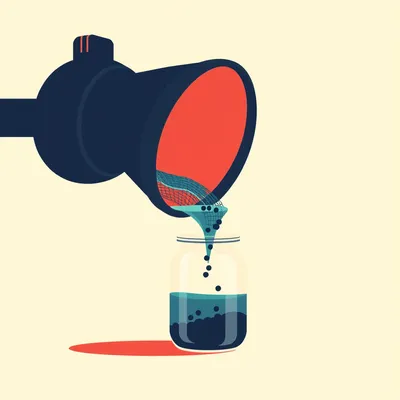
Exactly. And that is where the scale gets incredible. When you provide feedback in the app, that data is ingested into massive datasets. But here is the key: your feedback does not usually go directly into the "brain" of the main model. Instead, it is used to train what is called a Reward Model. Think of the Reward Model as a separate, smaller A I whose only job is to act as a judge. It learns to predict what a human would like based on all those thumbs up and thumbs down. Once you have a highly accurate Reward Model, you can use it to fine-tune the main language model. You basically let the main model practice on millions of prompts in a simulated environment, and the Reward Model gives it a grade. Over time, the main model learns to generate responses that maximize that grade.
So my single thumbs down is essentially one data point in a sea of millions that helps calibrate the "judge," which then teaches the "student," which is the language model I actually interact with.
That is a perfect analogy. But Daniel raised a really important point about the promises these models used to make. If you go back to twenty-three or twenty-four, you would often tell a model it made a mistake, and it would say, "Oh, I am so sorry, I will make sure to remember that and change my behavior in the future."
Yeah, and we all realized pretty quickly that it was a total lie. It had no memory of that conversation once the session ended. If you opened a new window and asked the same thing, it would make the exact same mistake.
Exactly. It was just mimicking a polite customer service representative because it was trained on dialogue where humans say things like that. It was reflecting a persona, not a functional memory. The actual weights of the model—the trillions of numerical values that make up its digital brain—were static. They were frozen in a file on a server. Updating those weights is incredibly expensive. It requires thousands of G P Us running for days or weeks. You cannot do that every time a user gets annoyed.
So, sitting here in early twenty-six, has that changed? Are we getting any closer to a world where my feedback actually influences the model in a more immediate way?
We are seeing two very distinct paths emerging. One is what we call "in-context learning" or "long-context memory." This is where the model uses the current conversation history—which can now be millions of tokens long—to adjust its behavior. If you tell a model in the beginning of a session, "I hate bullet points, never use them," the model can hold that instruction in its active memory for the duration of your project. But again, that is not a permanent change to the underlying model. It is just a temporary adjustment.
And the second path?
The second path is what Daniel is hinting at: personalized adapters. This is a huge trend right now. Instead of changing the massive base model for everyone, companies are using "Low-Rank Adaptation," or LoRA. Think of it like a little digital backpack that the model wears just for you. This backpack contains a very small set of updated weights that reflect your specific preferences, your writing style, and the feedback you have given over months. When you log in, the base model puts on your specific backpack. So, for you, the model actually does learn and evolve.
That is fascinating. So the "Global Model" stays the same to ensure stability, but my "Personal Model" gets smarter based on my specific thumbs up and thumbs down. But Herman, to make that work on a global scale, where user feedback across the board improves the model for everyone, you run into the massive privacy wall Daniel mentioned. And this is the part of the prompt that I think we really need to dive into. How do you take millions of human conversations—which are full of private details, passwords, medical questions, and personal venting—and turn them into a safe training set without leaking everyone's secrets?
This is the billion-dollar question. If I am using an A I to help me draft a sensitive email to my doctor about a specific condition, and then I give it feedback on how it handled the medical terminology, my private health data is now technically part of that feedback loop. Daniel mentioned anonymization and redaction. In twenty-six, those processes are much more sophisticated than they were two years ago, but they are still not perfect.
I imagine it is more than just a "find and replace" for names and social security numbers.
Oh, much more. There are now automated P I I—Personally Identifiable Information—scrubbing pipelines that use specialized models to scan every piece of feedback. They look for addresses, phone numbers, credit card patterns, and even subtle things like specific employer names or unique project titles. But even after you scrub the obvious stuff, you have the problem of "linguistic fingerprints."
Linguistic fingerprints? You mean the way I talk can identify me?
Exactly. The specific combination of your vocabulary, your syntax, the obscure topics you happen to know a lot about, and even your common typos can be enough to de-anonymize a dataset if someone is determined enough. This is why the industry has moved toward something called Differential Privacy.
I have heard that term tossed around in Apple keynotes. How does it actually work in the context of A I feedback?
It is a mathematical framework that adds "statistical noise" to the data. Imagine you are conducting a survey about something sensitive, like "Have you ever cheated on your taxes?" If people answer honestly, their privacy is at risk. But if you tell everyone, "Flip a coin. If it is heads, answer honestly. If it is tails, flip it again and answer 'Yes' for heads and 'No' for tails," you now have a dataset where you know the percentage of people who cheated on their taxes, but you can never be sure if any single individual's "Yes" was an honest admission or just the result of a coin flip.
That is brilliant. So you get the aggregate truth without the individual exposure.
Exactly. Differential privacy allows A I companies to learn the general patterns—like "users prefer concise explanations of quantum physics"—without the system ever "knowing" which specific user asked about quantum physics in their basement in Jerusalem. It allows the model to learn from the crowd while maintaining a mathematical shield around the individual.
So when Daniel asks if this is a real mechanism, the answer is yes, but it is a mechanism that is filtered through this massive privacy-preserving machine. But let's talk about the "firehose" aspect. Daniel mentioned the sheer volume of feedback. Millions of ratings every day. How do they separate the signal from the noise? I mean, I imagine a lot of that feedback is just people being frustrated, or even worse, people trying to "poison" the model by giving bad feedback on purpose.
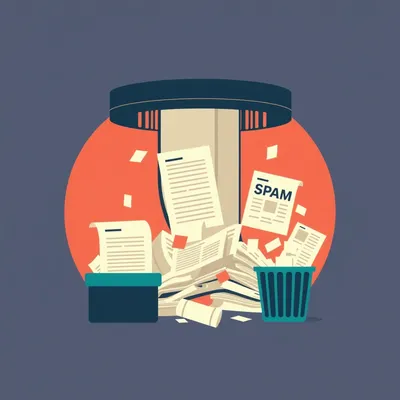
The "data poisoning" threat is very real. You have trolls who want to make the model more biased, or competitors who might want to degrade a model's performance. If you just fed all feedback into the training loop blindly, the model would collapse. It would become a "confident liar" because it would learn to prioritize whatever the most vocal or aggressive users want.
So how do they filter for quality?
They use a few layers of defense. First, they look for consensus. If ten thousand different users all give a thumbs down to a specific factual error—say, the model claiming that a certain historical event happened in nineteen twenty-four instead of nineteen twenty-five—that is a very strong signal. One person complaining about a subjective tone issue is a weak signal. Second, they have started using "AI-Feedback-on-AI-Feedback," or R L A I F.
Wait, so an A I is judging the human's judgment of the A I?
Precisely. You take a very high-reasoning model—something like the latest o-one or GPT-five class models—and you ask it to evaluate the user feedback. You ask the judge model, "Is this user feedback constructive? Does it align with our core safety guidelines? Or is the user simply trying to bypass a filter?" This helps categorize the feedback into buckets: factual errors, tone issues, safety refusals, or hallucinations.
It feels a bit like a reputation system. Does my feedback carry more weight if I have a history of being "correct" in my corrections?
Most companies are very secretive about this because they do not want people gaming the system, but the answer is almost certainly yes. They look for "high-quality contributors." If you are a verified expert in a field—let's say you are a known developer on GitHub with a high reputation—and you provide feedback on a coding response, the system is likely to weight your input more heavily than a random anonymous user.
Daniel also asked for examples of this in practice. We have seen the thumbs up and down, but have there been moments where a company said, "We changed X because of you"?
The most famous early example was the "GPT-4 Laziness" saga of late twenty-three and early twenty-four. Users across the world started reporting that the model was refusing to complete long tasks. It would say, "You can do the rest yourself," or just provide a brief outline instead of the full code. OpenAI actually came out and acknowledged this. They said they had seen the feedback and were working on a fix. That fix involved a new round of fine-tuning specifically designed to counter that "lazy" behavior. That was a direct, public result of the collective voice of the user base.
And what about Anthropic? They have a very different philosophy with their "Constitutional A I."
Anthropic is a great example of using feedback to refine the "Constitution" itself. Instead of just following what a user wants—because users often want things that are harmful or biased—they use feedback to see where their model's internal rules are being applied too strictly or too loosely. If users are constantly giving a thumbs down because the model is being "too preachy" about a harmless topic, Anthropic might update the model's instructions on how to handle sensitive topics without being condescending. It is a more principled approach to feedback.
It strikes me that we are moving toward a more democratic way of building these models, but it is a democracy with a lot of gatekeepers.
That is a great way to put it. It is democratic in the sense that the training data—the "will of the people"—is coming from the masses. But the final decision on what "weights" get updated and what "behaviors" are prioritized still rests with the internal teams at these massive corporations. They have to balance your feedback against a dozen other factors: compute costs, legal compliance, safety benchmarks, and performance on standardized tests.
Let's talk about the future part of Daniel's prompt. Do you think we will see more of this? Could we get to a point where a model is truly a "living thing" that evolves every single day based on what happened the day before?
I think we are headed toward a tiered system. On one level, you will have the massive "Base Models" that are updated maybe once or twice a year. These are the foundations. They are too big and too risky to update every day. But on top of that, we are seeing the rise of "Dynamic Knowledge Layers." Imagine a model that has a specialized layer for current events that updates every hour by scraping news and user reports. Or a "Style Layer" that shifts based on the trending vernacular of the week.
I can see that being incredibly useful, but as a developer, wouldn't that be a nightmare? If I am building an app on top of an A I, I need it to be predictable. If the model changes its behavior every Tuesday because of a bunch of user feedback on Monday, it might break my entire workflow.
That is the "Model Drift" problem. It is one of the biggest headaches in the industry right now. When you update a model to make it better at, say, creative writing, you often accidentally make it worse at logic or math. It is like a giant balloon—if you push it in over here to fix a bug, it might bulge out over there and create a new one. This is why companies are so cautious. They have to run massive suites of tests—benchmarks like M M L U or HumanEval—every time they make even a tiny change to ensure they haven't caused a "catastrophic forgetting" event.
So it is not just about collecting the feedback; it is about the massive infrastructure needed to verify that the feedback actually made the model better without breaking its "brain."
Exactly. And Daniel's point about internal teams using this data is key. The feedback is not just for the model; it is for the researchers. They look at the "clusters" of negative feedback. If they see a huge spike in negative ratings around, say, the model's ability to understand sarcasm in Arabic, they realize they have a data gap. They might then go out and specifically hire more Arabic-speaking annotators or buy more high-quality Arabic datasets to fill that hole in the next version.
It is almost like we, the users, are the world's largest quality assurance team.
That is exactly what we are. We are all unpaid beta testers for the most complex software ever written. Every time you click that thumbs down, you are performing a tiny act of digital labor that helps shape the future of intelligence.
When you put it that way, it makes me want to be a bit more thoughtful with my feedback. I am not just venting my frustration at a machine; I am contributing to the evolution of a digital mind.
You really are. And that brings up a practical takeaway for Daniel and everyone else. If you want the models to get better, the best thing you can do is provide specific feedback. A simple thumbs down is a weak signal. But most interfaces now allow you to type a reason. If you say, "This answer was factually correct but the tone was too condescending," or "You missed the third constraint I gave you in the prompt," that is gold for a researcher. It is much more actionable than just "I did not like this."
That is a great tip. If we want these tools to serve us better, we have to be better at communicating what we actually want. It is a two-way street.
And we have to be patient. The path from your feedback to a global model update is long. It has to go through redaction, anonymization, reward model training, fine-tuning, and then weeks of safety and performance testing. It is a slow, deliberate process, as it should be when you are dealing with something this powerful.
We have covered a lot of ground here, Herman. From the technical side of R L H F and D P O to the privacy challenges of P I I and differential privacy. It seems like Daniel's intuition was right on the money. This feedback is a real mechanism, but it is hidden behind several layers of sophisticated processing.
It is. And I think in the next year or two, we are going to see much more transparency around this. We might see features where a model says, "Hey, I noticed several people found my previous explanation of this concept confusing, so I have been updated to be more clear." That kind of "closing of the loop" would build a lot of trust.
I agree. Right now, it feels like a one-way street where we send our data into a black hole and hope for the best. Seeing the results of that collective feedback would be a huge step forward for the industry.
Definitely. It would also help educate users on what constitutes "good" feedback. If you see how the model improves based on certain types of input, you are more likely to stay engaged with the process.
Well, I think we have given Daniel a lot to chew on. It is a complex system, but at its heart, it is about trying to make technology more human by actually listening to humans.
Well said, Corn. It is the ultimate collaboration between our messy, intuitive human preferences and the rigid, logical world of machine learning. It is where the "weirdness" of our prompts meets the "weirdness" of how these models learn.
Before we wrap up, I want to remind everyone that if you are finding these deep dives helpful, we would really appreciate it if you could leave us a review on your podcast app or on Spotify. It really does help the show grow and helps other people find these conversations.
Yeah, we love seeing those reviews. It is our own little feedback loop, right? We read them, we learn from them, and we try to make the next episode better.
Exactly. We are using human feedback to improve our own model here. You can find us at myweirdprompts dot com, where we have all our past episodes and a contact form if you want to get in touch. We are also on Apple Podcasts, Spotify, and everywhere else you get your audio fix.
And if you have a prompt of your own—something that made you go "hmmm" or something you are curious about in the world of A I—you can send it to show at myweirdprompts dot com. We are always looking for new ideas to explore.
Thanks to Daniel for this one. It was a great excuse to dig into the mechanics of how these models actually learn from us. It is easy to forget that there is a massive infrastructure behind those two little icons.
Always a pleasure. This has been My Weird Prompts.
Thanks for listening, everyone. We will talk to you in the next one. Goodbye!
Goodbye!