Operation Epic Fury: The US-Iran War
On February 28, 2026, the US and Israel launched simultaneous strikes against Iran’s nuclear infrastructure, missile facilities, and top leadership. Within hours, the Islamic Republic’s Supreme Leader was dead, the IRGC was in crisis, and Iranian retaliatory missiles were falling on Israel, Jordan, and 27 US bases across eight countries. These eighteen episodes cover the outbreak, the immediate escalation, and the cascading consequences of the most significant military operation in the Middle East since the Gulf War.
The Outbreak
-
Operation Epic Fury: The Outbreak is the essential first listen — an urgent situational report recorded as news was breaking, covering the launch of the joint US-Israel operations, the scale of the initial strike package, the targets selected, and the political decisions that moved the conflict from covert pressure to open war.
-
Operation Roaring Lion: The Mechanics broke down how an operation of this scale actually moves from planning to execution without tipping off adversaries in advance. The episode deconstructed the years of pre-positioning, the deception operations, and the sequencing logic that allowed a simultaneous multi-domain strike across hundreds of targets.
The Decapitation
-
Epic Fury: The Decapitation was recorded from a reinforced shelter in Jerusalem as news of Khamenei’s death was confirmed — an urgent analysis of what the sudden elimination of Iran’s Supreme Leader means for the chain of command, the IRGC’s authority, and the stability of the Islamic Republic as an institution.
-
Israel SITREP: 4 March is the follow-on situational report filed 72 hours after the initial strikes, covering the confirmed leadership deaths, the scope of Iran’s retaliatory launch, and the state of Israeli civil defense as the country absorbed its heaviest missile barrage to date.
-
Iran After Khamenei: The IRGC’s Fight for Survival dug into the power vacuum left by the decapitation — the factional rivalries within the IRGC, the constitutional succession mechanisms (and their limits), and whether the Islamic Republic can function as a coherent military and political actor without its founding ideological authority.
What Comes Next: Four Trajectories
-
The Iranian Decapitation: Four Paths After the Strike mapped the four plausible geopolitical scenarios that follow a successful leadership decapitation: controlled succession, IRGC coup, popular uprising, and fragmented collapse. The episode assessed which historical analogies are instructive and which are misleading.
-
The Geopolitical Silence of Giants examined the conspicuous non-response of Russia and China in the 48 hours after the strikes — why two of Iran’s closest strategic partners went quiet, what their calculations are, and what their eventual response is likely to look like once the dust settles.
The Target List
-
72 Hours That Changed the World is the comprehensive strategic analysis of the first three days of the operation — the 2,500-plus sorties, the prioritization logic behind the target list, and the early damage assessment of what the strikes actually achieved against Iran’s hardened nuclear program.
-
Inside the Target List: Mapping Iran’s Nuclear Machine provided the detailed facility-by-facility breakdown of Iran’s nuclear and missile infrastructure — Fordow, Natanz, Parchin, Isfahan — and the specific engineering challenges of destroying facilities buried under hundreds of meters of rock.
-
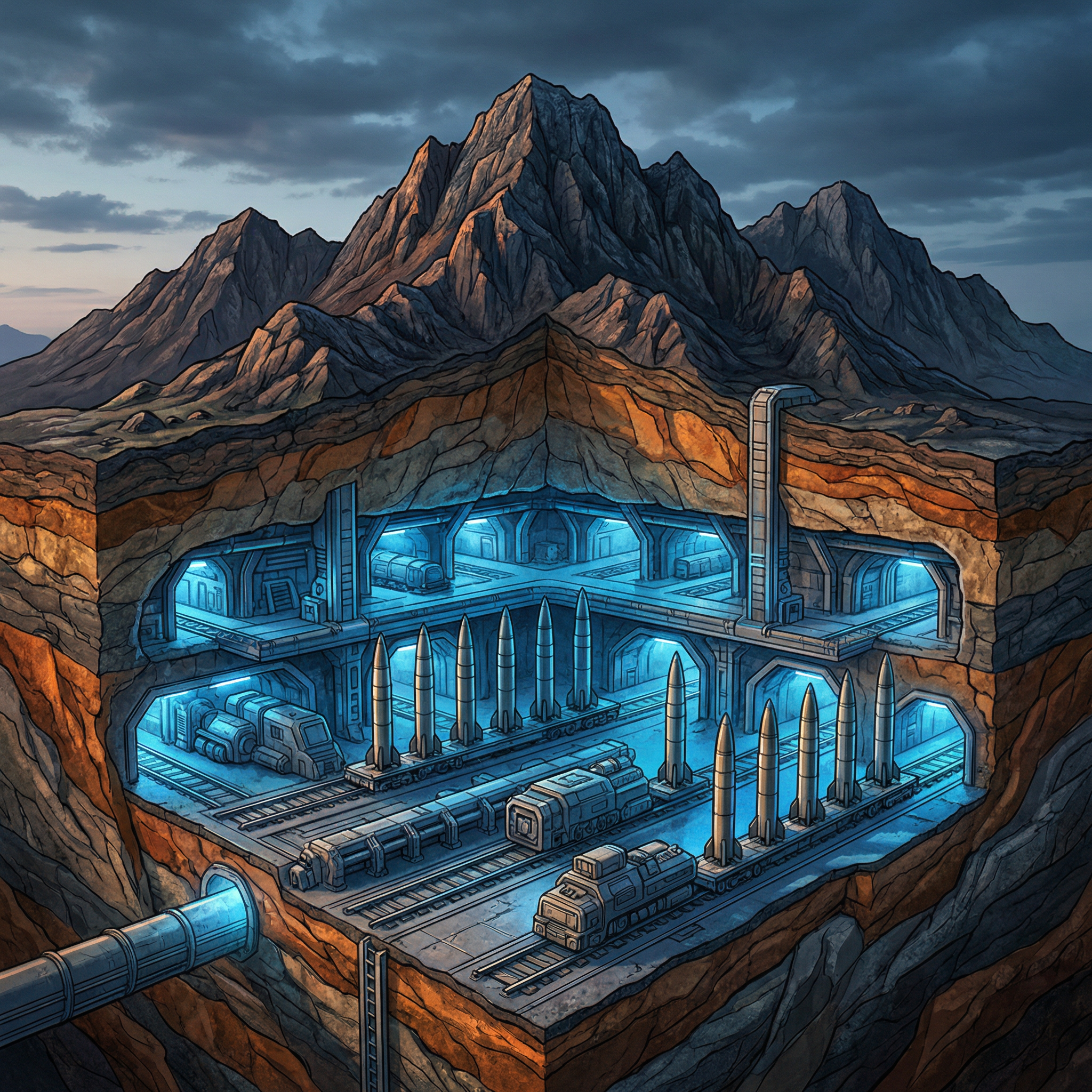
Under the Mountain: Iran’s Massive Missile Cities explained the vast network of reinforced tunnels beneath the Zagros and Alborz mountains that Iran has spent decades building. The “missile cities” are automated, hardened, and dispersed specifically to survive the kind of strike Operation Epic Fury attempted.
-
The Nuclear Dark Phase addressed the most alarming question raised by the strikes: if Iran’s declared facilities are destroyed, does that actually stop a weapons program — or does it accelerate a covert “dark phase” where miniaturized warhead development moves into facilities no one knows about?
Iran Strikes Back
-
The Myth of the Hermetic Shield was recorded in the aftermath of Iranian retaliatory strikes that penetrated Israeli air defenses. The episode moved past the propaganda on both sides to examine what the actual intercept data shows about the performance limits of even the world’s most sophisticated multi-layer system.
-
27 Targets: The History of the US Middle East Footprint covered the Iranian counter-strike against US bases across eight countries — and provided the historical context for how the United States came to have 27 installations spread across a region it never intended to occupy permanently.
-
The 3 AM Siren: Nighttime Missile Attacks explained why escalations in this conflict have consistently followed a nocturnal schedule, with major barrages arriving between 2 and 5 AM local time. The episode traced the orbital mechanics, thermal signatures, and defender psychology that make nighttime launches tactically advantageous.
The Military Machine
-
The Algorithm of War: Managing Assets in Multi-Front Conflict took a systems view of the operational challenge — how commanders allocate finite interceptors, sorties, and intelligence assets across simultaneous fronts when every decision involves trade-offs and the adversary is probing for seams.
-
The Physics of Interception: Decoding Iranian Missile Tech broke down the specific engineering characteristics of the Iranian missiles used in the retaliatory barrages — re-entry vehicle design, terminal phase maneuvering, and the detection and intercept geometry that determines whether a salvo gets through.
-
44 Hours in the Cockpit: The Limits of Human Endurance examined the human factor in sustained air operations — the fatigue management protocols for B-2 crews flying 30-hour round-trip missions from Missouri, the amphetamine policy debates, and where human physiology becomes the binding constraint on sortie rate.
-
That Others May Live: Combat Rescue told the story of the CSAR machine that activated when three F-15EX Strike Eagles were downed by friendly fire over Kuwait — the invisible logistics network of HC-130s, HH-60W Jolly Green IIs, and pararescuemen that exists for exactly this scenario.
These episodes cover the outbreak and immediate aftermath of Operation Epic Fury. For the deeper strategic context — proxy networks, Iran’s ideological roots, the missile technology arms race, and what comes next — see the companion playlist: The 2026 Iran-Israel War. For the July 2025 conflict that set the stage, see The July 2025 Twelve-Day War.
Episodes Referenced