Beneath the Surface and Beyond the Horizon: A Guide to Naval Warfare
Naval power is the original form of global force projection, and it remains the most credible measure of a nation’s ability to protect — or threaten — interests thousands of miles from home. These five episodes trace the full spectrum of maritime warfare, from the physics that make submarines effectively invisible to the geopolitics of the chokepoints that a single warship can hold hostage.
The Silent Service
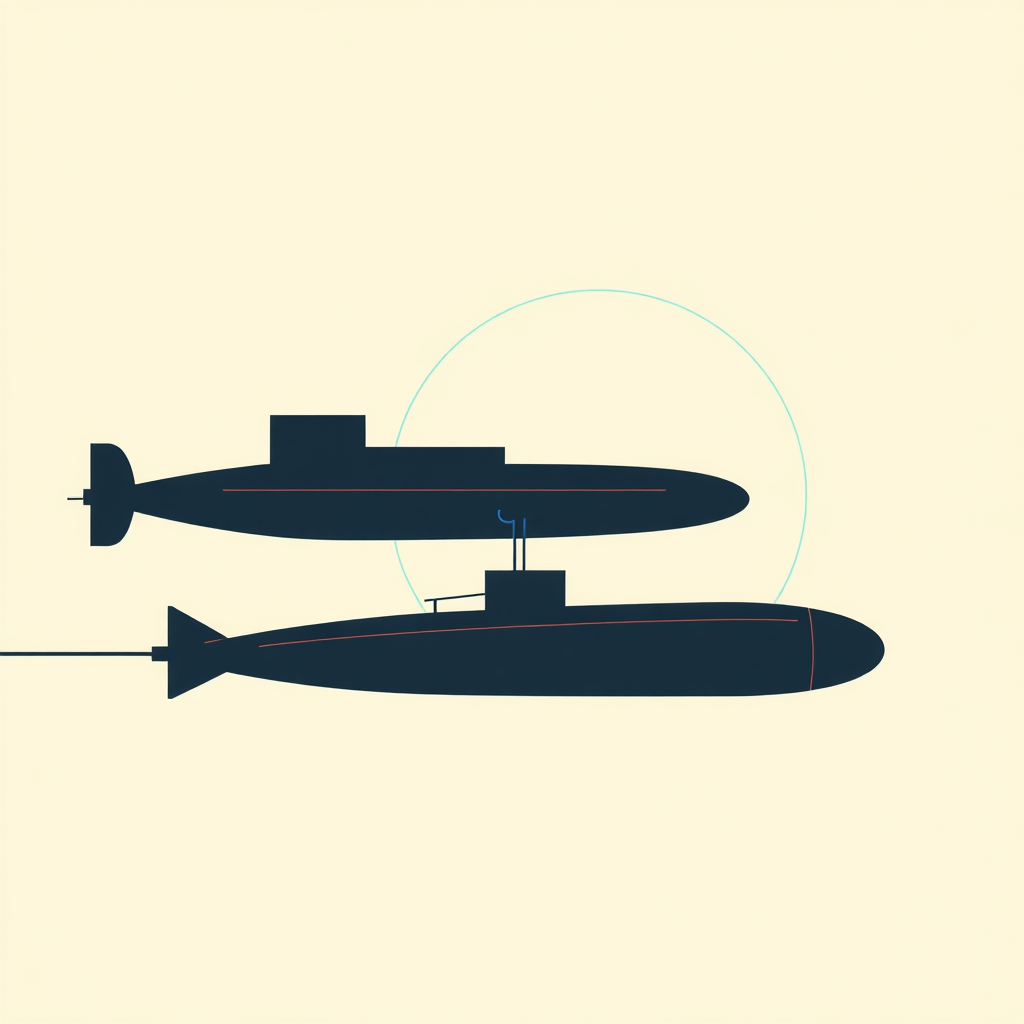
- Shadows of the Sea: Submarine Stealth and Navigation explored how modern submarines achieve something that sounds paradoxical: becoming a “black hole” in an age when satellites can image every surface of the planet in detail. The episode examined the acoustic physics behind anechoic tiles and noise isolation, the engineering challenges of navigating without GPS while submerged, and the strategic concept of “sea denial” — the ability to make an adversary uncertain about whether submarines are present in any given body of water. That uncertainty alone reshapes military planning.
The Carrier Strike Group, Part I
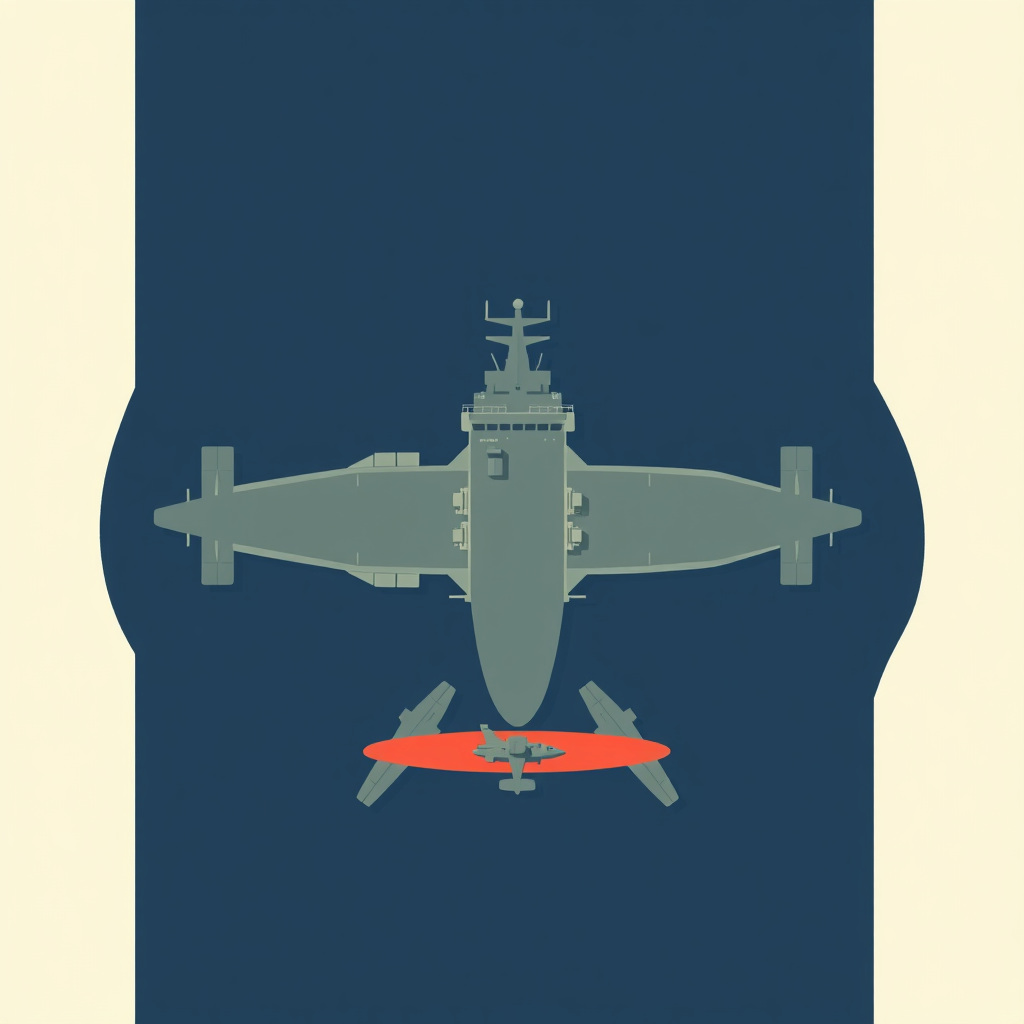
- The Floating Fortress: Inside the Carrier Strike Group introduced the USS Gerald R. Ford and the doctrine around it. The carrier is not a platform — it is a neighborhood. Destroyers handle anti-submarine and surface threats; cruisers manage air defense; submarines screen the formation against other submarines; supply ships extend range. The episode covered why the carrier never sails alone, the command relationships within the group, and how the entire formation represents the most concentrated projection of conventional military power in history.
The Carrier Strike Group, Part II
- Sovereign Steel: Inside the Carrier Strike Group went deeper into the engineering and operational mechanics that the strategy episode left aside. The Nimitz- and Ford-class carriers represent completely different engineering philosophies — nuclear propulsion versus electromagnetic aircraft launch systems — and the episode explained the operational implications of those choices. It also covered the specific threat environments that shape carrier battle group composition, including the growing challenge posed by Chinese anti-ship ballistic missiles designed specifically to defeat the carrier.
The Chokepoints
- Global Arteries: Guarding the World’s Maritime Chokepoints examined the narrow passages that concentrate oceanic trade into interdictable corridors. The Strait of Hormuz, Bab-el-Mandeb, Strait of Malacca, and Suez Canal each carry a disproportionate share of global energy and trade. The episode traced how Houthi attacks on commercial shipping in the Red Sea demonstrated that even a non-state actor with ballistic missiles and drones can impose massive economic costs on global trade by threatening a single chokepoint — and what naval forces can and cannot do to stop them.
The Arctic Opens
- The Cold War Heats Up: Militarizing the High North covered a theater that has transformed from frozen irrelevance to contested strategic space within a single generation. As ice recedes, new shipping routes become viable, new subsea resources become accessible, and new military basing becomes possible. Russia has invested heavily in Arctic military infrastructure; China has declared itself a “near-Arctic state”; and NATO is racing to rebuild capabilities it decommissioned after 1991. The episode explained why the Arctic represents perhaps the most significant geographic shift in strategic competition since the Cold War ended.
Naval warfare is defined by distances that dwarf land or air operations — and by the fact that control of the seas remains the prerequisite for every other form of power projection. These episodes provide the vocabulary for following maritime events as they happen.
Episodes Referenced
#763 Shadows of the Sea: Submarine Stealth and Navigation Feb 21, 2026
#813 The Floating Fortress: Inside the Carrier Strike Group Feb 23, 2026

#814 Sovereign Steel: Inside the Carrier Strike Group Feb 23, 2026

#604 Global Arteries: Guarding the World’s Maritime Chokepoints Feb 12, 2026
#829 The Cold War Heats Up: Militarizing the High North Feb 25, 2026