
The Strategy Lab: War Colleges, Deterrence, and Global Power Projection
Military strategy is one of the show’s recurring themes, and these five episodes form a coherent primer on how modern military power is organized, projected, and contested.
How Strategy Is Taught
- The Strategy Lab pulled back the curtain on war colleges — the graduate-level institutions where military officers study history, theory, and strategic planning. The episode covered the curriculum (Clausewitz to modern hybrid warfare), the role of wargaming in developing doctrine, and why these institutions matter for civilian policymakers too.
The Command Structure
- Mapping Global Power explained how the U.S. military divides the world into geographic and functional combatant commands — CENTCOM, EUCOM, INDOPACOM, and others. Each commands a vast force structure and operates with significant autonomy. The hosts mapped out who’s responsible for what and how the commands interact (and sometimes compete) with each other and with civilian leadership.
The Psychology of Deterrence
- The Architecture of Anxiety explored deterrence as a psychological operation rather than a purely military one. Border fortifications, surveillance towers, military exercises, and force posturing are all designed to shape an adversary’s calculus. The episode examined when deterrence works, when it fails, and the dangerous gray zone where signals are misread.
Multi-Front Strategy
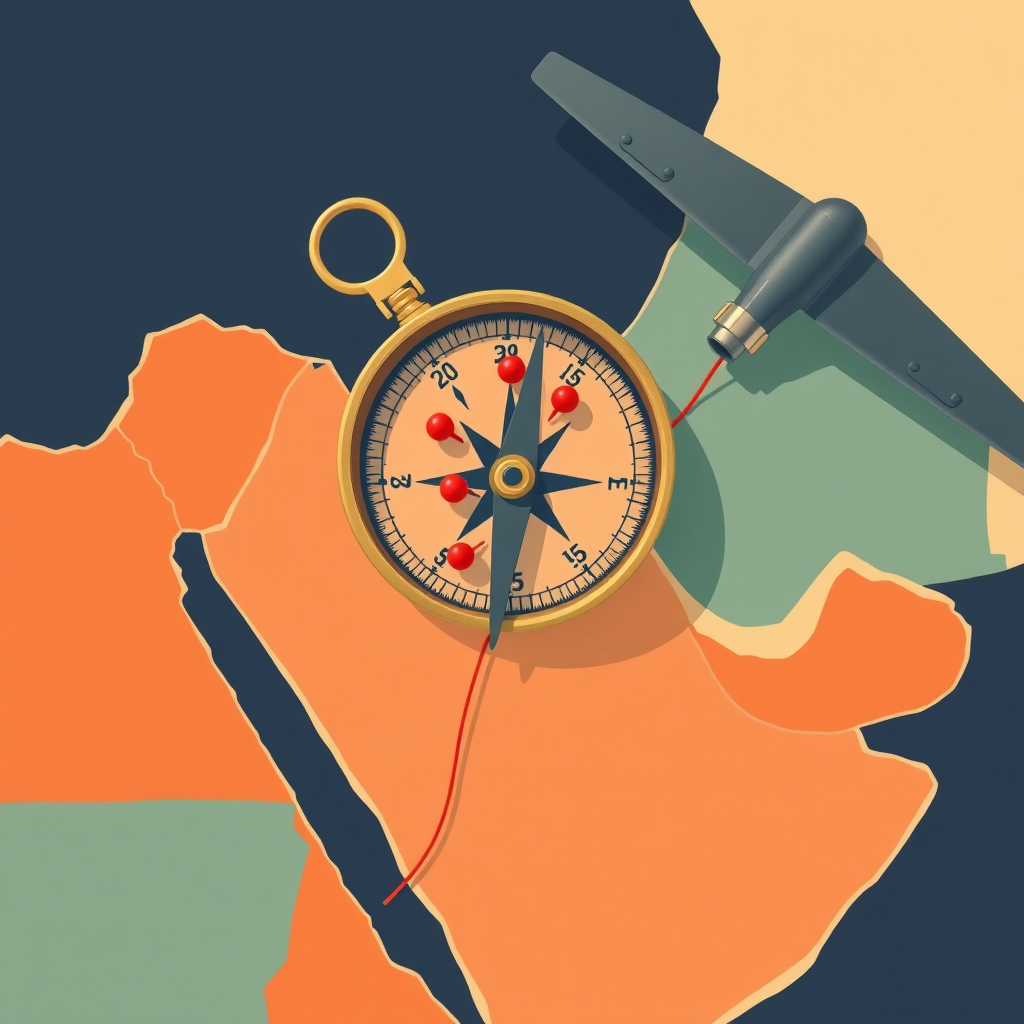
- The Axis of Resistance analyzed Iran’s unified multi-front strategy using proxy forces — Hezbollah, Hamas, the Houthis, and Iraqi militias. The hosts examined how this distributed network creates strategic dilemmas for adversaries who must defend against threats from multiple directions simultaneously, and the coordination challenges it creates for Iran.
Missile Defense Geopolitics
- The THAAD Shield covered THAAD (Terminal High Altitude Area Defense) as both a military system and a geopolitical signal. Deploying THAAD sends a message about alliance commitments and threat assessment. The episode explained the physics of terminal-phase intercept and why THAAD’s X-band radar is often more strategically significant than its interceptors.
Strategy is the art of connecting means to ends under conditions of uncertainty. These episodes provide the conceptual vocabulary for understanding military decisions in context rather than reacting to headlines.
Episodes Referenced
#733 The Strategy Lab: Inside the World of War Colleges Feb 20, 2026

#790 Mapping Global Power: Inside the U.S. Combatant Commands Feb 22, 2026

#532 The Architecture of Anxiety: Deterrence on the Edge Feb 7, 2026
#766 The Axis of Resistance: Iran’s Unified Multi-Front Strategy Feb 22, 2026

#581 The THAAD Shield: Strategic Deterrence in the Middle East Feb 11, 2026