How Aviation and Transportation Actually Work: A Technical Deep Dive
The engineering behind aviation is some of the most sophisticated systems design in any industry — and most passengers experience almost none of it. Separately, ground transportation is undergoing the most significant transition since the invention of the automobile. These twelve episodes cover both domains with the technical depth they deserve.
The Aircraft Itself
-
Who’s Really Flying? The Evolution of Aircraft Controls traced the history of aircraft control systems from the Wright brothers’ direct mechanical linkages through hydraulic amplification to modern fly-by-wire — where pilot inputs are electrical signals processed by flight computers that translate intention into control surface movement. The episode explained why this architecture enables aircraft that are aerodynamically unstable by design (the F-16 cannot be flown without computers; the pilot’s inputs alone would cause immediate loss of control) and what the implications are for certification, safety, and the ongoing debate about automation versus pilot authority.
-
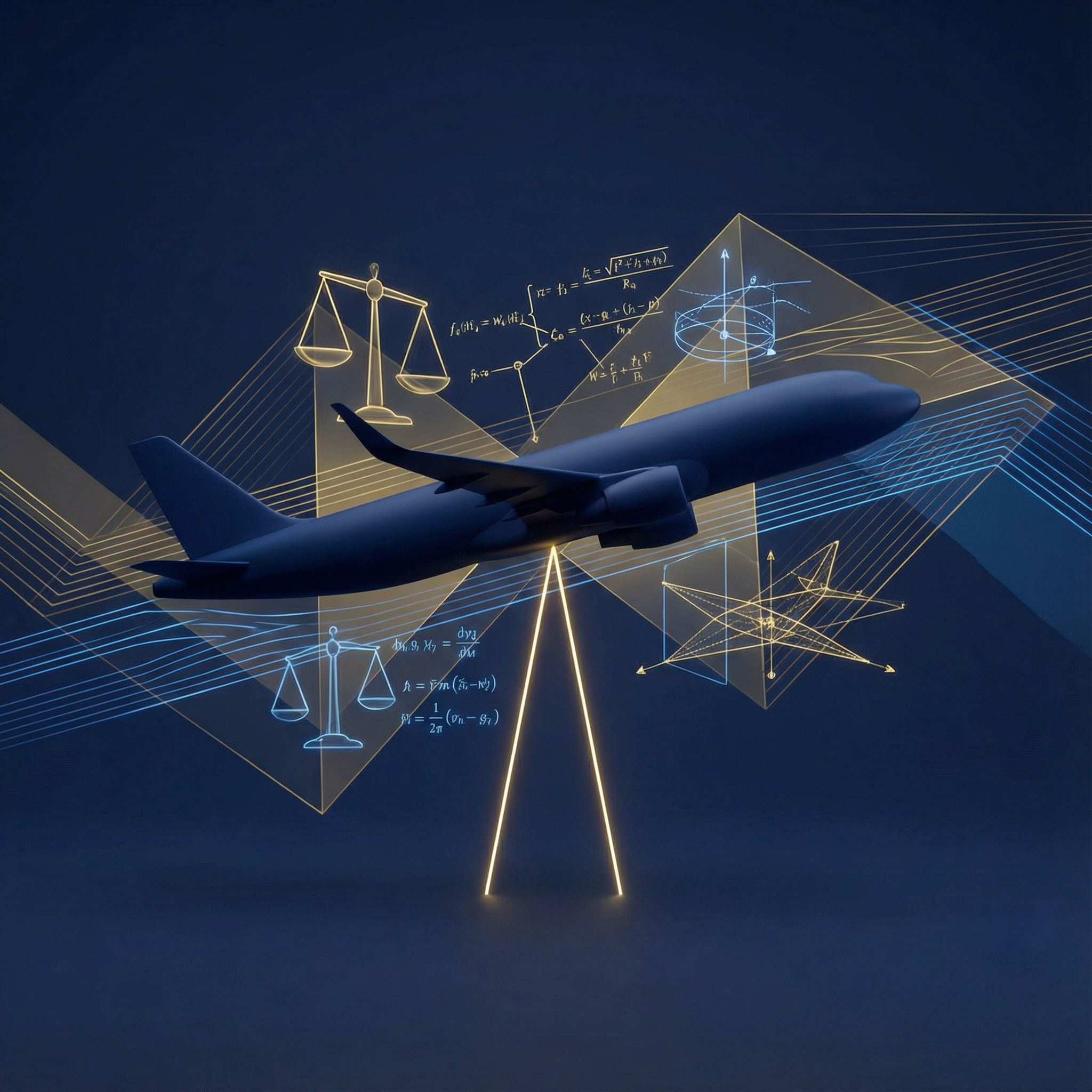
The Aviation Paradox: Why Airlines Don’t Weigh You examined the counterintuitive physics of aircraft weight and balance. Airlines weigh bags to the kilogram while using statistical averages for passengers — which the episode explained is actually the technically correct approach given passenger count variability and the way statistical noise cancels at scale. The deeper content examined how aircraft center-of-gravity management works, why cargo positioning matters as much as total weight, and the physics of what happens when weight and balance falls outside certified limits.
How Airlines Operate
-
Inside the Nerve Center: How Airlines Control the Skies opened the doors to Flight Operations Centers — the massive command rooms where airlines monitor every aircraft in their fleet in real time. The episode explained the roles of dispatchers, meteorologists, maintenance coordinators, and operations controllers, and how these functions interact during normal operations versus irregular operations like weather diversions, mechanical issues, and airspace closures. The hosts compared the FOC to NASA mission control — same operational philosophy, different stakes and operational cadence.
-
The Invisible Highways: Mastering North Atlantic Tracks explained one of the more elegantly designed systems in aviation: the Organized Track System that coordinates transatlantic flights. The North Atlantic is among the busiest air corridors in the world, but it has no radar coverage — aircraft are beyond the range of ground-based surveillance. The OTS solves this by publishing a new set of optimal city-pair routes twice daily, based on jet stream position, that aircraft follow at precise altitudes and time intervals. The episode explained the physics of jet stream exploitation, how the tracks are built, and what happens when an aircraft needs to deviate.
Weather and Navigation
-
The Invisible Enemy: Why Turbulence is Getting Worse examined the phenomenon of Clear Air Turbulence — violent air movement that occurs without any visible weather and cannot be detected by radar. The episode explored the physics of CAT, why the jet stream irregularities associated with climate change are increasing its frequency, and why the aviation weather community’s ability to predict it remains limited. It also addressed the practical question of whether turbulence actually poses meaningful injury risk and when to be concerned.
-
Navigating the Chaos: The Rise of GPS Spoofing in Aviation examined a growing threat to aviation navigation: the deliberate transmission of false GPS signals that cause aircraft navigation systems to believe they are somewhere they are not. GPS spoofing has been documented across conflict zones in the Middle East and near certain national borders. The episode explained the physics of how spoofing works, what it looks like from the cockpit, and the defensive measures pilots and regulators are developing in response to attacks on infrastructure that aviation was not designed to treat as adversarial.
-
The Skywave Secret: Why Aviation Can’t Quit HF Radio explained the continuing role of high-frequency radio in transoceanic aviation communications. When aircraft are beyond VHF range and satellite links are unavailable or too expensive, HF remains the fallback. The episode examined the physics of skywave propagation — the way HF signals bounce between the ionosphere and the earth’s surface to achieve intercontinental range — and why the combination of cost, reliability, and regulatory requirements keeps 1940s-era technology in active use.
Cargo and Logistics
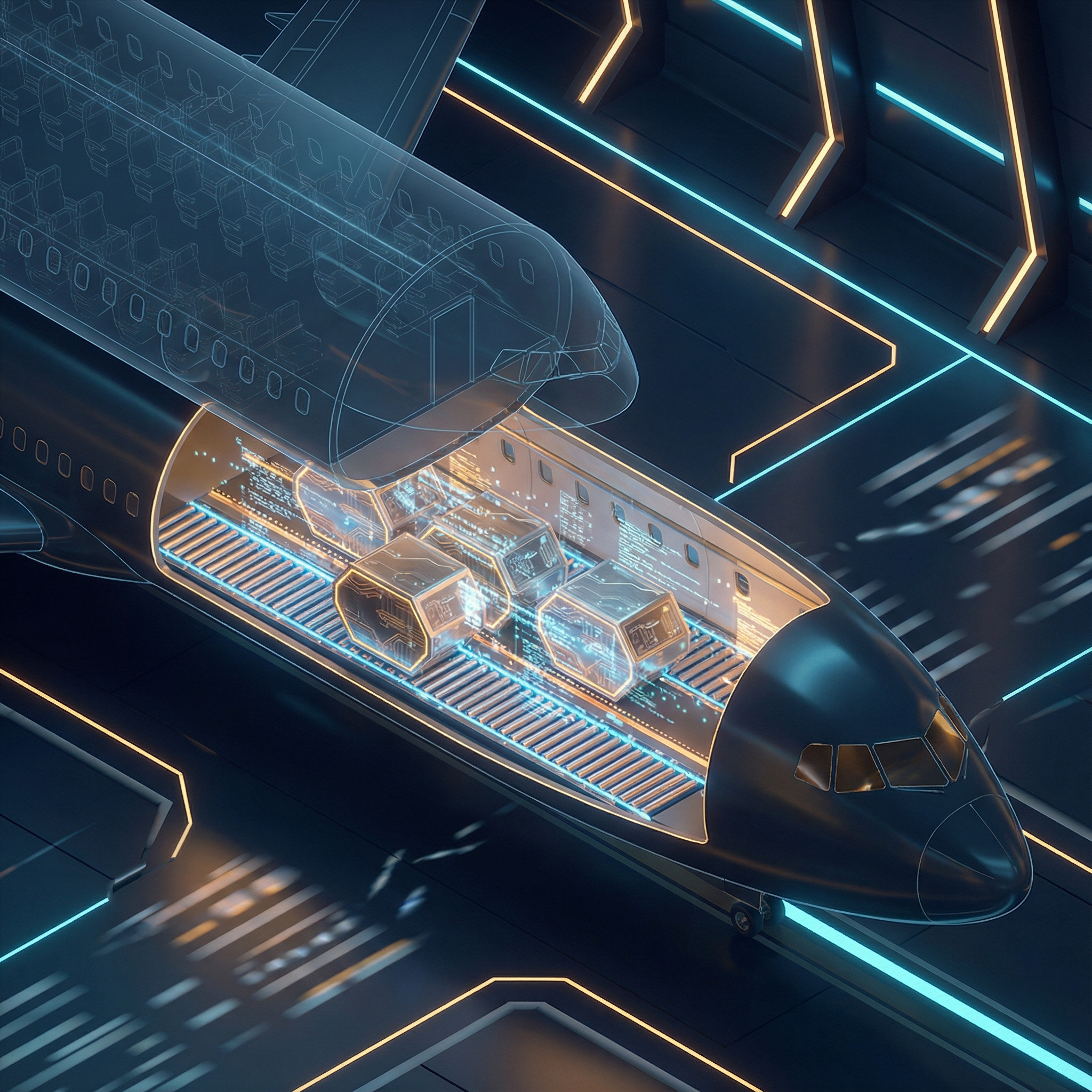
- The Secret Economy Under Your Feet: Air Cargo Explained revealed the economics of the air cargo industry — specifically the belly cargo model where passenger aircraft carry freight in their lower holds, effectively subsidizing ticket prices. The episode explained the cargo capacity tradeoffs in aircraft design, how freight rates are set, and what the air cargo industry looks like as an independent business separate from passenger aviation. The “secret economy under your feet” framing captured the reality that many passengers have never considered that their aircraft is carrying commercial cargo alongside their luggage.
Ground Transportation in Transition
-
The EV Paradox: History, Ethics, and the Future of Driving examined the electric vehicle transition with appropriate nuance. The episode — the show’s landmark 500th — traced the full history of EVs (electric cars predate gasoline cars historically), examined the genuine sustainability arguments, and confronted the uncomfortable supply chain questions: cobalt mining conditions, lithium extraction impacts, and the emissions profile of grid electricity in different markets. The conclusion was not anti-EV but honest about the complexity: EVs are better than ICE vehicles on most dimensions in most contexts, but the “zero emissions” framing obscures real costs that need to be addressed.
-
Beyond the EV: The Rise of Autonomous Mesh Cities pushed the transportation question further. Even an all-electric private vehicle fleet doesn’t solve the “geometry problem” of dense cities — the mathematical reality that cars use space inefficiently whether powered by gasoline or electrons. The episode examined the trajectory toward autonomous shared mobility, the technical and policy requirements for mesh transit systems that could actually reduce urban car dependence, and what a city designed around autonomous mobility rather than retrofitted for it might look like.
-
The End of the Car: Can We Really Quit Private Transport? tackled the political and behavioral obstacles to car-free urbanism directly. The technical case for reducing private car use in dense cities is strong; the policy case is contested; the implementation reality is hard. The episode examined the cities that have made meaningful progress, the specific interventions that work (congestion pricing, parking removal, transit investment), and the cognitive and cultural barriers that make car reduction politically toxic even where it would produce objectively better urban outcomes.
Navigation Technology
- The Hidden Tech Behind Lane-Level Navigation examined the multi-layer data architecture that allows smartphones to know which lane a driver is in, not just which road. The episode broke down the stack: GPS for approximate location, HD maps for lane geometry, LIDAR and camera data for real-time positioning, and the signal fusion algorithms that combine these inputs. This technology matters far beyond navigation convenience — it is the foundation of the safety systems that will eventually enable autonomous vehicles.
Aviation and transportation are engineering domains where the gap between what passengers experience and what is actually happening is enormous. These episodes close that gap — providing the technical context to understand systems that move hundreds of millions of people safely every day.
Episodes Referenced