Hey everyone, welcome back to My Weird Prompts. We are hitting a pretty big milestone today, this is episode three hundred sixty-five. That is a full year of daily episodes if you look at it that way, although we have been doing this for much longer than a year. I am Corn, and as always, I am joined by my brother.

Herman Poppleberry, at your service. Three hundred sixty-five episodes, Corn. That is a lot of rabbit holes we have tumbled down. I was looking back at some of our recent ones, like episode three hundred sixty-three where we talked about military probes and institutional failure, and it is wild how much ground we cover.
It really is. And today we are going into something that is literally all around us, but we often take it for granted. Our housemate Daniel sent us a voice note after a long week. He was sitting there with a glass of red wine, thinking about his wife Hannah’s profession. She is an architect, and Daniel realized that despite living with one, he still feels like he needs a bit of a bluffer’s guide to what architecture actually is.
I love that. It is one of those fields where everyone thinks they know what it is, right? You draw a building, you build the building. But as Daniel pointed out, it is this incredibly complex marriage of high-level creativity and rigorous engineering. Plus, living here in Jerusalem, we see the impact of architecture every single day, from the ancient stones of the Old City to those new high-rises Daniel was mentioning that are sparking so much debate.
Exactly. So today we are going to dive into the history of the craft, what the day to day life of an architect actually looks like, and how they balance the art of a beautiful space with the cold, hard reality of structural engineering and community planning. Herman, when we talk about the beginning of architecture, where are we even starting? Is it just the moment someone decided to put a roof over their head?
That is the big question, right? Is a cave architecture? Most historians would say no, that is just shelter. Architecture begins when there is intent beyond just survival. You are not just seeking cover from the rain; you are organizing space to reflect a certain value or a function. The first person we can actually name as an architect was Imhotep, back in ancient Egypt around twenty-six hundred BC. He designed the Step Pyramid for Djoser. Before him, we do not really have names, just collective efforts.
So Imhotep is the original. But back then, was there a distinction between the architect and the builder? Because today, those are very different roles with a lot of legal red tape between them.
Back then, the architect was the master builder. The Greek word architekton literally means chief builder. There was no separation between the design and the execution. You were on site, you knew how the stone was cut, and you knew how to manage the labor. The shift toward the architect as a separate intellectual professional really started to solidify during the Renaissance. That is when you get people like Brunelleschi or Alberti who started writing down the theory of architecture. They moved it from a trade to a liberal art.
That is an important distinction. It reminds me of what we discussed in episode one hundred fifty-one about internet infrastructure, where the physical layer and the logical layer have to work together but are managed by different mindsets. In architecture, the theory has to eventually meet the physics of a load-bearing wall.
Exactly. And that brings us to the famous Vitruvian Triad. Marcus Vitruvius Pollio was a Roman architect who wrote the only major work on architecture to survive from antiquity. He said a building needs three things: Firmitas, Utilitas, and Venustas. In modern English, that is firmness, commodity, and delight.
Firmness, commodity, and delight. I like that. So, it has to stand up, it has to be useful for its purpose, and it has to be beautiful or pleasing to experience?
Precisely. If you have a building that is beautiful and stands up, but has no functional stairs, you have failed the commodity part. If it is functional and strong but looks like a depressing grey box, you have failed the delight part. And if it is beautiful and functional but falls down in a light breeze, well, you are out of a job and probably in legal trouble.
It feels like that delight part is where the most friction happens today. Daniel was mentioning those high-rises going up in Jerusalem. Specifically, that forty-two story Epstein Tower project in Kiryat Yovel—people are calling it the Jerusalem Burj Khalifa. From a commodity standpoint, it houses hundreds of people. From a firmness standpoint, it is an engineering marvel. But the delight factor is highly subjective, especially when it is towering over Mount Herzl and Yad Vashem.
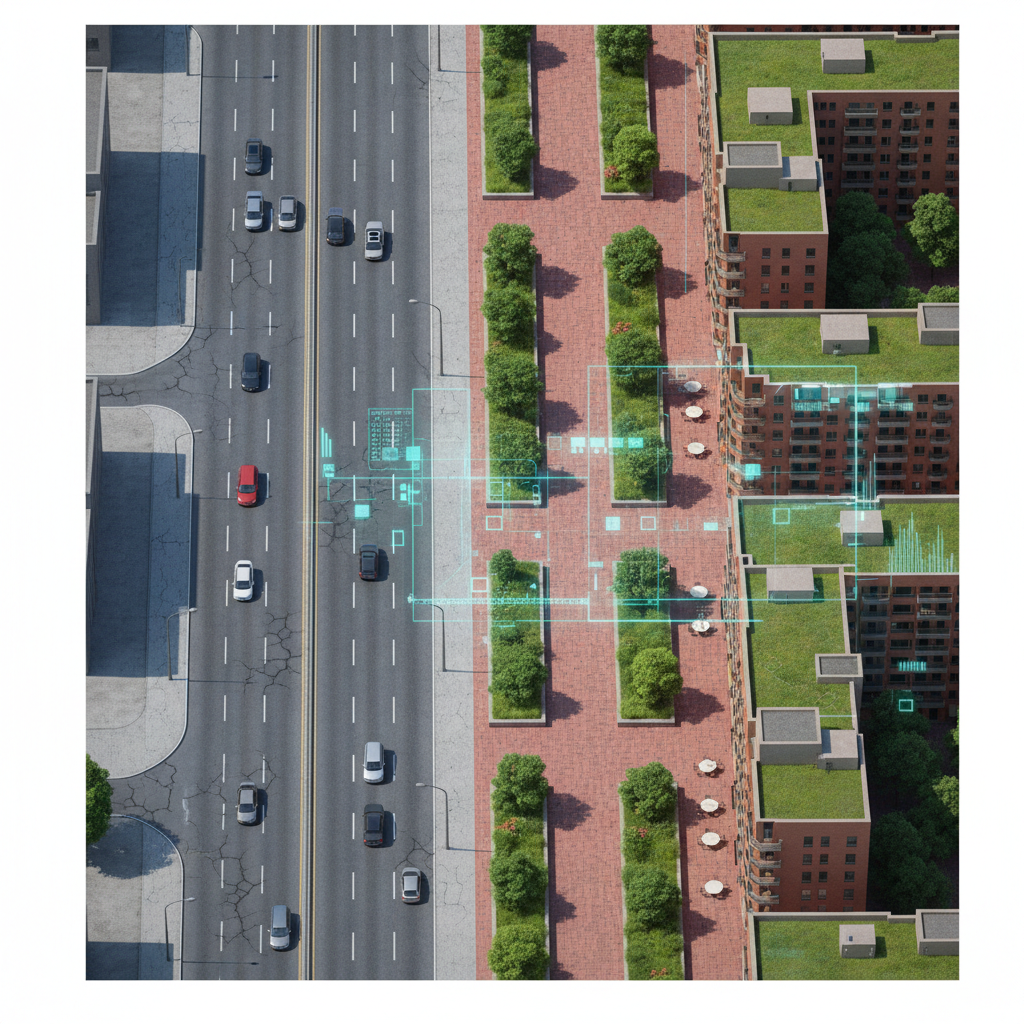
That is the heart of urbanism. Architecture is not just a single building in a vacuum. It is how that building talks to the street, how it affects the wind patterns, how it shades its neighbors, and how it makes the people walking past it feel. When architects talk about community planning, they are looking at the second order effects. If I put a massive glass tower here, does it kill the small shops on the ground floor because it feels too imposing or private?
Let us get into the actual work, though. Daniel asked about what they do all day. He mentioned CAD and site visits. I think most people imagine an architect sitting at a drafting table with a T-square and a pencil, wearing a black turtleneck and looking very serious. Is that still the reality, or has it gone completely digital?
The black turtleneck might still be there, but the drafting table is mostly a relic of the past. Almost everything now is done through CAD, which stands for Computer-Aided Design. But even CAD is becoming old school. The industry has moved toward BIM, which is Building Information Modeling, and increasingly toward Digital Twins.
Wait, how is BIM different from just a three-dimensional model in CAD?
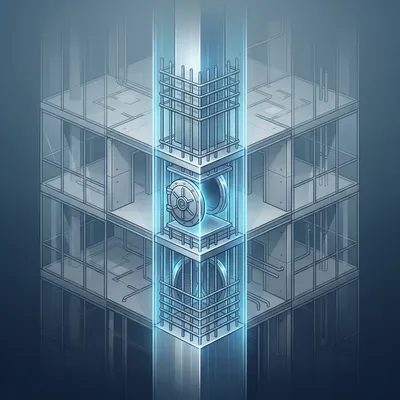
This is where it gets really nerdy and cool. In a traditional CAD drawing, a line is just a line. You draw two lines and say, okay, that is a wall. In BIM, you are not just drawing a wall; you are placing a digital object that knows it is a wall. It has data attached to it. It knows its thickness, its material, its thermal properties, and its cost.
So if you change the height of the ceiling in a BIM model, it automatically recalculates how much drywall you need and how it affects the HVAC system?
Exactly. It is a live database of the building. This allows for what they call clash detection. Before a single shovel hits the dirt, the architect can run a simulation and realize, wait, the structural steel beam is intersecting with the main sewage pipe in the three-dimensional model. In the old days, you might not find that out until the contractor is standing on site saying, hey, I cannot put this pipe through this beam.
That sounds like it saves an incredible amount of money and headache. But does that take away from the creativity? If you are just snapping together smart objects, do we lose that artistic touch?
Some old-school architects argue that, but most see it as a tool that frees them up. If the computer handles the boring stuff like counting windows and checking pipe clearances, the architect can spend more time on the Venustas, the delight. They can iterate faster. They can see how sunlight will hit a specific room at four in the afternoon on the winter solstice.
I want to go back to the site visits Daniel mentioned. Because Hannah clearly spends time away from the screen. What is the architect’s role once construction actually starts? Are they the boss of the construction workers?
Not exactly. This is a common misconception. The architect is more like the conductor of an orchestra where they do not actually employ the musicians. The client hires the architect and the client hires the contractor. The architect’s job during construction is contract administration and site observation. They are there to make sure the contractor is actually building what was designed and that they are using the right materials.
So they are the quality control?
Quality control and the ultimate arbiter of intent. If a contractor says, hey, we cannot get this specific stone, can we use this cheaper version? The architect has to decide if that change compromises the integrity or the aesthetic of the project. They also have to deal with the inevitable surprises. You dig a hole and find an ancient Roman drainage system, which happens quite often here in Jerusalem. The architect has to pivot the design in real-time.
That sounds incredibly stressful. You have the client who wants it cheap and fast, the contractor who wants it easy to build, and the city planners who have a thousand regulations. The architect is in the middle of all that pressure.
It is a high-stress profession, absolutely. You are balancing the laws of physics, the laws of the city, and the desires of the human heart. And let us talk about those regulations for a second. In Jerusalem, we have the Jerusalem Stone law. Almost every building has to be faced with that specific pale limestone. That is a massive architectural constraint that defines the entire identity of the city.
It is why the city has that golden glow at sunset. It is beautiful, but I imagine it is a challenge for an architect who wants to do something truly modern or different. How do you innovate when you are required by law to use a material that people have been using here for three thousand years?
That is where the real skill comes in. Do you use the stone in a traditional way, or do you cut it into thin panels and hang it on a steel frame? Do you contrast it with massive amounts of glass? The best architects use constraints as a springboard for creativity rather than a cage.
Daniel also mentioned the blending of creativity and engineering. I think about someone like Santiago Calatrava, who does those bridges and buildings that look like skeletons or birds. Those look like pure art, but they have to support thousands of tons. How does that collaboration work? Does the architect design a crazy shape and then a structural engineer tells them why it is impossible?
Often, yes. It is a push and pull. A good architect understands enough engineering to know what is possible, and a good structural engineer is creative enough to find a way to make the impossible work. There is this beautiful tension there. If the architect wins too much, the building is over-budget and maybe unstable. If the engineer wins too much, the building is a boring, efficient box.
It is interesting that Daniel brought up the social impact and community planning. We often think of architecture as just the building, but it is really about how people move through a city. If you design a neighborhood with no sidewalks and huge fences, you are essentially designing a lack of community. You are forcing people to stay in their cars and their private bubbles.
That is exactly what the New Urbanism movement tries to fight. They look back at historical cities where you had mixed-use buildings, shops on the bottom, apartments on top, narrow streets that slowed down traffic, and plenty of public squares. That kind of architecture creates social capital. It makes it easy to run into your neighbor. It makes it safe for kids to walk to school.
And the opposite of that is what we see in a lot of mid-century suburban planning. The zoning laws that say, you can only have houses here, and you have to drive five miles to find a grocery store. That is an architectural and planning decision that has massive psychological effects on a population. It creates isolation.
It really does. And you can see the backlash to that now. People are craving walkable environments. They want that sense of place. Architects today are increasingly focused on placemaking. It is not just about the four walls; it is about the space between the buildings. That is where life happens.
I think we should talk about some of the big movements in architecture, just so Daniel can have some names and styles to drop when he is talking to Hannah. If someone says a building is Brutalist, what are they actually looking at?
Oh, Brutalism is a fun one. It comes from the French term beton brut, which means raw concrete. It was popular from the nineteen fifties to the mid-seventies. Think of big, heavy, imposing concrete structures with no paint or plaster. It was meant to be honest about its materials. A lot of people hate it because it can feel cold and totalitarian, but architects often love it for its sculptural power.
It definitely has a vibe. What about Modernism versus Post-Modernism? That seems to be the big divide in the twentieth century.
Modernism was the era of less is more. Think of Le Corbusier or Mies van der Rohe. Glass, steel, clean lines, no ornamentation. They wanted to create a universal style that worked anywhere in the world. But by the nineteen eighties, people got bored of the glass boxes. That is when Post-Modernism kicked in.
That is the style with the weird shapes and the historical references that feel a bit tongue-in-cheek, right?
Exactly. Post-Modernism said, actually, less is a bore. They started putting columns and arches back on buildings, but in a colorful or exaggerated way. It was a reaction against the austerity of Modernism. Today, we are in a bit of a pluralistic era. We have sustainable architecture, where the primary goal is a zero-carbon footprint. We have Parametricism, where complex computer algorithms generate fluid, organic shapes that look like they belong in a sci-fi movie.
The sustainability aspect is huge. I read somewhere that the building and construction industry is responsible for nearly forty percent of global carbon emissions. That puts a huge responsibility on architects to change how they work.
It is the biggest challenge the field has ever faced. Recent reports show the sector accounts for around thirty-four to thirty-nine percent of global energy-related carbon dioxide emissions. It is not just about putting solar panels on the roof anymore. It is about embodied carbon. How much energy did it take to create that concrete? Can we use mass timber instead? We are seeing a huge trend in twenty-twenty-six toward mass timber high-rises, like the Rocket and Tigerli building in Switzerland which is set to be the world's tallest timber residential tower.
It is a return to the vernacular, in a way. Using local materials and understanding the local climate. Which, again, brings us back to Jerusalem. The thick stone walls here are actually great for thermal mass. They stay cool in the summer and hold heat in the winter. The ancients knew what they were doing.
They really did. There is a lot of wisdom in traditional architecture that we ignored for a few decades because we thought we could just solve everything with a bigger HVAC system. Now, we are realizing that was a mistake. We are moving toward biophilic design—literally bringing nature into the structure with living walls and natural light to reduce stress and boost creativity.
So, for Daniel’s bluffer’s guide, what are the key takeaways? If he is looking at a building and wants to sound like he knows what he is talking about, what should he look for?
First, look at the materiality. Is the building honest about what it is made of, or is it covered in a fake facade? Second, look at the scale. Does it feel like it was built for a human, or does it feel like it was built for a giant or a car? Third, look at the light. How does the building handle the sun? Are there deep overhangs to provide shade? Does it have large windows to let in natural light?
And maybe ask, what is the story this building is trying to tell? Is it trying to look like the past, or is it trying to shout about the future? Every building is a statement about what the person who built it thinks the world should look like.
That is a profound way to put it. Architecture is basically philosophy made physical. When you walk through a city, you are walking through the history of human ideas.
I also want to touch on the idea of the architect as a generalist. It seems like they have to know a little bit about everything. They have to know law for the building codes, psychology to understand how people will use the space, physics for the engineering, and art for the aesthetics. It is a very broad education.
It is one of the few professions left that truly bridges the humanities and the sciences. That is why it takes so long to become a licensed architect. In most places, it is five years of school, plus years of internship, plus a series of exams. In fact, the National Council of Architectural Registration Boards just updated the exams in April twenty-twenty-six to be more competency-based. You cannot just call yourself an architect because you designed a shed. It is a protected title for a reason.
It is interesting because people often confuse architects with interior designers or drafters. But the architect is the one who is legally responsible if the thing falls down. They have the professional seal.
Exactly. That seal is a big deal. It means you have taken responsibility for the life and safety of anyone who enters that building. That is why there is so much paperwork. Daniel mentioned the CAD and the site visits, but there is also the massive pile of specifications. Thousands of pages detailing exactly what kind of screw goes into which wall.
That sounds like the least glamorous part of the job.
It is. But if you get the screw wrong, the window might fall out in a high wind. The details are where the architecture lives. Mies van der Rohe famously said, God is in the details.
I like that. It also connects back to what we discussed in episode three hundred sixty-two about SSH keys and the geometry of secrets. The tiny details in the code are what keep the whole structure of the internet safe. It is the same in a building. If you ignore the small stuff, the big stuff fails.
Totally. And speaking of details, I want to go back to the idea of the bluffers guide for a second. If Daniel wants to impress Hannah, he should look up the term fenestration. It just means the arrangement of windows and doors on a building. Instead of saying, I like the windows, he can say, the fenestration on this facade is really well-balanced.
Fenestration. That is a good one. I will have to remember that. What about the term floor area ratio? That sounds like something a developer would care about.
Oh, FAR, or Floor Area Ratio, is the architect’s best friend and worst enemy. It is the ratio of the total building floor area to the size of the land it is built on. The city says, you can only have an FAR of two point zero. That means if your lot is one thousand square feet, you can only build two thousand square feet of building. That is the number that determines if a project is financially viable for a developer.
So that is where the architecture meets the economics. The architect is trying to fit as much delight and commodity as possible into the square footage allowed by the FAR.
Exactly. It is a giant three-dimensional puzzle. And that is why those high-rises Daniel mentioned are so controversial. Developers want to increase the FAR to make more money, but the community worries about the density and the strain on the infrastructure. The architect is caught in the middle, trying to design something that satisfies the developer’s budget but also doesn't ruin the neighborhood.
It is a delicate dance. I think we have covered a lot of ground here. We have gone from Imhotep to BIM models, from Brutalism to sustainability, and from the Jerusalem stone to the floor area ratio.
I think Daniel has enough now to at least hold his own over another glass of wine with Hannah. But the main thing to remember is that architecture is a service profession. Even though we celebrate the starchitects like Frank Gehry or Zaha Hadid, most architects are working hard to make everyday life just a little bit better for the people using their buildings.
It is about the human experience. Whether it is a kitchen layout that actually works or a public square that feels welcoming, good architecture is often invisible because it just feels right. You only notice it when it is bad.
Like a door that opens the wrong way or a hallway that is too narrow. Bad architecture is a constant friction in your life. Good architecture is a smooth path.
Well said, Herman. I think we can wrap it up there for today. This has been a fascinating look into the world of the built environment.
It really has. And hey, if you are listening and you have a weird prompt of your own, or if you are an architect who wants to tell us everything we got wrong, we would love to hear from you.
Definitely. You can find us on Spotify and at our website, myweirdprompts.com. We have a contact form there and an RSS feed if you want to make sure you never miss an episode.
And if you have been enjoying the show, maybe consider leaving us a review on your podcast app. It really helps other people find these deep dives and join the community. We are at episode three hundred sixty-five, and we have no plans to stop anytime soon.
Thanks for the prompt, Daniel. Give our best to Hannah. We will see you all next time.
Until then, keep looking at the buildings around you. There is more thought in those walls than you might think. This has been My Weird Prompts.
Take care, everyone. Bye!