Hey everyone, welcome back to My Weird Prompts. I am Corn, and I am sitting here in our living room in Jerusalem with my brother.

Herman Poppleberry, at your service. It is good to be back at the microphones, Corn.
It really is. And we have a fascinating topic today that actually hits quite close to home. Our housemate Daniel was asking about something that I think most of us take for granted every single day. We look at our weather apps to see if we need an umbrella, or we watch the news to see a hurricane tracking across the ocean, but we rarely think about the people who are actually keeping those eyes in the sky functioning.
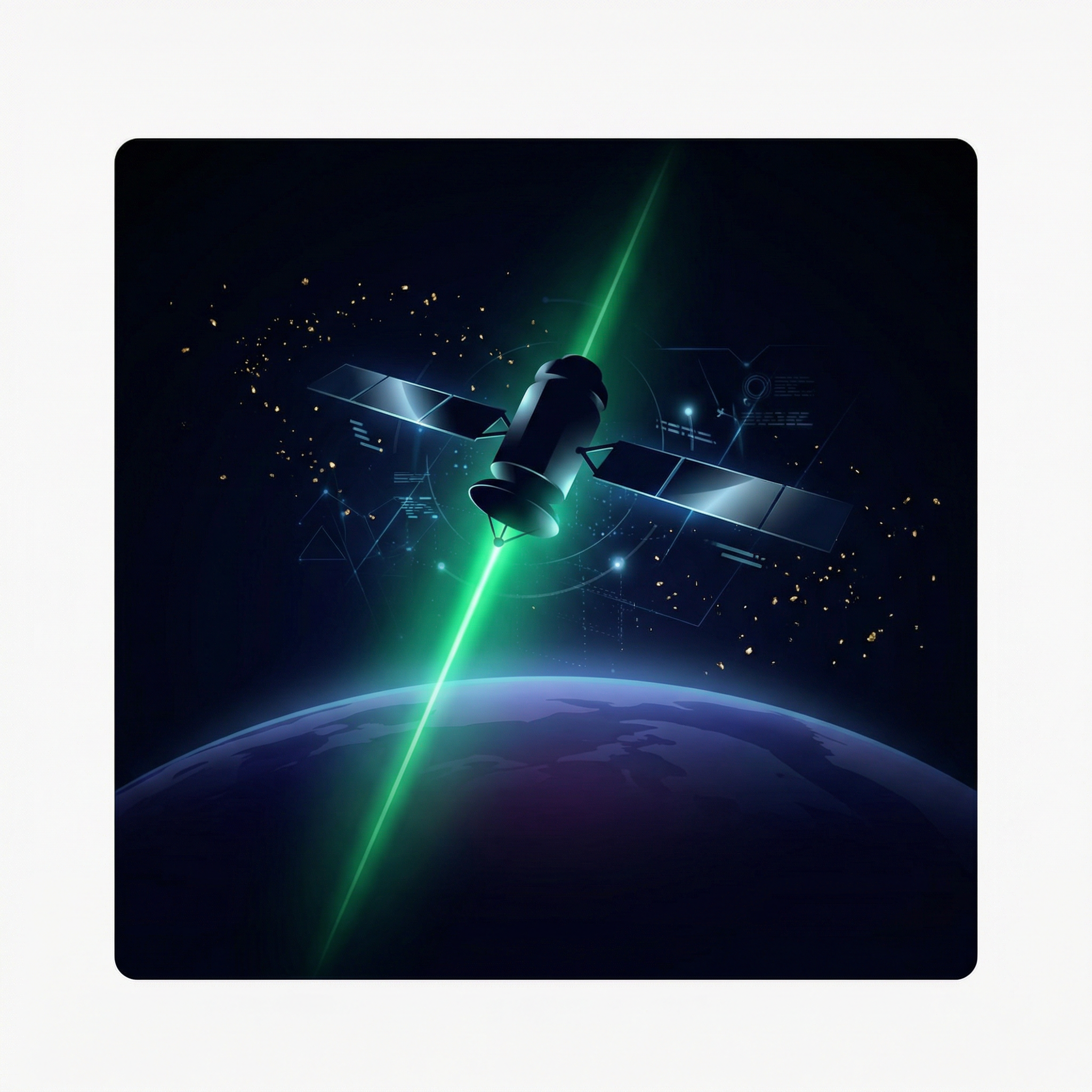
Right. Daniel mentioned those incredible images of mission control centers, like the ones at the National Aeronautics and Space Administration or those massive ground stations in places like Canberra, Australia. He wanted to know what the day to day looks like for the people sitting in those chairs. Is there a satellite driver? Are they white knuckling a joystick to stay in orbit? It is such a great question because it moves away from the flashy, high stakes drama of space warfare or launch day and looks at the actual engineering and patience required for long term operations.
That is the key thing. It is about the routine. We have talked about the hardware before, but the human element of maintenance is what we are diving into today. So, Herman, let us start with that image of the satellite driver. When Daniel asked if there is such a thing, what is the reality? Is someone actually steering these things in real time?
The short answer is no, not in the way we think of driving a car or even flying a plane. You have to remember that these satellites are moving at incredible speeds. A weather satellite in low earth orbit, like the Joint Polar Satellite System, is screaming along at about seventeen thousand five hundred miles per hour. If you tried to steer that with a joystick in real time, the latency alone would be a nightmare. Even for geostationary satellites like the Geostationary Operational Environmental Satellite - R series, which stay over one spot on the earth, they are thirty-five thousand seven hundred and eighty-six kilometers away. The round trip for a signal is about a quarter of a second.
So if you made a steering mistake, you would not even know it happened until it was already too late to fix it.
Precisely. Instead of driving, think of it as choreography. The operators are more like conductors or perhaps master programmers. They do not send individual steering commands second by second. Instead, they upload a command queue. This is a list of instructions that the satellite will execute over the next few hours or even days. The human involvement is in the planning, the monitoring, and the troubleshooting when the telemetry looks a bit wonky.
Telemetry is a word that comes up a lot in these discussions. For those who might not be familiar with the deep technical side, what are the operators actually looking at on those massive screens Daniel mentioned? I imagine it is not just a live video feed of the earth.
Oh, definitely not. Most of the time, the screens are filled with what we call state of health data. Imagine the dashboard of your car, but magnified by a thousand. They are looking at the thermal subsystem, which tells them how hot or cold different parts of the spacecraft are. Remember, in space, the side facing the sun can be over a hundred degrees Celsius, while the side in the shadow is minus a hundred. They have to balance that heat using heaters, louvers, and radiators.
That sounds like a constant battle against the environment. What else is on the dashboard?
Power is the big one. They are monitoring the solar array output and the battery charge levels. Satellites spend part of every orbit in the shadow of the earth, which we call an eclipse. During that time, they are running entirely on batteries. An operator has to make sure those batteries are healthy enough to last through the dark period and that the solar panels are angled perfectly to catch the sun as soon as they emerge. Then you have the attitude control system data, which tells you exactly which way the satellite is pointing. If your weather camera, like the Advanced Baseline Imager on Geostationary Operational Environmental Satellite - Nineteen, is pointing at deep space instead of a storm system in the Atlantic, you are having a very bad day at the office.
It sounds like a lot of green text on black screens, which can be mesmerizing but also exhausting to monitor for an eight hour shift.
It is actually color coded for exactly that reason. In a modern control center, like the National Oceanic and Atmospheric Administration Satellite Operations Facility in Suitland, Maryland, they use the traffic light system. Green means the parameter is within the nominal range. Yellow is a warning that something is drifting. Red means an immediate limit has been exceeded and requires intervention. Most of the job is watching the green and making sure it stays green. But when a yellow pops up, that is when the expertise kicks in.
Let us talk about that expertise. Daniel asked about the backgrounds and skills of these operators. I assume you need more than just a passing interest in science to land a job at a National Oceanic and Atmospheric Administration control center.
You usually see a mix of backgrounds, but the core is almost always aerospace engineering, physics, or computer science. Many of the senior controllers have decades of experience. You need someone who understands orbital mechanics at an intuitive level. You need to know that if you want to catch up to an object in front of you in orbit, you actually have to slow down to drop into a lower, faster orbit. It is counterintuitive, and you cannot be second guessing those physics when things go wrong.
It is that calm under pressure that seems vital. I remember reading that a lot of these operators come from military backgrounds because they are used to following strict procedures while dealing with high value assets.
That is very true. But there is also a specific kind of personality that thrives in satellite operations. It is someone who is incredibly detail oriented and, frankly, okay with a bit of boredom. Most of the time, the satellite is doing exactly what it is supposed to do. You are essentially a highly paid security guard for a billion dollar piece of equipment. You have to be able to maintain focus so that when that one sensor reading drops by zero point five percent, you notice it before it becomes a catastrophic failure.
So, let us get into the actual trajectory maintenance. Daniel asked how human involved the process is of keeping them on a path over earth. If the satellite is already in orbit, why does it need help? Does it not just stay there because of gravity?
You would think so, but the earth is actually quite a messy place to orbit. First off, the earth is not a perfect sphere. It is an oblate spheroid, kind of squashed at the poles and bulging at the equator. It also has mass concentrations, or mascons, where certain parts of the planet are denser than others. This creates a lumpy gravitational field.
Like driving on a road full of potholes, but the potholes are gravity wells.
That is a good way to put it. Then you have the atmospheric drag. Even at several hundred kilometers up, there are still a few stray molecules of air. Over time, they act like a very light brake, slowing the satellite down and causing its orbit to decay. And then there is solar radiation pressure. The photons from the sun actually push on the satellite, especially those big solar panels. It is like a tiny, constant wind.
So, without intervention, every satellite would eventually either drift out of position or burn up in the atmosphere.
Precisely. This is where station keeping comes in. For a weather satellite in geostationary orbit, the goal is to stay inside a tiny little box in the sky, maybe only a few dozen kilometers wide. To do this, the operators perform maneuvers. They use small thrusters, often using chemical fuel like hydrazine or modern electric propulsion like xenon ion thrusters.
How often does that happen? Is it a daily thing?
Usually, it is every few weeks for geostationary ones, while low earth orbit satellites might need more frequent adjustments. The operators will analyze the tracking data from ground stations like the one Daniel mentioned in Canberra, or the ones in Wallops Island, Virginia. They see the satellite is starting to drift toward the edge of its box. They calculate exactly how much thrust is needed, at exactly what angle, and for exactly how many seconds. They write the script, verify it on a simulator on the ground, and then upload it to the spacecraft.
That verification step seems crucial. You do not want to upload a typo to a satellite.
Oh, the stories of lost missions due to a single decimal point are legendary. That is why there is so much redundancy. You have the operator who writes the command, a senior engineer who reviews it, and often a completely separate flight dynamics team that runs their own independent calculations to make sure the maneuver will actually achieve the intended result.
It is a very deliberate process. It makes me think about the ground stations themselves. Daniel mentioned the huge antennas. I think most people imagine the satellite talks directly to the building where the people are sitting, but that is not usually how it works, right?
Right. Most control centers are in places like Maryland or Colorado, but the satellites need to be tracked from all over the world. That is why we have networks like the Near Space Network. These massive parabolic dishes are strategically placed around the globe so that as the earth rotates, at least one dish always has a line of sight to the satellite. They act as the ears and the mouth for the mission controllers. The data comes down from the satellite to a dish in Australia, it gets beamed via fiber optic cables or underwater links across the ocean, and then it pops up on a screen in a windowless room in the United States.
It is a global game of telephone, but with incredibly high bandwidth. Now, what about the safety aspect? Daniel asked about staying in a safe and stable orbit. Beyond just the gravity and the sun, there is the issue of other stuff up there. Space debris is a growing concern. How much of an operator's day is spent playing dodgeball?
It is a massive part of the job now. As of February twenty-twenty-six, the United States Space Command is tracking over forty-five thousand pieces of debris larger than ten centimeters. If a piece of debris is projected to come within a certain safety zone, an alert is sent to the operators.
And then they have to move?
They have to decide if they need to move. Every maneuver uses fuel, and fuel is the lifeblood of a satellite. Once you run out of fuel, you can no longer maintain your orbit, and the mission is effectively over. So, operators have to weigh the probability of a collision against the cost of the fuel. It is a high stakes calculation. If the risk is high enough, they will perform what is called a collision avoidance maneuver. They slightly nudge the satellite out of its normal path to let the debris pass by, and then they nudge it back.
It is interesting that you mentioned fuel as the limiting factor. I think many people assume these things just last forever because they are solar powered.
The electronics are solar powered, but the physics of staying in the right spot requires mass. You have to throw something out of a nozzle to move in the opposite direction. Some modern satellites are using ion engines which are much more efficient, but even they eventually run out of propellant. That is why the routine monitoring is so important. You want to use every drop of fuel as efficiently as possible.
I want to go back to the human element for a second. We are talking about these people sitting in rooms, staring at screens. What is the shift work like? Because weather does not stop at five p.m.
It is a twenty-four seven operation. Usually, you have three or four teams that rotate. There is a lead flight controller, sometimes called a flight director, who is responsible for the overall safety of the spacecraft during that shift. Then you have specialists for each subsystem. You might have a power person, a thermal person, and a communications person. In older missions, you would have a person for every single system. In newer missions, one or two people might monitor an entire fleet of satellites using automated systems like the Open Architecture Space Information System.
That is an interesting shift. Automation is taking over a lot of the mundane tasks, right?
Oh, definitely. We are seeing a move toward lights out operations for some of the more routine constellations. The computers are getting better at recognizing what a healthy state looks like using machine learning. If everything is green, the computer just logs the data and moves on. If a parameter starts to drift, the system will actually page an engineer who might be at home or in another part of the building.
So we are moving from a room full of people in white shirts and ties, like in the Apollo era, to a much smaller, more specialized team.
That is right. But you still need those humans for the edge cases. Computers are great at following rules, but they are not great at troubleshooting a problem that has never happened before. If a solar flare hits the satellite and flips a bit in the memory, causing the computer to reboot in a weird state, you need a human who understands the underlying architecture to go in and perform a sort of long distance brain surgery.
Long distance brain surgery is a great way to put it. You are working on a machine that is thousands of miles away, that you can never touch, and where one wrong command could brick the whole thing. The stress must be unique.
It is. I have talked to some of these folks, and they describe it as a very quiet kind of intensity. It is not like the movies where everyone is shouting. It is very calm, very methodical. They use checklists for everything. Even the most basic command is read aloud, confirmed by a second person, and then executed. It is all about minimizing the chance of human error.
And I imagine the rewards are pretty great too. Knowing that the data you are helping to collect is literally saving lives by predicting a tornado or a flood.
That is what keeps them going. For weather satellite operators, they know that every image that comes down is being used by meteorologists around the world. If the satellite goes down for even an hour, that is a gap in our understanding of the atmosphere that could have real world consequences.
You know, it is funny. We started this by saying it is not like driving a car, but in some ways, it is like being the person who maintains the entire global highway system, but for space.
That is a great analogy. It is infrastructure management at the highest level. And as we put more and more satellites up there, especially with these massive constellations like Starlink or the new weather arrays, the complexity of that management is growing exponentially.
We should probably touch on the training for a moment. If someone listening wants to become a satellite operator, what does that path look like? Is it all university, or is there a lot of on the job training?
It is both. You usually need that technical degree to get your foot in the door, but every satellite is different. Even two satellites in the same series can have slight quirks or different hardware revisions. When a new operator starts, they usually spend months, if not a year, in shadow mode. They sit behind a senior operator, watching every move, learning the specific personality of the spacecraft.
I love the idea that a satellite has a personality.
Oh, they definitely do. Some might have a battery that runs a little hotter than the others, or a thruster that has a slight bias to the left. Operators get to know these things. They know that if the temperature on sensor forty-two hits fifty degrees, it is actually fine, even though the manual says forty-eight is the limit. That tacit knowledge is something you can only get by spending thousands of hours staring at the telemetry.
It makes me wonder about the future. As we move through twenty-twenty-six and beyond, and we see more artificial intelligence being integrated into these systems, do you think the human role will eventually disappear?
I do not think it will disappear, but it will change. We will move from being operators to being supervisors. We will be the ones setting the high level goals and the safety constraints, and the artificial intelligence will handle the micro maneuvers and the routine health checks. But as long as these assets cost hundreds of millions of dollars and are critical to our global economy, we are going to want a human being with their hand near the big red button.
That makes sense. You want that human intuition when things get weird.
You got it. And things always get weird in space. You have cosmic rays, micrometeoroids, solar cycles. Space is a very hostile environment for delicate electronics. The fact that we have satellites like the Geostationary Operational Environmental Satellite series that have been operating continuously for fifteen or twenty years is a testament to the incredible skill of the people on the ground who keep them alive.
It really is. I think about the Voyager probes sometimes. Those are being operated by a tiny team of people who are using technology from the nineteen-seventies to talk to a spacecraft that is outside our solar system. That is the ultimate version of this job.
It really is. Talk about knowing the personality of your spacecraft. Those operators are basically nursing a fifty year old machine through the void. It is beautiful, in a way.
So, to bring it back to Daniel's question, the routine day to day is a blend of high tech monitoring, careful planning, and a deep understanding of physics. It is not about the thrill of the chase, but the satisfaction of the stable line on a graph.
Well put. It is the art of making sure nothing interesting happens. Because in satellite operations, interesting usually means expensive and dangerous.
I like that. The goal is to be as boring as possible.
That is the idea. If the public never hears about a satellite, it means the operators are doing a perfect job.
That is a great perspective. I think it gives me a lot more appreciation for those control center photos. It is not just about the big screens and the cool clocks. It is about the hundreds of people dedicated to the quiet, constant maintenance of our modern world.
It really is. And it is a job that is only going to become more important as we become more dependent on space for everything from internet to climate monitoring.
Well, I think we have covered a lot of ground today, or rather, a lot of orbit. Herman, any final thoughts on the life of a satellite operator?
Just that the next time you check the weather, spare a thought for the person in the windowless room who made sure that satellite stayed in its little box in the sky. It is a lot harder than it looks.
Absolutely. And hey, if you are listening and you found this as fascinating as we did, we would love it if you could take a moment to leave us a review on your podcast app or on Spotify. It really does help other people find the show and join our little community of curious minds.
It really does. We see every one of them and we truly appreciate the support.
You can find all our past episodes, including the ones where we talk about satellite warfare and control center hardware, at myweirdprompts dot com. We also have an Really Simple Syndication feed there if you want to subscribe directly.
And thanks again to our housemate Daniel for sending in this prompt. It was a great excuse to dive into the more human side of space engineering.
Definitely. We will have to see what he comes up with next week.
I am looking forward to it.
All right, that is it for this episode of My Weird Prompts. Thanks for listening, everyone.
Take care, and keep looking up.
Goodbye.
Goodbye.