Hey everyone, welcome back to My Weird Prompts. I am Corn, and I am joined as always by my brother, Herman Poppleberry.

That is me, Herman Poppleberry, at your service. And we are coming to you from our home in Jerusalem, where the February air is actually quite lovely today. A bit of a chill, but the sun is holding its own.
It really is. And we have a fascinating topic today. Our housemate Daniel sent us a voice memo while he was out near the Hadassah hospital area, looking out over the city. He was reflecting on his own experience with gallbladder surgery from about seven years ago and the persistent issues that can follow.
Yeah, Daniel has got this way of framing things that I really appreciate. He mentioned that it feels like his stomach has an independent existence from him. Specifically, he is talking about post-prandial distress syndrome. It is that intense bloating and distended feeling right after you eat.
It is a really common issue, actually. A lot of people go into gallbladder surgery—or a cholecystectomy, to use the medical term—thinking it is the end of their digestive woes. But for a significant percentage, anywhere from ten to forty percent according to some longitudinal studies, the symptoms just shift. They change shape.
Exactly. This is often lumped into a broad category called post-cholecystectomy syndrome. And what I loved about Daniel's prompt is that he wants to move beyond the purely chemical or medical side of it. We often talk about bile acids and malabsorption, which are important, but he is curious about the cognitive side. The brain-gut connection.
Right, he mentioned things like biofeedback for something called abdominophrenic dyssynergia and even hypnosis. It is this idea that the body might be stuck in a certain pattern of behavior even after the original physical trigger, the gallbladder issue, is gone.
It is like a software glitch that persists after you have replaced the faulty hardware. You have the surgery, the gallstones are gone, the organ is gone, but the nervous system is still running the old distress program.
So let us start there. Herman, for those who might not be familiar, what is actually happening when we talk about post-prandial distress syndrome in a post-surgical context?
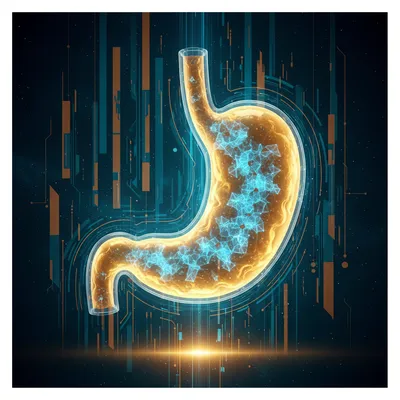
Well, technically, post-prandial distress syndrome, or P-P-D-S, is a subtype of functional dyspepsia. It is characterized by that bothersome fullness after a meal and early satiation. Now, when you remove the gallbladder, you are removing the storage tank for bile. Bile is now constantly trickling into the small intestine rather than being released in a big squirt when you eat a fatty meal.
And that usually leads to the medical explanation of bile acid diarrhea or general irritation.
Right. But the bloating part, that distended stomach Daniel mentioned, that is where it gets weird. You can have all the bile acid sequestrants in the world, but if your abdominal muscles and your diaphragm are not communicating correctly, you are still going to look and feel six months pregnant after a sandwich.
This brings us to that term Daniel used: abdominophrenic dyssynergia. It sounds like a mouthful, but it is actually a very mechanical problem, right?
It is incredibly mechanical. In a normal person, when you eat and your stomach expands, your brain sends a signal to your abdominal wall to relax slightly to make room, while your diaphragm, the big muscle under your lungs, actually moves upward. This keeps the pressure stable and prevents your belly from sticking out.
But in people with this dyssynergia, that process is reversed?
Exactly. It is a paradoxical reaction. The stomach expands from food or gas, and instead of the diaphragm moving up, it contracts and moves down. At the same time, the abdominal wall muscles, instead of staying firm, they just relax or even protract. So you have the diaphragm pushing down from the top and the abdominal wall giving way at the front. The result is a visible protrusion of the abdomen.
So it is not necessarily that there is an extra amount of gas or volume in the stomach, but rather that the body is mismanaging the space it has?
Precisely. There have been studies using C-T scans that show the actual volume of gas in patients with severe bloating is often no different than in healthy controls. The difference is the muscle coordination. Their bodies are literally pushing the stomach out.
That is a huge insight for someone who feels like they are filled with air. Knowing that it might actually be a muscular coordination issue is a totally different way of looking at it. It takes it out of the realm of I need to stop eating broccoli and into I need to retrain my muscles.
And that is why Daniel's mention of biofeedback is so spot on. If the problem is a coordination failure between the diaphragm and the abdominal wall, you can actually use biofeedback to see what those muscles are doing in real time and learn to correct it.
How does that look in a clinical setting? I mean, you can't exactly see your diaphragm moving.
Usually, they use electromyography, or E-M-G. They place sensors on the abdominal muscles and sometimes use a belt to track breathing and diaphragmatic movement. The patient sits there, eats something that usually triggers the bloating, and watches a screen. The screen shows them when their diaphragm is pushing down inappropriately.
So it is like a video game where the goal is to keep your diaphragm from winning the pressure battle?
Kind of, yeah. You learn to consciously engage the abdominal muscles and relax the diaphragm during the post-meal period. It is about breaking that reflexive, paradoxical habit. And the research is actually really promising. Some studies show a sixty to seventy percent improvement in symptoms for people who did not respond to any dietary changes.
That is fascinating because it suggests that the distress Daniel feels is part of a feedback loop. You eat, your body mismanages the pressure, you feel bloated and gross as he put it, which creates stress, which likely worsens the muscle tension and the dyssynergia.
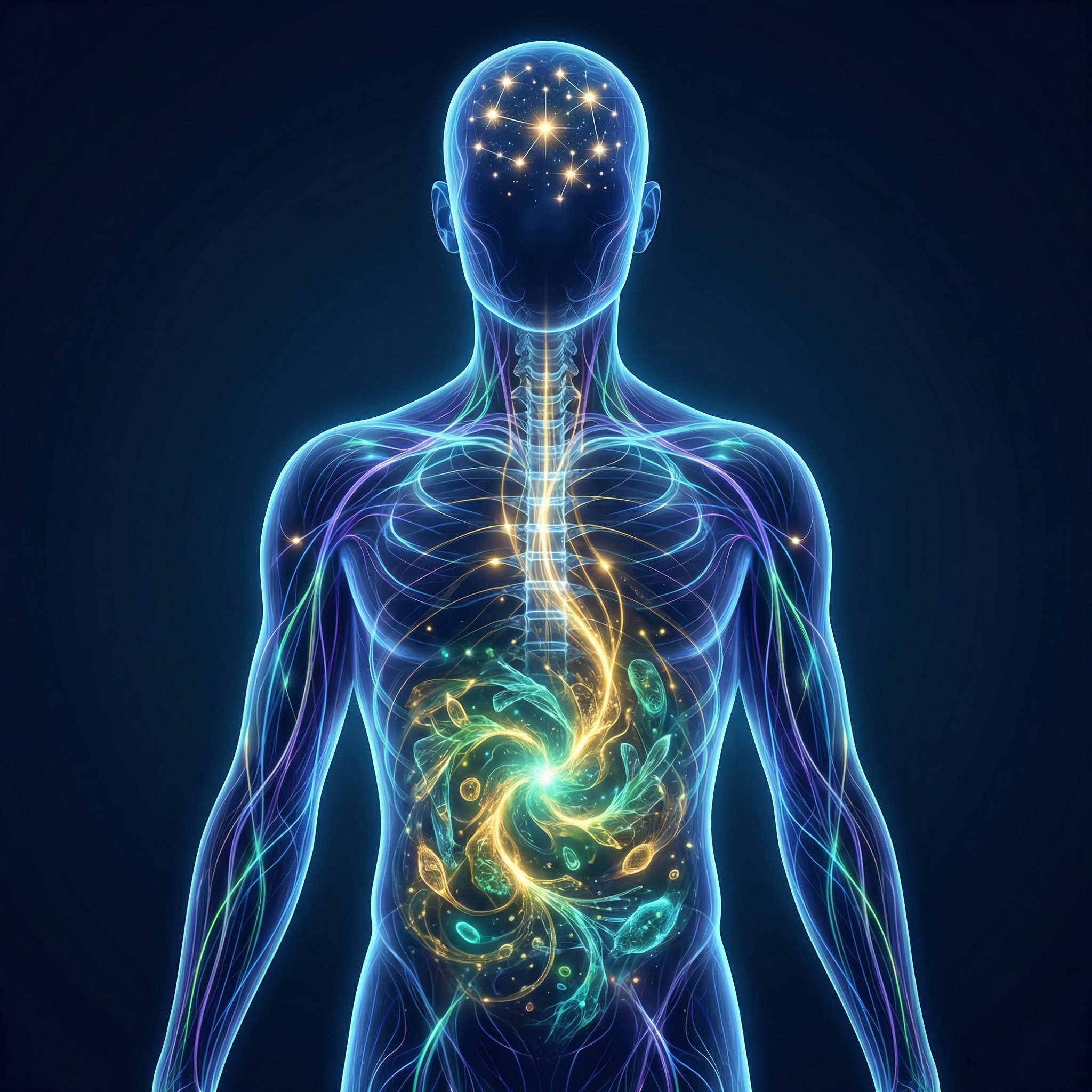
It is a classic positive feedback loop, and not the good kind. The brain-gut axis is essentially a two-way highway. The gut is sending I am full and uncomfortable signals, and the brain is responding by bracing the body in a way that actually increases the physical discomfort.
Which leads us to the other thing Daniel mentioned: hypnosis. Now, I think a lot of people hear hypnosis and they think of stage magicians making people cluck like chickens. But we are talking about gut-directed hypnotherapy here.
Right, and we should be very clear: this is a legitimate, evidence-based treatment. It has been studied extensively, especially for Irritable Bowel Syndrome, but the principles apply here too. It is not about mind control. It is about using focused attention and suggestion to modulate how the brain processes signals from the gut.
I remember reading about a study out of Monash University, the same place that did all the work on the low F-O-D-M-A-P diet. They found that gut-directed hypnotherapy was just as effective as the diet for managing symptoms, with about seventy percent of patients seeing significant relief.
It is true. And the reason it works is that it addresses the visceral hypersensitivity that often comes after surgery. When you have had a gallbladder that was inflamed or full of stones, your nerves in that area have been on high alert for a long time. Even after the organ is gone, those nerves can stay hypersensitive. They report a normal amount of digestive activity as pain or extreme pressure.
So hypnosis is essentially like turning down the volume knob on those nerve signals?
Exactly. A therapist might use imagery, like imagining the digestive tract as a smooth, flowing river, or visualizing the muscles of the abdomen as being calm and flexible. Over several sessions, this helps the brain re-categorize those gut signals as normal rather than emergency.
It is interesting to think about how this applies specifically to the post-gallbladder crowd. Many of these people, like Daniel, have been dealing with this for years. Seven years in his case. That is a long time for a neural pathway to become hard-wired.
It really is. And there is a psychological component too. If every time you eat, you expect to feel miserable and look bloated, your body is going to enter a state of anticipatory stress. We know that stress hormones like cortisol can directly affect gut motility and muscle tension.
So you are basically pre-loading the dyssynergia before you even take the first bite.
Exactly. You are essentially telling your diaphragm, Get ready, we are about to be under attack, and it responds by bracing itself, which is exactly what leads to the bloating. It is a self-fulfilling prophecy.
I want to go back to the biofeedback for a second. Is this something people can do at home, or do you need the high-tech sensors?
While the clinical E-M-G biofeedback is the gold standard, there are definitely low-tech versions. Diaphragmatic breathing, or belly breathing, is the foundation. It is about learning to breathe into your lower lungs without letting your chest and shoulders do all the work, but also without forcing the belly out in a way that is disconnected from the breath.
I have seen some practitioners suggest placing a hand on the stomach and a hand on the chest to monitor the movement.
Yes, and specifically for abdominophrenic dyssynergia, you want to focus on expansile breathing where the lower ribs move outward, rather than the belly just flopping forward. It is about creating lateral space rather than just forward-and-backward pressure.
That seems like a very practical takeaway. If you are feeling that post-meal distension, instead of just lying on the couch, which Daniel mentioned he often does, you could try some intentional, rib-expanding breathing.
Right. And actually, lying down can sometimes make it worse because of how gravity affects the diaphragm and the abdominal contents. Sometimes a gentle walk or even just sitting very upright can help the muscles find their correct alignment again.
It is funny, Daniel used the analogy of a car with a buggy transmission. The engine is fine, the wheels are there, but the shifting is all wrong. It feels like these cognitive and behavioral treatments are essentially trying to re-map that transmission.
I love that analogy. And honestly, I think we are seeing a shift in gastroenterology as a whole toward this neuro-gastroenterology perspective. We are realizing that you can't just treat the tube; you have to treat the computer controlling the tube.
Well, and it is also about validation. For so many people, being told their symptoms are functional or in their head feels like being dismissed. But if we frame it as your muscle coordination software has a bug, it is much more actionable.
Exactly. It is not all in your head in the sense that you are making it up. It is all in your head in the sense that your brain is the primary controller of your digestive muscles, and that controller needs a firmware update.
I think this is where we should probably address the misconception that these issues are just about gas. People spend hundreds of dollars on enzymes, charcoal, and anti-gas medications. And while those can help if you actually have an overgrowth of bacteria, they won't touch a coordination issue.
That is such a good point. If you have tried every supplement under the sun and you are still bloating like a balloon, it is a very strong sign that the issue is not what is inside the gut, but how the gut is being held by the body.
So, if we are looking at a roadmap for someone like Daniel, or anyone listening who has had their gallbladder out and is still struggling, what does that look like?
First, obviously, you rule out the basics. Make sure you do not have S-I-B-O, which is Small Intestinal Bacterial Overgrowth, or a genuine bile acid malabsorption issue. Those are the hardware checks. But if those come back clear, or if you treat them and the bloating persists, then you move to the software.
And that would be seeking out a physical therapist who specializes in pelvic floor or abdominal work, or a G-I psychologist?
Exactly. G-I psychologists are a growing field. They are the ones who usually facilitate the gut-directed hypnotherapy. And for biofeedback, you often look for specialized physical therapists. They can help you literally re-learn how to eat and breathe at the same time.
It is amazing how something we do so reflexively, like breathing and digesting, can become so un-learned after a trauma like surgery.
It really is. The body is incredibly adaptive, but sometimes it adapts in ways that are meant to protect us in the short term—like bracing after surgery—that then become maladaptive in the long term.
I think we have covered a lot of ground here, but I want to touch on one more thing Daniel mentioned: the distress part of post-prandial distress syndrome. He mentioned it sounds like the bill at a restaurant. But there is a real emotional toll to this, isn't there?
Oh, absolutely. When you can't trust your body to react normally to food, it changes your social life. You stop going out to dinner. You start wearing baggy clothes. You become hyper-fixated on every sensation in your abdomen. That hyper-fixation actually increases the gain on those nerve signals, making the discomfort even more intense.
It is that insider knowledge we often talk about. Most people think bloating is just a minor annoyance, but when it is chronic and visible, it is genuinely debilitating.
It is. And that is why I think the cognitive approach is so powerful. It gives the patient back a sense of agency. You are no longer just a victim of a buggy digestive system; you are an active participant in retraining it.
I am curious, Herman, in your research, have you seen any connection between this and the vagus nerve craze that seems to be everywhere lately?
You know, I was waiting for you to bring that up. Yes, the vagus nerve is the primary highway of the brain-gut axis. It carries about eighty percent of its information from the gut to the brain. When people talk about toning the vagus nerve, they are essentially talking about increasing the body's ability to switch from fight or flight mode to rest and digest mode.
So things like deep breathing, humming, or even cold exposure, which are often cited as vagus nerve stimulators, might actually be helping this dyssynergia?
Indirectly, yes. Anything that lowers the overall threat level in the nervous system is going to make it easier for the brain to release that paradoxical grip on the diaphragm. If the brain feels safe, it is less likely to brace the abdomen.
It all comes back to safety, doesn't it? The body is trying to protect itself, it just has a very poor way of doing it in this case.
Exactly. It is like a security guard who is so nervous that he starts tackling the delivery people. He is trying to do his job, but he has lost the ability to distinguish between a threat and a meal.
That is a great way to put it. So, for the practical takeaways section of our show, what are the three things we want people to remember?
Number one: If you are bloating after surgery, it might not be gas in the traditional sense. It might be a coordination issue called abdominophrenic dyssynergia. Check your posture and your breathing after you eat.
Number two: Your brain and your gut are in a constant conversation. If that conversation has become shouty or distressed, treatments like gut-directed hypnotherapy can help lower the volume and re-train the nerves.
And number three: Biofeedback is a real, clinical tool. You don't have to just live with it. There are professionals who can help you visualize and correct the way your muscles are responding to food.
I think this is going to be really helpful for a lot of people. It is a perspective you don't often get in a standard fifteen-minute post-op checkup.
Definitely not. Most surgeons are focused on the cut and sew part, which they do brilliantly. But the long-term functional recovery? That often requires a more holistic, neuro-scientific approach.
Well, I think that is a good place to wrap up the main discussion. But before we go, I want to say a huge thank you to Daniel for sending in that prompt. It is such a personal but universal topic.
Yeah, thanks Daniel. It is always good to have a reason to dive into the deep end of the medical literature, especially when it is something that affects so many of our listeners.
And speaking of our listeners, we have been doing this for over five hundred episodes now, and we are so grateful for this community. If you have been enjoying My Weird Prompts, please consider leaving us a review on your favorite podcast app or on Spotify. It really does help other curious minds find the show.
It really does. And remember, you can find all our past episodes, including our deep dives into the microbiome and the nervous system, at myweirdprompts.com. We have a full archive there, and you can even send us your own prompts through the contact form.
We love hearing from you. Whether it is a technical question or a weird observation you had while looking out over the city, like Daniel did, keep them coming.
Absolutely. The weirder, the better.
Alright, that is it for this episode. I am Corn.
And I am Herman Poppleberry.
Thanks for listening to My Weird Prompts. We will see you next time.
Goodbye everyone.