Hey everyone, welcome back to My Weird Prompts. I am Corn, and I am here in our Jerusalem living room on this Wednesday, February eighteenth, twenty twenty-six. I am joined, as always, by my brother, the man who probably knows more about fluid dynamics and maritime physics than anyone else in this zip code.

Herman Poppleberry, at your service. And Corn, you know I can never resist a good conversation about the physics of the natural world. It is one of those things that seems so simple on the surface but gets incredibly complex the deeper you dive. Pun intended, I suppose. It is actually a perfect day to talk about the water; I was just reading a paper this morning about the latest satellite altimetry data from the North Atlantic.
Well, you are in luck because today’s prompt comes from Daniel, and it is a deep dive into the blue. Daniel writes: "I’d like to talk about the phenomenon of waves and specifically, something I’ve always wondered: what is it like in the middle of the ocean? For someone in a kayak or canoe hundreds of miles from land, would they experience constant, volatile water, or is it actually quite pleasant and calm most of the time? Let's discuss what the ocean is really like in remote areas."
That is such a fascinating mental image. I think most of us have this cinematic version of the deep ocean in our heads. It is either a flat, glassy mirror in a dead calm—the kind of thing you see in a perfume commercial—or it is a scene from a disaster movie with seventy-foot waves crashing over a bridge. The reality of the open ocean is actually much more nuanced and, in many ways, much more alien than what we see from the shore. It is a world governed by different rules than the coastline.
Right, because when we stand on a beach, we are seeing the end of a wave's life. We are seeing it break. We see the white foam and the roar. But out in the middle of the Atlantic or the Pacific, waves behave very differently because they are not interacting with the seafloor yet. So, Herman, let's start with the basics for Daniel. If I am sitting in a specialized ocean kayak three hundred miles off the coast of Ireland, what am I actually seeing and feeling under my hull?
The first thing you have to understand is the fundamental difference between a wave and a swell. When you are on the shore, you see waves breaking because the bottom of the water column is hitting the sand or the reef. This friction slows the bottom of the wave down, while the top of the water keeps moving at its original speed until it topples over. In the open ocean, where the water might be two or three miles deep, there is nothing for the wave to trip over. So, what you experience are swells. A swell is essentially a pulse of energy moving through the water. The water itself isn't actually traveling across the ocean in a linear path; it is just moving in a circular motion, up and down, as the energy passes through it.
I have heard that analogy before, like a rug being shaken. The bump moves down the rug, but the fibers of the rug stay in the same place.
Exactly. It is called orbital motion. If you were to track a single molecule of water as a swell passes, it would draw a circle in the water and end up almost exactly where it started. So, in a kayak in the middle of the ocean, you aren't being pushed along by the swells like a surfer. Instead, you are being lifted up and then gently dropped back down. If the conditions are right, it can feel like being on a very slow, very large elevator. You might rise fifteen feet into the air, see the horizon for miles in every direction, and then sink back down into a valley where all you can see are walls of blue water.
That sounds incredibly disorienting. If the swells are fifteen feet high, but they aren't breaking, is it actually dangerous for a small boat? Or is it just a matter of having a strong stomach for the motion?
For a well-designed ocean kayak—and we should specify that these aren't the plastic boats you rent at a lake; they are often twenty feet long, carbon fiber, with self-righting hulls and tiny cabins—a fifteen-foot swell is actually quite manageable as long as it is not breaking. The danger comes from what we call sea state. The sea state is a combination of the long-period swells, which might have traveled thousands of miles from a storm halfway across the world, and the local wind waves. Wind waves are smaller, choppier, and much more volatile. When you get a strong local wind blowing against the direction of the long-term swells, that is when the water gets messy. That is what we call a "confused sea." That is when you get those whitecaps and the chaotic, multi-directional splashing that makes it feel like a washing machine.
So, it is the interference between different types of energy. You have the deep-seated energy of the ocean moving one way and the surface wind pushing another. I imagine that for a kayaker, that is the difference between a pleasant day and a fight for survival. But Daniel asked if it is actually pleasant and calm most of the time. What is the statistical reality of the open ocean? Is the weather usually "bad"?
It really depends on your latitude and the atmospheric zones. The ocean is divided into these massive belts. You have the trade winds, roughly between thirty degrees north and thirty degrees south, where the wind is incredibly consistent. Sailors love those. But then you have the doldrums, or the intertropical convergence zone near the equator, where the wind can just disappear for weeks. In the doldrums, the ocean can indeed become like a mirror. It is eerily still. But in the higher latitudes, like the "roaring forties" or "furious fifties" in the southern hemisphere, the wind is almost constant because there are no landmasses to stop it. There, the ocean is a perpetual engine of motion. Statistically, if you are in the North Atlantic, you are going to see "rough" conditions—meaning waves over eight feet—about thirty to forty percent of the time.
I want to dig into that "mirror" idea for a second. We have all seen those photos of the ocean looking perfectly flat. But even in a dead calm, is there still a swell? Can the ocean ever truly be still?
It is almost never truly still. Even if the wind is zero where you are, there is almost certainly a storm somewhere else in that ocean basin. The energy from a storm in the North Atlantic can travel thousands of miles without losing much power. So, even on a day with no wind, you will likely still feel a long, low swell. It might only be a foot or two high, and the distance between the peaks—the wavelength—might be five hundred feet, so you barely notice it. But the ocean is always breathing, in a sense. It is a massive reservoir of kinetic energy. The only way to get a truly flat ocean is to be in a very specific high-pressure system in a protected area, but in the "middle" of the ocean? There is always a pulse.
That is a beautiful way to put it. The ocean is breathing. But let's talk about the scale of these things. Daniel mentioned those cargo ships in storms. When we see a video of a thousand-foot ship disappearing into a wave trough, it is terrifying. But for a person in a kayak, who is basically a needle in a haystack, does the scale feel different? Does a thirty-foot wave feel the same to a kayaker as it does to a captain of a freighter?
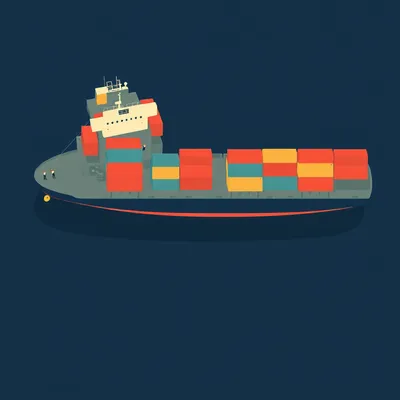
This is one of the great ironies of ocean travel. In some ways, the kayaker is actually safer in a massive swell than a medium-sized ship. A large ship is rigid. If a ship is long enough to span two wave crests, the middle of the ship can actually be suspended in the air, which puts incredible structural stress on the hull. We call that "hogging" if the middle is pushed up, or "sagging" if the ends are pushed up. Ships can literally snap in half. A kayak, however, is so small that it just sits on the surface like a piece of cork. As long as the wave isn't breaking on top of you, you just ride the surface perfectly. The real terror for a kayaker isn't the height of the wave; it is the steepness. If a wave becomes too steep, the kayak can slide down the face like a skier, and if you hit the bottom at the wrong angle, you pitch-pole—which is basically a front-flip that can destroy the boat.
Because once it turns into foam, it is no longer just energy moving through water. It is tons of water physically falling on you.
Exactly. That is a breaking wave. In the open ocean, waves break when the wind gets strong enough to literally blow the top off the wave. This usually starts happening at about fifteen to twenty knots of wind, which is a four or five on the Beaufort scale. You start seeing whitecaps. For a kayaker, that is when the "pleasant" part of the trip ends. Now you have to worry about the boat being flipped or filled with water. And remember, in the middle of the ocean, the "fetch" is infinite. Fetch is the distance the wind blows over open water. On a lake, the fetch is a few miles. In the Pacific, the fetch can be five thousand miles. That means the waves have five thousand miles to soak up energy and grow.
You mentioned earlier that Daniel's prompt isn't just a random question because it relates to renewable energy. I think that is a really important angle for twenty twenty-six. If we are looking at the middle of the ocean as a place of constant motion, how much energy are we actually talking about? Is it enough to power our civilization if we could figure out how to harvest it?
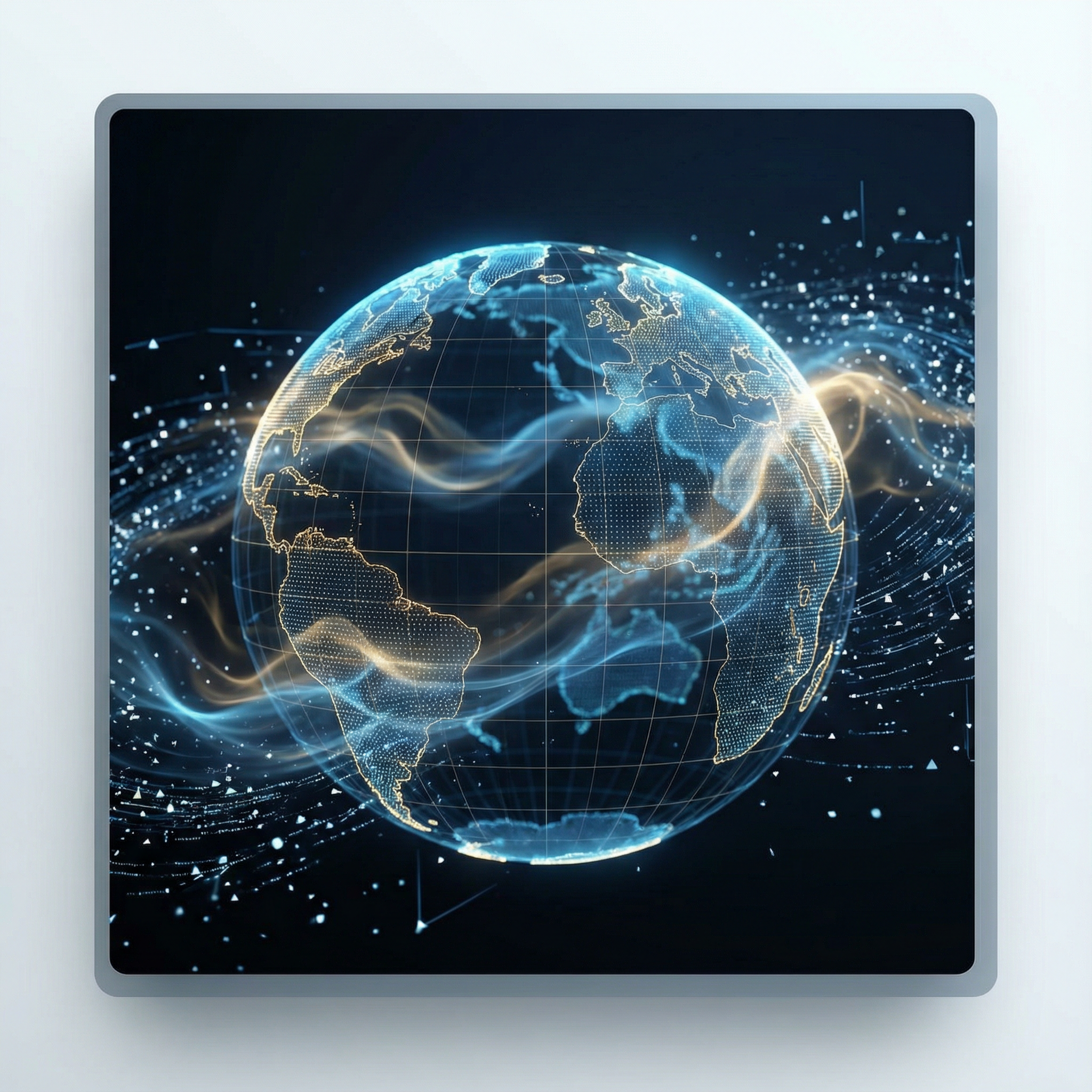
Oh, the numbers are staggering, Corn. The theoretical potential of wave energy is estimated to be around two terawatts globally. To put that in perspective, that is roughly the same as the entire world's current electricity generation capacity. As of this year, we are seeing some real breakthroughs. Companies like CorPower Ocean and Eco Wave Power have deployed commercial-scale buoys that can survive these conditions. The reason the open ocean is so attractive is that wave energy is much more "dense" than wind or solar. A wave carries energy from the wind that has been concentrated over thousands of miles and then stored in the density of the water. Water is eight hundred times denser than air. A single wave hitting a coastline can carry more energy than a whole day of wind hitting a turbine.
But the problem, I assume, is the same thing that makes it hard for the kayaker. The environment is incredibly hostile. How do you build a machine that can harvest a gentle swell but also survive a hundred-year storm with sixty-foot breaking waves?
That is the trillion-dollar question. Most wave energy prototypes in the early twenty-tens were destroyed by the very thing they were trying to harvest. It is a massive engineering challenge. You need something that is efficient at low energy states but can "go into a defensive crouch" when the big waves come. Some of the new designs we are seeing now use "tuning" technology. They can change their internal buoyancy or resistance to match the frequency of the waves, which allows them to extract maximum power in normal conditions but then "detune" and just bob harmlessly when a storm hits.
It is interesting because we usually think of the "middle of the ocean" as a wasteland. A place where nothing happens. But physically, it is one of the most active places on the planet. I want to go back to the human experience of this. Imagine you are that kayaker. You are five hundred miles from the nearest human being. What does it sound like? Is it quiet?
That is something people often get wrong. They think the ocean is silent. But the open ocean is actually quite noisy. If there is any wind at all, you have the constant hiss of the water moving past the hull—it sounds like white noise or a constant "shhhhh." You have the deep, low-frequency thrum of the swells, which you feel in your chest more than you hear in your ears. And then there is the wildlife. If you have a hydrophone, or even just put your ear against the hull of the kayak, you can hear whales singing from miles away. Sound travels four times faster in water than in air, and it travels much further. You might hear the clicking of sperm whales or the snapping sound of shrimp. It is a very busy acoustic environment.
And the light. I have read accounts from solo sailors and kayakers like Cyril Derreumaux, who paddled from California to Hawaii in twenty twenty-two. They say that at night, when the water is calm and there is bioluminescence, it feels like you are floating in outer space. The stars are reflected in the water because there is no light pollution for a thousand miles, and every time your paddle hits the surface, it sparks with neon blue light from the plankton.
That is the "pleasant" side that Daniel was asking about. There are moments of profound, almost religious beauty in the deep ocean. When the sea state is low and the sky is clear, it is the purest form of wilderness left on Earth. You are seeing the world exactly as it looked millions of years ago. There are no roads, no buildings, no lights. Just the horizon in a perfect three hundred sixty-degree circle. It can be incredibly peaceful, but it is a fragile peace.
But let's talk about the "volatile" part again. Most people have heard of rogue waves. For a long time, scientists thought rogue waves were just sailor's myths—tall tales to explain why ships disappeared. They thought the math didn't allow for a wave to be twice as big as the surrounding sea state. But then we got the Draupner wave measurement in nineteen ninety-five, and more recently, the Ucluelet wave in November twenty twenty, which was nearly sixty feet high in a sea where the other waves were only about twenty feet. How does a rogue wave even happen in the middle of the ocean?
It is a phenomenon called constructive interference. Imagine you have two different sets of swells coming from two different storms at different angles. Usually, they just pass through each other. But every once in a while, the peaks of both swells line up perfectly at the exact same spot. For a few seconds, their energy combines, and you get a wave that is significantly higher and steeper than anything around it. There is also a non-linear effect where a large wave can actually "steal" energy from the waves in front of and behind it, growing into a monster. It is like a wall of water that appears out of nowhere and then vanishes just as quickly.
If you are in a kayak and a rogue wave hits you, is that just... game over?
Not necessarily. Again, if the wave isn't breaking, you might just go up a very, very high hill and come back down. But rogue waves are often very steep, and because they are so much higher than the surrounding water, the wind often catches the top and turns them into a breaking wave. If a forty-foot wall of water breaks on a kayak, no amount of skill is going to save you. But the odds of hitting a true rogue wave are incredibly low. You are much more likely to be worn down by the constant motion and the lack of sleep. That is what really gets to people who cross oceans in small boats. You can never truly be still. Your body is constantly micro-adjusting to the motion of the water, even when you are trying to sleep in a tiny cabin that feels like a coffin.
That leads to a question about the "middle" of the ocean versus the edges. We often think the middle is the most dangerous part because it is the furthest from help. But is the water actually more volatile in the middle, or is it worse near the continental shelves?
From a purely wave-physics perspective, the edges are often more dangerous. When deep-ocean swells hit the continental shelf, the water depth suddenly shallows from maybe fifteen thousand feet to a few hundred feet. This causes the waves to compress, slow down, and grow much taller and steeper. It is called shoaling. Areas like the Bay of Biscay off France or the Agulhas Current off the tip of South Africa are famous for this. The "middle" of the ocean is actually where the waves are the most regular and predictable. It is where they have the room to be their true selves, so to speak.
Their true selves. I like that. So, in a sense, the middle of the ocean is the most "honest" part of the water. It isn't being distorted by landmasses or shallow bottoms. It is just pure energy and wind.
Exactly. And that is why it is so important for climate modeling. The way the ocean absorbs heat and carbon dioxide is heavily dependent on the surface interface. If the ocean is "volatile" and there is a lot of whitecaps and spray, it increases the surface area for gas exchange. It is like shaking a soda bottle. If it is calm, it acts more like a lid. Understanding the "middle" of the ocean is key to understanding the future of our entire planet's atmosphere. The ocean has absorbed about ninety percent of the excess heat from global warming, and most of that happens in these remote, volatile areas.
You mentioned earlier that the ocean is a reservoir of kinetic energy. I am curious about the scale of that. If we could somehow stop all the waves in the ocean, what would happen to the energy? Would the ocean just heat up?
That is a fascinating thought experiment. If you could magically freeze the motion of the waves, that kinetic energy would eventually dissipate as heat through internal friction. But it wouldn't be a lot of heat in the grand scheme of things. The ocean's thermal energy—the heat it stores from the sun—is vastly greater than its kinetic energy. However, the motion of the waves is what helps distribute that heat. Without waves and the currents they help drive, the equator would get much hotter and the poles would get much colder. The "volatility" of the ocean is actually a giant planetary cooling system. It mixes the warm surface water with the cold deep water.
So, when Daniel asks if the ocean is pleasant or volatile, the answer is that it has to be volatile for the planet to be pleasant for us.
That is a very poetic way of looking at it, Corn. Yes. The turbulence of the open ocean is a vital part of the Earth's circulatory system. Without that volatility, the land we live on would be uninhabitable.
I want to talk about the "kayak" aspect of Daniel's prompt specifically. There have been a few people who have actually done this. Aleksander Doba, the Polish explorer, crossed the Atlantic three times in a kayak. He was in his sixties and seventies when he did it. He spent months at a time in the middle of the ocean. From his accounts, it seems like the biggest challenge wasn't the "big waves," but the "small things." The salt sores from being constantly wet, the humidity that rots your gear, and the equipment breaking down.
And the psychological toll of the horizon. In the middle of the ocean, the horizon is always exactly the same distance away—about three miles if you are sitting low in a kayak. You can paddle for twelve hours, burning six thousand calories, and feel like you haven't moved an inch because there are no landmarks. It is a form of sensory deprivation. You are in a blue void. The "volatility" of the water actually becomes a welcome distraction because it gives you something to react to. The "calm" can be much more maddening. There is a reason sailors used to go crazy in the doldrums.
That is so counter-intuitive. We think we want peace and quiet, but a month of "peace and quiet" in a six-foot-wide circle of plastic might be enough to break anyone. I remember reading about "The Third Man Factor," where solo explorers in these environments start to feel like there is someone else with them in the boat, just to keep their brain from shutting down from the isolation.
There is a term for it—"sea room." Sailors always want more sea room. They want to be far away from land because land is what you hit and sink. In the middle of the ocean, you have infinite sea room. You are safe from the rocks, but you are a prisoner of the scale. You are at Point Nemo, perhaps—the pole of inaccessibility. That is the point in the ocean furthest from any land. It is in the South Pacific, and you are so far from humans that the closest people to you are often the astronauts on the International Space Station when they pass overhead.
Let's talk about the biology for a second. We think of the open ocean as a desert, but is it? If I am in that kayak, am I seeing fish and birds every day, or is it just empty water?
It is often called a "blue desert," but that is a bit of a misnomer. While there isn't as much life as there is on a coral reef, the open ocean has its own unique ecosystem. You have these massive migrations happening beneath you. Tuna, sharks, and billfish travel thousands of miles through these waters. And for a kayaker, you often become a "FAD"—a Fish Aggregating Device. Small fish like to hide under anything floating in the water to avoid predators from above. So, a kayak will often pick up a "following" of small fish, like mahi-mahi or pilot fish. These then attract larger fish, which then attract birds. You become a moving oasis in the desert.
So you are never truly alone. You have your own little traveling circus of marine life.
Exactly. And that can be one of the most pleasant parts. Having a pod of dolphins decide to surf your bow wave for an hour, five hundred miles from land, must be one of the most incredible experiences a human can have. They aren't there because they want food; they are there because they are curious and they like the energy of the wave you are creating. Even a small kayak creates a pressure wave that dolphins can feel.
It is amazing to think that even in a kayak, you are creating enough of a wave for a dolphin to surf. It goes back to what you said about the density of water. Even a small movement in such a dense medium carries a lot of information and energy.
It does. And that brings us back to Daniel's point about energy generation. One of the reasons wave energy is so hard to capture is that the energy is "low frequency." It is a slow, powerful push rather than the fast, light spin of a wind turbine. Converting that slow, massive force into the high-speed rotation needed for a generator is a massive mechanical challenge. But the sheer amount of force is what makes it so tempting. If you could capture just one percent of the wave energy hitting the coast of the United States, you could power millions of homes. In twenty twenty-six, we are finally seeing the first "wave farms" being connected to the grid in places like Scotland and Portugal.
I wonder if we will ever see "wave farms" in the middle of the ocean, far away from the coast. Would that be easier because the waves are more regular?
It would be more consistent, but the transmission problem is the killer. How do you get that electricity back to land? You would need thousands of miles of undersea cables, which are incredibly expensive and lose energy over distance. Some people have suggested using that energy on-site to create hydrogen fuel through electrolysis or to power massive floating data centers. Imagine the "middle of the ocean" becoming the world's battery or its server farm, cooled by the very water that powers it.
That is a wild vision of the future. The "blue desert" becoming the industrial heart of the world. But I think I prefer the version where it stays a wilderness. There is something comforting about knowing there is a place on Earth that is so volatile and so vast that we can't easily tame it.
I agree. There is a certain humility that comes from looking at a map of the Pacific and realizing that you could fit all of the Earth's landmasses into that one ocean and still have room left over. It is the dominant feature of our planet, and yet most of us will never see the "true" version of it. We only see the edges, the places where the ocean is dying against the sand.
So, to answer Daniel's question: the middle of the ocean is both. It is a place of terrifying volatility where waves can grow to the size of office buildings, but it is also a place of profound, mirror-like calm. It is a place where you are never alone but always isolated. It is a massive engine of energy that we are only just beginning to understand.
And for the person in the kayak, it is the ultimate test of both physical endurance and mental fortitude. It is a journey through a world that doesn't care if you are there or not. The waves will keep rolling, the wind will keep blowing, and the ocean will keep breathing, whether there is a human there to witness it or not. It is the ultimate "weird prompt" because the answer is as deep as the water itself.
I think that is a perfect place to start wrapping this up. This has been such a deep dive, Herman. I feel like I have a much better handle on why the "middle of the ocean" is such a unique physical space. It’s not just a big lake; it’s a different state of being for the planet.
It is one of those topics where the more you know, the more mysterious it becomes. The physics are clear—we can calculate the period, the amplitude, and the frequency—but the scale is almost impossible to wrap your head around until you are out there, three hundred miles from land, looking up at a wall of blue water.
Well, if any of our listeners have been out in the middle of the ocean in a small boat—maybe you’ve done a solo row or a long-distance kayak—we would love to hear from you. What was the most surprising thing about the experience? Was it the silence or the noise? The calm or the chaos? You can reach us at show at my weird prompts dot com.
And if you are enjoying these explorations, please do leave us a review on your favorite podcast app. It really does help other people find the show and join our little community of curious minds. We’ve seen a lot of new listeners from the maritime community lately, and we love having you here.
Definitely. We appreciate every single one of you who listens. You can find all of our past episodes—all six hundred and seventy-four of them—at my weird prompts dot com. We have a search bar there if you want to see if we have covered a specific topic before, from the physics of sand to the chemistry of the upper atmosphere.
And you can also find our RSS feed there if you want to subscribe directly and never miss an episode.
Alright, Herman, I think I am ready to head back to solid ground for a bit. My inner ear is starting to get confused just talking about all this motion.
Me too, Corn. Although, I might go look at some more wave energy research papers tonight. There is some really interesting work being done with flexible membranes that mimic the way kelp moves in the water to harvest energy without being destroyed by the force of the waves.
Of course you are. Never stop learning, Herman Poppleberry.
Never.
Thanks for listening, everyone. This has been My Weird Prompts. We will be back soon with another deep dive into whatever Daniel or the rest of you send our way.
Until next time, stay curious and watch out for those rogue waves.
Goodbye!
Goodbye!