You know, Herman, I was thinking about that drive Daniel was mentioning in his prompt today. That stretch along Route ten near the Egyptian border. It really is one of the most surreal landscapes on the planet. You can drive for an hour and see absolutely nothing but prehistoric rock formations and the occasional military outpost. It makes you realize just how lopsided the population distribution in this country really is.

It’s staggering when you look at the raw data, Corn. And by the way, for those just tuning in, I am Herman Poppleberry. To Daniel’s point, Israel is roughly twenty-two thousand square kilometers. That is about the size of New Jersey. But while New Jersey is fairly evenly spread out, Israel has this incredible density in the center. We are talking about nearly ten million people now in early twenty-six, and the vast majority are squeezed into that thin coastal strip between Gedera and Hadera, or up here with us in the Jerusalem hills.
And that is exactly what Daniel was poking at. He mentioned the Central Bureau of Statistics and how they define a city. It is true, they have a very low threshold. Sometimes a place with only twenty thousand people is technically a city here. But when we talk about a vibrant, major metropolis, we are really talking about something else entirely. We are talking about the dream David Ben-Gurion had. He famously said that the future of Israel lies in the Negev. He wanted to see a million people living in the desert.
He did, and he led by example, moving to Kibbutz Sde Boker. But here we are, decades later, and while Beersheba has grown into a significant high-tech and medical hub, the deep desert remains largely as it was. Daniel’s question is the right one: what would it actually take from an infrastructure perspective to build a brand-new, vibrant city from scratch in the middle of the Negev today? We are not just talking about a few apartment blocks. We are talking about the foundations of a modern civilization in a place where nature is actively trying to keep you out.
It is a massive engineering challenge. I think the first place we have to start is the most obvious one: water. You cannot have a city without it, and the Negev gets almost no rainfall. Historically, Israel solved this with the National Water Carrier in the nineteen sixties, which pumped water from the Sea of Galilee down south. But that system is basically at capacity, and the Galilee isn’t a bottomless well. If we want to build a new city of, say, half a million people in the middle of the desert in twenty-six, where does that water come from?
It has to come from the sea, Corn. Desalination is the only viable path. We already get about eighty percent of our domestic water from desalination plants along the Mediterranean coast, like the ones in Sorek and Hadera. But if you build a city in the deep Negev, you have to transport that water. You are talking about massive pipelines running sixty, seventy, or a hundred kilometers inland, and more importantly, you are pumping it uphill. The elevation gain from the coast to some parts of the Negev is hundreds of meters. The energy requirement just to move the water is astronomical.
That brings up a great point about the second-order effects. If you want water, you need energy. If you want a green, sustainable city in the desert, you have to look at solar. We have plenty of sun in the Negev, but as we discussed back in episode two hundred nineteen when we talked about industrial-scale infrastructure, solar isn’t just about putting panels in the sand. You need massive battery storage to keep the city running at night. You need a smart grid that can handle the fluctuations.
Exactly. And you have to consider the dust. The Negev is prone to massive sandstorms. If your entire city’s power depends on solar arrays, and a sandstorm covers them in a layer of silt, your power output drops to near zero instantly. You would need robotic cleaning systems, perhaps similar to the computer-use agents we talked about in episode two hundred thirteen, to constantly maintain those panels. So, right off the bat, the foundation of this city isn’t concrete; it’s a high-tech loop of desalination and solar storage.
Let’s talk about the physical foundations for a second. Daniel mentioned his grandfather was a traveling salesperson for electricity poles. That is a great image because it reminds us that before the first house is built, you need the grid. In the desert, the soil is often loess or sandy. It is not as stable as the limestone we have here in Jerusalem. Building high-density apartment buildings requires deep pilings and a different kind of structural engineering to deal with the extreme temperature shifts. The desert expands and contracts significantly between the heat of the day and the freezing nights.
That thermal stress is brutal on materials. Roads crack faster, pipes expand and contract, and glass needs to be incredibly high-spec to handle the ultraviolet radiation. But I want to go back to something Daniel asked about the Mandate period. He wondered how much of the current infrastructure was already in place back then. The answer is: almost none of it in the south. The British Mandate mostly focused on the railway lines between Cairo and Haifa and the ports. The Negev was essentially a blank map to them. Everything we see there now, from the roads to the power lines, was built from scratch by the state.
Which is why building a new city today would be so much more complex. In the nineteen fifties, you could just build a few rows of concrete blocks, call it a development town, and move people in. That doesn’t work anymore. People won’t move to the desert for a concrete block. They want the Tel Aviv lifestyle. They want high-speed internet, cultural centers, and specialized jobs. So, the infrastructure has to include a massive connectivity play.
Right. You cannot have a vibrant city if it is an island. You need a high-speed rail link that gets you to Tel Aviv in forty minutes. If you look at the current plans for the Israel twenty forty and twenty fifty projects, they are talking about extending the rail line all the way to Eilat. A new city in the middle of the Negev would need to be a major stop on that line. Without that physical connection to the rest of the country’s economy, the city just becomes a subsidized dormitory.
It is the chicken and the egg problem. You need the people to justify the train, but you need the train to attract the people. And then there is the question of why. Why would someone leave a vibrant place like Jerusalem or the tech hub of Herzliya to live in a new city in the sand? It has to be more than just cheap housing. It has to be a specialized economy. Maybe this new city becomes the world capital of desert tech or renewable energy research.
That is the only way it works. You create a cluster. Think about what happened in Beersheba with the relocation of the military’s intelligence units. That brought thousands of high-quality jobs and their families to the south. A new city would need a similar anchor. Maybe it’s a massive data center hub because you have the space and the solar power, or a specialized aerospace testing zone. You build the infrastructure for the industry first, and the city grows around it.
I love that idea, but let’s pause there for a moment. We need to take a quick break for our sponsors.
Larry: Are you tired of the sun constantly trying to ruin your day? Introducing the Solar-Shield Hat-brella! It is not just a hat, and it is not just an umbrella. It is a proprietary, carbon-fiber-lined head-tent that creates a personal microclimate of exactly sixty-eight degrees Fahrenheit, regardless of the ambient temperature. Using our patented "Sand-Repel" coating, the Solar-Shield Hat-brella ensures that not a single grain of desert grit will ever touch your eyebrows again. Perfect for hiking, waiting for the bus, or standing in the middle of a barren wasteland dreaming of urban development. Order now and receive a free vial of "Desert-Scent" cologne, which smells faintly of old maps and ambition. Solar-Shield Hat-brella – because the sky is the enemy! BUY NOW!
Thanks, Larry. I think I will stick to my regular sun hat for now. Anyway, Herman, before the break we were talking about the anchor industries. But let’s get into the nitty-gritty of urban planning for a desert city. If we are starting from a blank slate in twenty-six, we shouldn’t be building like we did in the eighties.
Absolutely not. The biggest mistake in early desert towns was trying to copy European urban design. They built wide boulevards and big open squares. In the Negev, that is a disaster. Wide streets act as heat sinks and wind tunnels for sand. A truly vibrant desert city needs to be dense and shaded. We should be looking at ancient Middle Eastern architecture but with twenty-first-century materials. Think narrow, winding streets that provide natural shade, or "mashrabiya" screens that allow airflow while blocking the sun.
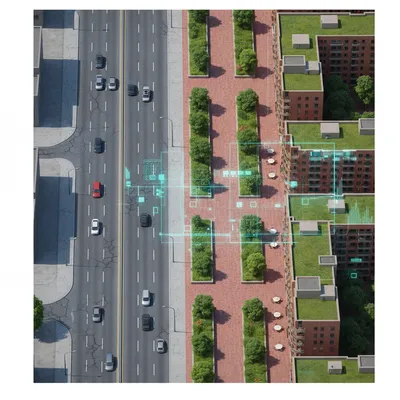
It is funny you say that because it connects back to the "war on the screen" we discussed in episode two hundred fifty-two. If we are building a city from scratch, we can integrate the digital layer into the physical environment. Imagine a city where the buildings themselves are smart. They adjust their orientation or their shading based on real-time weather data. Or a city designed entirely around autonomous transport, so you don’t need massive, hot parking lots. You could have a much more walkable, livable environment even in forty-degree heat.
That is the dream, isn’t it? But there is a massive hurdle we haven’t mentioned yet: the environment. The Negev isn’t actually an empty space. It is a fragile ecosystem. When you build a city for five hundred thousand people, you are destroying habitats. You are changing the drainage patterns of the "wadis," the dry riverbeds that flash flood in the winter. The infrastructure has to include incredibly sophisticated flood management. If you pave over the desert, the water has nowhere to go when those rare but intense rains hit.
Right, and we have seen how devastating those flash floods can be. So, you are looking at a city built on stilts or with massive underground reservoirs to capture that water. It is almost like building a space station on Earth. You have to be entirely self-contained. Waste management is another one. You can’t just have a landfill in the middle of the desert; the wind will carry trash for miles. You need a closed-loop system, where every bit of waste is recycled or turned into energy on-site.
It’s the ultimate "circular city" challenge. And to Daniel’s point about the population density, if we actually achieved this, it would fundamentally change the character of Israel. Right now, the country feels like a very small, crowded room. If you open up the south with a vibrant, high-tech metropolis, the country suddenly feels much larger. It shifts the center of gravity. But I wonder, Corn, do you think people actually want that? Or do we just love the idea of the desert as this "other" place where we go to hike and clear our heads?
That is a deep question. There is a certain romanticism to the emptiness of the Negev. But when you look at the housing prices in Tel Aviv and even here in Jerusalem, the economic reality is forcing the issue. People need somewhere to live. The problem is that historically, the "periphery" has been treated as a second-class option. To make a new city work, it has to be a first-class destination from day one. It can’t be "the cheap place in the desert." It has to be "the cool, futuristic city where the best jobs are."
Which brings us back to the role of the government and the "foundations" Daniel mentioned. This isn’t something the private sector can do alone. You need a massive, multi-decade commitment of state resources. You need to build the hospital, the university, and the theater before the people even arrive. It is a huge risk. If you build it and they don't come, you’ve spent billions on a ghost town. But if you don't build the high-end infrastructure first, the people definitely won't come.
It reminds me of the "New Towns" movement in the United Kingdom after World War Two, but on steroids. Those were built to relieve the pressure on London. Some worked, some didn't. The ones that worked were the ones that managed to create their own identity and their own economy. In Israel, we have the "Development Towns" like Dimona or Yeruham. They were built with good intentions, but for a long time, they lacked the high-level infrastructure to really compete with the center.
And that is the cautionary tale. If you just build housing, you aren’t building a city. You are building a suburb of nowhere. To fulfill Ben-Gurion’s dream, you have to build a soul. And that comes from culture. So, the infrastructure needs to include museums, parks that use recycled water, and vibrant public spaces that are actually usable in the heat. Maybe the city is partially underground? Like the "low-line" projects we see in some cities, where you use the natural insulation of the earth to stay cool.
Imagine a city of "sunken" courtyards. You walk through the city at a level five meters below the desert floor, where it is naturally ten degrees cooler, and the "roof" of the city is a park made of solar panels and greenery. That would be a world-class architectural marvel. People would move there just to be part of that experiment.
Now you are talking! That is the kind of vision that actually moves the needle. But let’s get practical for a second. If we were to start today, in January twenty-six, what is the first step? I’d say it’s the legal and planning infrastructure. In Israel, getting a building permit can take a decade. To build a whole city, you need a special "National Infrastructure Committee" with the power to bypass the usual red tape. You need a master plan that looks fifty years ahead.
And you need to involve the people who already live in the Negev. We can’t forget that there are Bedouin communities and smaller kibbutzim already there. Any new city has to be integrated with the existing population, not just dropped on top of them like a spaceship. That social infrastructure is just as important as the water pipes. If the new city creates a "dual-class" society in the desert, it will fail.
That is a crucial point. It has to be an engine of prosperity for the whole region. It should provide the high-level medical care and education that the smaller desert communities currently have to travel to Beersheba or the center for. It becomes a regional hub. But I also think about the "digital fingerprinting" we discussed in episode two hundred fifty. A new city is a chance to build a "data-first" urban environment. We could track every drop of water, every kilowatt of power, and optimize the city in real-time.
It would be the ultimate "Smart City." But we have to be careful not to make it feel sterile. One of the things Daniel loves about Jerusalem is its grit and its history. You can’t manufacture that. A new city can feel very "plastic" if you aren’t careful. You need to leave room for the city to grow organically. You need "loose" spaces where people can start small businesses or create art without everything being pre-planned by a committee.
That is the hardest part for planners. They want to control everything. But the best parts of Tel Aviv or Jerusalem are the parts that the planners didn’t expect. So, maybe the infrastructure should be "modular." You provide the core—the water, the power, the transport—and then you let the neighborhoods develop their own character over time.
I like that. Provide the "skeleton" and let the city grow its own "skin." So, if we are looking at takeaways for our listeners, what can we learn from this thought experiment? First, that "density" isn’t just a numbers game; it’s a design challenge. Israel is dense because we haven't yet mastered the infrastructure of the desert.
Second, that the "foundations" of a city in twenty-six are no longer just stone and mortar. They are data, energy storage, and water reclamation. If you solve those three, you can build a city anywhere—even on Mars, which isn't that much different from the deep Negev in some ways.
And third, that connectivity is the lifeblood of a modern city. A city that isn't connected to the global economy via high-speed transport and high-speed data is just a collection of buildings. To make the Negev "bloom," we don't just need water; we need "bandwidth" in every sense of the word.
Well said, Corn. It really makes you look at those empty spaces on the map differently. They aren't just "nothing"; they are a massive opportunity, provided we have the courage and the engineering "chutzpah" to actually build there.
I think Daniel’s grandfather would be proud to see those new electricity poles going up. It’s a continuation of that same pioneering spirit, just with better technology.
And hopefully better hats, thanks to Larry.
Hopefully not! Anyway, this has been a fascinating dive into land use. It’s one of those topics that seems dry—pun intended—until you realize it’s actually about how we choose to live together as a society.
Exactly. It’s about the future of our home. And speaking of our home, if you’ve been enjoying these deep dives into the weird prompts Daniel sends our way, we’d really appreciate it if you could leave us a review on Spotify or whatever podcast app you use. It genuinely helps other curious minds find the show.
It really does. We love seeing the community grow. You can find all our past episodes and a way to get in touch at our website, myweirdprompts.com. We are also on Spotify, so make sure to follow us there for the latest episodes every week.
Thanks for joining us for episode two hundred fifty-five. It’s been a blast as always.
Until next time, stay curious and keep exploring those rabbit holes. This has been My Weird Prompts.
I’m Herman Poppleberry, and we’ll talk to you next week!
Bye everyone!
Bye!