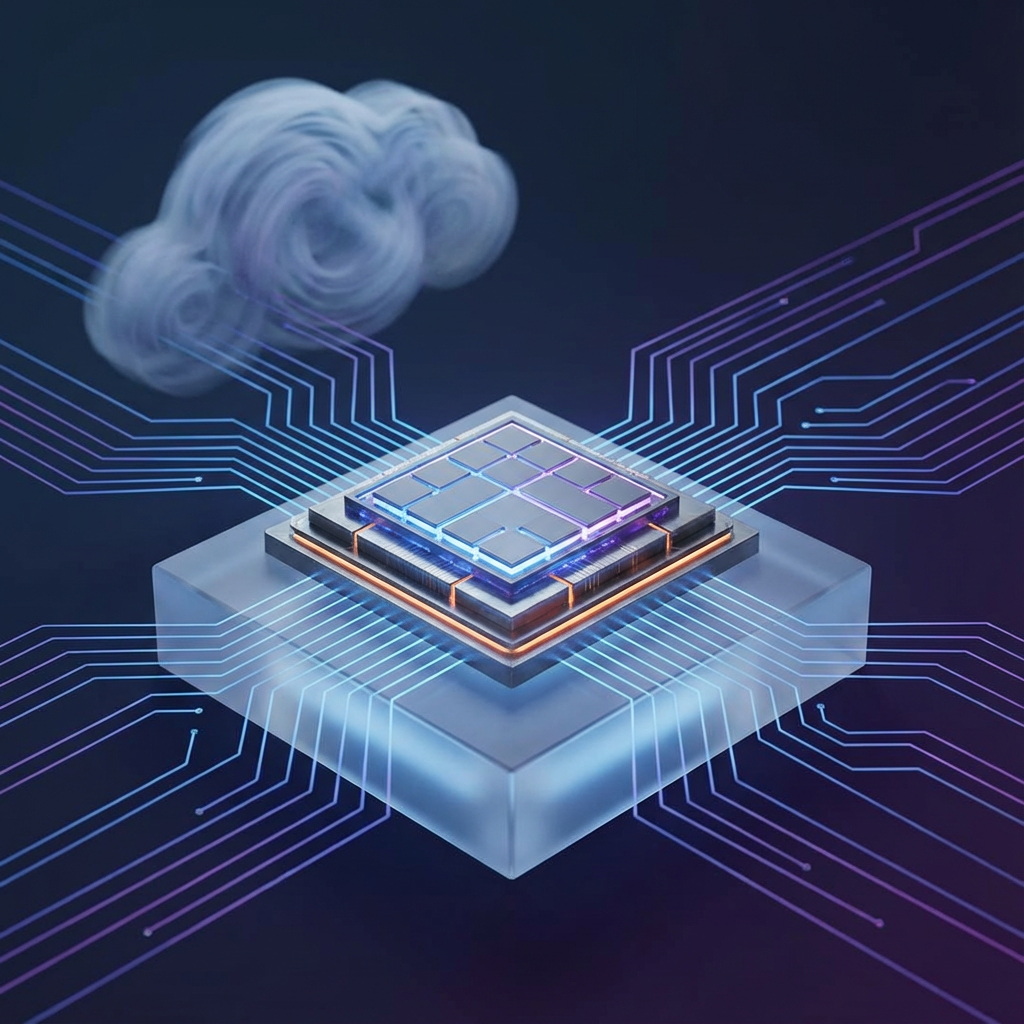
The Dawn of Local AI: Unpacking the "AI Supercomputer on Your Desk"
In a recent episode of "My Weird Prompts," hosts Corn and Herman delved into a fascinating development in artificial intelligence: the emergence of powerful AI supercomputers capable of operating locally, even from a desktop. Sparked by their producer Daniel Rosehill’s discovery of NVIDIA’s DGX Spark – an AI supercomputer that can fit on a desk – the discussion explored the nuances, drivers, and implications of this technological shift. While the phrase "AI supercomputer on your desk" evokes images straight out of science fiction, the hosts meticulously broke down what this truly means for the future of AI, distinguishing between consumer dreams and enterprise realities.
Inference vs. Training: A Crucial Distinction
The conversation began by clarifying a fundamental aspect of AI: the difference between inference and training. Herman explained that devices like the DGX Spark, capable of running models up to 200 billion parameters, are primarily "inference machines." This means they excel at running already-trained AI models to make predictions or generate content. Training these colossal models, especially from scratch, still demands far more massive resources, typically found in large cloud data centers or specialized facilities.
Corn initially pondered if this meant every home user would soon have such a device. Herman quickly introduced nuance, stating that while appealing, a full-blown AI supercomputer isn't destined for every desk. For casual users generating images or drafting emails, cloud services remain the most convenient and cost-effective solution. The true impact of local AI, it was emphasized, lies in specialized applications rather than a wholesale replacement of existing cloud AI services like ChatGPT or Midjourney for everyday tasks.
Why Local AI Now? The Driving Forces
The podcast highlighted three primary drivers pushing the demand for local AI capabilities, especially for enterprise-level applications: API costs, latency, and data privacy/security.
Prohibitive API Costs: For individuals and businesses engaged in highly iterative or complex AI tasks, such as continuous video generation or extensive creative workflows, cloud API costs can quickly escalate. Daniel Rosehill’s personal exploration into image-to-video generation served as a perfect example of how what seems like a casual experiment can lead to substantial cloud bills. For larger organizations with high-volume, continuous processing needs, these costs become a significant factor in justifying a local hardware investment.
Critical Latency Demands: Perhaps the most compelling argument for local AI centers on latency. Many real-time applications simply cannot afford the milliseconds of delay incurred by data round-trips to remote cloud servers. Herman illustrated this with several impactful examples:
- Autonomous Vehicles: Instantaneous processing of sensor data is non-negotiable for safety.
- Real-time Fraud Detection: Financial institutions need immediate analysis to prevent losses.
- Factory Floor Monitoring: AI systems detecting defects in manufacturing must provide immediate feedback to prevent the production of thousands of faulty units.
- Healthcare Diagnostics: Rapid processing of medical scans at the point of care can lead to faster diagnoses and better patient outcomes.
In these scenarios, every millisecond counts, making local processing capability a strategic imperative.
Uncompromising Data Privacy and Security: The third critical factor is data privacy and security. Many organizations deal with highly sensitive, proprietary, or classified information that cannot, under any circumstances, leave their physical premises. Herman emphasized that for corporate data, classified government information, or patient health records, allowing data to reside or even transiently pass through public cloud infrastructure is an unacceptable risk. Local AI, especially in "air-gapped" environments, offers unparalleled control and protection.
Beyond a Desktop PC: The Holistic System Requirements
The hosts quickly moved past the misconception that an AI supercomputer on a desk is merely a powerful graphics card plugged into a standard PC. Herman detailed the complex, holistic system requirements for true enterprise-grade local AI:
- Power Systems: High-performance GPUs demand significant electricity, necessitating specialized power supplies and potentially dedicated electrical circuits.
- Advanced Cooling: These chips generate immense heat, requiring sophisticated liquid or air cooling systems to maintain optimal performance and longevity, preventing thermal throttling.
- High-Bandwidth Interconnects: Within the system, specialized technologies like NVIDIA's NVLink are crucial to ensure ultra-fast data transfer between multiple GPUs, enabling them to work seamlessly together on massive datasets.
- Optimized Software Stack: Beyond hardware, a robust software environment is essential, including optimized drivers, AI frameworks like TensorFlow or PyTorch, and orchestration tools to manage complex deep learning workloads.
In essence, these "desktop supercomputers" are mini data centers in a box, demanding specialized expertise for deployment and maintenance, far beyond the scope of a typical consumer electronics purchase.
Who Needs It? The Enterprise Landscape
The discussion clarified that while the "on your desk" concept might initially appeal to consumers, the primary beneficiaries are enterprises and government agencies. This isn't an off-the-shelf purchase but a strategic infrastructure investment.
Major enterprise players like HPE, Dell Technologies, and Lenovo offer specialized AI servers, often incorporating NVIDIA GPUs. However, for the most bespoke, air-gapped, or ultra-high-performance local AI setups, organizations turn to specialized system integrators. These niche companies possess deep expertise in custom-building and deploying systems tailored to specific needs, understanding the intricacies of power delivery, advanced cooling, network topology for massive data throughput, and cybersecurity for isolated environments.
Herman delved into the concept of "air-gapped AI," explaining it as a system physically isolated from unsecured networks like the public internet. This level of isolation is paramount for defense contractors, government agencies handling classified information, critical infrastructure operators, and financial institutions safeguarding sensitive trading algorithms. For these entities, sacrificing the convenience of cloud access for ultimate security and control is a non-negotiable trade-off.
The ROI of Local AI: Risk Mitigation and New Capabilities
Assessing the Return on Investment (ROI) for local AI is complex. It's not always about direct cost savings on a cloud bill. Instead, the ROI often manifests in:
- Risk Mitigation: Preventing data breaches, protecting sensitive intellectual property.
- Compliance: Meeting stringent regulatory requirements for data handling.
- Operational Efficiency: Enabling real-time decisions that optimize processes, like preventing manufacturing defects.
- Unlocking New Capabilities: Allowing for applications previously impossible due to latency or security constraints, such as edge AI deployments in remote locations or smart city sensors.
These benefits, though not always quantifiable in direct monetary terms, represent immense strategic value that far outweighs the significant upfront investment in hardware and specialized personnel.
Conclusion: A Strategic Shift
While a caller named Jim from Ohio voiced common skepticism, framing the discussion as "making a mountain out of a molehill," the podcast powerfully articulated that the "AI supercomputer on your desk" isn't a consumer gimmick. It represents a significant and strategic shift in the AI landscape, driven by tangible enterprise needs. For organizations where data integrity, real-time decision-making, and unparalleled security are paramount, local AI offers a transformative solution, moving powerful processing capabilities to the edge where they can have the greatest impact. This evolution signifies a future where AI's most critical work is increasingly done close to the data, revolutionizing industries and enabling new frontiers of innovation.