Alright, today's prompt from Daniel is about Moonshot AI's Kimi K2 Thinking model. He wants us to look at its advantages and figure out where it actually shines.

Herman Poppleberry here. And this is a fantastic topic because it's not just another incremental model release. This feels like a fundamental shift in architecture. It's moving from just predicting the next token to actually doing internal work before it speaks.
Right, the whole 'thinking' branding. It sounds like a marketing gimmick, but from what I've been reading, it's architecturally distinct. It's not just a slower version of a normal large language model.
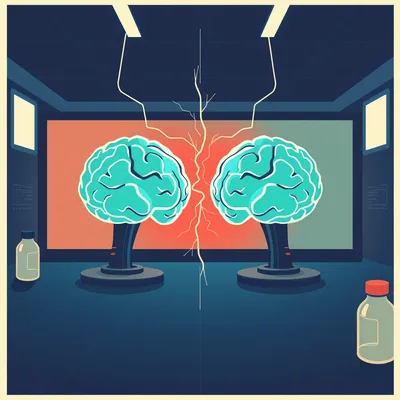
It's not. And that's the key misconception to bust right away. Standard autoregressive models, your GPTs, your Claudes, they're generating output token by token, based on statistical probabilities from their training. The Kimi K2 Thinking model introduces a deliberate, internal reasoning phase.
So it pauses, thinks, and then answers. Like a human who doesn't just blurt out the first thing that comes to mind.
Exactly that. But the mechanism is fascinating. It's not just a longer processing time; it's generating what researchers call an internal 'reasoning trace.' A hidden chain of thought that the user doesn't see, which it then uses to verify and refine its final, external output.
By the way, fun fact—DeepSeek v3.2 is writing our script today. But back to K2. This sounds computationally expensive. What's the trade-off? You get better answers, but you wait longer.
That's precisely the trade-off. The latency increases because you're essentially running the model twice—once to think, once to speak. But the quality leap, particularly in tasks where logical consistency is paramount, can be dramatic. It's the difference between a student guessing on a math test and a student showing their work.
I hate to be the one to ask, but… is this actually new? Chain-of-thought prompting has been around for ages. You just ask the model to "think step by step."
It's a brilliant question, and the distinction is crucial. With standard CoT prompting, you're asking the model to output its reasoning steps. That uses up context window, it's visible to the user, and the model can still make a mistake in that visible chain. The K2 architecture bakes the reasoning into the model's internal process. The 'thinking' is hidden, it's more efficient computationally once integrated, and it allows for a kind of internal cross-checking that an outputted chain doesn't necessarily have.
So it's like the difference between a chef writing down a recipe as they cook for a critic to see, versus a chef mentally tasting and adjusting the seasoning in their head before the plate leaves the kitchen.
That's… actually a decent analogy, which I know we try to avoid. But yes. The hidden process allows for revision. The model can hit a logical dead-end in its internal trace and backtrack, something you can't easily do when you're already committing tokens to the output.
Let's make that even more concrete. Say you ask a standard model and a K2 model to solve a logic puzzle: "Alice is taller than Bob. Carol is shorter than Bob. Who is the tallest?" A standard model might pattern-match and spit out "Alice" instantly.
Right, and it could be wrong if the puzzle is trickier. But a K2 model, in its thinking phase, would internally construct a mental model. It might assign symbolic heights, create inequalities: A > B, C < B. It would then deduce A > B > C, then output "Alice." The key is, if it messed up the deduction internally—say, it temporarily thought C > B—it would hit inconsistency and re-run that logic before ever speaking.
That internal sandbox for trial and error is the real magic. It’s not just thinking; it’s thinking iteratively.
Precisely. And that leads to fewer of those frustrating moments where a model confidently states something that is logically incoherent halfway through its own sentence.
Let's get into the nitty-gritty. How does this actually manifest in performance? Daniel's notes mentioned it's topping benchmarks, even against the big proprietary models.
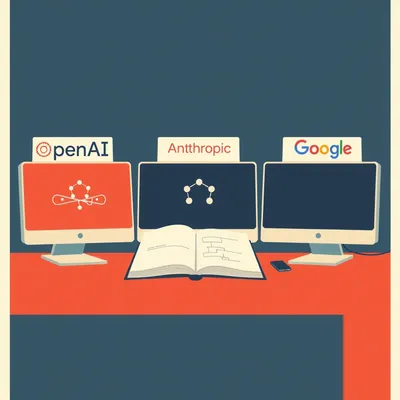
The benchmarks are striking. On things like LiveCodeBench, which tests coding performance on realistic, evolving problems, and on MATH, which is multi-step math reasoning, K2 Thinking isn't just competitive with GPT-5 or Claude Sonnet 4.5—it's beating them. And this is an open-weights model. That's a massive shift.
Open-weights meaning the model weights are publicly available. Anyone can download and run it, fine-tune it, inspect it.
Correct. This isn't an API call to a black box in the cloud. This is a model you can theoretically run on your own infrastructure, which for certain sectors and use cases is a game-changer for control, cost, and privacy. But the real story is that the open-source frontier is now matching, and in some cases exceeding, the closed, proprietary frontier on raw capability for specific tasks.
What's powering this leap? Is it just more compute, or is the 'thinking' architecture itself the secret sauce?
It's the architecture, combined with very smart training. The post-training phase for K2 Thinking specifically optimized for this internal deliberation. They're essentially teaching the model to use its own internal 'scratchpad' effectively. It's a move from what some call 'System 1' thinking—fast, intuitive, pattern-matching—towards 'System 2'—slow, deliberate, logical.
And that has huge implications for where these models fail. Hallucinations, logical inconsistencies, getting lost in multi-step problems.
A standard model might see a complex physics problem, pattern-match to a similar-looking problem it trained on, and spit out a plausible but wrong answer. K2, in its thinking phase, has to internally derive the steps. If step three doesn't follow from step two, it gets stuck. That failure mode is actually a feature—it prevents the model from confidently outputting nonsense.
Can you give us a case study of that in action? Something from the research papers?
Sure. There was a notable test on a dataset called "ProofWriter," which involves logical deduction through multiple layers of if-then statements. Standard models would often shortcut and give an answer that seemed right based on surface features. The K2 model, because its thinking process forces explicit deduction, showed a much higher rate of correctly navigating through all the logical layers. Its internal trace would literally map out the dependency graph before answering.
So the advantage is accuracy, especially in complex logic. But you pay for it in time and compute. That naturally leads us to the big question: what is this thing actually for? It's not your go-to for a quick chat.
No, it's not. And that's the critical takeaway. Kimi K2 Thinking is a specialist tool, not a general-purpose replacement. Its most suitable workloads are 'deep work' tasks where correctness and reasoning depth are more valuable than speed.
Give me the top of the list.
Number one, complex coding and software engineering. This is where it truly shines. We're talking about debugging a sprawling, legacy codebase where the bug symptoms are in one module but the root cause is three layers deep. We're talking about refactoring a multi-file project, where you need to understand the dependencies and interfaces between dozens of classes. The model's ability to maintain a coherent, long-horizon chain of thought is paramount.
Daniel's notes highlighted that it can handle hundreds of sequential tool calls. That's an agentic workflow—automating a complex series of actions.
Right. Imagine giving it a goal: "Migrate this Django backend from Python three seven to three eleven and ensure all deprecated libraries are replaced." That's not one prompt; that's a project. It involves analyzing the current code, checking compatibility, writing new code, testing, iterating. K2's internal reasoning allows it to keep the master plan coherent across what could be two or three hundred discrete steps without losing the plot.
It’s like having a junior developer who can hold an incredibly complex task in their head without constant supervision. But how does that compare to just breaking the task down into smaller prompts for a faster model?
Great question. You could do that, but you, the human, become the project manager, constantly feeding it the next micro-step and re-injecting context. With K2, you define the high-level goal, and its internal reasoning acts as that project manager. It reduces the cognitive overhead and context-switching for the human. It’s the difference between directing every single move of a chess piece versus telling a grandmaster, “Win this endgame.”
Workload number two?
Scientific research and technical analysis. Literature reviews, where you need to synthesize findings from dozens of papers, extract hypotheses, and identify contradictions. Or data science workflows where you're not just writing a script, but designing an entire analysis pipeline, choosing the right statistical tests, interpreting results. The factual precision and logical rigor matter more than shaving milliseconds off the response time.
I can see that. For instance, asking it to “Review these 20 clinical trial abstracts and list all reported adverse effects for Drug X, noting any correlations with dosage.” That requires extracting, comparing, and synthesizing, not just regurgitating.
And a fun fact here: the internal reasoning trace in such tasks might resemble a researcher's own notes—creating a mental table of studies, dosages, and outcomes, looking for patterns, then formulating the answer. That’s a qualitatively different process than just sequentially answering “What does paper 1 say? What does paper 2 say?”
And the third major category?
Strategic planning and complex decision support. Business scenario modeling, risk assessment for a new product launch, regulatory compliance analysis. These are tasks with many moving parts, where the chain of reasoning is the deliverable. You need to see how assumption A leads to implication B, which creates risk C. A fast-talking model might jump to a conclusion; a thinking model is forced to walk through the logic.
So you could prompt it with, “We’re launching Product Y in the EU and California. Map the key GDPR and CCPA compliance requirements, identify any conflicts between them, and propose a data handling architecture that satisfies both.” That’s a mini-project.
Precisely. And the model would have to internally reason about legal texts, technical constraints, and potential conflicts before outputting a coherent plan. It wouldn’t just list the regulations; it would perform the synthesis.
This starts to paint a picture of the developer or knowledge worker of the near future. You don't have one AI assistant. You have a toolbox. You reach for the fast, chat-optimized model for brainstorming and quick Q and A. But when you have a serious, deep, complicated problem that requires rigor, you spin up the thinking model.
That's the ecosystem. And the fact that K2 is open-weights makes this even more powerful. Companies can take this model, fine-tune it on their own proprietary codebase or their internal research documents, and create a specialist that knows their domain inside and out, running securely within their own walls.
Let's talk about the second-order effects, because this is where it gets really interesting for me. If the thinking model's process is hidden, how does a developer trust it? With chain-of-thought prompting, at least you could see the model's work, even if it was wrong.
A fantastic point, and it touches on a major debate in AI alignment: transparency versus performance. The hidden reasoning is more efficient and can lead to better outcomes, but it's a black box within a black box. Moonshot and other labs are working on 'scratchpad' features where you can optionally expose some of that internal trace for debugging.
But fundamentally, it changes the relationship. You're not collaborating with the model step-by-step as much as you are giving it a complex goal and trusting its internal process to arrive at a correct solution. It becomes more of an autonomous agent.
Which is why the benchmarking on those long-horizon agent tasks is so significant. It's demonstrating reliability over extended operations. This isn't just about answering a question better; it's about reliably executing a multi-stage project.
What about the limitations? We've covered the latency. What else?
The computational cost is higher. Running that internal reasoning trace requires more FLOPS per output token. So it's more expensive to run, both in time and in money. Also, for simple, creative, or subjective tasks—write a poem, brainstorm character names, summarize this email—the thinking model might be overkill. You don't need deliberate logical deduction for that; you want fast, creative pattern association.
So it's the wrong tool for that job. You wouldn't use a surgical scalpel to butter your toast.
Precisely. And this gets to a broader trend we're seeing: the diversification of model architectures. We're moving away from the idea of one giant model to rule them all, and towards a constellation of specialized models. K2 Thinking is a flagship for the 'reasoning specialist.'
There’s another limitation, I think: conversational flow. If you’re having a free-form, creative dialogue, that internal thinking pause might break the rhythm. You don’t want a five-second lag after every witty repartee.
It would be like talking to someone who pauses for an uncomfortably long time before every sentence. For collaborative, iterative tasks—like co-writing a story or designing a UI mockup where you’re going back and forth quickly—the standard models are far superior. The thinking model is for when you hand off a defined chunk of deep work.
Let's pull back and look at the landscape. This is a Chinese lab, Moonshot AI, releasing a model that beats American flagship models on key benchmarks. That's not just a technical note; it's a geopolitical one.
It is. For years, the narrative has been that U.S. companies, thanks to compute advantage and talent concentration, held an insurmountable lead. What K2 Thinking demonstrates is that the open-source ecosystem, particularly driven by Chinese labs lately, can not only catch up but can innovate in novel architectural directions. They're not just copying the transformer; they're experimenting with things like this thinking module.
And because it's open-weights, that innovation diffuses globally instantly. A research team in Germany or a startup in India can take this model and build on it. It accelerates the entire field, but it also dilutes the strategic advantage held by the big, closed U.S. API providers.
It creates a new kind of competition. The competition is no longer just about who has the biggest model, but who can create the most useful architectural innovations for specific problem classes. It's a healthier, more diverse ecosystem.
It also raises an interesting question about the “scaling laws.” For years, the dogma was “more parameters, more data, more compute” equals better performance. Is K2 an example of finding a smarter path through the compute, rather than just throwing more of it at the problem?
I think that’s a key insight. It suggests that architectural innovation—how you use those parameters and that compute—is becoming a primary lever for advancement. It’s not just about making the brain bigger; it’s about giving it a better internal process for using what it knows.
Alright, practical takeaways for our listeners, many of whom, like Daniel, are developers or work in tech. When should you be reaching for a model like Kimi K2 Thinking?
First, any task where the cost of being wrong is high. Code that goes into production, a legal document review, a financial model. If a hallucination or logical error costs you money or creates risk, the extra time and cost of using a thinking model is worth it.
Second?
Any long-horizon, multi-step process. If you're asking an AI to perform a task that would take a human more than ten minutes and involves multiple decisions, the thinking architecture is designed for that. Agentic workflows, complex data analysis pipelines, orchestration of other tools.
And third, I'd say, is when transparency and reproducibility matter less than the final, correct output. Sometimes you just need the right answer, and you don't need to audit the AI's every thought along the way. The thinking model optimizes for that final answer's quality.
The counterpoint is just as important: when you need speed, creativity, or a collaborative back-and-forth, a faster, standard model is probably still your best bet.
So the actionable advice is: know your workloads. Profile your tasks. Is this a deep, complex reasoning problem? Then go for a K2 Thinking-type architecture, probably via an API that offers it or by running the open weights if you have the infrastructure. Is this a conversation, a brainstorm, a simple transformation? Use a faster, cheaper model.
And experiment. The field is moving so fast that these categories aren't static. What's a 'thinking' task today might be efficiently handled by a faster model next year. But right now, K2 Thinking establishes a compelling beachhead for this kind of deliberate reasoning.
It makes me wonder about the future of these models themselves. Will this 'thinking' module become a standard component? Will all models internally reason before they speak?
I think we'll see a hybrid approach. Models might have a fast, intuitive pathway for simple queries and a slower, deliberate reasoning pathway that gets triggered for complex problems. The key will be routing—the model itself deciding which pathway to use. That's the next frontier: meta-cognition in AI.
The model thinking about whether it needs to think.
And that gets us into very interesting philosophical territory about what we're actually building here. But for now, Kimi K2 Thinking is a powerful, specialized tool that redefines what's possible with open-source AI, particularly for the deep, complex work that really moves the needle.
It's not the AI that replaces all conversation; it's the AI you bring in for the serious problems. The specialist you call for the difficult surgery.
And in a world awash with AI chatter, that focus on substance and rigor is incredibly refreshing. One final thought: this also pushes us, the users, to be more precise in our requests. You get the best out of a thinking model when you give it a well-scoped, complex problem. It forces a higher level of prompt craftsmanship.
That’s a great point. It rewards clarity of thought in the human, too. Thanks as always to our producer Hilbert Flumingtop. Big thanks to Modal for providing the GPU credits that power this show.
This has been My Weird Prompts. If you're enjoying the show, a quick review on your podcast app helps us reach new listeners.
We'll catch you next time.