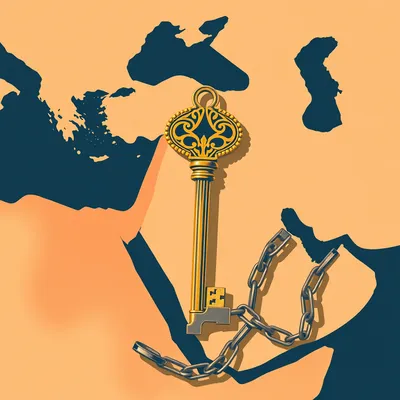
Well, the landscape of the region has shifted again, and this time it feels like the coalition has finally decided to go for the jugular. I have been looking at the satellite imagery coming out of the Persian Gulf over the last forty-eight hours, and it is unlike anything we have seen in previous phases of this conflict. We are moving past the era of just intercepting drones and hitting launch sites. We are entering a phase of what I would call financial decapitation.

It is a total shift in doctrine, Corn. Herman Poppleberry here, and I have to say, I have been glued to the energy market data all morning. Our housemate Daniel actually sent us a note about this yesterday, wondering if we were going to dive into the strategic logic behind these latest strikes. He noticed the headlines about the oil terminals and asked the million-dollar question: is this just another round of escalation, or is this the beginning of the end for the regime's funding model?
Daniel's question is vital because it points to the fact that the theater of war has expanded into the ledger books. We are seeing a fundamental pivot in how the coalition, led by Israel, views the Islamic Revolutionary Guard Corps, or the I-R-G-C. For years, we have talked about them as a military entity, but as we explored back in episode nine hundred thirty-one, they are actually a massive, diversified conglomerate that happens to own a military. If you want to stop the octopus, you do not just trim the tentacles; you have to stop the blood from reaching the heart.
That is right. And the blood, in this case, is crude oil. People often forget that the I-R-G-C is not just a branch of the Iranian armed forces. They control somewhere between thirty and forty percent of Iran’s total gross domestic product, or G-D-P. They are the country's biggest builders, its biggest telecommunications providers, and most importantly, its primary oil brokers. When Prime Minister Netanyahu speaks about a decisive final blow, he is not talking about a nuclear exchange or a ground invasion of Tehran. He is talking about the systematic dismantling of the oil-based patronage network that keeps the guards in power.
That is the framing we need to hold onto today. We are looking at the March two thousand twenty-six strikes not as a purely kinetic operation, but as a surgical economic intervention. If you look at the reports from this week, the coalition has targeted at least three major oil processing facilities. The estimates I am seeing suggest a reduction in export capacity by about one point two million barrels per day. That is not a warning shot, Herman. That is a massive hole in the budget of a regime that was already struggling with internal dissent and currency devaluation.
It's a massive shift. And I think to understand why this is the Achilles' heel, we have to look at the mechanics of how the I-R-G-C operates. Most people think of Iranian oil as something the state sells to other countries, and then the state decides how to spend the money. That is the old model. The modern model is that the I-R-G-C has its own parallel economy. They have a shadow fleet of tankers, they have front companies in places like Dubai, Singapore, and Malaysia, and they essentially run a black-market energy empire that bypasses the official Iranian Ministry of Petroleum.
And that is why traditional sanctions, while helpful, never quite finished the job. The I-R-G-C is incredibly good at hide-and-seek. They have spent decades building a resilient, decentralized shadow economy. If you block one bank account, they open ten more under the names of shell companies that look like they are selling medical supplies or construction equipment. But you cannot hide a massive oil refinery from a precision-guided munition. You cannot hide a loading jetty at Kharg Island when the coalition has the kind of persistent overhead surveillance we discussed in episode nine hundred twenty-nine.
That is the key distinction. You can sanction a ghost, but you have to protect a terminal. Kharg Island is the perfect example. It handles something like ninety percent of Iran's crude oil exports. It is a geographic bottleneck. If you take out the T-jetty or the Sea Island terminal there, the I-R-G-C’s ability to turn underground carbon into liquid cash simply evaporates. And without that cash, the entire structure of their regional influence starts to crumble.
I want to dig deeper into that "octopus" model we mentioned earlier. If we assume the I-R-G-C is a business, what does the loss of one point two million barrels a day actually do to their daily operations? Because they are not just paying for missiles; they are paying for a massive domestic security apparatus. They are paying the salaries of the Basij militia who suppress protests in the streets of Tehran and Isfahan. They are funding the social services that keep their loyalist base from flipping.
That is where the "final blow" theory really gains traction. The I-R-G-C is essentially a massive patronage network. It is a "pay-to-play" system. If you are a loyal commander, you get a piece of a construction firm or a percentage of an oil contract. If the money stops flowing, the loyalty starts to fray. We have seen this historically in other regimes. When the dictator can no longer pay the guys with the guns, the guys with the guns start looking for a new boss or they just stop showing up for work.
It is the ultimate stress test. And it is not just domestic. Think about the proxies. We have spent years talking about the "ring of fire" around Israel. Hezbollah in Lebanon, the Houthis in Yemen, the militias in Iraq and Syria. They do not fight for free. They need hardware, they need salaries, and they need logistics. If the I-R-G-C’s oil revenue is cut by fifty or sixty percent, do they prioritize the guy in a trench in Southern Lebanon or the guy guarding the palace in Tehran?
They will always choose the palace, but that choice creates its own set of problems. If you abandon your proxies because you can no longer afford them, you lose your strategic depth. This is why the March two thousand twenty-six strikes are so significant. By hitting the oil infrastructure, the coalition is forcing the I-R-G-C into a series of impossible choices. It is a strategic squeeze.
Let's talk about the technical side of how they have been evading this for so long, because I think it helps illustrate why these strikes were the necessary next step. You mentioned the "shadow fleet." For those who are not following the maritime tracking data as closely as you are, Herman, how does a country under heavy sanctions manage to move millions of barrels of oil across the ocean without getting caught?
It's an incredibly shady business. It involves what we call "dark ship" operations. These tankers will turn off their Automatic Identification System, or A-I-S, which is the transponder that tells the world where a ship is and where it is going. They call it "going dark." Once they are dark, they will meet another tanker in the middle of the ocean—often a legitimate-looking vessel—and do a ship-to-ship transfer of the oil. They mix the Iranian crude with oil from another source, forge the paperwork to say it originated in, say, Malaysia or Oman, and then sell it to refineries that are more than happy to look the other way because the price is discounted.
I remember we talked about the "Ghost Tanker" incident in twenty twenty-five. That was a perfect case study. You had a vessel that was officially scrapped years ago—it was supposed to be a pile of rusted metal in an Indian shipyard—suddenly appearing in the Persian Gulf, loading up with I-R-G-C-linked crude, and then "teleporting" across the Indian Ocean by spoofing its G-P-S coordinates.
They're using sophisticated electronic warfare techniques to make it look like the ship is in one place while it is actually hundreds of miles away loading oil. They can even spoof the A-I-S signal to make it look like they are a completely different vessel with a clean record. But here is the thing: that only works as long as you have oil to load. The shadow fleet is a distribution network. It is the delivery trucks. If the warehouse—the refineries and the terminals—is on fire, the trucks have nothing to carry. The coalition has realized that chasing individual tankers is like playing a game of Whac-A-Mole where the mole has a billion dollars. You have to hit the source.
And that brings us to the Netanyahu strategy. He has been very vocal about the fact that the "head of the snake" is in Tehran, and the lifeblood of that snake is oil. By targeting these assets, he is betting that the economic pain will lead to an internal collapse before a full-scale regional war becomes inevitable. It is a gamble, though, isn't it? Because when you hit oil, you risk global energy price spikes.
That is the traditional concern, and it is why previous American administrations were so hesitant to go this route. They were terrified of five-dollar or six-dollar-a-gallon gasoline in the United States. But the global energy market in twenty twenty-six is not what it was in the nineteen seventies or even the early two thousands. The United States is now a massive net exporter. We have seen a huge increase in production from other regions like Guyana and the Permian Basin. There is more "spare capacity" in the system than people realize.
The coalition seems to have calculated that the short-term volatility in oil prices is a price worth paying to permanently dismantle the I-R-G-C’s ability to fund global terror. It is a "rip the Band-Aid off" approach. If you look at the market reaction to the March strikes, there was a spike, sure, but it was not the catastrophic collapse of the global economy that the doomsayers predicted. The world has priced in the instability of the Iranian regime.
This is where the situation gets complex. When the refineries at Abadan or the terminals at Kharg are hit, it is not just the I-R-G-C that feels it. The ordinary Iranian people, who are already dealing with hyperinflation, see their national wealth being literally burned up because of the regime’s obsession with regional dominance. There is a psychological component to this. It demonstrates that the regime can no longer protect its most valuable assets. It shatters the illusion of invincibility.
That is a crucial point. It is a message to the Iranian people: "Your leaders are gambling your future on a war they cannot win." We saw something similar during the Iran-Iraq war in the nineteen eighties, the famous "Tanker War." But the technology back then was so crude. You had planes dropping dumb bombs and hoping to hit a massive ship. Today, the coalition can use a single cruise missile to take out the specific pumping station that makes an entire refinery useless, while leaving the surrounding civilian infrastructure relatively intact.
The precision is the difference-maker. In the eighties, it was a war of attrition. You were trying to sink enough ships to make the other side quit. Today, it is a war of surgical removal. If you can take out the I-R-G-C's ability to process and export oil without causing a massive environmental disaster or killing thousands of civilians, you win the moral and the strategic high ground. You are not fighting the Iranian people; you are bankrupting their oppressors.
I want to talk about the "front companies" again, because that is a layer of this that I think many people miss. We are talking about thousands of entities. If the oil revenue stops, what happens to the I-R-G-C’s grip on the rest of the economy? Do they start cannibalizing their other businesses?
They have already started. We are seeing reports of the I-R-G-C trying to liquidate assets in the construction and telecommunications sectors to cover their military payrolls. But who is going to buy a company owned by the I-R-G-C right now? It is a toxic asset. You are basically buying a target for the next coalition strike. So they are stuck. They have these massive holdings that are losing value every day, and their primary source of liquid cash is being systematically destroyed.
It is a death spiral. And it leads to a very interesting question about the "day after." If Netanyahu is right, and this is the "final blow" that brings the I-R-G-C to its knees, what replaces that economic vacuum? Because when thirty to forty percent of your G-D-P is controlled by one organization and that organization collapses, that is a lot of unemployed people and a lot of broken supply chains.
It is a massive risk, and it is something the coalition needs to be planning for right now. You cannot just dismantle the octopus and leave the pieces to rot. You need a plan for a transition to a legitimate, transparent economy. But that is a secondary problem. The primary problem, the existential threat, is the I-R-G-C’s current trajectory. You have to stop the fire before you can start rebuilding the house.
I think it is also worth noting the role of the shadow fleet's enablers. We have seen the United States Treasury and the coalition navy getting much more aggressive about seizing these "ghost tankers" when they enter international waters. It is not just about the strikes in Iran; it is about making the entire business of smuggling Iranian oil too expensive and too risky for the middlemen.
Think about it: if you're a shipping company in a third country and you realize that your multi-million dollar tanker might be seized or that you might be completely cut off from the United States financial system, you are going to think twice about taking that I-R-G-C contract. The "risk premium" for handling Iranian oil has gone through the roof. Even the Chinese refineries, which have been the primary buyers of this black-market oil, are starting to pull back because they do not want to get caught in the crossfire of a hot war.
So, we have the physical destruction of the terminals, the seizure of the shadow fleet, and the financial isolation of the front companies. It is a three-pronged attack. And it all points back to that one goal: making the I-R-G-C’s model of regional dominance unsustainable. Herman, you mentioned that this is a conservative, realistic approach to foreign policy. Why do you think this is more effective than the "containment" strategies we have seen for the last twenty years?
Because containment assumes that the regime is a rational actor that can be incentivized to change its behavior through diplomacy. But the I-R-G-C is an ideological entity. Their entire reason for existing is the "export of the revolution" and the destruction of the "Zionist entity." You cannot "contain" that kind of zealotry. You can only deprive it of the resources it needs to act on its impulses. It is the difference between asking a bully to stop hitting you and taking away the bully's lunch money so he is too weak to lift his arms.
It is a harsh reality, but it is one that the events of two thousand twenty-six have made unavoidable. The idea that we could just wait for the regime to "moderate" has been proven wrong time and again. They used the "peace dividends" from previous deals to build the very missile programs and drone fleets that are now being used against the coalition. They took the money and they doubled down on the "octopus" model.
That's why this shift to targeting oil assets is so significant. It is an admission that the previous strategy failed. It is an acknowledgment that the only way to secure long-term peace in the region is to fundamentally break the I-R-G-C’s economic backbone. And Netanyahu is betting his entire legacy on the idea that this will be the "final blow."
I want to pivot a bit to what our listeners can look for to see if this strategy is actually working. We like to give people "leading indicators" they can track themselves. If the goal is to dismantle the I-R-G-C’s economic base, what should we be watching over the next few months?
The first thing is the exchange rate of the Iranian Rial. If it continues to plummet against the dollar, it means the regime is failing to provide the basic currency stability needed for the economy to function. We are already seeing it hit record lows, and if it crosses certain psychological thresholds, it could trigger a total run on the banks. The second thing is the "tanker tracking" data. There are several public-source intelligence groups that track these ships. If the number of tankers leaving Iranian ports drops and stays low, the strikes are working.
And what about the front companies? Is there a way for a regular person to see if those are being affected?
It is harder, but you can look at the "Entity List" from the United States Department of Commerce and the sanctions lists from the Treasury. If you see a surge in new names being added—companies based in unlikely places like the Marshall Islands or the Seychelles—that is a sign that the I-R-G-C is getting desperate and trying to create new shells to replace the ones that have been burned. Also, keep an eye on the "bonyads." Those are the so-called "charitable foundations" in Iran that are actually I-R-G-C slush funds. If they start cutting back on their domestic programs or selling off their real estate holdings, you know the cash crunch has hit home.
That is really helpful. It gives people a way to look past the headlines and see the actual mechanics of the conflict. I also think we should mention that for anyone who wants a deeper dive into the "octopus" structure itself, episode nine hundred thirty-one is really the foundational text for this. We went into the specific percentages of the economy they control and the history of how they moved from a revolutionary guard to a corporate mafia.
And if you want to understand the technical side of how the coalition is actually hitting these targets with such precision, episode nine hundred twenty-nine on "Data Points in the Sky" covers the satellite and drone integration that makes these surgical strikes possible. It is not just about the "boom"; it is about the "where" and the "when."
It's a multi-dimensional chess game. So, let’s wrap this up with some practical takeaways. What are the three things our listeners should remember about the March two thousand twenty-six oil strikes?
First, this is a shift from military containment to economic dismantlement. The goal is no longer just to stop the missiles, but to stop the money that pays for the missiles. Second, the oil sector is the I-R-G-C’s only real source of liquid cash. By hitting the terminals and the refineries, the coalition is attacking the regime's "center of gravity." And third, the "shadow fleet" and front companies are the I-R-G-C’s primary tools for survival. The more the coalition can expose and disrupt these networks, the faster the regime's internal patronage system will collapse.
That covers the core of it. And I would add a fourth point: watch the internal stability of Iran. The "day after" is coming, and whether it is a peaceful transition or a chaotic collapse will depend largely on how the Iranian people react to seeing their leaders' bank accounts run dry. It is a high-stakes moment, maybe the highest-stakes moment we have seen in our lifetime in that part of the world.
It's a pivotal moment. And I think it is important to remember that this is not just about geopolitics. It is about the people of Iran who have been held hostage by this I-R-G-C-controlled economy for decades. Freeing the oil assets from the guards is the first step toward freeing the country.
Well said, Herman. This has been a heavy one, but an important one. We are living through history right now, and the headlines today are going to be the history books of tomorrow. We want to thank Daniel for sending in this prompt. It really pushed us to look at the "why" behind the "what" in these latest strikes.
Yes, thanks Daniel. And to our listeners, if you are finding these deep dives helpful, we would really appreciate it if you could leave us a review on your podcast app or on Spotify. It genuinely helps other people find the show and helps us keep doing this kind of detailed analysis.
It really does make a difference. We see every review and we appreciate the support of this community. You can find all of our past episodes, including the ones we referenced today, at our website, my weird prompts dot com. We have an R-S-S feed there and a contact form if you want to get in touch with us.
We are also on Spotify, so make sure you are following us there to get the latest episodes as soon as they drop. We have got some interesting topics lined up for the next few weeks as we approach our one thousandth episode. I can hardly believe we are almost there.
It has been a long road, but with everything happening in the world, it feels like we are just getting started. There is always something new to explore, another "weird prompt" to unpack.
That is the truth. Alright, I think that covers it for today. This has been My Weird Prompts. I am Herman Poppleberry.
And I am Corn. Thanks for listening, and we will talk to you in the next one.
Until next time. Stay curious and keep looking at the data.
The truth is usually hidden in the numbers. Goodbye everyone.
Bye for now.