Welcome to My Weird Prompts! I am Corn, and I am joined as always by my brother.

Herman Poppleberry, reporting for duty. And man, do we have a deep one today. Our housemate Daniel was actually wrestling with some serious network gremlins over the weekend right here in our house in Jerusalem. He was diving into the guts of point to point protocol over ethernet, or triple P O E, and fiber optic systems while trying to figure out why the internet was acting up.
It is funny how we take the internet for granted until that little light on the router turns red. Then suddenly, you are trying to understand the difference between a modem and an optical network terminal at two in the morning. Daniel's struggle really highlights how complex the invisible infrastructure around us has become.
It really has. And what is fascinating is that the topic he sent us today is about that entire journey. Not just the router in our living room, but how an internet service provider, or I S P, actually manages to provision connectivity to millions of people simultaneously. It is this massive, coordinated dance of protocols, hardware, and literal glass threads buried under the ocean.
I think most people imagine the internet as this amorphous cloud, but as Daniel pointed out after his research, it is actually just a very long, very expensive chain of cables. I want to start with the consumer end, though. When Daniel was talking about triple P O E, that felt like a bit of a throwback. Why are we still using protocols that feel like they belong in the dial up era when we have gigabit fiber?
That is a great place to start. Triple P O E, or Point to Point Protocol over Ethernet, is essentially a way for the I S P to identify who you are and manage your session. Think of it like a digital passport control. Back in the day, Point to Point Protocol was used for dial up because you were literally making a direct phone call to the I S P. When we moved to broadband, the I S P still needed a way to authenticate users, handle billing, and assign I P addresses without having to re-engineer their entire backend. So, they just wrapped that old protocol inside of ethernet frames.
So it is basically a legacy wrapper. But does it not add overhead? If I am on a two gigabit fiber connection, is my router wasting time doing this handshake every time I want to watch a video?
It does add a tiny bit of overhead, usually about eight bytes per packet. For most people, it is negligible, but for power users or people with very high speed connections, it can actually become a bottleneck for the router's processor. That is why some modern I S P's are moving toward D H C P, or Dynamic Host Configuration Protocol, which is much "leaner." But triple P O E is still incredibly popular because it allows the I S P to easily "terminate" your session if you do not pay your bill or if they need to reset your connection. It gives them a very granular level of control.
That makes sense from their perspective, even if it is a headache for the user to configure. Now, let us talk about the hardware. Daniel mentioned fiber optic systems. In our neighborhood, we have seen the crews digging up the streets for years to lay these cables. What is actually happening when that fiber line enters our house? It is not just a faster version of the old copper phone lines, right?
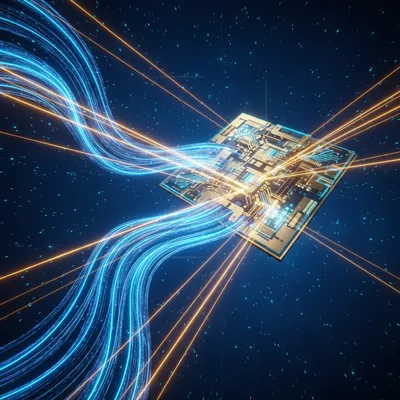
Not at all. It is a fundamental shift in physics. With the old D S L or cable systems, you were sending electrical pulses over copper. Copper has resistance, it generates heat, and it is susceptible to electromagnetic interference. If your neighbor uses a microwave or there is a lightning storm, your signal can degrade. Fiber optics use photons. We are talking about pulses of laser light traveling through strands of glass that are about the thickness of a human hair.
And that light stays inside the glass because of total internal reflection, right?
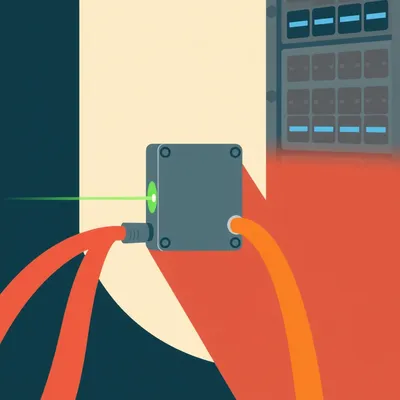
Exactly! The core of the fiber is surrounded by a cladding that reflects the light back inward. Because light travels so fast and does not suffer from electrical interference, we can send massive amounts of data over huge distances without the signal fading. But here is the tricky part Daniel was looking at: the O N T, or Optical Network Terminal. That is the little box on the wall that the fiber plugs into. Its job is to turn those flashes of light back into electrical signals that your router can understand.
I remember when we first got fiber installed, the technician was very careful not to bend the cable too sharply. He said if you "kink" a fiber line, the light just stops. It is much more fragile than the old coaxial cables we used to have.
Oh, definitely. If you bend it too much, the light hits the cladding at the wrong angle and just escapes into the plastic jacket instead of reflecting back into the core. It is called a "macro-bend" loss. But once that signal is in the O N T and converted to ethernet, that is where the I S P's provisioning system kicks in. They have to make sure that the specific O N T in our house is authorized to access their network. They usually do this by checking the serial number of the O N T against their database.
So even before I put in my username and password for the internet session, the hardware itself has to be "whitelisted." This brings up an interesting point about the "last mile." That is the term for the connection from the I S P's local hub to the consumer's house. How do they manage that for millions of people? It seems like an incredible amount of cable.
It is, and they use something called a P O N, or Passive Optical Network. This is a brilliant bit of engineering. Instead of running a dedicated fiber line from the central office all the way to every single house, which would be insanely expensive, they run one high-capacity fiber to a neighborhood and then use a "splitter." A single fiber can be split to serve thirty-two or even sixty-four different customers.
Wait, if the fiber is split, does that mean I am sharing my bandwidth with sixty-four neighbors? Is it like the old cable modem days where the internet got slow at seven P M when everyone started watching movies?
In theory, yes, it is a shared medium. But the total capacity of that one fiber line is so high, often tens of gigabits per second, that you rarely notice it. Plus, the I S P uses time-division multiplexing. Basically, the O N T in your house and the O N T in your neighbor's house take turns sending data in incredibly small time slices. They are synchronized down to the nanosecond.
That is wild. The level of coordination required just to get a packet from our living room to the local exchange is staggering. And we have not even left Jerusalem yet.
We are just getting started. But before we head upstream to the big backbone cables, I think we should take a quick break for our sponsors.
Good idea. Let us hear from Larry.
Larry: Are you worried about the security of your home network? Do you stay awake at night wondering if your data packets are lonely or unprotected? Introducing the Packet-Pal, the world's first emotional support shield for your router. The Packet-Pal is a hand-crafted, lead-lined cozy that fits snugly over your wireless antennas. Not only does it block ninety-nine percent of harmful "outside" signals, but it also features a built-in lavender diffuser to keep your data feeling calm and serene as it travels through the air. Why settle for a cold, metallic connection when you can have a warm, fuzzy one? The Packet-Pal comes in three colors: Charcoal, Eggshell, and Paranoia Purple. Note: Packet-Pal may significantly reduce WiFi range, internet speed, and overall functionality. But can you really put a price on your data's peace of mind? BUY NOW!
Thanks, Larry. I am not sure lead-lining your router is the best way to get a good signal, but I suppose the lavender is a nice touch.
Paranoia Purple. Truly a color for our times. Anyway, back to the infrastructure. We have made it from our house to the I S P's local exchange. Now, how does the I S P get their internet? As Daniel asked, who is the I S P's I S P?
This is where we get into the world of "Tiers." Most of the I S P's we deal with as consumers, like Bezeq or Hot here in Israel, or Comcast and A T and T in the States, are what we call Tier Two or Tier Three providers. They have their own regional networks, but they do not own the global backbone. To get to the rest of the world, they have to connect to Tier One providers.
And Tier One providers are the giants, right? Companies like Lumen, formerly CenturyLink, or Telia, or Zayo. These are companies that own the massive, intercontinental fiber networks and "peer" with each other without paying for transit.
Exactly. A Tier One network is one that can reach every other part of the internet without paying anyone else for the privilege. They have "peering agreements." It is like a global club where everyone agrees to carry each other's traffic for free because the exchange is mutually beneficial. If you are a Tier Two provider, you usually have to pay a Tier One provider for "transit" to get your customers' data to the other side of the world.
So, when I send an email to a friend in New York, my data goes from our O N T to the local Jerusalem exchange, then probably to a major data center in Tel Aviv, and then it has to find a way out of the country.
Right. And for Israel, that means going underwater. This is the part Daniel found so fascinating. We are essentially an island when it comes to data. Almost all of our international traffic goes through submarine cables at the bottom of the Mediterranean Sea.
I remember reading about the landing stations. There are major ones in Haifa and Ashkelon. These cables are like the carotid arteries of the nation's economy.
They really are. And these are not just cables; they are engineering marvels. A modern submarine cable like the Blue-Raman system, which Google has been working on to connect Italy to India via Israel, can carry hundreds of terabits per second. These cables are armored with steel and buried under the seabed near the coast to protect them from boat anchors and sharks, but once they get to the deep ocean, they are surprisingly thin, maybe the diameter of a garden hose.
It is amazing to think that the entire world's communication relies on a few dozen garden hoses at the bottom of the ocean. What happens when one of them breaks? We have seen news reports about ships dragging anchors and cutting cables.
That is where the "mesh" nature of the internet comes in. This is a concept called B G P, or Border Gateway Protocol. It is essentially the G P S of the internet. Every major network on earth tells its neighbors which I P addresses it can reach. If a cable in the Mediterranean is cut, the B G P routers automatically realize that the path is gone and they start rerouting traffic through other available cables, maybe through a different landing station or even a longer route through another country.
But that must cause massive latency, right? If my traffic suddenly has to go through a backup cable that is already at ninety percent capacity, everything slows down.
Oh, absolutely. We saw this back in early two thousand twenty-four when several cables in the Red Sea were damaged. It did not break the internet, but it caused significant slowdowns across East Africa and parts of Asia. The internet is designed to be resilient, but it is not infinite. This is why I S P's spend so much money on "redundancy." They do not just buy capacity on one cable; they buy it on three or four different systems owned by different companies.
This brings us back to Daniel's question about how they manage all of this. It is not just about the cables; it is about the software that manages the traffic. You mentioned B G P, but how does an I S P decide which path to take? Is it just the fastest one?
Not always. Often, it is the cheapest one. This is the business side of the internet that most people do not see. I S P's have "routing policies." If they have a peering agreement with a neighbor that is free, they will try to send as much traffic as possible through that neighbor, even if it is slightly slower than a paid transit route. It is a constant balancing act between performance and cost.
It is like a giant game of logistics. But let us bring it back down to earth for a second. For someone like Daniel, or any of our listeners who are troubleshooting their own network, why does understanding this help?
I think it helps because it changes your perspective on where the problem might be. When your internet is slow, most people assume it is the WiFi. And to be fair, ninety percent of the time, it is the WiFi. But by understanding the chain, you can start to isolate the issues. If you can ping your router but you cannot ping the I S P's gateway, the problem is likely that "last mile" fiber connection or the triple P O E session. If you can reach local websites but international ones are slow, then you know there is a bottleneck at the upstream provider or a submarine cable issue.
That is a great point. It is about narrowing down the "fault domain." If Daniel knows his triple P O E session is active, he knows the O N T and the fiber line are working. He can then look at things like D N S, or Domain Name System, which is another layer of the provisioning process.
D N S is huge! That is the phonebook of the internet. When you type in a website name, your I S P's D N S server tells your computer the I P address. If the I S P's D N S server is slow or overloaded, it feels like the whole internet is broken, even if the underlying fiber is perfectly fine. That is why a lot of "tinkerers," as Daniel called himself, often switch their routers to use public D N S servers like Google's eight dot eight dot eight dot eight or Cloudflare's one dot one dot one dot one.
I have done that myself. It often makes the internet feel much "snappier" because the lookups happen faster. So, we have the physical fiber, the O N T, the triple P O E session, the I S P's internal network, the peering points, and the submarine cables. It is a massive stack of technology. What do you think is the biggest misconception people have about this whole system?
I think the biggest misconception is that the internet is "wireless." We talk about the cloud and WiFi and five G, but the reality is that the wireless part is only the very last few feet, or maybe the last couple of miles if you are on a cell tower. The other ninety-nine percent of the internet's journey is through physical, tangible materials. It is glass, it is copper, it is massive data centers that consume as much power as a small city. We are still very much tethered to the earth.
It is a very grounded reality for something that feels so ethereal. And as we move into twenty-seven and beyond, that infrastructure is only going to get more complex. We are seeing more satellite constellations like Starlink, which add another layer to the mix.
Starlink is fascinating because it is essentially trying to move the "backbone" into space. Instead of submarine cables, they are using laser links between satellites. It is still a physical chain, just one that is orbiting at seventeen thousand miles per hour. But for most of us, the fiber in the ground is still going to be the gold standard for a long time because of the sheer capacity of glass.
So, for the practical takeaways today: first, if you are having issues, check your hardware. Make sure your fiber isn't kinked and your O N T is happy. Second, understand your protocol. If your I S P uses triple P O E, your router is doing more work than if it used D H C P. And third, do not be afraid to change your D N S. It is one of the easiest ways to improve your browsing experience without spending a dime.
And maybe most importantly, have some sympathy for the network engineers. Managing a network that serves millions of people while the ground is literally shifting and cables are being snagged by anchors is a monumental task. It is a miracle that it works as well as it does.
It really is. Well, I think we have successfully followed the thread from Daniel's living room to the bottom of the sea.
It has been a journey. And hey, if you have been enjoying our deep dives into the plumbing of the digital world, we would really appreciate it if you could leave us a review on your podcast app or on Spotify. It genuinely helps other curious people find the show.
Definitely. We love hearing from you all. You can find all our past episodes and a contact form at myweirdprompts dot com. This has been My Weird Prompts.
Thanks to Daniel for the great prompt. We will see you all next week!
Goodbye everyone!