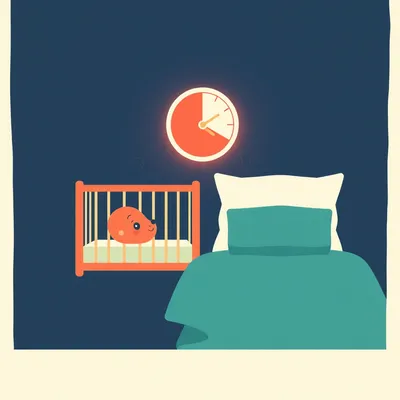
There is this specific kind of quiet panic that only exists in a house with a newborn who will not close their eyes. It is three in the morning, you are scrolling through forums on your phone with the brightness turned all the way down, and suddenly you find yourself deep in the world of sleep training. You start feeling like if you do not get the room temperature to exactly sixty-eight degrees and the humidity to forty-five percent, you have already failed as a parent. It is a high-stakes, high-anxiety optimization problem that has turned a basic biological function into a competitive sport.

It really is the ultimate engineering challenge for the sleep-deprived, Corn. People treat infant sleep like they are trying to launch a rocket from Cape Canaveral, where one degree of deviation in the thermostat or a five-minute delay in the white noise activation results in a total mission failure. I am Herman Poppleberry, and I have been looking forward to this because today's prompt from Daniel is about the controversial world of sleep training and the best practices for getting kids to actually sleep. We are moving past the binary of "cry it out" versus "attachment parenting" to look at the actual neurobiology of how a human brain learns to shut down for the night.
It is a timely one, especially since Daniel and Hannah are right in the thick of it with young Ezra. I think most parents start out thinking sleep is just a natural biological function, like breathing or digestion, but then they hit that first four-month regression and realize there is an entire multi-billion-dollar industry waiting to tell them they are doing it wrong. There are consultants, apps, smart bassinets, and weighted swaddles, all promising the holy grail of twelve hours of uninterrupted silence.
The sleep industrial complex is a fascinating and somewhat terrifying development. We have moved away from viewing sleep as a developmental milestone, like crawling or talking, and started viewing it as a behavioral intervention that requires professional management. The core of the conflict usually boils down to whether sleep is something you teach through conditioning or something that just happens when the biology is ready. To understand why we are so obsessed with this, we have to look at the cultural shift. In a society where both parents are often back at work within weeks of a birth, a baby who does not sleep is not just a domestic challenge; it is an economic threat.
If we are going to look at the biology, we should probably start with the biggest point of confusion, which is when the evening should actually begin. Daniel asked about the best practice recommendations for bedtime. Is there a universal right answer, or is the seven p.m. bedtime just a social construct for parents who want their evenings back so they can finally watch a show without a tiny human screaming in their ear?
It is a bit of both, but there is a heavy biological component involving the suprachiasmatic nucleus, or the S C N. That is the tiny region in the brain's hypothalamus that acts as the master clock for the entire body. For an infant, that clock is not calibrated at birth. They are born with a completely fragmented rhythm because, in the womb, they were essentially living in a world of constant twilight with no external light cues. They do not even produce their own melatonin in significant amounts until they are around nine to twelve weeks old. Before that, they are basically riding on the tail end of the hormones they got from their mother during pregnancy.
So when parents are trying to set a strict seven p.m. bedtime for a six-week-old, they are essentially fighting a ghost. The brain literally does not have the chemical signal to stay asleep for a long stretch yet. It is like trying to run a piece of software on a computer that does not have the operating system installed.
They are fighting an uphill battle against a system that has not been wired yet. However, once that melatonin onset starts happening around the three-month mark, you see the development of the circadian rhythm. The common recommendation for an early bedtime, usually between six-thirty and eight p.m., is based on the idea of catching the natural dip in body temperature and the rise in melatonin. If you miss that window, you hit the phenomenon everyone talks about but few understand: the second wind.
The second wind is the bane of every parent's existence. You think, oh, they missed their afternoon nap, so they will be extra tired and sleep better tonight. It makes logical sense to an adult. But then eight p.m. rolls around and the kid is vibrating with the energy of a thousand suns, sprinting around the crib or screaming at the top of their lungs. What is actually happening in the blood at that point?
It is a physiological stress response. When a baby stays awake past their natural biological window, the body perceives that wakefulness as a need to stay alert for survival. The hypothalamic-pituitary-adrenal axis, or the H P A axis, kicks in and starts pumping out cortisol and adrenaline. Cortisol is a primary stress hormone that keeps you alert and ready for action. So, ironically, being overtired makes it physically harder to fall asleep because the baby is effectively caffeinated by their own internal chemistry. Their brain is telling them, "We are still awake, so there must be a predator nearby or a reason we cannot rest. Stay alert!"
That explains why the "drowsy but awake" mantra is so polarizing. If you catch them at the right moment of sleep pressure, it works. If you are five minutes late and the cortisol has hit the system, you might as well be trying to put a squirrel in a shoebox. But Herman, does "drowsy but awake" actually work for every kid? Because I have heard parents say their child goes from "wide awake" to "nuclear meltdown" with no middle ground.
The "drowsy but awake" advice is heavily dependent on infant temperament, which is something the rigid sleep training books often gloss over. In developmental psychology, we talk about sensory thresholds. Some babies have a very low threshold for sensory input. For them, the sensation of being put down while slightly conscious—the change in air temperature, the feeling of the mattress, the loss of physical contact—is a massive alarm bell. Other babies have a higher threshold and can transition more easily. We often treat sleep training like a software update that should work on every device, but the hardware varies wildly from child to child. A "spirited" or "high-needs" baby is not failing to learn; their nervous system is just more reactive to the environment.
Daniel also asked about the environment. Does it have to be a perfectly dark room? I see people traveling with black-out curtains and rolls of duct tape to cover every tiny L E D on a humidifier or a baby monitor. Is that actually necessary for the biology, or are we just creating babies who cannot sleep anywhere but a sensory deprivation tank?
Total darkness serves a very specific biological purpose, but it has been taken to an extreme. Melatonin is light-sensitive. There are cells in the retina called intrinsically photosensitive retinal ganglion cells that send signals directly to the S C N. Even a small amount of blue-spectrum light hitting those cells can suppress melatonin production. In a perfectly dark room, you are maximizing the brain's natural sedative. However, there is a secondary effect that is more psychological than biological. At around four or five months, babies develop object permanence. They start to realize that when you leave the room, you still exist somewhere else.
And they would rather be where you are, which is usually where the light and the noise and the fun are happening.
Usually, yes. A dark room reduces the visual stimulation that might keep them interested in staying awake. If they can see their stuffed animals or the patterns on the wallpaper, their brain stays in an engaged, exploratory mode. Darkness is less about the eyes and more about telling the brain that the world has ended for the day and there is nothing left to see. But there is a trade-off. If you raise a child in a tomb-like environment, you lose the ability to ever have them nap in a stroller or at a grandmother's house. This is called environmental habituation. If the sleep cues are too narrow, the child becomes dependent on a very specific set of variables. You have built a very fragile system that breaks the moment you try to go on vacation.
It is like a fragile piece of code that breaks if you change one line. I think that is why Daniel asked if it has to be so regimented. We see these schedules online that are broken down into fifteen-minute increments. Wake at seven, first bottle at seven-fifteen, nap at nine-thirty. It feels more like a military operation than a family life.
The rigidity is often more for the parent's sanity than the child's biology. Humans crave predictability, especially when they are sleep-deprived and feel like their lives are out of control. If a parent feels like they have a plan, their own cortisol levels drop. And since babies are incredibly sensitive to the emotional state of their caregivers—a phenomenon known as emotional contagion—a calm parent often leads to a calmer baby. But the biology of the baby does not care about the clock; it cares about sleep pressure.
Sleep pressure being the build-up of adenosine in the brain?
That is it. Adenosine is a byproduct of energy consumption in the brain. It builds up the longer we are awake. When it reaches a certain threshold, the urge to sleep becomes overwhelming. The problem with rigid schedules is that they assume every baby builds up adenosine at the same rate. But if a baby had a very active morning or a particularly long nap, their sleep pressure might not match the clock. Forcing a baby to sleep when the pressure is not there is just a recipe for a two-hour power struggle. The best practice is "observation over orchestration." You look for early cues like eye rubbing, ear pulling, or losing interest in toys, rather than waiting for the clock to strike seven.
Let's talk about the room transition. This is one of the most debated topics in the whole sleep training world. When do you move them into their own room? The American Academy of Pediatrics, or the A A P, has some pretty specific guidelines on this that often clash with what the sleep consultants say.
They do. The current recommendation from the A A P, which was updated fairly recently, is that infants should sleep in the parents' room, but on a separate surface like a crib or bassinet, for at least the first six months, and ideally for the first year. The primary driver for this recommendation is the reduction of S I D S, or Sudden Infant Death Syndrome.
And the data on that is fairly substantial. Room sharing can reduce the risk of S I D S by as much as fifty percent. But why is that? Is it just that the parents are there to hear if something goes wrong?
It is actually more interesting than that. It is thought that the ambient noise of the parents moving, breathing, and even snoring keeps the baby from falling into an unnaturally deep sleep. For an infant, very deep sleep can actually be a risk factor because their respiratory drive is still maturing. If they stop breathing for a moment—which is common in infants—a lighter sleep state allows them to wake up and restart that drive. The presence of other humans in the room acts as a sort of gentle sensory tether that keeps them in a safer, slightly lighter stage of sleep.
That is fascinating. We spend all this time talking about how to get them to sleep deeply, but the official safety advice is basically to keep them from sleeping too deeply for the first few months. It is a delicate balance. But this is where the conflict with sleep training happens. Most sleep training methods, like the Ferber method or the various cry-it-out approaches, are much easier to implement if the child is in their own room. It is very hard to ignore a baby's protest if they are three feet away from your bed.
It is a massive source of parental guilt. You have one set of experts telling you that moving them out early is a safety risk, and another set telling you that keeping them in the room is creating "bad habits" and preventing the baby from learning to self-soothe. In reality, most parents in the United States seem to make the move between four and six months, often coinciding with the return to work or the baby outgrowing their bassinet. We are very outliers in the West with our obsession with independent sleep. In many cultures, co-sleeping or room-sharing continues well into toddlerhood. There is no biological rule that says a child must sleep alone to be healthy.
I remember we touched on some of this back in episode five hundred seventeen when we discussed the twelve-foot mattress and the family bed debate. The cultural context here is huge. We live in a society that values early independence and requires parents to be back at their desks forty hours a week very quickly after a birth. The sleep training industry is, in many ways, a response to a labor market that does not account for human biology. If you have to be at a meeting at nine a.m., you cannot afford to be up five times a night. So you turn to a technological or behavioral solution to force a biological result.
And now we have actual technology entering the fray. Daniel mentioned he is into A I and automation, and we are seeing that bleed into sleep. We have smart bassinets like the Snoo or the Cradlewise that use sensors to detect a baby's cry and automatically increase the rocking motion and white noise. We have wearable socks that track heart rate and oxygen levels. It is the "Oura-fication" of infancy.
I have seen those. They give you a little dashboard on your phone with a sleep score for your four-month-old. On one hand, it seems like it would be reassuring. On the other hand, I feel like looking at a live graph of your baby's heart rate at two in the morning is a great way to never sleep again.
There is a real concern about the second-order effects of these monitors. There have been studies showing that parents using high-tech monitors often report higher levels of anxiety than those using simple audio monitors. When you turn sleep into a set of metrics to be optimized, every dip in the graph becomes a potential crisis. It creates this feedback loop where the parent is stressed by the data, and the baby picks up on the parent's stress, which then disrupts the baby's sleep, which creates more "bad" data. This is sometimes called "orthosomnia"—an unhealthy obsession with achieving perfect sleep data.
This reminds me of what we discussed in episode nine hundred twenty-three about the Parenting Paradox. The advice keeps flipping. In the nineteen-fifties, it was all about strict schedules and not picking the baby up so you wouldn't "spoil" them. Then in the seventies and eighties, we moved toward more responsive parenting. Now we are in this weird hybrid era where we want to be responsive, but we also want the data-driven results of a nineteenth-century boarding school. We want the baby to be "attached" but also "independent" on a schedule that fits our Google Calendar.
We want the best of both worlds, but biology doesn't really work that way. One of the biggest misconceptions in the sleep training world is the idea that babies are manipulating their parents. You hear people say, "Oh, he is just crying because he wants you to come in."
Well, yeah. He is a baby. Wanting his parents is his primary survival mechanism.
An infant's brain does not have the prefrontal cortex development required for manipulative behavior or long-term planning. They don't have a concept of "if I cry for ten minutes, Mom will give me the good milk." They only have the immediate sensation of a need—hunger, cold, loneliness, or just a lack of sensory input—and the only tool they have to address it is their voice. When a sleep training method says to ignore the cry to "break the habit," what is actually happening in the brain is a process called extinction.
From a behavioral psychology standpoint, if a behavior is not reinforced, it eventually stops. The baby learns that crying does not result in the presence of a caregiver, so they stop crying to conserve energy.
Proponents say the baby has learned to "self-soothe." Critics say the baby has simply reached a state of "learned helplessness." It is a spectrum. You have the full extinction methods, and then you have more graduated methods like the Ferber method, or "Responsive Settling," where you go in at increasing intervals to reassure the baby. The goal of responsive settling is to provide enough comfort that the stress levels stay manageable while still encouraging the baby to find their own way to sleep.
Does the research show any long-term psychological damage from the more intense methods? Because that is the big fear that keeps parents up at night—the idea that they are breaking their child's trust or damaging the attachment bond.
The most robust longitudinal studies we have, including some significant ones out of Australia that followed children for five years, generally show no long-term differences in emotional development, attachment, or behavior between children who were sleep trained and those who weren't. By the time they are five or six years old, you can't tell the difference. The primary benefit of sleep training seems to be for the parents' mental health and the stability of the marriage.
So it is less about the baby's long-term trauma and more about the parents' short-term survival.
That is the most honest way to frame it. If a mother or father is suffering from postpartum depression because of chronic sleep deprivation, that is a much bigger risk to the child's development than ten nights of crying during sleep training. We have to look at the family as a whole system. A baby does not exist in isolation; they exist in an environment created by their parents. If that environment is crumbling because the parents haven't slept more than two hours at a time for six months, the system is failing.
Let's pivot to some practical takeaways for people like Daniel who are navigating this right now. If we move away from the rigid increments and the perfectly dark rooms, what actually works based on the science?
The first thing is to prioritize sleep pressure over clock time. If your baby is not showing tired cues, don't force the bedtime just because the book says it is seven p.m. You are just going to spend two hours fighting them, which increases everyone's cortisol. Wait for the window. Second, use darkness as a tool, but don't be a slave to it. It is helpful for the melatonin, but the baby also needs to learn that life happens in different settings. A white noise machine is actually more effective than total darkness for most babies because it mimics the low-frequency sounds of the womb and masks the sudden noises—like a dog barking or a car door slamming—that might startle them out of a light sleep cycle.
I think the biggest takeaway for me is that sleep is a developmental skill, not a performance metric. Some kids walk at nine months, some walk at fifteen months. Some kids sleep through the night at four months, and some don't do it until they are two years old. It doesn't mean you are doing anything wrong as a parent.
The "good enough parent" approach is usually the most sustainable. Consistency matters more than perfection. If you have a simple routine—bath, book, bed—it signals to the brain that the transition is coming. The specifics of the routine matter less than the fact that it happens the same way most nights. And honestly, turn off the smart monitor every once in a while. If you can hear the baby through the door, you probably don't need to see their pulse oximetry on a smartphone app. Trust your intuition a bit more and the data a bit less.
This has been a deep dive into a topic that I think every parent feels a little bit guilty about. It is nice to see that the biology is a bit more flexible than the internet would have you believe. We are not just trying to program a robot; we are helping a human nervous system find its rhythm.
It is a biological process, not a software update. You can't just force a new version of the operating system on a baby before the hardware is ready to support it. As we move into the future, we are going to see more A I-driven sleep coaching, but I suspect the most successful parents will still be the ones who can read their own child's cues better than an algorithm can.
That is a great place to wrap it up. We covered the melatonin onset, the cortisol second wind, the reality of darkness, and the cultural pressures that drive the sleep training industry. Thanks as always to our producer, Hilbert Flumingtop, for keeping the gears turning behind the scenes.
And a big thanks to Modal for providing the G P U credits that power this show. We literally couldn't do this without that hardware support.
This has been My Weird Prompts. If you enjoyed this exploration of the science of sleep, we have over a thousand other episodes in the archive. Check out episode five hundred fifteen on screen time and toddlers if you want to keep the developmental psychology trend going.
You can find us on Spotify, Apple Podcasts, or wherever you get your audio fix.
If you have a second, leaving a review on your podcast app is one of the best ways to help new listeners find the show. We really appreciate it.
We will see you in the next one.
Sleep well, if you can. Goodbye.
Goodbye.